
The Orbital Data Center Space Race Has Officially Begun
We’ve highlighted a new theme: data centers in low Earth orbit, or at least the race to get these AI chips into space.
Week after week, the news flow shows a new space race taking shape, as Elon Musk, Jeff Bezos, and Sam Altman appear to be the major players in the scramble to get chips into orbit – almost certainly joined by other billionaires quietly working behind the scenes.
The latest news on the AI chips-in-space theme comes from a Bloomberg report that Musk’s SpaceX is planning to raise $30 billion at a $1.5 trillion valuation, with some of the proceeds expected to be used for space-based data centers.
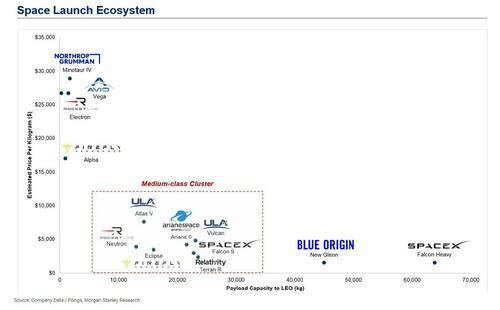
We must note that Musk has the only capable space program that could rapidly deploy space-based data centers at scale; neither China nor Russia, nor even Bezos’ Blue Origin, currently has this capability.
Meanwhile, ChatGPT founder Sam Altman attempted to buy rocket startup Stoke Space this past summer, with the intent of joining the space race to launch AI chips into orbit.
A new Wall Street Journal report on Wednesday afternoon added more color about the Musk-Bezos space-based data center race:
Bezos’ Blue Origin has had a team working for more than a year on technology needed for orbital AI data centers, a person familiar with the matter said. Musk’s SpaceX plans to use an upgraded version of its Starlink satellites to host AI computing payloads, pitching the technology as part of a share sale that could value the company at $800 billion, according to people involved in the discussions.
The push to move data centers into low Earth orbit is all about sidestepping Earth’s power constraints and soaking up precious resources, harnessing essentially limitless solar energy, and leveraging space’s near-zero thermal environment to keep advanced AI chips cool.
“Taking resource-intensive infrastructure off Earth has been an idea for years, but it has required launch and satellite costs to come down. We are nearing that point,” Will Marshall, CEO of satellite operator and builder Planet Labs, told WSJ.
Making spaceflight affordable has been SpaceX’s focus with its reusable rockets, and once Starship becomes commercialized, costs should drop even further.

Let’s remind readers that SpaceX is effectively America’s rocket program – and it leads the world by light-years.
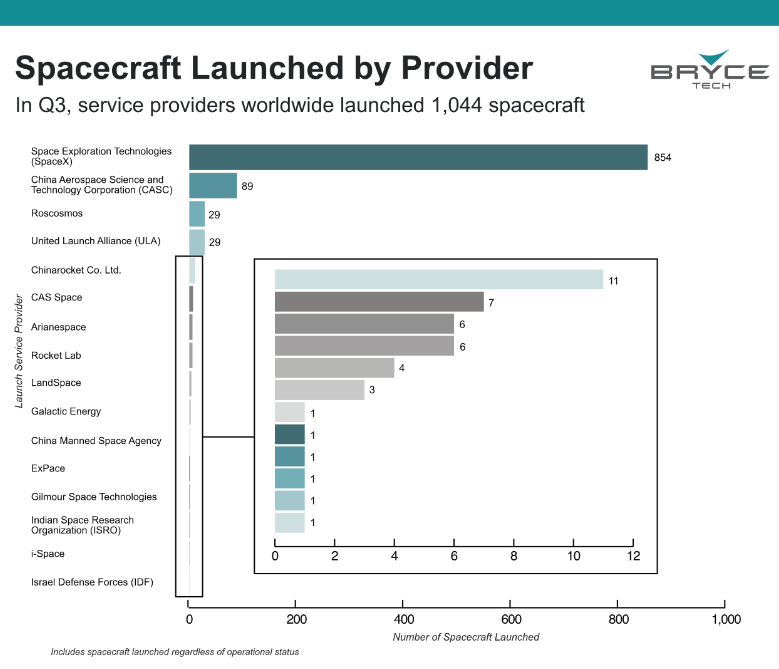
This makes Musk and xAI uniquely positioned to scale data centers quickly.
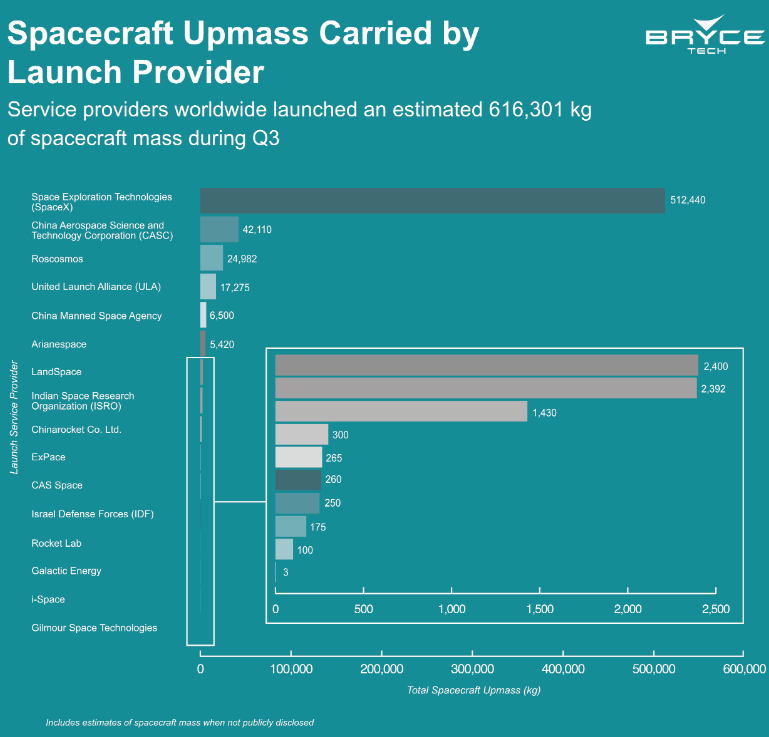
SpaceX also leads in terms of spacecraft upmass…
WSJ noted that Google and Planet Labs plan to conduct a 2027 space test using satellites equipped with Google AI chips. Early tests aim to demonstrate feasibility, while full-scale systems will require thousands of satellites to match a single large terrestrial data center.
Latest from Musk about data centers in space.
The lowest cost place for data centers is space when 300 GW of computer data center you can power and cool in space when you have continuous solar and no batteries needed. @elonmusk pic.twitter.com/J5EMJt8rRw
— Marc Benioff (@Benioff) November 19, 2025
And Bezos.
Jeff Bezos plans to build a data center in space within the next 10+ years.
Unlimited solar energy available 24/7, space is an ideal location for data centers.$AMZN AWS is set to make major moves out there. pic.twitter.com/KJCEO973eQ
— Bourbon Capital (@BourbonCap) October 3, 2025
Why stop with data centers in low Earth orbit? How about on the moon? We’re sure Starlink’s in-space mesh network can help with that… So crypto mining on the moon as well? All things space are about to kick off with SpaceX’s IPO slated for next year.
Tyler Durden
Thu, 12/11/2025 – 08:25ZeroHedge NewsRead More



 R1
R1
 T1
T1


