
The Trauma Of Inflation Hits Hard In 2025
Authored by Jeffrey Tucker via The Epoch Times,
Inflation is the most insidious tax because it is the least visible. If the taxman took 30 percent more of your income this year than six years ago, you would be in a state of fury. Inflation does the same thing but only leaves confusion and disorientation in its way, a sense that something is deeply wrong but with an explanation that is opaque and a bit abstract.
We blame high taxes on politicians. We are never entirely certain who precisely to blame for inflation. Part of the reason is that it is generated by a system with many moving parts. The core explanation is simple—paper money expansion—but the players involve central bankers, commercial bankers, bond dealers, legislatures, and the way that it plays out depends on contingent factors involving reserves and financial velocity.
We are left with a sense of rage against everything.
But this doesn’t happen immediately.
Recall that in 2021, Treasury Secretary Janet Yellen assured the country that the inflation was transitory. That sounded a bit like temporary, even if she did not say that. Many people heard that, and assumed that prices would go down in a matter of months.
That did not happen. Instead it got worse, reaching even double digits. Making matters worse, each inflation report was rendered by media as relatively good news. Inflation is “cooling,” they said, and is limited only to this sector or that, without which there would be no problem at all. This messaging continued for three years.
During that very time, there were moments in which we felt oddly prosperous because the Treasury Department was injecting newly created Fed money directly into our bank accounts. Many were staying home at that time, not really working. It seemed like magic: making money without working. It is always this way in the early parts of inflation. Life seems relatively good, at least not tremendously bad.
But then strange things started happening. Not all at once. Inflation hits random sectors and then disappears again, like a mold in the house that is there and then not. You keep wondering if it is in your imagination, not really a threat, just a one-time thing, and so on. Plus money is otherwise washing around everywhere, generating frenzied buying.
This sloshing effect of new inflations keeps going, hitting in unexpected ways. It’s plywood. Then it goes away. It’s gas. Then it’s gone. Then it’s eggs but that comes and goes. Then it hits services, which you only notice because you happen to need your car repaired. It is hidden until accidentally revealed in an unexpected health-care purchase and so on. At every stage, it is getting better in one sector and worse in another.
The point at which it becomes obvious that a massive devaluation is taking place is uncertain. Eventually, however, the reality dawns on everyone. We’ve all been robbed even though we never saw the thief or even noticed that the property was missing. Every inflation in history has worked this way, which is why governments have long resorted to money printing when taxes are too dangerous for political stability.
The inflation of 2021–2024 has its origin in the year before it showed up in prices. The pandemic response was the reason for the sudden shift from monetary tightening to monetary loosening. Such a wild printing mania has not been experienced in our lifetimes in the United States. It was also repeated in most parts of the world, causing essentially a global inflation.
No need to wonder why everyone is so upset these days about affordability and why it has become the central issue. It’s mostly because of the devaluation that took place during the pandemic. Yes, tariffs have contributed to the problem mostly by adding a pricing floor that includes compliance costs. That said, tariffs are not driving the problem even if they are not helping it.
The lingering effects are everywhere in 2025. Even as headline inflation hovers around 3 percent—higher than the Federal Reserve’s target but spun as “moderating”—the cumulative damage from those pandemic-era money floods is baked in. Prices aren’t falling back; they’re just rising more slowly. Your grocery bill is still 20–25 percent higher than in 2019, housing costs have ballooned, and everyday services feel like luxuries.
Affordability is the central grievance, not some transient blip. This has uncertain political impacts, but it certainly does not help that Donald Trump declared his Golden Age prematurely, just about the time that the trauma of the previous four years was just settling in.
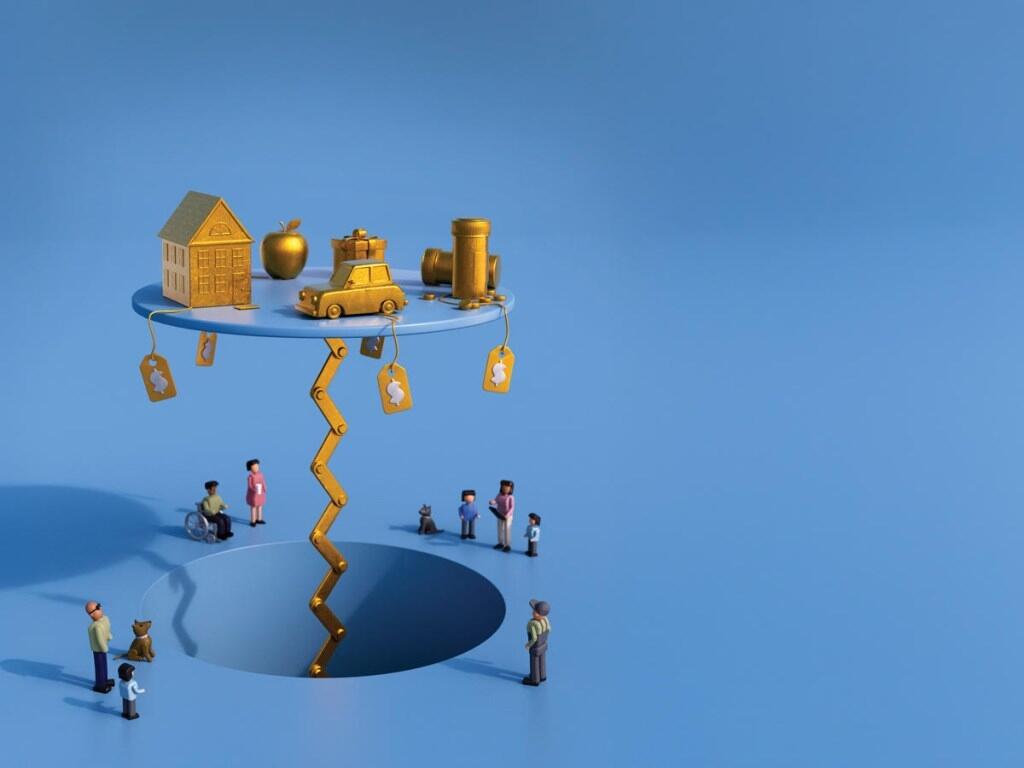
Shelter costs, the biggest chunk of most budgets, have been stubbornly high and continue to rise by 3–4 percent in many reports. The pandemic lockdowns crushed new construction, supply chains lingered in disarray, and then the money printing bid up asset prices. The result is that a median home now requires an income far beyond what most young families earn. First-time buyers are sidelined, renting forever, or moving to less desirable areas.
It’s not just numbers; it’s delayed marriages, fewer children, shattered dreams of independence.
Food tells a similar story. Eggs, meat, dairy—the basics—spiked erratically, then settled at elevated plateaus. Energy prices fluctuated with global events and policy shifts, but gasoline and utilities never returned to pre-2021 levels. Add in tariffs and you get upward pressure on goods from apparel to electronics.
Today’s officials can call this all a hoax or transitory but families live in the real world. One month it’s heating bills, the next childcare or car insurance.
Inflation doesn’t just erode wealth. It erodes trust. People sense they’re working harder for less, savings vanishing into thin air, rewards from labor diluted by invisible forces. And what is the Fed doing about the problem? The answer is not good: it is lowering rates. Let there be no mystery. This is quantitative easing by another name. It risks another full wave, which is a terrifying prospect. Congress isn’t helping by its continued spending frenzies. And now we are seeing a virtual merging of the Treasury Department and the Federal Reserve. This can only end in making the problem worse, unless we get very lucky.
The problem comes down to this. Sound money is great and even essential for the people. But it is never good for government or debt-addicted financial markets. Governments and borrowers generally love inflation for the same reason they once loved debasing coins: it funds spending without overt taxes, and pays down debt in cheaper dollars. But the bill arrives eventually for everyone else. The results are social unrest, lost productivity, and misallocated capital.
In 2025, the trauma of inflation manifests in quiet desperation: skipped doctor visits, cheaper (less healthy) food, delayed retirements. It’s not hyperinflation but a slow grind that normalizes hardship. The thief got away, leaving us poorer, more divided, less hopeful. Until we confront the root, the hits will keep coming, random and relentless, until the system itself cries uncle.
Meanwhile, for most people, the golden age feels more like the coins in our pocket: scrap metal refashioned to look like something they are not.
Views expressed in this article are opinions of the author and do not necessarily reflect the views of ZeroHedge.
Tyler Durden
Tue, 12/16/2025 – 18:25ZeroHedge NewsRead More



 R1
R1
 T1
T1


