

Maduro Open To US Talks On Drug-Trafficking
Authored by Rachel Roberts via The Epoch Times,
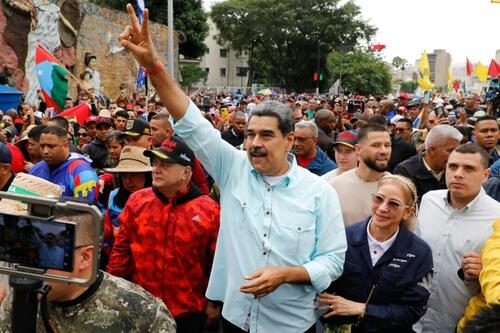
Venezuelan President Nicolás Maduro said he is open to talks with the United States to combat drug trafficking, but did not comment on last week’s U.S. strikes on a docking facility.
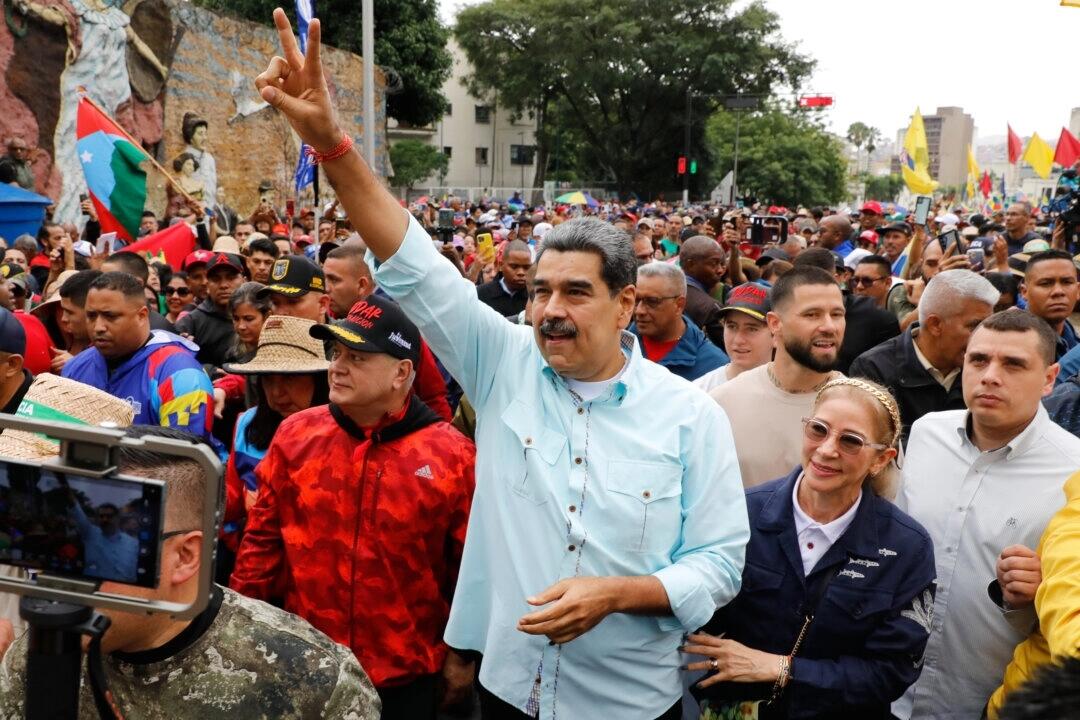
Maduro made his comments in an interview aired Thursday on Venezuelan state television, repeating his claim that the United States is trying to force a government change in the South American country and gain access to its vast oil reserves through the campaign against the cartels.
U.S. President Donald Trump’s actions to combat drug trafficking began last August with a significant military deployment to the Caribbean Sea. Boat strikes by the United States began off Venezuela’s Caribbean coast and later expanded to the eastern Pacific Ocean.
“What are they seeking? It is clear that they seek to impose themselves through threats, intimidation, and force,” Maduro said.
‘Ready’ for Oil Investment
Later in the interview, he said that it is time for both nations to “start talking seriously, with data in hand.”
“The U.S. government knows, because we’ve told many of their spokespeople, that if they want to seriously discuss an agreement to combat drug trafficking, we’re ready,” he said.
“If they want oil, Venezuela is ready for U.S. investment, like with Chevron, whenever they want it, wherever they want it, and however they want it.”
Venezuela has the world’s largest known oil reserves, and Chevron Corp. is the only major company exporting the South American country’s crude oil to the United States.
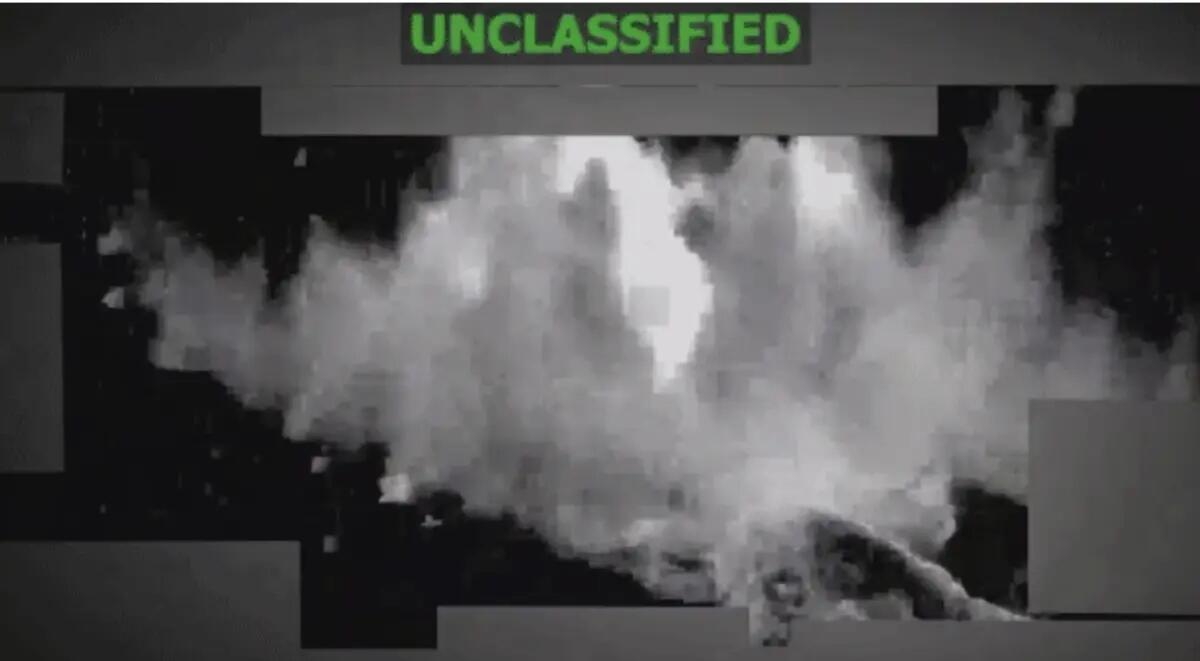
Footage of a U.S. strike on three alleged drug trafficking boats in the eastern Pacific Ocean on Dec. 29, 2025. U.S. Southern Command/Screenshot via The Epoch Times
New Year Boat Strikes
The New Year’s Eve interview was recorded on the same day the U.S. military announced strikes against five alleged drug-smuggling boats.
The latest attacks bring the number of known boat strikes to 35, while the number of people killed is at least 115, according to numbers from Washington, with Venezuelans among the dead.
The White House said in October that the attacks are a necessary escalation to stem the flow of illegal drugs into the United States, stating that the government is engaged in an “armed conflict” with drug cartels.
Trump on Dec. 29 said that the United States had knocked out a loading facility linked to Venezuelan drug boats, but didn’t provide further details, in the first known direct operation in the South American country since the boat strikes began.
The latest strike marks a significant escalation in the Trump administration’s campaign to put pressure on Maduro, who was charged with narco-terrorism in the United States in March 2020.
In the interview, Maduro said he would be able to talk about the operation on Venezuelan soil “in a few days.”
Trump made reference to the operation in an interview on Friday with John Catsimatidis on WABC radio in New York, saying the United States had knocked out some type of “big facility where ships come from.”
On Monday, as he hosted Israeli Prime Minister Benjamin Netanyahu at his Mar-a-Lago resort, Trump declined to comment when asked whether the attack was conducted by the military or the CIA, but said in an exchange with reporters that the operation targeted a “dock area where they load the boats up with drugs.”
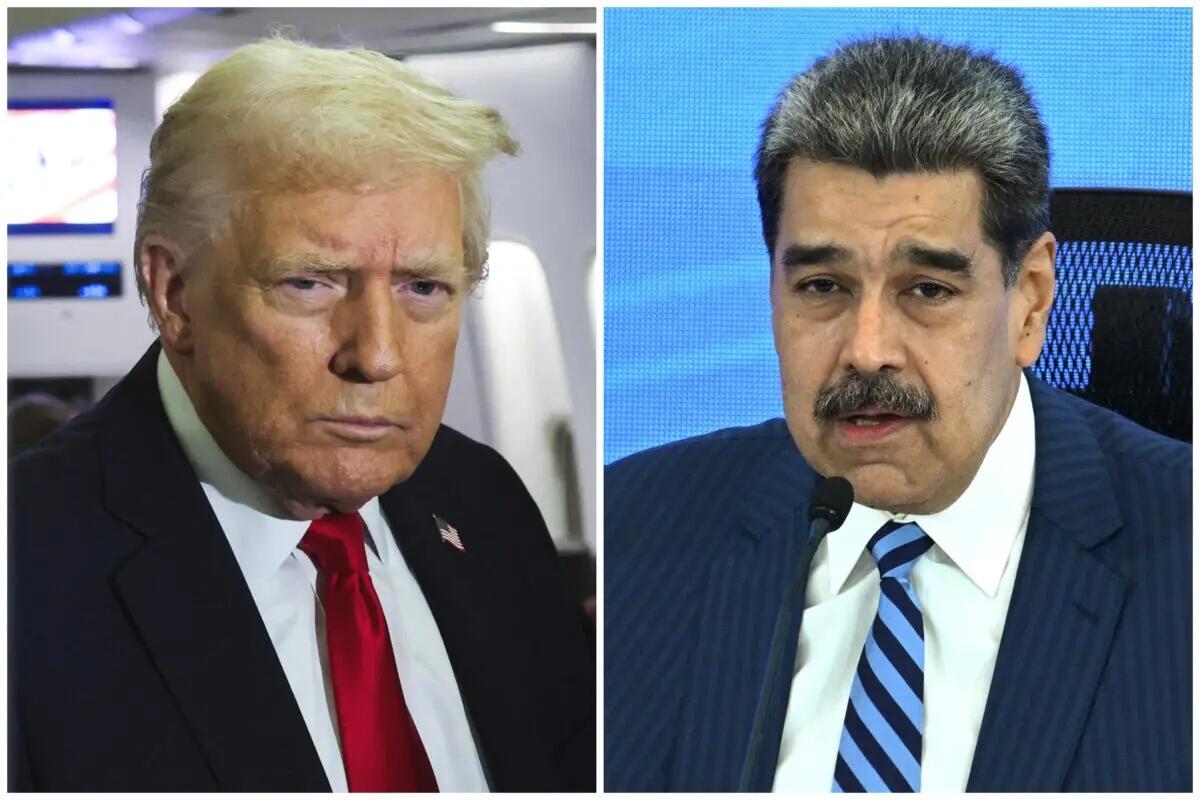
(Left) U.S. President Donald Trump looks on aboard Air Force One during travel to Palm Beach, Florida, from Joint Base Andrews, Md., on Nov. 25, 2025. (Right) Venezuelan President Nicolas Maduro speaks during the Meeting of Jurists in Defense of International Law at the Eurobuilding Hotel in Caracas on Nov. 14, 2025. Anna Rose Layden/Reuters; Federico Parra/AFP via Getty Images
Covert Operations
However, Trump has previously taken the step of publicly acknowledging that he had authorized the CIA to carry out covert action inside Venezuela.
The administration is required to report covert CIA activities to senior congressional officials, including the chair and ranking members of both the Senate and House intelligence committees. However, an action undertaken by the intelligence agency rather than the military would likely face less scrutiny from lawmakers in the United States.
In October, Trump said he authorized the operations for two reasons: criminals and drug trafficking.
“And the other thing, the drugs, we have a lot of drugs coming in from Venezuela, and a lot of the Venezuelan drugs come in through the sea,” he told reporters.
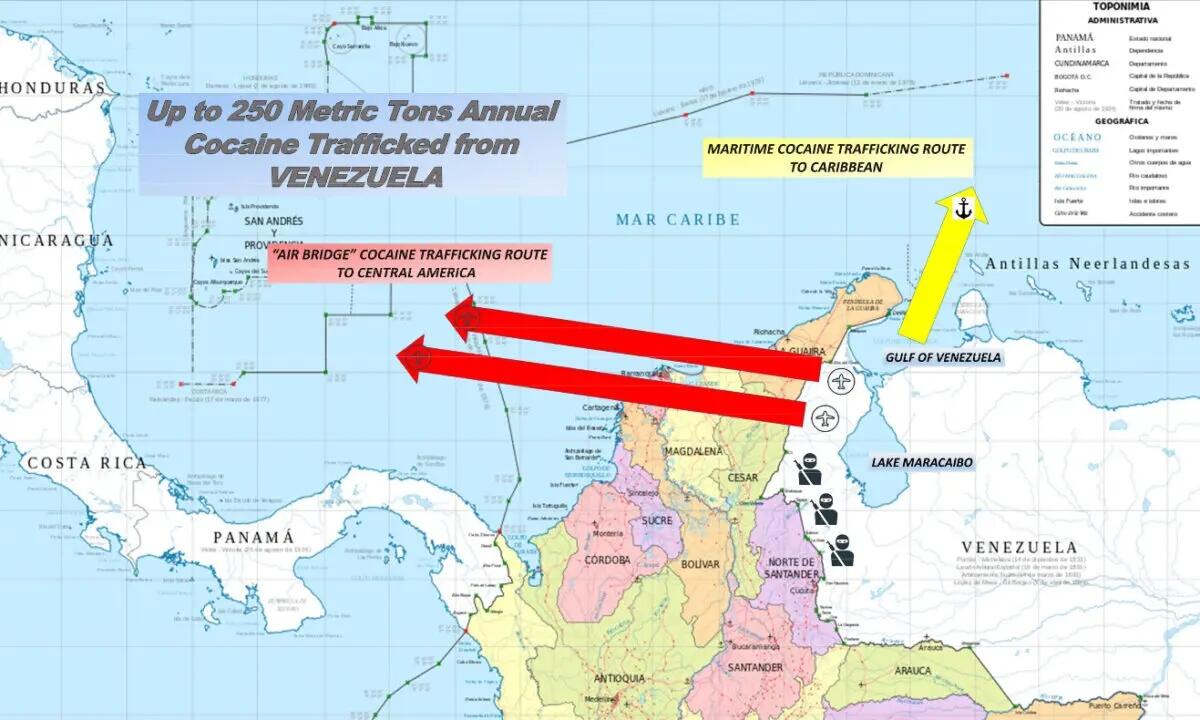
Justice Department officials alleged that Venezuelan President Nicolas Maduro and other regime officials ran a cartel aimed at flooding the United States with cocaine. The United States estimates that 250 metric tons of cocaine are trafficked from Venezuela each year. Department of Justice
Accusations Against Maduro
Trump and members of his administration have alleged that Maduro and senior officials in Venezuela lead the Cartel de los Soles, a shadowy network they say moves cocaine through Venezuelan territory in cooperation with criminal groups such as Tren de Aragua.
The gang has been accused by Trump of engaging in “irregular warfare” against the United States through drug trafficking and transnational violence.
Maduro denies any such involvement in organized crime, alleging that Washington has fabricated evidence to justify intervention and impose “regime change through military threat.”
The United States and much of the international community view Maduro’s presidency as illegitimate, citing evidence that his 2024 reelection—his third term in office—was marred by allegations of fraud and manipulation, while accusing Venezuela’s leftist authoritarian regime of human rights abuses.
Trump has repeatedly expressed readiness to deploy U.S. military power to stop drug trafficking from Latin America, including land-based strikes or the use of ground forces if deemed necessary.
In November, War Secretary Pete Hegseth unveiled Operation Southern Spear, a broad U.S. initiative aimed at dismantling what the administration terms “narco-terrorist” networks across the Western Hemisphere.
Tyler Durden
Fri, 01/02/2026 – 17:40ZeroHedge NewsRead More



 R1
R1
 T1
T1


