

NPR’s CEO Refused Internal Demands To Resign “For The Good Of Public Media” Before Loss Of Funding
The New York Times reports that the Corporation for Public Broadcasting (CPB) called on National Public Radio (NPR) CEO Katherine Maher to resign before all federal funding for both the CPB and NPR was cut off. As in the past, Maher and the NPR board chose their own agendas over the interests of their institution and public radio.
I have long been a critic of Maher since her inexplicable selection by the NPR board to lead the media organization. Despite years of objections to NPR’s overt bias, many critics genuinely wanted NPR to reverse course and adopt more balanced coverage. That is why, when NPR was searching for a new CEO, I encouraged the board to hire a moderate figure without a history of political advocacy or controversy.
Instead, the board selected Katherine Maher, a former Wikipedia CEO widely criticized for her highly partisan and controversial public statements.
She was the personification of advocacy journalism, even declaring that the First Amendment is the “number one challenge” that makes it “tricky” to censor or “modify” content as she would like.
Maher has supported “deplatforming” anyone she deems to be “fascists” and even suggested that she might support “punching Nazis.”
She also declared that “our reverence for the truth might be a distraction [in] getting things done.”
As expected, the bias at NPR only got worse. The leadership even changed a longstanding rule barring journalists from joining political protests.
One editor had had enough. Uri Berliner had watched NPR become an echo chamber for the far left with a virtual purging of all conservatives and Republicans from the newsroom. Berliner noted that NPR’s Washington headquarters has 87 registered Democrats among its editors and zero Republicans.
Maher and NPR remained dismissive of such complaints. Maher attacked the award-winning Berliner for causing an “affront to the individual journalists who work incredibly hard.” She called his criticism “profoundly disrespectful, hurtful, and demeaning.”
Berliner resigned, after noting how Maher’s “divisive views confirm the very problems at NPR” that he had been pointing out.
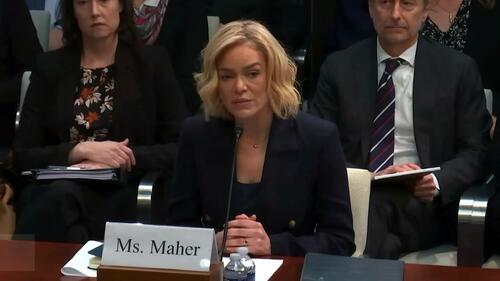
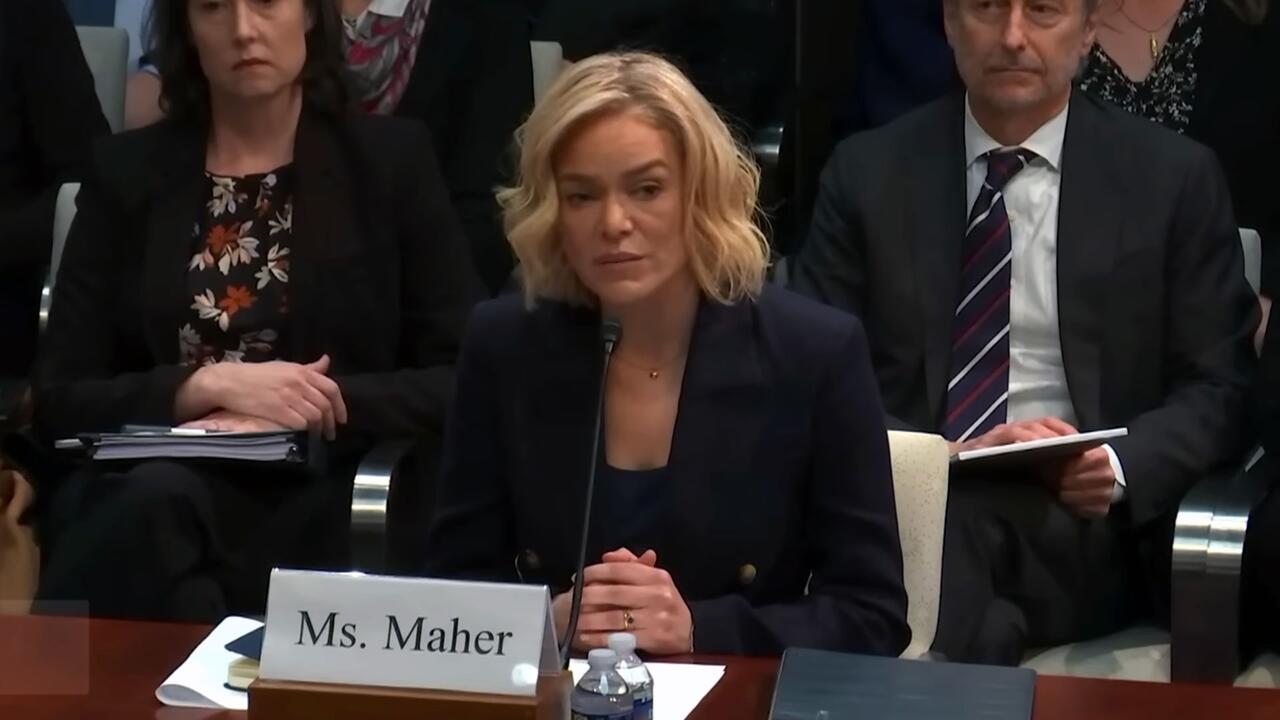
In her disastrous appearance before Congress, Maher sat next to PBS CEO Paula A. Kerger and dismissed criticism. What was not disclosed is that PBS agreed with some of us that, if Maher truly wanted to save federal funding and protect NPR, she would resign.
According to the Times, our calls for her resignation were being repeated internally. Instead, the board that made the foolish choice of hiring Maher chose their ideological and personal agendas over the interests of their institution . . . again.
In the meantime, Maher and others were going public, bewailing the threat to journalism and calling on citizens to do everything that they could to protect NPR. The only thing that they were not willing to do was admit their own failure.
We have seen the same pattern in academia.
The fact is that this academic echo chamber may be killing educational institutions, but the intolerance still works to the advantage of faculty who can control publications, speaking opportunities, and advancement with like-minded ideologues.
We have watched the same perverse incentive in the media where outlets are seeing plummeting readers and revenue. Journalism schools and editors now maintain that reporters should reject objectivity and neutrality as touchstones of journalism.
It does not matter that this advocacy journalism is killing the profession. Reporters and editors continue to saw at the limb upon which they sit due to the same advantage for academics. For reporters, converting newsrooms into echo chambers gives them more security, advancement, and opportunities.
Recently, the new Washington Post publisher and CEO William Lewis was brought into the paper to right the ship. He told the staff “let’s not sugarcoat it…We are losing large amounts of money. Your audience has halved in recent years. People are not reading your stuff. Right. I can’t sugarcoat it anymore.”
The response from reporters was to call for owner Jeff Bezos to fire Lewis and others seeking to change the culture. The Post has been eliminating positions and just implemented another round of layoffs to address the budget shortfalls.
In the meantime, trust in the media is at record lows — paralleling the polling on higher education. The result is the rise of new media as people turn to blogs and other sources for their news.
At NPR, the board and Maher have led the organization into a complete and utter meltdown, resulting in the loss of millions in funding and a shrinking audience. However, it does not matter. CPB called on Maher to resign “for the good of public media.” It was not, however, good for her or her board.
Socially and personally, these individuals are praised and promoted as ideological champions on the left. They were even willing to see the death of CPB to remain faithful to the agenda.
So, CPB died, NPR lost all funding, but Maher kept her job… and her agenda.
Tyler Durden
Fri, 01/02/2026 – 10:20ZeroHedge NewsRead More



 R1
R1
 T1
T1


