

Where People (Don’t) Reach For Alcohol-Free Alternatives
2026 has arrived, and like every year, many around the world will be using this new beginning to take New Year’s resolutions, often centered around health: exercising more, eating healthier, losing weight, or maybe drinking less.
Dry January, a month-long break from alcohol, was officially launched as a campaign in 2013 by Alcohol Change UK, a charity specialising in consultancy and training around alcohol harm.
According to Alcohol Change UK, 200,000 people officially signed up for the challenge last year, with millions estimated to have taken part globally.
While this yearly break from alcohol has grown in popularity in recent years, it seems the same may not be true of non-alcoholic alternatives to classic alcoholic beverages.
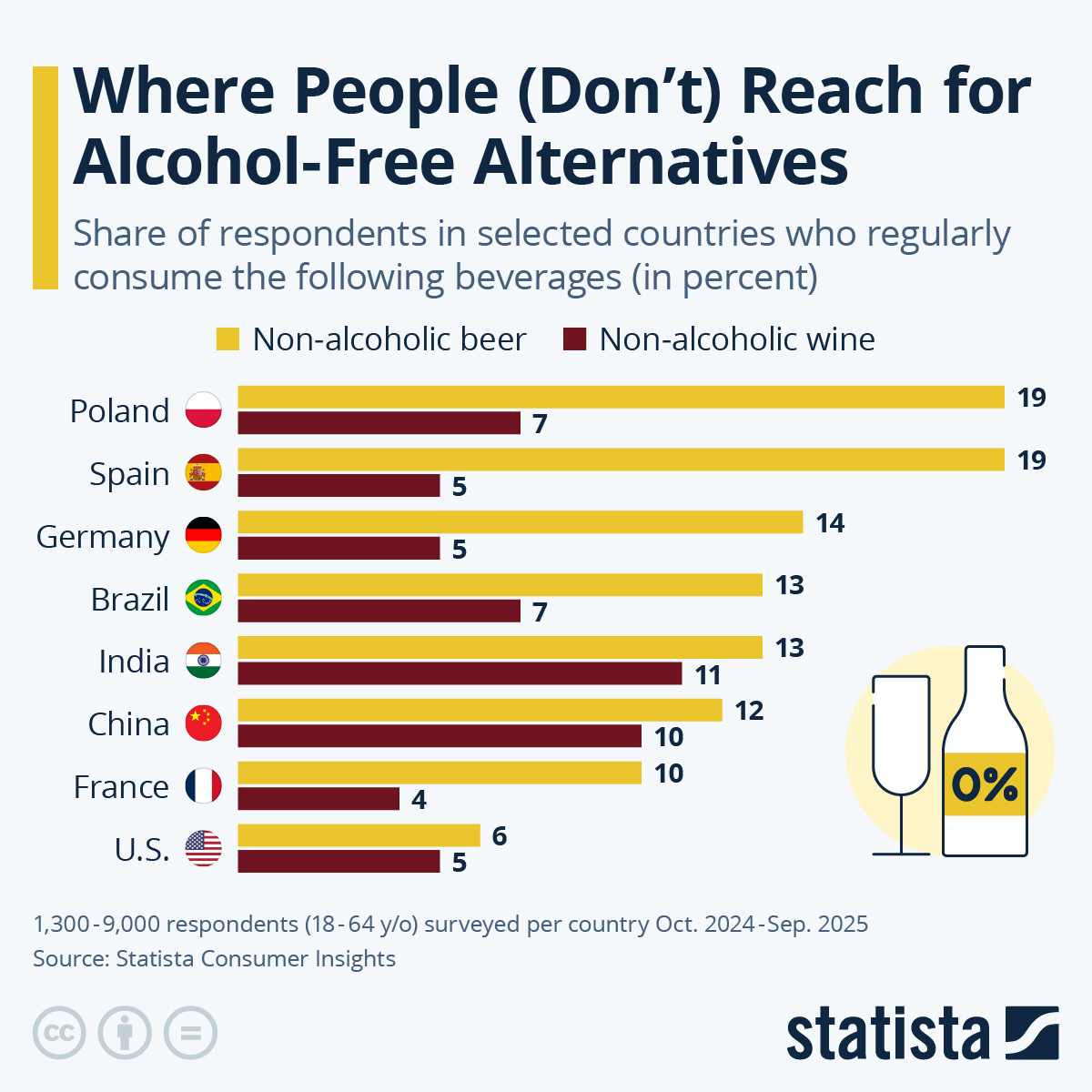
As Valentine Fourreau details below, results from a Consumer Insights survey conducted by Statista between October 2024 and September 2025 show that non-alcoholic wine isn’t favoured by many.
You will find more infographics at Statista
Of the 31 countries included in the study, only four had 10 percent or more of their respondents cite non-alcoholic wine as a beverage they frequently consume: India (11 percent), Thailand (11 percent), China (10 percent) and Vietnam (10 percent).
Non-alcoholic beer appeared to be more popular: in Poland and Spain, for instance, almost one in five people surveyed (19 percent) said they consumed the beverage regularly. They were 14 percent in Germany, and 13 percent in Brazil and India.
Tyler Durden
Thu, 01/08/2026 – 23:00ZeroHedge NewsRead More



 R1
R1
 T1
T1


