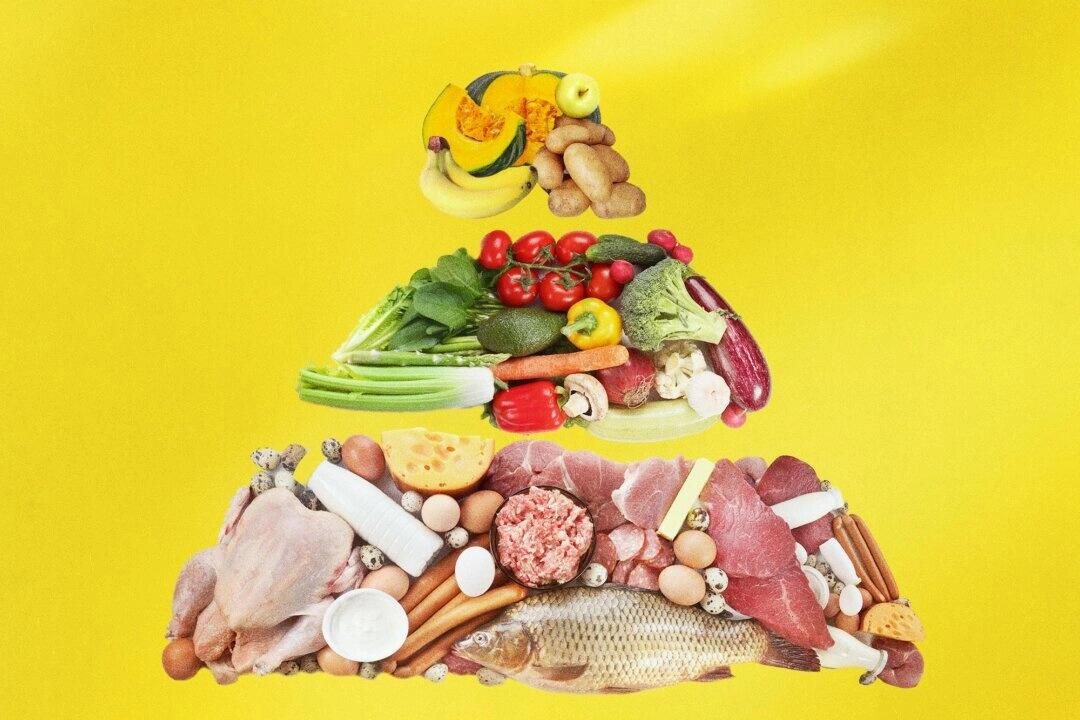
The Pyramid Was Wrong. Local Food Was Right All Along
Authored by Mollie Engelhart via The Epoch Times (emphasis ours),
I never cared about the food pyramid.
Not once. Not when it hung in classrooms, not when doctors repeated its logic, and not when federal agencies insisted that grains outranked everything else.
I grew up in a family where food wasn’t a recommendation—it was our economy and our culture. There was always a garden, always bulk bins of staples, always bread baked by hand. We preserved, canned, and stored what we could from the soil and orchard—cherries, apples, seasonal fruit—long before “farm-to-table” became a career path people marketed instead of lived.
As I got older, even when I lived in immaculate golf-course communities, I kept returning to the same truth: Food should be grown, handled, and circulated locally. My chickens earned HOA violations. My vegetable beds violated CCRs. Planting fruit trees in my front yard went against neighborhood covenants. But nourishment was always my compass—not their rules.
That compass shaped my career. I built restaurants around farmers and relationships, not federal charts. Even when I was vegan, we sourced what made sense for the place—apples from nearby growers, cherries when the trees gave them, vegetables from people we knew by name, like our friends at Anna Ayala Farms when I lived in California.
Later, when I tried to transition my restaurants toward regenerative meat, dairy, and vegetables, it didn’t succeed financially. But it was always true to me. My conviction didn’t begin with MAHA. It began with lineage, instinct, motherhood, and feeding people well, even when the market resisted it.
So yes, when the Dietary Guidelines for Americans 2025–2030 were released in January 2026, and the food pyramid was finally inverted, many of us saw it as a long-overdue win. And it is a win.
But any hunting culture could have told you long before 1992 that the original pyramid was flawed. Traditional hunting cultures always prioritized the most calorie-dense, nutrient-rich foods—fat, protein, organs, energy that lasts. Ancient wisdom didn’t fear calories—it revered them. Survival depended on them, which means we should have known. And we did know. The guidance was flawed from the beginning, had anyone bothered to cross-check it against nature or history.
But gratitude for the correction doesn’t erase the larger question: Who is accountable for the harm?
Nutrition policy doesn’t stay on posters. It becomes school lunch standards, federal food programs, and medical talking points. For decades, the federal model warned against fat, elevated grains, and left the door open for processed foods to dominate institutional feeding environments.
Critics have long argued that the original USDA pyramid—and later the MyPlate model, which didn’t restrict processed carbohydrates or added sugars—reflected strong food industry lobbying and agricultural commodity interests rather than biological science.
Nutrition historians note that the 1992 pyramid’s recommendation of 6 to 11 daily servings of grains was widely criticized, even at the time, by experts, including researchers at Harvard, for ignoring metabolic science and traditional dietary knowledge.
In the meantime, the country got sicker. Childhood obesity rose sharply after the 1990s. Type 2 diabetes began appearing in adolescents by the 2000s. Metabolic dysfunction was normalized as inevitable aging, rather than the biological debt of policy error and corporate influence.
I watched it happen from the outside, insulated by the way I grew up. But millions of kids learned what food looked like from a cafeteria built on that inverted logic. They were conditioned to crave refined starches and sugar-loaded convenience foods—meals engineered for profit, not nourishment.
And those kids are now adults, carrying inflammation, disease, and addiction to processed carbohydrates into young adulthood and middle age: diabetic charts, cardiac events, cancer diagnoses, and bodies trained to mistrust their own instincts instead of their lunches.
I know marriages that were destroyed by unscientific COVID-19 policies. I lived the collapse of my own businesses under decisions made far from communities and far from human biology. And when those policies tore families, livelihoods, and health trajectories apart, no one had to sign their name publicly or carry responsibility for the fallout.
This is where I stop applauding and start asking for receipts. Because accountability isn’t optional when the consequences span generations. When bureaucrats, agencies, and corporate interests make decisions that shape national feeding environments, who answers for the harm? Who signed the papers that allowed ketchup to count as a vegetable? Who approved school meals that trained children toward metabolic dysfunction? Who carries responsibility when public policy serves corporate profit over public health?
The inverted pyramid is exciting. I hope the ripple effect of the new model becomes equally immeasurable—a turning tide toward real nourishment, local food economies, and restored trust in instinct. But we cannot pretend that late corrections erase the need for accountability.
Because here’s the truth, stated plainly: The ripple effect of the previous food pyramid is immeasurable, and the wake of metabolic dysfunction it left will take at least 50 years to repair. And we all know this isn’t the only place where bureaucrats, three-letter agencies, and corporate interests are harming the people.
Views expressed in this article are opinions of the author and do not necessarily reflect the views of The Epoch Times or ZeroHedge.
* * * GRAB SOME SEEDS!

Tyler Durden
Mon, 01/12/2026 – 11:45ZeroHedge NewsRead More



 R1
R1
 T1
T1