

Democrats Fight To Keep Insurrection Myth Alive In New J6 Committee
The new J6 Committee has started its hearings and, unlike the prior Committee, Republicans have allowed Democrats to select members to sit in opposition. That has led to sharp exchanges, but one of the more interesting occurred between Rep. Harriet Hageman (R., Wyo.) and Jamie Raskin (D., Md.). After Hageman got a witness to admit that no one was charged with incitement, Raskin made the clearly false statement that a few defendants charged with seditious conspiracy was the same thing as incitement. It is not.
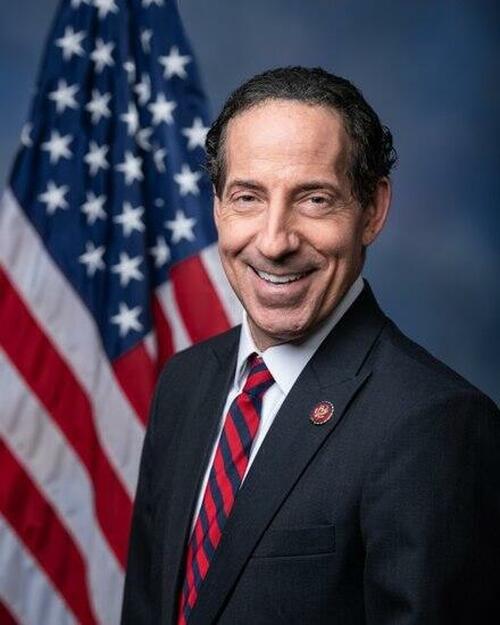
Rep. Raskin triggered the confrontation by making a clearly false claim about one of those charged by the Biden Administration: “I would just commend to everybody the testimony of Pamela Hemphill, who was a convicted insurrectionist that was pardoned. She rejected her pardon.”
In reality, Hemphill was charged (like most of the rioters) with relatively minor misdemeanors. She pleaded guilty to one count of demonstrating, picketing, or parading in a Capitol building and received just 60 days in prison, 36 months of probation, and a $500 fine for restitution. She was never charged with insurrection or any felony.
Rep. Hageman pounced on the comment and asked former Justice Department prosecutor Michael Romano whether any January 6 protester had actually been convicted under the federal insurrection statute.
Romano tried to dodge the question but admitted that no one, not Trump nor any rioter, was ever charged with insurrection. Notably, after January 6th, there was a great amount of coverage on Trump and his aides being possibly charged with insurrection or incitement. Despite some of us noting that the speech was clearly protected under the First Amendment, the press portrayed such a charge as credible and heaped coverage on District of Columbia Attorney General Karl Racine, who announced that he was considering arresting Trump, Donald Trump Jr., Rudy Giuliani, and U.S. Rep. Mo Brooks and charging them with incitement. It never happened. The reason is obvious. It could not be legally maintained.
While the FBI launched a massive national investigation, it did not find evidence of an insurrection. While a few were charged with seditious conspiracy, no one was charged with insurrection.
The Supreme Court later reduced charges further by rejecting obstruction charges in some cases.
Yet that did not stop members and the media from repeating the false mantra that this was an insurrection, despite some of us immediately rejecting it as legally unsustainable. Indeed, Democrats used the false claim to seek to disqualify Trump and dozens of Republicans from ballots.
Now back to the hearing.
Hageman asked the witness, “Mr. Romano, did you prosecute anyone related to January 6th for engaging in an insurrection?” she asked. Romano responded, “No, congresswoman.”
That is when Raskin objected and tried to interrupt the confirmation that, in fact, there never was an insurrection or any such charges.
Hageman persisted, “So, Mr. Raskin’s statement that someone was a ‘convicted insurrectionist’ is actually inaccurate, isn’t that correct?”
When Romano again tried to pivot, she pressed further, “She wasn’t a convicted insurrectionist, was she?”
“For the crime of insurrection, no,” he admitted.
Raskin shouted, “Do you accept seditious conspiracy as insurrection?”
It was a telling statement.
For the record, I have long been a critic of sedition crimes. As I discuss in my book “The Indispensable Right: Free Speech in an Age of Rage,”sedition was a noxious import from Great Britain. British judges had balked at the effort to accuse citizens of treason for things like telling bawdy jokes about the queen in some pub.
However, putting that aside, the handful of charges for seditious conspiracy are not legally the same or even close to an insurrection charge. Rep. Raskin, a former law professor, must know that.
The provision in 18 U.S.C. 2384 has long been controversial because it is so sweeping and includes any effort “by force to prevent, hinder, or delay the execution of any law.” While the provision can also entail an intent to overthrow the country, the provision covers any interference with federal proceedings or laws.
Ironically, Raskin opposes the invocation of the Insurrection Act in cities like Minneapolis on the basis of the interference with federal officials in the enforcement of federal law. However, he seems to view this provision as endlessly malleable, so that anyone accused of hindering the execution of a federal law is an insurrectionist.
After January 6th, Justice Department official Michael Sherwin publicly declared that “our office wanted to ensure that there was shock and awe” in hitting people with a maximal level of charges. Yet, despite that “shock and awe” effort, not a single charge for insurrection was ever brought — an inconvenient truth for members like Raskin.
None of this excuses the outrageous riot that occurred on that terrible day. However, seeking to conform the criminal code to the political narrative serves neither the Congress nor the public.
Tyler Durden
Fri, 01/16/2026 – 13:40ZeroHedge NewsRead More



 R1
R1
 T1
T1


