

One of the more obscure ‘jewish invention’ claims – which as it happens is also viciously anti-English – was made by the best-selling jewish historian and writer from Finland (of all places) Max Isaac Dimont in his 1984 book ‘The Amazing Adventures of the Jewish People’.
He writes that:
‘England was not only hypocritical in her stated reasons for expelling the Jews but also ungrateful. The Jews had contributed much to the evolving British common law, especially the jury system and the concept of due process of law.
When the Jews had arrived in England in the eleventh century C.E. at the invitation of William the Conqueror, they viewed the illiterate Anglo-Saxons with as much contempt as did the Norman conquerors. Accustomed as the Jews were to Talmudic concepts of judicial procedure based on evidence, they found the British custom of settling legal disputes through ordeal by fire and trial by combat especially barbaric.
The Jews informed the king they would not stay if, before they could collect a debt, they would have to first be burned to a crisp or sliced by a sword. They demanded that legal dispute be settled according to Jewish law. William, accustomed to settling debts by flogging, hanging, or mass murder, nevertheless agreed with the Jews.
Talmudic law specifies that in cases of disputes about property, the verdict of a three-man court is binding. In England, the Jews worked out a compromise system – six Jews and six Christians acceptable to both sides in the dispute. After a century, even the Anglo-Saxons conceded this was a better method than being slain in combat, and the jury system found its way into British common law.’ (1)
Aside from the violent anti-English as well as anti-gentile sentiments expressed by Dimont here; the problem with this narrative is that it is entirely made up as he cites no sources for this claim and I can believe knowing Dimont’s works that he simply injected this claim as a way for the jews to ‘take credit’ for the creation of modern legal systems that are often based on ideas stemming from British common law.
Indeed, Dimont should have known better since had he read George Macaulay Trevelyan’s best-selling 1926 ‘History of England’ he would have known his entire narrative – as well as his nasty comments about ‘illiterate Anglo-Saxons’ and all but referring to the Normans as ‘bloodthirsty idiots’ – was not only wrong but a pack of lies from start to finish.
Trevelyan writes that:
‘There was now only one King, but for generations to come there was a rich variety of customs and ‘laws’ in the land. The Common Law — that is the law common to -all England — was built up in Plantagenet times by the professional lawyers of the King’s courts; but in Anglo-Saxon times there was no such body of men and no body of case law for the whole nation. Certain written laws were sometimes issued by the King with the help of his Bishops, perhaps for the guidance of all courts. But every Shire or Hundred Court and every court of private jurisdiction might also have its own customary local laws. The Danes clung strongly to their own, and the -region of the ‘Dane law’ had its name thence.
Law, like many other good things, received a stimulus from the coming of the Danes. The very word ‘law’ is Danish, and has survived its rivals, the Anglo-Saxon word ‘doom’ and the Latin word ‘lex.’ The Scandinavians, when not on the Viking war-path, were a litigious people and loved to gather in the ‘thing’ to hear legal argument. They had no professional lawyers, but many of their farmer-warriors, like Njal the truthteller, were learned in folk custom and its intricate judicial procedure. A Danish town in England often had, as its principal officers, twelve hereditary ‘law men.’ The Danes introduced the habit of making committees among the freemen in court, which perhaps made England favourable ground for the future growth of the jury system out of a Frankish custom introduced later by the Normans. In the laws of Ethelred the Unready we read ‘that a gemot be held in every wapontake, and the twelve senior thegns go out, and the reeve with them and swear on the halidoom that is given into their hand that they will accuse no innocent man nor conceal any guilty one.’ This is Danish, and very near to a medieval jury of presentment, though not its direct original.
The conception of justice in the Anglo-Danish period shows traces of three different origins. First the old idea, common to Saxon and Scandinavian, was the ‘weregild’ or money compensation for a wrong, to be paid to the injured party or his kin to prevent feud, a conception once covering almost the whole field of justice, but on the wane as the power of the courts became stronger and the feeling of the clan weaker; slowly, throughout the late Saxon period, ‘slaying’ loses much of its character as a blood feud between families and becomes increasingly an affair between the community and the murderer.’’ Secondly, there was the new doctrine of the Church that wrong-doing had the further aspect of sin or moral wrong, to be expiated by penance. And thirdly there is the peculiarly Scandinavian view, found in Anglo-Danish laws, that certain acts such as cowardly flight or desertion of one’s chief were dishonourable — ‘nidings voerk’ — to be punished as deeds unworthy of the free warrior. From the time of Alfred onwards, we find special penalties and special reprobation attached to the crime of treason to the King or to a man’s lord ; the growth of the law of treason and petty treason is due, in part, to the increase in the power of the Crown and of the feudal lord, partly to the influence of Roman law coming in through the clergy, and partly to the strong ethical feeling of the whole Nordic race, expressed alike in Anglo-Saxon and Scandinavian literature, of horror of the man who betrays or deserts his chief.’ (2)
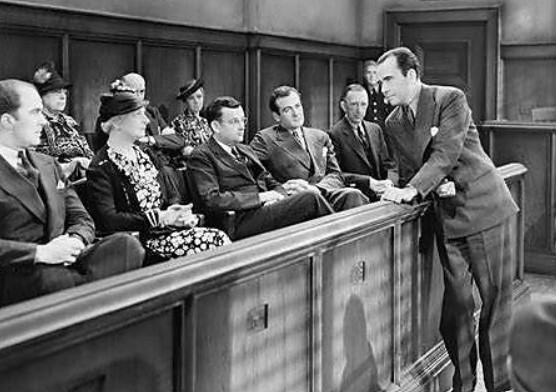
So no the ‘twelve man jury’ system has absolutely nothing to do with the jews but rather is an Anglo-Saxon and Scandinavian creation long before the jews ever turned up in England!
References
(1) Max Isaac Dimont, 1984, ‘The Amazing Adventures of the Jewish People’, 1st Edition, Behrman’s Jewish Book House: New York, pp. 109-110
(2) George Macaulay Trevelyan, 1926, ‘History of England’, 1st Edition, Longmans, Green & Co.: London, pp. 82-83
Karl’s SubstackRead More



 R1
R1
 T1
T1


