US Weighs Precision Strikes On Iranian Officials As Govt Is ‘Weakest’ Since 1979
On the one hand there are reports that the Trump administration “is open for business” when it comes to negotiations with Iran. “If they want to talk, and they know our terms, we are open to have a conversation,” a senior US official has told Axios. But on the other, amid this ‘openness’ toward cutting a deal (presumably on the nuclear and ballistic missile fronts), President Trump is said to be weighing a menu of escalation options aimed squarely at forcing regime change in the Islamic Republic, according to fresh regional and US reporting.
Middle East Eye, citing Arab officials, reports that Washington is actively considering direct strikes on senior targets in Tehran. “The US is weighing precision strikes on ‘high-value’ Iranian officials and commanders who it deems responsible for the deaths of protesters, a Gulf official familiar with the discussions told Middle East Eye.”
The Jerusalem Post reports that another option under discussion is a full blockade of Iranian oil exports – a replay of last year’s Venezuela playbook. That campaign saw Washington impose an embargo, seize oil tankers, and ultimately kidnap Venezuelan President Nicolás Maduro in the Jan.3rd military raid on Caracas.
Treasury Secretary Scott Bessent has emerged as a leading advocate of economic warfare, arguing that collapsing Iran’s economy would create conditions severe enough to trigger an internal uprising against the government, or starve the system until it breaks (as also happened in Iran’s ally Syria). US Treasury days ago began hitting Tehran officials with new protest-related sanctions.
Other senior officials are pushing for a more kinetic approach. Members of Trump’s Cabinet have urged targeted military strikes against Iranian government and military assets, but say these could be limited in scope akin to military action in the June 12-day war involving Israel.
Earlier this month, Trump reportedly held back from striking Iran, citing concerns that the Pentagon lacked sufficient forces in the region to decisively topple the government, also at a moment the US Navy strike force was built up on the southern Caribbean.
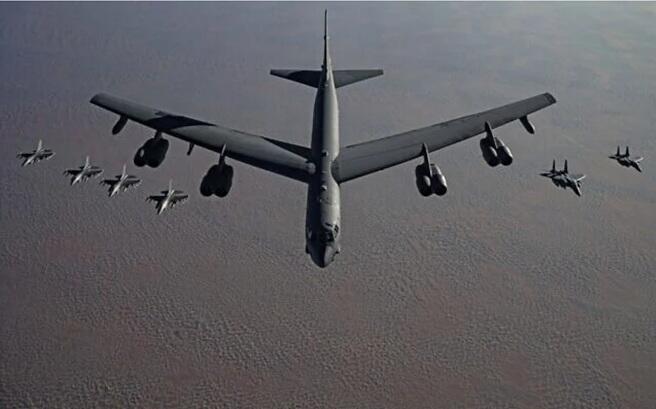
But a former US official told Middle East Eye that the odds of a strike are now higher than they were just weeks ago. Currently there’s a major military buildup ensuing across the Middle East, including the deployment of an aircraft carrier strike group (the USS Abraham Lincoln strike group), additional fighter jets, and advanced air defense systems – signaling ‘all options’ are indeed on the table.
Protests is in Iran have long gone quiet, but what has changed? The NY Times reports Tuesday:
President Trump has received multiple U.S. intelligence reports indicating that the Iranian government’s position is weakening, according to several people familiar with the information.
The reports signal that the Iranian government’s hold on power is at its weakest point since the shah was overthrown in the 1979 revolution.
But the dilemma remains as hawks in the administration urge action: “Mr. Trump warned that he could strike Iran as the government’s bloody crackdown on the protests expanded. Still, his advisers have been divided on the benefits of strikes, particularly if they were simply symbolic strikes against elements of the government involved in the crackdown,” The NY Times report adds.
Washington logic: Give them an ultimatum that they’ll never accept anyway and consequently you have the perfect reason to start bombing them…
The Americans are basically asking the Iranians to abandon their entire defense strategy. It’s completely untenable for the regime. https://t.co/oGRDn1dDLh
— Woofers (@NotWoofers) January 26, 2026
One anti-Iran think tank hawk, Jason Brodsky, who is Policy Director at United Against Nuclear Iran (UANI), writes that “Iran’s regime wants a JCPOA-like deal. It is highly unlikely Khamenei will agree to the terms America is demanding because it would basically amount to a form of regime change. But the Islamic Republic will try and lead the U.S. on to think it will negotiate meaningfully to avoid an attack and entrap the U.S. in endless negotiations.”
But we should note that Tehran also has little reason to ever trust Washington, given the original JCPOA was collapsed when the first Trump administration unilaterally pulled out of it.
Tyler Durden
Tue, 01/27/2026 – 11:25ZeroHedge NewsRead More


 R1
R1
 T1
T1