

Trump Pushes To End Senate ‘Blue Slips’ As GOP Confirms Judges At Record Pace
In just the past week, the Senate confirmed half a dozen of Trump’s judicial nominees, continuing a streak that’s left Democrats visibly frustrated.
Since the start of Trump’s second term, 33 judges have sailed through confirmation — already eclipsing his entire first-term total. By comparison, during Trump’s first year in office, the Senate confirmed 19 Article III judges, including Supreme Court Justice Neil Gorsuch.
While Senate Republicans are moving fast and confirming judges at a blistering pace, there are mounting calls to scrap one of the Senate’s oldest customs — the “blue slip.”
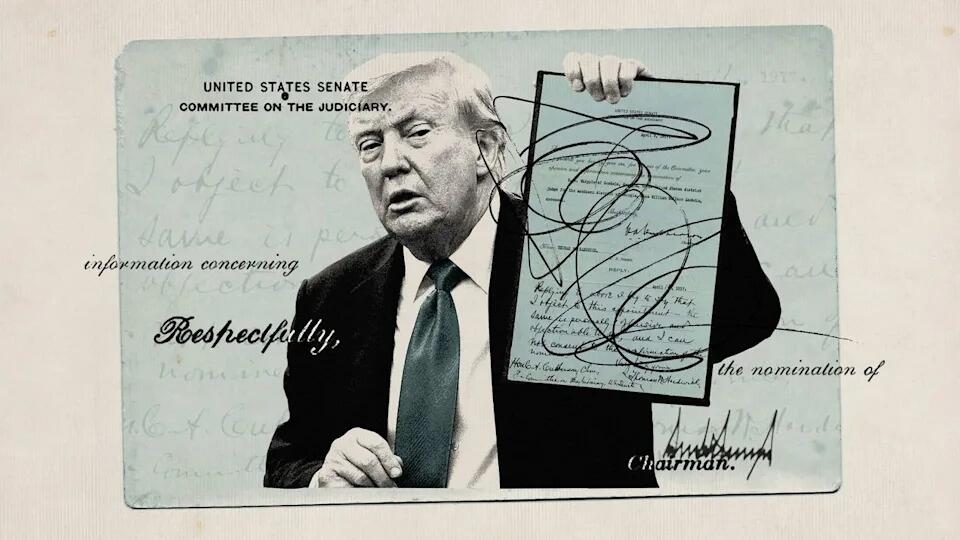
The century-old practice has long allowed home-state senators to weigh in on judicial nominations before they advance, but Democrats have been abusing it, turning it into a de facto veto on nominees they don’t like.
Trump has wanted the tradition gone because of the way Democrats have abused it.
Last year, he reportedly told Senate Republicans to “get rid of blue slips, because, as a Republican President, I am unable to put anybody in office having to do with U.S. attorneys or having to do with judges.”
Some Republicans sympathize with Trump’s view, seeing the blue slip as an outdated relic that slows confirmations.
But others see danger in dismantling another institutional guardrail.
“Nuking the blue slip would be a huge mistake,” Sen. Thom Tillis (R-N.C.) told Fox News Digital, joining several colleagues warning that a short-term rules victory could backfire the next time Democrats control the Senate.
For them, the issue isn’t about speed — it’s about reciprocity.
They argue the GOP will one day need the same courtesy they’re now being pressured to destroy.
While that is certainly true, like the filibuster, it is likely to be nuked by Democrats the next time they’re in power if they feel this guardrail hampers their ability to get what they want. In fact, that’s exactly why the blue slip started to get abused in the first place. In 2017, Senate Judiciary Chair Chuck Grassley was forced to reshape the practice after Democrats used it as a veto on Trump’s judicial nominees during his first term.
Grassley noted at the time that the blue slip began as a “courtesy to get insights on federal court nominees from home-state senators in an era when such information was hard to come by.” It was never, he argued, meant to give senators “veto power over the president’s judicial nominations.” Grassley also reminded Democrats that their predicament was self-inflicted. “Democratic senators’ recent calls for an ahistorical interpretation of the blue slip courtesy stem from a decision they made in 2013 to end the 60-vote filibuster for lower court nominees. This move, often referred to as the ‘nuclear option,’ effectively silenced half of the Senate during confirmation votes.
At the time, many Democratic senators argued it was unfair for a minority of senators to block nominees with majority support.” he wrote.
“Now that they are in the minority, Democrats are scrambling to cope with the fallout from their decision.”
That history lesson seems lost on much of Washington. For now, the tension within the GOP shows no signs of easing, and despite his earlier move, Grassley remains a proponent of blue slips in theory.
“Because it’s a question of 110 years, and everybody in the Senate wants to maintain the blue slip,” Grassley said.
That is likely wishful thinking. During the Biden years, Senate Democrats ignored the spirit of the tradition whenever it suited them, confirming 42 judges in the first year of Biden’s presidency — a pace even faster than Trump’s current term.
Trump’s allies argue that the President’s judicial agenda is too critical to be slowed by Senate traditions that Democrats themselves long abandoned.
Others, however, believe that retaliating by erasing every trace of procedural courtesy risks making future confirmations impossible when Democrats are back in power.
Tyler Durden
Wed, 02/11/2026 – 18:50ZeroHedge NewsRead More


 R1
R1
 T1
T1


