

The AI Transition: Even Dinosaurs Weren’t Stupid Enough To Create Their Own Extinction Event
By Peter Tchir of Academy Securities
A Bridge Too Far? The AI TRANSITioN?
Last weekend we discussed Molotov Cocktails, Volatility, Stability, & Faux Liquidity. In a nutshell, it was about:
- The transition from one steady state to another steady state can be volatile.
- A rules-based world, dependent on trade, to a ProSec-based world where each country operates more independently.
- The transition from a pre-AI world to an AI world.
- Faux liquidity – or our assessment that market structure is set up to produce bigger moves than the headlines or news warrant.
We got to discuss many of these things on Bloomberg TV on Friday, where Academy was part of the first half hour. While the focus was on AI, I kept arguing that geopolitics and this transition from one stable system to another stable system was also likely playing a major role in this week’s price action. Of all the things I regret saying, or not saying, I flubbed the final question on Walmart’s multiple. It isn’t something I focus on, and my answer was weak. I wish I’d highlighted that Walmart is the sort of company that should do well – big enough to navigate the changing global trade system and well positioned enough to extract the maximum benefit from AI-related efficiencies.
In any case, we certainly have a lot to follow up on based on this past week’s volatility and rapidly evolving narrative.
A Bridge Too Far?
One heck of a movie, and one of the few that comes to mind where the “good guys” lose. They put up an epic struggle, but don’t achieve their goal.
As you know I am Canadian, so you can choose to take this with a grain of salt, but I believe that this week’s “Truth Social” post about the new bridge, almost completed, fits the “bridge too far” narrative.
- There was a lot of concern about imposing tariffs on countries that had been deemed to be blocking the U.S. “taking” Greenland. Not just from foreign countries, but there also seemed to be some degree of backlash and concern domestically. Not “just” from economists (which were front and center during Liberation Day). Nothing broke, and nothing really changed, but it seemed to set the stage for what happened this week.
- On Sunday night (or early Monday morning) the President posted some complaints about the new bridge being built. The Gordie Howe Bridge. He is legendary both in Canada and Detroit. As we’ve become used to there was a mix of fact and fiction, and some weirdness (like China going to take away the Stanley Cup – which no Canadian team has won since 1993).
- He went down the path of ownership. But it quickly came out that Michigan will have ownership, once the bridge costs are paid for (which were heavily skewed towards being paid by Canada). The argument of “ownership” also looked “flimsy” as people discovered that the Ambassador Bridge (the current connecting bridge) is privately owned by an American company (or family). I’ve used that bridge a lot, and it leaves a lot to be desired. One thing that I think of a lot is how great the new Tappan Zee Bridge is (technically the Mario Cuomo Bridge). It is a beautiful bridge and it has changed traffic patterns for the better. I don’t even know how old the bridge is now, but I still feel a sense of awe (and even pride) when driving across that bridge. I’m not sure the Gordie Howe Bridge is anywhere near as impressive as the new Tappan Zee Bridge, but it certainly has to be an improvement (and additive).
- I’ve left out a myriad of other allegations around this to focus on the pertinent point. Michigan, with the approval (and support) of U.S. Presidents (including President Trump) has engaged in a project that they viewed would help their economy. Out of the blue, that is being challenged?
Now maybe it is pure coincidence, but this week, the House of Representatives voted to stop the tariffs between the U.S. and Canada. There is no way this won’t get stopped with a veto (assuming it gets passed the Senate), but this is the first time during this administration that we saw Republicans go against the President even as they were warned about reprisals such as “being primaried.”
We’ve had some questions about the American Brand. Tourism to the U.S. from abroad is down (not horrific, but down). We have yet to notice a discernible change in consumer tastes abroad, but many of these “bridges too far” have occurred only recently.
While I’m not sure much will come of it, France announced on January 26th that civil servants would have to use Visio by 2027, instead of Zoom.
While we have “goods” trade deficits with many (even most countries), we have “services” surpluses.
We’ve always argued that the total trade balance is most important (goods and services).
- While I don’t see it tracked anywhere, “profitability” of trade is even more relevant and what little evidence there is points to the fact that from most countries, the U.S. imports low margin products and exports higher margin products (or services as the case may be).
- That is NOT inconsistent with ProSec which prioritizes domestic (or trade with close allies) for “things” that are vital for national security in a wholistic way (rather than purely military).
We’ve also argued that tariffs put pressure on the system slowly. It is the cumulative effect of tariffs that matter (especially when the rates themselves seemed subject to change at any moment). As we move into the 10th month of higher tariff revenue (around $30 billion per month) the cumulative effect seems to be appearing (lots of reports this week citing amounts eaten by exporters, versus paid by importers, or passed on to customers).
Now maybe it is pure coincidence, but this week, stories circulated about reducing tariffs on steel and aluminum. There were some denials but this makes sense – as it will take the U.S. time to crank up production and it is “confusing” how to apply this, as both steel and aluminum are a part of so many products.
Markets like some degree of certainty. Even if the certainty is somewhat variable. The market has grown to accept the volatility and the “maximalist negotiating leverage” game.
But have we crossed a bridge, where that game no longer functions like it has for the previous 6 months or so?
U.S. stocks underperformed most other indices last week, especially when converted to dollars.
I think we have seen enough Molotov Cocktails lobbed domestically and internationally (from all sorts of directions and parties) that this volatility extends and resolves itself in lower valuations, especially domestically, as the U.S. has outperformed by so much for so long.
The AI TRANSITioN?
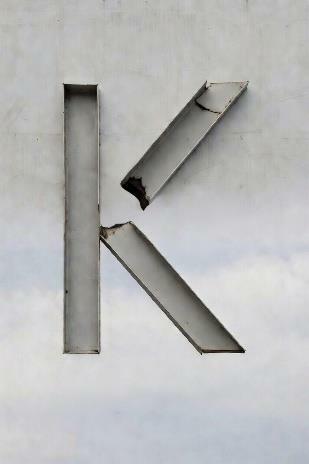 I was trying to find a font that had more of a computer/sci-fi “vibe”. I wanted to use one of The Far Side’s dinosaur cartoons where a couple of dinosaurs are laughing at a mammal while one looks mildly concerned about some snowflakes that are falling (but we probably needed some actual copyright permission to do that – though I urge you to search The Far Side for dinosaurs).
I guess I was thinking about that because Even the Dinosaurs Weren’t Stupid Enough to Create Their Own Extinction Event. They were not smart, and they did become extinct, but they didn’t do it to themselves.
So, we will use this little picture to symbolize what may have happened last week (and I’m pretty sure we don’t need any copyright permission from Grok).
We have been talking about the little I (or i-shaped) economy. Arguing that maybe it is a k-shaped economy rather than a K-shaped economy. We’ve also been talking about the “working poor” in recent pieces (The Fed, Electricity, & Affordability).
You could almost convince me that it is an h-shaped economy, but that might be too negative.
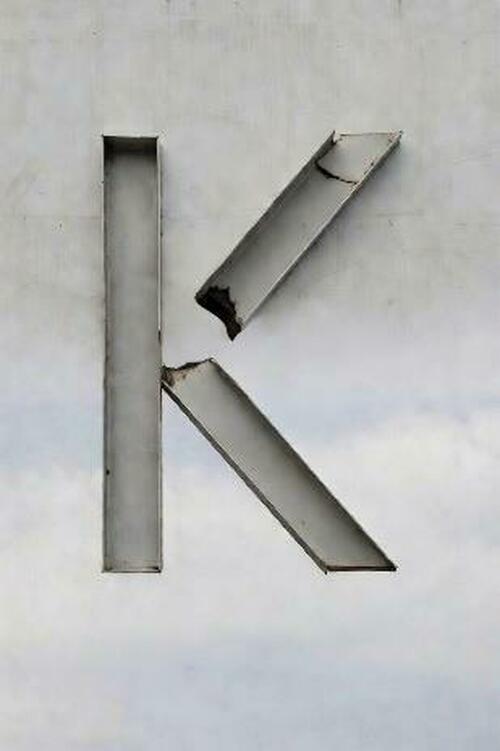
But for now, I think the K in the K-shaped economy just cracked. Let’s look at this “cracking” of the K in two ways.
The first from “margin compression” and even “margin differential” compression:
- High margin, low physical asset businesses are likely to face margin pressures. I don’t think we are close to the day where AI can create products that remotely compete with the biggest and best software programs – but they could face margin pressures as they head off any potential competition at the pass. The selling may already be overdone, but we could see some margin compression continuing in sectors that don’t have as big of a “moat” as previously thought. Installed base is still a very powerful “moat” and the market may have forgotten that, but margin pressure is likely to be a story that becomes a recurring theme to pressure markets.
- Low margin business, especially those with large “physical” undertakings (property, plant, and equipment, shipping, logistics, etc.) may benefit and see margin expansion. These are the sorts of business that can see margins expand as they get benefits from efficiencies delivered by AI (I should have done a better job on this on Friday’s TV appearance).
- So, the high margin sectors that the market owns heavily could see margins shrink, while the low margin businesses that many investors are underweight in could see margins expand. Both the margin expansion and compression come from the same force – rapidly improving AI. This rotation could have some staying power. Call this the margin differential compression trade. It will adjust what are the appropriate multiples for different companies and different industries.
Weirdly, that might be the more benign way to think about this.
- White collar job losses.
- The FT published an article where Mustafa Suleyman, the CEO of Microsoft AI, predicted (according to a Grok summary) that most tasks in white-collar professions – such as those performed by lawyers, accountants, project managers, and others working at computers – will be fully automated by AI within the next 12 to 18 months. There seem to be a lot of takes on his words that are even worse than what he said, though what he said doesn’t seem great. Presumably, at least some people on the upward sloping part of the K have white-collar jobs?
- I did manage to write a T-Report this weekend, rather than giving up, but…
- If you haven’t seen, or I’m the first person to suggest checking out Something Big Is Happening, I recommend it. It is another, I think I can say, “dire” warning about potential job losses.
- The FT published an article where Mustafa Suleyman, the CEO of Microsoft AI, predicted (according to a Grok summary) that most tasks in white-collar professions – such as those performed by lawyers, accountants, project managers, and others working at computers – will be fully automated by AI within the next 12 to 18 months. There seem to be a lot of takes on his words that are even worse than what he said, though what he said doesn’t seem great. Presumably, at least some people on the upward sloping part of the K have white-collar jobs?
We’ve been living in a “no hire, no fire” economy. Anyone who had been proclaiming massive job losses from AI was viewed as a tin foil hat wearing “doomer.”
Most people were explaining that AI would:
- Enhance what people could do, so those who harnessed it would benefit greatly.
- The counterpoint to this, recently, has become that since AI is getting so easy to use, don’t even bother, because by the next generation, we won’t need to have a clue on how to use AI, to use it.
- Create some job losses but create many more jobs. Ironically AI prompter is one of them, but see the above comment.
- Basically, the argument has been that AI, like many other technological advances, would be a big net benefit to humankind (and not a self-made extinction event).
That narrative, like the K, seems to have cracked in the past few weeks.
- Will that change how people spend their money? This narrative has appeared rather “suddenly” and has an “alarmist” ring to it. Maybe, like the initial concerns about DeepSeek, it will fall by the wayside.
- The risk is that, even before job losses occur, people will change their spending behavior out of fear of those job losses.
I’m not in this camp, but the concern that “Someone’s Efficiency is at the cost of Your Job” was almost palpable this week.
Probably overdone, but if the upward sloping leg of the K has been driving the economy and spending, we might want to be very careful (in our investing and spending).
Yet another reason to be cautious on risk as we make it through this “transition.”
The Fed
I remain convinced that:
- We will have 75 bps of cuts by the end of the September meeting. That there is a far higher chance of one more Powell cut (March or April) than the market is pricing in. The market moved in our direction this week, but plenty of room still to price in what we are positioning for.
- 10-year yields will be sub 4%. 10s closed at 4.05% on Friday.
This has nothing to do with the rest of today’s report, but I didn’t want anyone to think we’ve stopped pounding the table on these trades. Though in some ways it has a lot to do with everything in today’s report if we’re right about the volatility and its disruptive nature.
Two Last Things
- The Supreme Court is likely to rule, at least partially, against the U.S. government on the IEEPA tariffs.
- Countries that have set up trade deals are unlikely to be impacted as the trade deals themselves should overrule the IEEPA tariffs (to the extent there were any). Though there isn’t a lot of evidence that agreements in principle have turned into formal documents.
- The admin has many other ways to attack tariffs other than under IEEPA, especially for tariffs in the 15% and lower range.
- It is likely the admin, on any losses, will make it very difficult to collect money paid on tariffs that were deemed illegal. Do you really want to sue the government or do you just view it as a sunk cost?
- I don’t think the ruling will have much of an impact, though I’m rethinking that, as the reaction might be different if we really did go “a bridge too far” this week.
- Expect nuclear arms proliferation.
- Ukraine gave up what nukes it had and it was invaded by Russia (which does have nukes and has muted any military response to their actions).
- Iran has been attacked before, and the U.S. is positioning forces capable of launching another major attack.
- North Korea, with a backwards economy, and few friends, is largely left alone (while executing cybercrimes to fund themselves). Would the world tolerate such blatant cyber activity if they didn’t have nukes?
- France has discussed the possibility of working with other nations about sharing (in some form) either technology or weapons.
- Nuclear energy will be important to the world for ProSec, and I’d be shocked if nuclear weapons didn’t play an important role in smaller nations figuring out how to ensure their sovereignty. So probably bad for humankind and extinction events, but good for uranium and others in the nuclear fuel business.
Bottom Line
More of the same. We could get some bounces.
- Some markets are at or near being oversold.
- We could get pleasant surprises with Iran or Russia.
- There are likely to be new “pronouncements” from the administration in their efforts to run hot heading into the midterms – and I continue to believe people are not pricing in the Fed as aggressively as they should. I also remain a huge fan of the ProSec™ trade. Not in the least because many of the industries that fit the trade criteria are in the camp of stocks that have been underinvested in and are positioned to do well.
I wasn’t even depressed when I started writing this report. Sorry if this report did nothing to brighten your day, but this is the dark spot my thoughts led me to.
Though I do remain skeptical of the ability for AI to change things so quickly that we are hurt before we can reap the benefits.
There, at least we ended on a positive note, and for those on holiday on Monday, do enjoy! It is difficult to believe it is only the middle of February.
Tyler Durden
Sun, 02/15/2026 – 15:10ZeroHedge NewsRead More



 R1
R1
 T1
T1


