

The Crowdsourcing Of Cutting Waste & Fraud
Authored by Jeffrey Tucker via The Epoch Times,
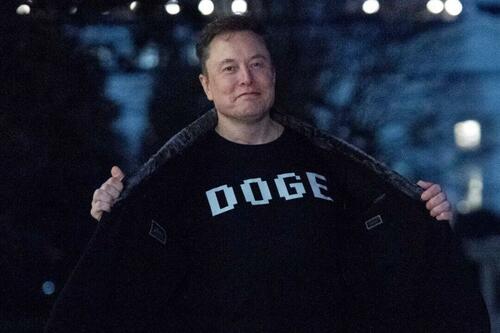
The Trump administration came into office with a pledge to uproot waste, fraud, and abuse within the government’s system of transfer payments. Leading the charge would be Elon Musk and his Department of Government Efficiency (DOGE).
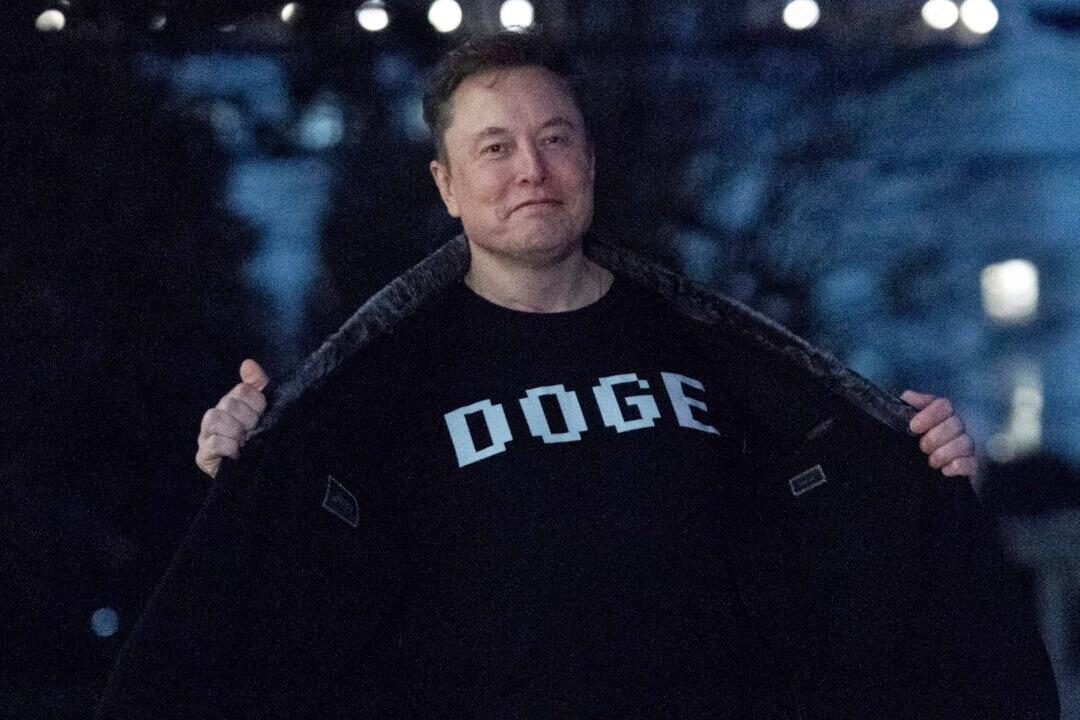
They began their work early on with earnest and passion, starting inauguration evening, with many long days and nights of data crunching and number slinging, under the assumption that auditing government would be similar to auditing a private company.
DOGE quickly found itself buried and overwhelmed. There were too many programs, too much leakage, no coordination between departments, strange sources of incoming and outgoing payments, shadowy institutions and names flying everywhere, and eye-popping levels of inefficiency. It became obvious that many decades had gone by without any scrupulous concern for how taxpayer dollars were used.
After months on the job, DOGE backed away from the big picture job and embedded itself in specific agencies with more focus and less in the way of press releases. Elon went back to his enterprises which had been suffering with his absence and distractions. Meanwhile, his small cadre of data mavens stayed on and got to work, agency by agency.
This much became clear: the job was too much for them. They had to prioritize their work. It was decided that the most important priority would be to sync up the many random databases strewn here and there and everywhere into large packages that were manageable and could be checked, with lines of spending matching sources and purposes. Nothing like this existed before.
Once that was done, it became clear that the datasets were too large for a team of workers. They needed to open source all the data and enlist help from the public. In essence, the problems were just too big to isolate problem spending from legitimate spending. The decision was made to bundle it all up and do waves of file dumps on the public.
After all, we live in the age of the citizen researcher, people with fast Internet connections, large machines, high degrees of skill, and a passion to discover. For too long, the affairs of government have lived in a cloud of secrecy, probably for one hundred years or more. The excuse has always been discretion: It wasn’t the public’s business how the money was spent. But this is ridiculous; we are talking about taxpayer dollars. The citizens do in fact have the right to know. The goal of bringing all this out into the open would represent a fundamental change in the operation of public policy.
The most elaborate installation yet was just posted on the website of the Department of Health and Human Services, with a focus on Medicaid. This is a program designed to provide needed services to the poor. Annual spending exceeds $1 trillion a year, having entered into new upward slopes of spending in the COVID era where government unleashed the printing presses and spent money as if it were in infinite supply. This one program now accounts for 18 percent of U.S. health care expenditures.
Exactly where is all this going?
We now have a tool that helps show what is happening.
HHS has provided a full .ZIP file that anyone can download and examine. Nothing like this has ever happened in the history of the U.S. government or probably any government. It has also given us sample visualizations to help citizens understand the fullness of what is going on.
This effort has also involved Scott Bessent at the Department of Treasury. He has announced that anyone who can find fraud and submit the evidence to the website will be given 10 to 30 percent of the fines imposed on the receiving individual or organization. This means giving rewards to intrepid researchers who can find and prove fraud in the program. The efforts will take months or years, simply because there is so much of it.
Elon Musk and others have given low estimates of 5 to 10 percent of fraudulent Medicaid spending over the last 10 years, while others say the number is closer to 20 and 30 percent. Figures like $1 trillion are being thrown around as possible numbers on how much has been lost. They could be much higher. As we discovered in the Minnesota case, the fraud can be brazen and undisguised or it can be surreptitious and shape-shifting in order to avoid detection.
There are many features of this effort that are fascinating. To my knowledge, this is the first time that a strategy like this has been deployed to clear up the welfare state. It’s probably the largest data dump by government in history. The strategy of enlisting citizen researchers is also new and very brilliant, recalling bounty hunters of the Old West. People are talented and care deeply. Why not use that energy to clean up public spending?
The single most striking feature of this data release is that it was covered nowhere in the mainstream press. You might have thought otherwise—that the nation’s press would be all over this—but not so. I kept looking for the headline but they were nowhere to be seen apart from The Epoch Times, Townhall, and a few other venues. There is no question that mainstream media is quite anxious to bury the news. If not for Elon’s X social media app, and The Epoch Times, hardly anyone would even know about this!
What’s most fascinating about this is what it reveals about the politics and culture of major media operations. You might think that even left-liberals would be on board with rooting out corruption and abuse within government programs, if only to shore up public confidence in their operations. But, again, as we saw in Minnesota, the dedication from elite circles to silencing all public knowledge of how their money is actually being used seems to be an essential part of their messaging priorities. As a result, one of the most spectacular moves in history to clean up the operations of government has gotten almost no attention outside alternative venues.
In the bigger picture, the challenge that the Trump administration took on is larger and grander than anyone knew. The second term hit following the largest explosion of government spending ever recorded, with some $6 trillion -$8 trillion added in the name of public health in a few short years. Overall, total cumulative spending added across the years 2020 to 2025 totals roughly $33 trillion –$34 trillion.
I’m profoundly aware that no human mind can even conceive of numbers on that scale. They are simply incomprehensible. Remember too that government has no resources of its own; whatever it has to spend is taken from the public in one form or another: taxes, inflation, or debt paid by future generations. In essence, what we have seen over these years has set new records for profligacy.
I noted that after the first few months of DOGE’s work in 2025, a kind of demoralization set in. The problem they had sworn to tackle was just too big for even a great team of researchers. DOGE and the Trump administration deserve maximum credit for their persistence and coming up with a plausible strategy for achieving the goal. It’s a start, in any case, and sets a mighty precedent for the future.
Tyler Durden
Tue, 02/17/2026 – 16:20ZeroHedge NewsRead More



 R1
R1
 T1
T1


