

Yen Tumbles After Japan’s PM Voices Concerns About Further Rate Hikes To BOJ
The yen was already sliding on Monday after Nikkei Asia reported that the sharp swing we saw in USDJPY in January was initiated by FX intervention from US Treasury Secretary Bessent not Tokyo, even if Washington, D.C. is open to coordinated forex moves if requested by Japan. FX traders took this as evidence that, contrary to previous conventional wisdom, Japanese authorities were prepared to allow the USDJPY to continue climbing on Jan. 23 and it was only US action which prevented a print at 160, or higher. At the time, investors were leaning toward the upcoming Japanese election as a reason for intransigence, but this report made it seem more like benign neglect of the currency.
Then yen then dropped some more after China added 20 Japanese firms – including affiliates of Mitsubishi Heavy Industries – to an export control blacklist, escalating the dispute between the two nations.
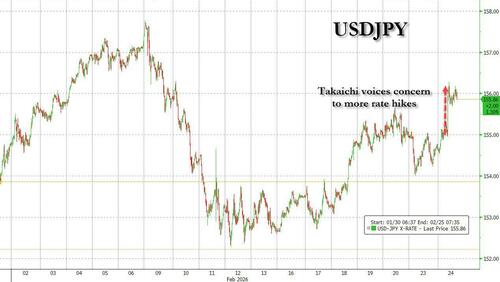
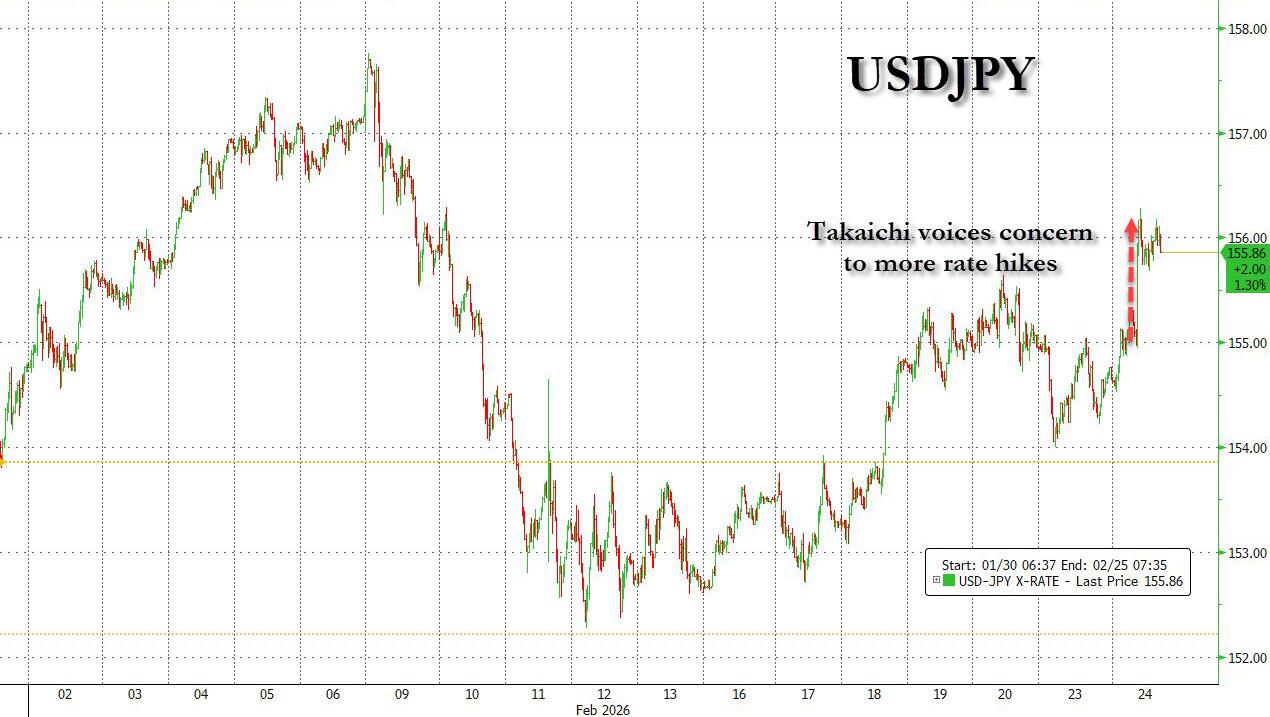
But it was the third drop that was the biggest, and sent the USDJPY above 156, after Japan’s Mainichi daily reported that Japanese Prime Minister Sanae Takaichi expressed reservations about additional interest rate hikes during her meeting with Bank of Japan Governor Kazuo Ueda last week.
The report, if true, signals growing friction over monetary policy that could complicate the BOJ’s timetable as coordination with the newly strengthened administration becomes more delicate, and as the new PM does what every other politicians has been so willing to do in recent years: support the stock market at all costs, surging inflation be damned. Oh, and by not hiking rates, Japan can pretend that its Japanese bond market game of musical chairs can extend a little bit longer.
Ueda had (mis)characterized the meeting last Monday as a general exchange of views on economic and financial developments, and had said the prime minister had not made any specific monetary policy requests.
Takaichi herself has been coy about the particulars of their meeting, saying only that she hoped the central bank would work closely with the government to durably achieve its 2% inflation target accompanied by wage gains.
The meeting was held amid raging speculation that the rising cost of living, driven in part by the weak yen – but mostly by the surging price in rice which the BOJ has no control over – could prompt the central bank to raise interest rates as soon as March or April. In December, the BOJ raised rates to a 30-year high of 0.75% and signaled further hikes were possible.
A Reuters poll this month showed that a majority of economists expect the BOJ to raise its key rate to 1% by the end of June, with some anticipating a move as soon as April because of mounting concerns about inflationary pressures and a weak yen. Odds of a rate hike have certainly tumbled after last night’s report.
Following the Mainichi report, the yen tumbled, and the USDJPY surged by 100 pips, rising to 156, the highest price it has been in 2 weeks.
Tyler Durden
Tue, 02/24/2026 – 11:00ZeroHedge NewsRead More



 R1
R1
 T1
T1


