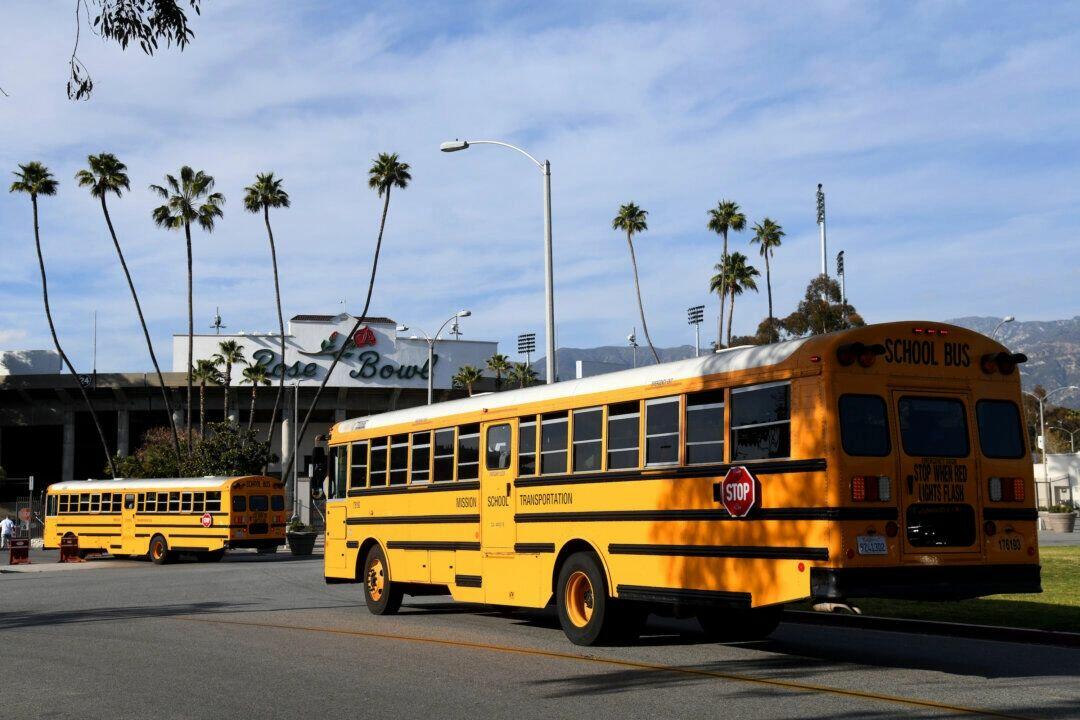
EPA To Reform $5 Billion ‘Clean School Bus’ Program
Authored by Naveen Athrappully via The Epoch Times (emphasis ours),
The Environmental Protection Agency (EPA) is revamping the Biden administration’s Clean School Bus (CSB) program, which focused on installing electric buses at U.S. schools, the agency said in a statement released on Feb. 19. The overhauled program will focus on providing school districts with “increased choice and affordable options” for school buses.
In 2021, the Infrastructure Investment and Jobs Act directed the EPA to create the CSB program and provide $5 billion over fiscal years 2022–2026 to replace existing school buses with zero-emission school buses. The Biden administration distributed about $2.7 billion in these funds, 90 percent of which was to fund electric school buses. The rest went toward propane-fueled vehicles.
“There are multiple well-documented examples of one particular bus manufacturer failing to deliver buses altogether despite preemptively receiving tens of millions of tax dollars from the CSB program,” the EPA said.
“To fix these issues, the Trump EPA will seek public input on the availability, cost, and performance of alternative school bus fuels and technologies. This feedback will help reform the program to bring consumer choice back to schools and deliver results for American families, while still fulfilling congressional intent.”
The EPA cited the case of Lion Electric, a Canadian electric vehicle company that was granted $159 million to build 435 battery-powered buses between October 2022 and May 2024.
However, Lion Electric filed for bankruptcy in December 2024. In August 2025, EPA Administrator Lee Zeldin said the company still hadn’t delivered school buses to 55 districts, worth approximately $95 million.
The Epoch Times reached out to Lion Electric for comment but did not receive a response by publication time.
In its latest statement, the EPA said it had issued a request for information that seeks feedback from school officials, fleet operators, energy producers, and manufacturers on a wide range of fuel options that can be used by school buses, including biofuel, hydrogen, liquefied natural gas, and compressed natural gas.
In 2023, almost 450,000 school buses were operating in the United States, the Department of Energy said, citing data from the World Resources Institute. As of July 2025, more than 5,100 electric school buses were serving roughly 265,000 students, the Electric School Bus Initiative said in a post published in July 2025.
Biden’s CSB Program
In a February 2023 EPA report submitted to Congress, the Biden administration highlighted the environmental requirement for the CSB program.
Most school buses emit nitrogen oxides and particulate matter in diesel exhaust, which contribute to poor air quality and negatively affect people’s health, especially children, who have a faster breathing rate than adults and whose lungs are not yet fully formed, the report said.
The agency’s CSB program funds the replacement of existing school buses with zero-emission and clean school buses, which will “ensure cleaner air for students, bus drivers, school staff working near bus loading areas, and the communities through which the buses drive each day,” according to the report.
Last year, a group of 17 Democrats in the U.S. Senate, along with Sen. Bernie Sanders (I-Vt.), sent a letter to Zeldin regarding the EPA’s decision to freeze CSB program funds, according to a Feb. 28, 2025, statement from the office of Sen. Ron Wyden (D-Ore.).
The lawmakers said that CSB funding would support the electric bus manufacturing boom in the United States and create good-paying jobs.
They said that CSB provided health and cost-saving benefits, and they urged the EPA to distribute funding for CSB program recipients with signed agreements, according to the statement.
In its latest statement, the EPA accused the previous administration of intentionally limiting the availability of these fuel options so it could push for electric buses.
“By providing more options to school districts, EPA will ensure they can purchase the right types of school buses for their specific needs,” the agency said.
The data collected from the request for information will be used to revamp the CSB program for the 2026 grant funding round that prioritizes child safety and reliable buses, according to the EPA. The agency said that updating the program is expected to bring auto jobs back into the United States and unleash domestic energy production.
“The Clean School Bus program has been a disaster of poor management and wasteful spending of taxpayer dollars,” Zeldin said.
“At the Trump EPA, we have zero tolerance for reckless spending. Today, EPA takes the next step to set the program straight.
“Americans can rest assured that moving forward, the program will be safe, effective, and use reliable forms of American energy.”
According to the EPA, revamping the CSB program strengthens oversight and compliance actions in a way that aligns with President Donald Trump’s executive orders.
On Jan. 20, 2025, Trump signed the “Unleashing American Energy” executive order, which sought the removal of incentives for electric vehicles and promoted market choice for consumers.
In November 2024, the EPA’s Office of Inspector General released a report saying the agency didn’t have adequate oversight to record CSB program rebates for fiscal years 2023 and 2024.
“We found that the EPA failed to implement internal controls to make sure funding was properly allocated for the 2022 Clean School Bus Rebates Program,“ the report said. ”The Agency recorded the full amount paid to the Clean School Bus rebate recipients as an expense, instead of an advance, prior to the recipient expending the funds.”
Tyler Durden
Thu, 02/26/2026 – 13:00ZeroHedge NewsRead More



 R1
R1
 T1
T1