

First Oil Tanker Hit In Strait Of Hormuz
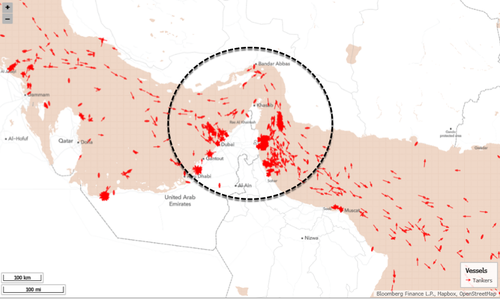
Oil and gas tanker traffic through the Strait of Hormuz, a critical maritime chokepoint, has seen disruptions as the U.S.-Israeli campaign, Operation Epic Fury, continues targeting Islamic Revolutionary Guard Corps command-and-control infrastructure across multiple Iranian cities; as of Sunday morning, only a limited number of tankers were observed exiting the Strait, while separate news reports indicate a sanctioned oil tanker was also attacked.
On Sunday morning, Automatic Identification System (AIS) vessel-tracking data showed that tanker traffic through the most critical energy chokepoint in the world, which handles about 20% of global petroleum liquids consumption and roughly 27% of global seaborne oil trade, had slowed to a near standstill, with tankers in holding patterns on both sides of the Strait’s entrance and exit.
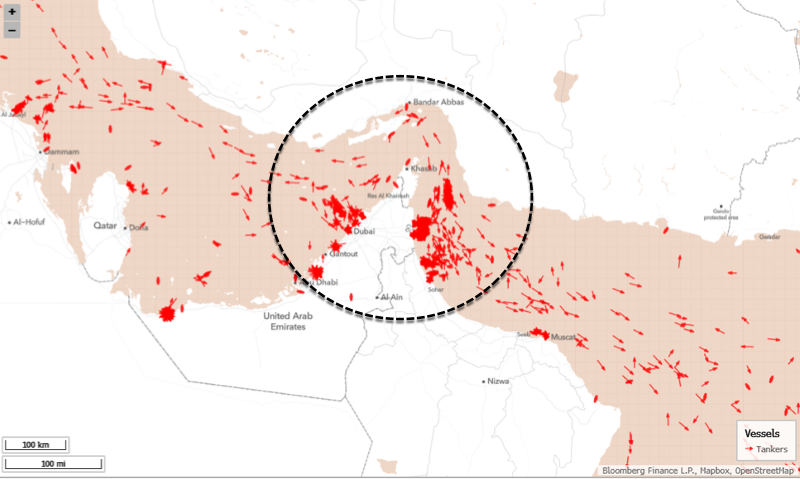
S&P Global Energy notes:
-
Strait of Hormuz handles 20% of global oil supply
-
Iran exported 1.3 mil b/d in Jan, mainly to China
FACTBOX: Oil markets braced as Iran confirms death of Supreme Leader Khamenei https://t.co/jAdG2emkVR
🔹Iran exported 1.3 mil b/d in Jan, mainly to China
🔹Strait of Hormuz handles 20% of global oil supply pic.twitter.com/T9m55W3Nq7— Oil by S&P Global Energy (@SPGEnergyOil) March 1, 2026
The big development in the Strait this morning was the attack on a tanker.
All the evidence suggests that Iran attacked one of its own (very small) dark fleet oil tankers (which was under US Treasury sactions). It feels like a false flag operation. The tanker near Oman had been in the same area for ~10 days; she wasn’t crossing the Strait of Hormuz. https://t.co/nLaiivp879
— Javier Blas (@JavierBlas) March 1, 2026
Oman’s Maritime Security Centre revealed that the sanctioned tanker Skylight, flying the flag of the Republic of Palau, was targeted five nautical miles north of Khasab Port.
⚡️Clearer vid pic.twitter.com/kLtv0xV6DE
— War Monitor (@WarMonitors) March 1, 2026
There are no confirmed reports identifying who struck the Skylight, but the incident came as Iran’s semi-official Tasnim news agency said on Saturday that the Strait of Hormuz was effectively closed to vessel traffic.
Mohsen Rezaei, a member of the Expediency Discernment Council that advises Iran’s supreme leader, warned on state TV that “no American ship is allowed to enter the Persian Gulf.”
German container liner Hapag-Lloyd AG has suspended all transits through the waterway due to its “official closure,” while France’s CMA CGM SA, the world’s third-largest container line, told ships within its fleet to suspend passage through the Suez Canal and take shelter immediately.
The Financial Times reported that shipowners had canceled insurance policies and raised premiums for vessels transiting through the Gulf region.
We spoke with Rapidan Energy Group analyst Fernando Ferreira on Saturday about the situation unfolding in the Middle East, with a focus on the Strait.
Ferreira explained:
Iran understands that threatening traffic through Hormuz is its most credible asymmetric lever. Even limited interference can raise oil prices and impose immediate economic costs on the US and its partners, increasing pressure on Washington to de-escalate.
We expect at least moderate disruptions to Gulf oil flows in the coming days, with the risk tilted toward something more severe if tensions escalate further.
In energy markets, Goldman analyst Adam Crook told clients shortly after the operation began that:
Oil remains the most direct and liquid expression as a geopolitical hedge – while a full closure of the Strait of Hormuz remains a tail scenario, even a disruption of flows through the Strait via other means (targeting of ships, insurance issues) poses an upside scenario closer to $100/bbl. Additionally, whilst not our base case, an attack on Iranian Oil infrastructure puts 2mb/d of Iran Crude exports at risk.
A synthetic weekend market via IG has crude oil prices up as much as 9% early Sunday morning.
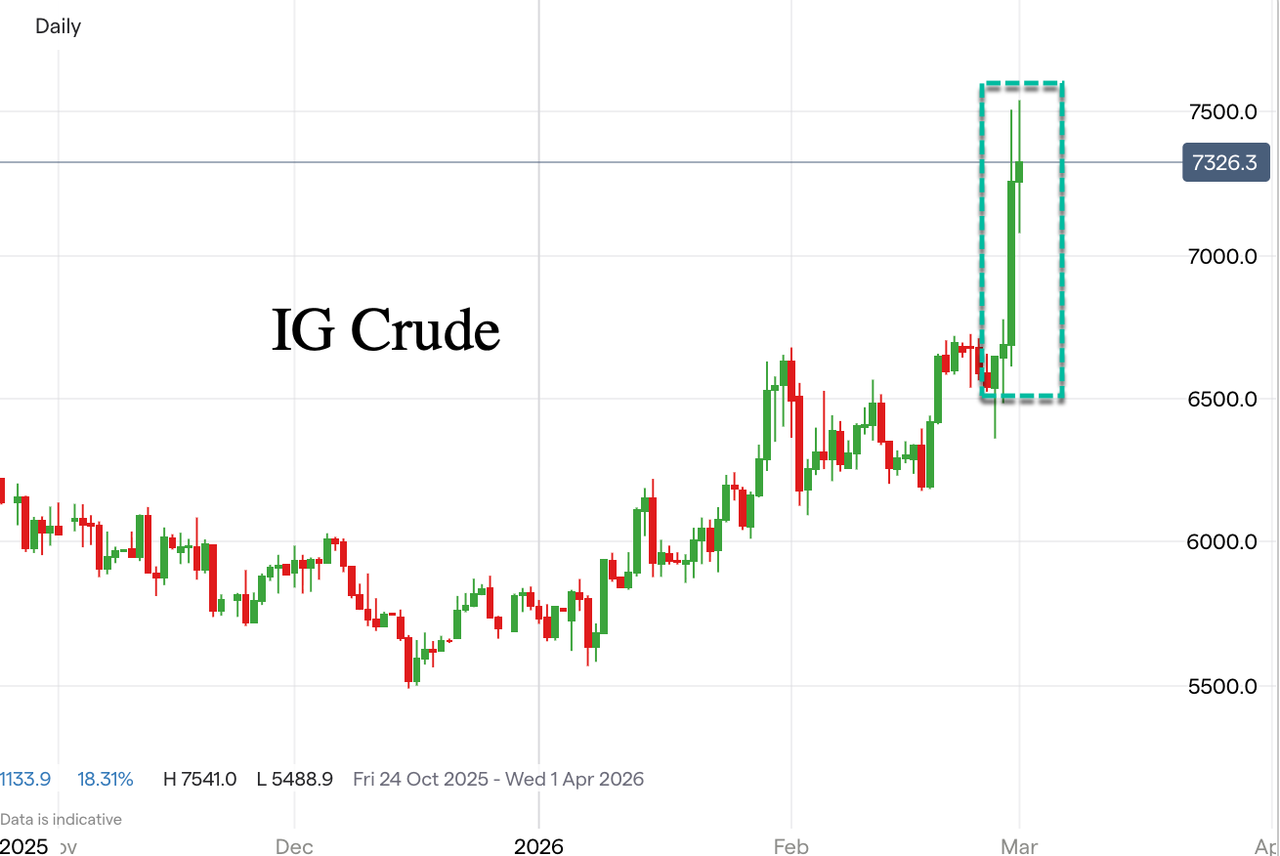
With flows through the Strait of Hormuz disrupted, the immediate impact will be higher Brent crude futures when markets open in New York this evening. The biggest pressure point, however, will be on China, which is the top buyer of Iranian seaborne crude and one of the most exposed major end markets for Hormuz-linked flows, meaning any prolonged disruption would further tighten Beijing’s supplies.
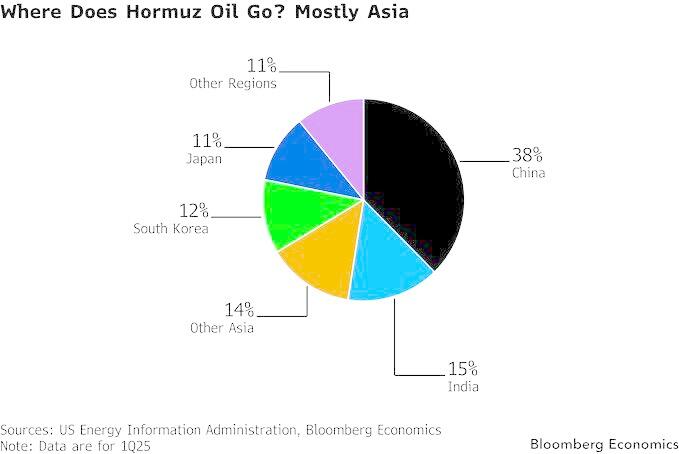
This follows a squeeze on Beijing’s access to cheap Venezuelan crude after President Trump moved last month to crimp those flows. All of this is unfolding ahead of President Trump’s meeting in Beijing in about a month.
Tyler Durden
Sun, 03/01/2026 – 08:28ZeroHedge NewsRead More



 R1
R1
 T1
T1


