

“This Will Bring Down Global Economy”: Qatar’s Energy Minister Offers Dire Warning About Hormuz Chokepoint Chaos
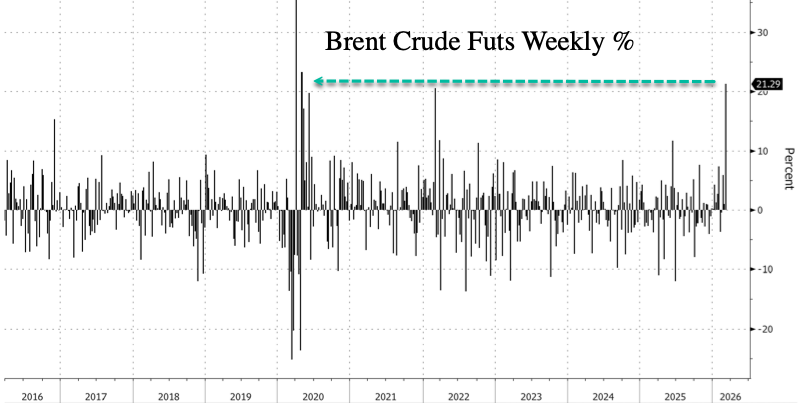
Brent crude futures are on track for their biggest weekly gain since the early days of Covid, with the move now exceeding the 20% weekly spike at the start of the Russia-Ukraine war, as the U.S.-Israeli air campaign against Iran, Operation Epic Fury, has tipped the Gulf into an energy crisis, freezing commercial traffic through the Strait of Hormuz and pushing some regional oil and gas production offline.
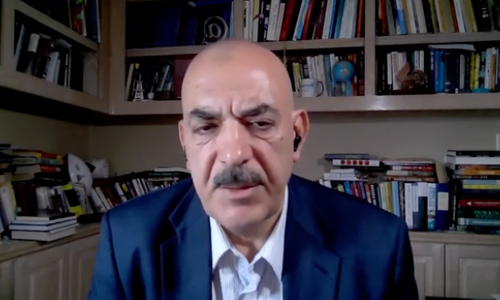
On Friday, Qatar’s energy minister, Saad al-Kaabi, told the Financial Times that the Gulf conflict could trigger a global economic shock, warning that continued fighting would force all Gulf energy exporters to halt output and could send Brent crude prices north of $150 a barrel.
Strait of Hormuz the last 24 hours.
Unreal.
Source: @MarineTraffic pic.twitter.com/krcT5qp4ik
— HFI Research (@HFI_Research) March 5, 2026
“Everybody who has not called for force majeure we expect will do so in the next few days if this continues. All exporters in the Gulf region will have to call force majeure,” Kaabi explained. “If they don’t, they are at some point going to pay the liability for that legally, and that’s their choice.”
Qatar is the world’s second-largest producer of LNG and was forced to declare force majeure earlier this week after IRGC drone strikes on its Ras Laffan plant.
“This will bring down the economies of the world,” he warned. “If this war continues for a few weeks, GDP growth around the world will be impacted. Everybody’s energy price is going to go higher. There will be shortages of some products and there will be a chain reaction of factories that cannot supply.”
Kaabi continued, “We don’t yet know the extent of the damage, as it is currently still being assessed. It is not yet clear how long repairs will take.”
On Tuesday, we provided readers with the number of days of disruption needed in the Gulf area (the Strait of Hormuz chokepoint) to trigger actual panic, that is 25. Read the full report here.
And for Zerohedge Premium and Pro subs. JPMorgan crunched the math on Hormuz and revealed just how many days until chaos (report here).
The math behind the forced shut ins https://t.co/SJ88Pky7D3
— zerohedge (@zerohedge) March 6, 2026
Then, on Thursday, energy economist Anas Alhajji spoke with top UBS analysts on a webinar that also provided a timeline for energy market chaos and the risks of an impending economic shock.
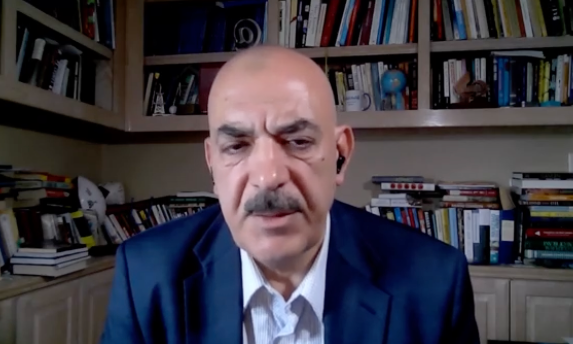
“Our main scenario is that if this lasts four weeks, things will be completely out of control. And when I say out of control, I mean that even if China starts releasing oil from its inventories, the problem is that my guess is China would also restrict exports, which means that oil would remain in China. We were counting on that oil being in the market, and now it is not going to be in the market,” Alhajji said.
Alhajji outlined critical questions:
-
Is the war about Iran’s nuclear program, or is something much larger at play, with Iran serving more as a trigger or for broader strategic objectives?
-
The distinction matters significantly because the medium- and long-term outcomes would look very different.
-
Should attention be focused narrowly on Iran’s nuclear program and regime change, or should the situation be analyzed within the much wider context of China, trade wars & tariffs, AI competition, Panama Canal, Red Sea, Venezuela, Syria, & Greenland?
-
Are we observing “conflicts” within a larger “CONFLICT,” where some groups are opportunistically exploiting the situation to pursue their own “local” objectives?
As well as the problem:
-
The problem now is attacks that spark panic buying while Saudi Arabia cannot react. Thus, U.S. SPR release is limited, and China might ban exports. Prices would go above $100 easily, but fear would contain demand growth, limiting the increase in oil prices. The impact on LNG and NGLs is higher than on oil.
-
We cannot go back quickly to normal. It will take at least 2 months if the war stops tomorrow. (logistics and technical issues)
-
Lack of international cooperation (Every country for itself)
In energy markets, Brent crude futures are up 21%, exceeding the 20% spike at the start of the Ukraine-Russia war, and are on track for their largest weekly gain since the first week of May 2020.
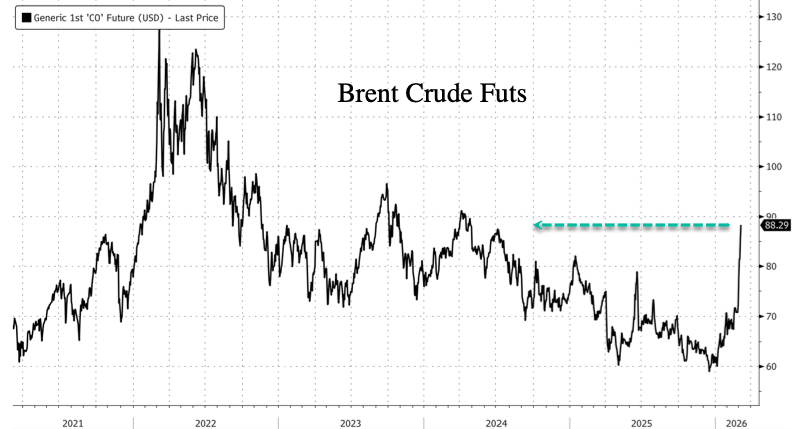
Back to 2024 highs.
There are no signs, at the moment, that the conflict is nearing an end. In fact, there are reports that IRGC forces just hit a US-owned oil tanker near Kuwait.
Goldman analysts earlier this week warned about $100/bbl crude oil prices. Disruptions across the Gulf have already sent diesel futures up 40% this week, while central banks are warning of a possible inflation spike.
Asia’s exposure to Gulf oil is concerning, but China’s exposure is even more alarming. This suggests that if the conflict persists, Beijing could be facing an incoming shock that risks morphing into a financial crisis
Tyler Durden
Fri, 03/06/2026 – 07:15ZeroHedge NewsRead More



 R1
R1
 T1
T1


