

Maurice Samuel’s book You Gentiles is truly refreshing. Today we are too used to having to read between the lines, the dominant position which Jews hold in today’s world necessitates at least some form of prudence when talking to non-Jews (although many often fall short, very short). Samuel, meanwhile, is brutally honest about how his people feel about our people. As Kevin MacDonald writes in the foreword to the recent Antelope Hill Publishing version of the book: ‘His ethnic blinders firmly in place, Samuel conceptualizes Judaism as superior in every way to the West, except those areas that he regards as of trivial importance.’
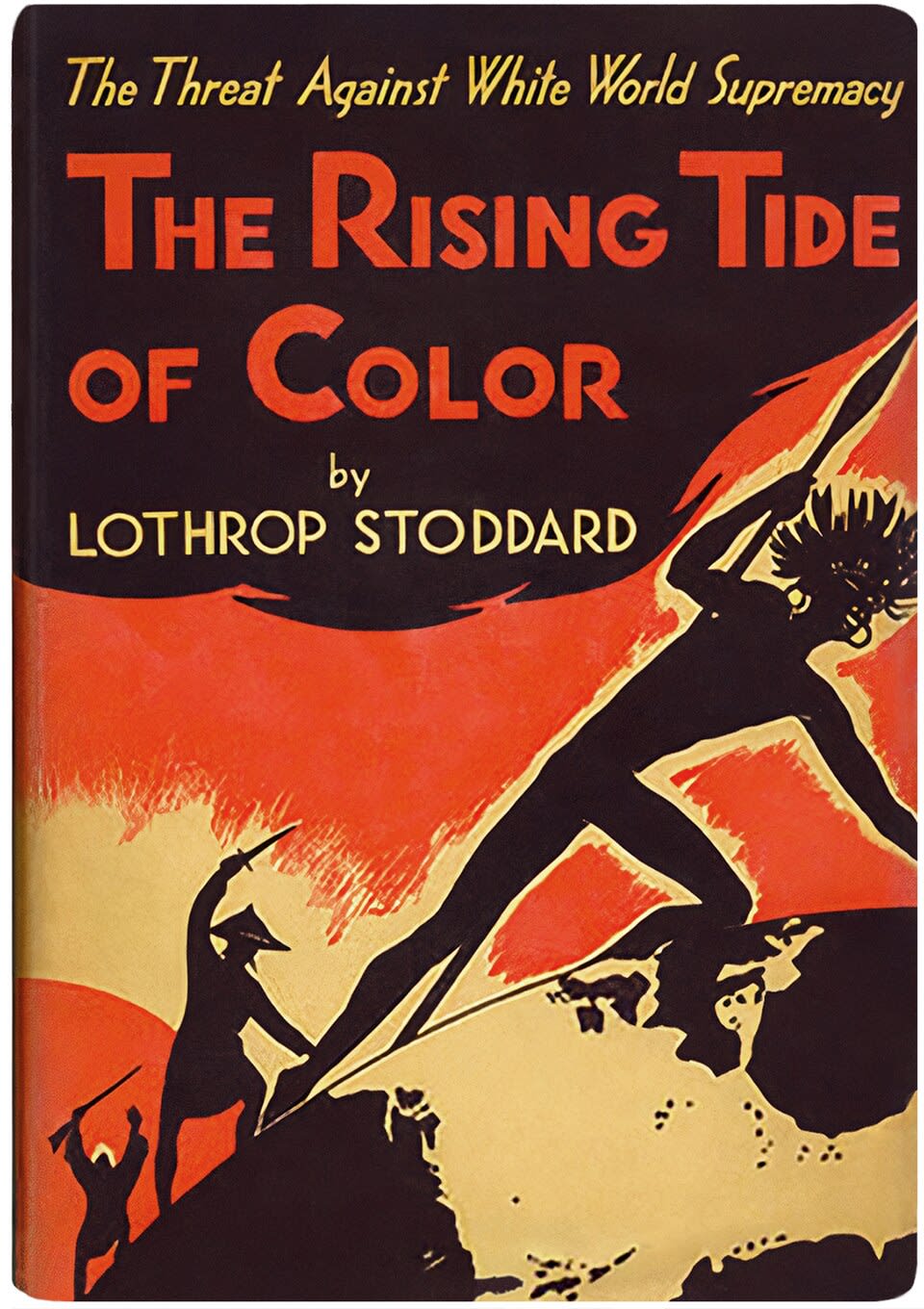
Samuel was born in Romania in 1895, moving to Paris when he was five and then Manchester a year later before finally moving onto the United States in 1914. Ten years later in 1924 the Americans, influenced by those sounding the racial alarm bells such as Lothrop Stoddard and Madison Grant, tightened up their immigration laws. The founding stock, north-west Europeans, were once again to be the focus, not southern and eastern Europeans. Jews had of course been massively over-represented in the recent migration wave which had washed over the United States, they had also proven to be one of, if not the least, assimilable groups. Samuel, who conveniently viewed ‘American’ as a civic identity, rather than a racial one, was furious, frothing at the mouth about the new laws at the tail end of his book, which was also published in 1924. He was not too happy with the goyim, to put it mildly, as can be seen in the book.
Before we begin, this book was kindly sent to me by my beloved publishers, Antelope Hill Publishing, and if you want to pick up your own copy then you can do so here on their website, or here on Amazon, or, alternatively, Antelope Hill offers The Noticing Collection which includes You Gentiles, Culture of Critique and When Israel is King. On the website you can use code ‘zoomerhistorian5’ at checkout for a discount (and to give me shekels).
The Question
In the first chapter of Samuel’s book he poses the question to himself: ‘Is there, between us Jews and you Gentiles; that is between the Jew on the one hand and the Englishman, the Frenchman, the American on the other hand; that which transcends all the differences which exist among yourselves, so that, in relation to us, you are Gentiles first and afterwards (and without particular relevance in this connection) Englishmen, Frenchmen, Americans?
Or is there nothing more implied in that distinction, Jew-Gentile, than (in a general way) in the distinctions Jew-American, American-Englishman, Englishman-Frenchman?
In other words, are we Jews but part of the Gentiles – Americans, Englishmen, Jews, Frenchmen – or is there a deeper cleavage between us? Is this Western world divided primarily into two parts – you Gentiles, we Jews?’1
Yes, Samuel replies to himself, there is, in fact, an ‘unbridgeable gulf’2 between Gentile and Jew. The very existence of the Jews after being scattered across the world and subjected to ‘centuries of alternate torture and respite’3 is proof of that. How else could such a people survive, resisting all pressures and threats to convert and assimilate into whatever nation they found themselves living in? Yes, the Jew is different. Very different. He is apart from the Gentiles, an almost unassimilable other. There is an ‘abyss’4 between us, Samuel concludes. ‘You and we may come to an understanding, never to a reconciliation. There will be irritation between us as long as we are in intimate contact.’5
Life to the Gentile, Samuel says, is a game and gallant adventure, the Gentile goes through life with a ‘spirit of the adventurous’.6 Meanwhile the Jew, Samuel posits, views life as a ‘serious and sober duty pointed to a definite and inescapable task.’7 We Gentiles, with our honour, loyalty and purity, go through life as if abiding by the rules of a game: ‘The best of you will not swerve from them: you will die in their defense – like the gallant gentlemen you are.’8 The Jews, or so Samuel says, do not accept living by such rules. The Jew’s only distinction is that of right and wrong. To die for an idea or for loyalty is incomprehensible, he says: ‘We are amazed when you fight for them; we are struck dumb when you die for them – a song on your lips.’9
‘Wars for Helen and for Jenkins’ ear; duels for honor and for gambling debts, death for a flag, loyalties, gallant gestures, a world that centers on sport and war, with a system of virtues related to these; art that springs not from God but from the joyousness and suffering of the free man, a world of play which takes death itself as part of the play, to be approached as carelessly and pleasantly as any other turn of chance, cities and states and mighty enterprises built up on the same rush of feeling and energy as carries a football team – and in the same ideology – this is the efflorescence of the Western world. It has a magnificent, evanescent beauty. It is a valiant defiance of the gloom of the universe, a warrior’s shout into the ghastly void – a futile thing to us, beautiful and boyish. For all its inconsistencies and failures within itself, it has a charm and rhythm which are unknown to us. We could never have built a world like yours.’10

Sport
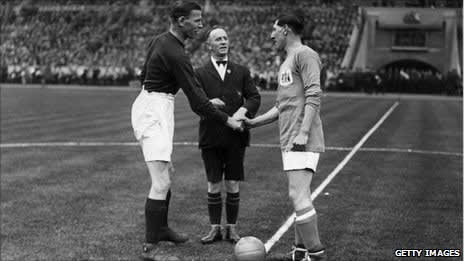
One of the greatest differences between Gentiles and Jews to Samuel is the matter of sport. Whether it be in Athens, Rome, Byzantium or in Samuel’s own time (or ours), the European has found sport at the centre of his world. Our morality, Samuel says, is a sporting one: ‘The intense discipline of the game, the spirit of fair play, the qualities of endurance, of good humor, of conventionalized seriousness in effort, of loyalty, of struggle without malice or bitterness, of readiness to forget like a sport – all these are brought out in their sheerest and cleanest starkness in well-organized and closely regulated college sports.’11 Indeed, had not Wellington supposedly said (apocryphal or not, it remains true) that the Battle of Waterloo was won on the playing fields of Eton? To Samuel, to the Jews, this is incomprehensible.
If one has to win then one must do so at all costs, as ruthlessly as possible. The idea of ‘rules’ in sport or in murder (referring to European chivalric values) makes no sense. ‘That strange character, the gentleman thief, the gallant and appealing desperado who recurs with such significant frequency in your fine and popular literature, perhaps points my meaning best.’12 Chivalry does not exist in the Jewish world, there is no Jewish Robin Hood. There is no nuance to a Jew, they can only ask ‘is it right or is it wrong?’13
It is in business where this difference is most stark. Samuel accuses us of attempting to bring ‘the curious punctilio of the fencing master’14 into business as well as trivialities (to him) such as ‘service’, ‘the good of the public’ and ‘a square deal’. ‘We, on our part, recognize no particular system that divides business from the rest of life.’15 The Jew, Samuel says, does not abide by the rules of ‘this game’ or ‘that game’ whether he be a shopkeeper, tailor or banker. Whatever field he is in, he will act ruthlessly, doing whatever is necessary to crush his opponents to get to the top, no matter who it hurts or how ‘immoral’ it is.
As in business, so in war. Courage to the Gentile is an ‘end in itself to be glorified and worshiped as imparting morality to an act’16 whereas ‘to us, courage is merely a means to an end.’17 Fighting is not a glorious business to the Jew, but a ‘dirty business’, something to just get on with. When Horace said ‘It is sweet and fitting to die for the homeland,’18 this did not resonate with Jews. ‘It is not sweet to die for anything’, Samuel says, ‘but if we must die for it, we will.’19 In general, the Jew does not glorify the warrior. War is simply a business ‘to be finished with as soon as possible, and to be forgotten as soon as possible.’20 The Jew ‘despises the fighter as such and abhors war’21 Samuel says, who was, of course, writing his book before the creation of Israel. The Jew, clearly, has found a love for war now that he has his own state.
‘For when you Gentiles assert that you abhor war, you deceive yourselves. War is the sublimest of the sports and therefore the most deeply worshipped. Do you mourn when you must fight? Is a nation plunged into gloom when a declaration of war arrives? Do you search your hearts closely, cruelly, to discover whether you yourselves are not to blame that this monstrous thing has come to pass? Does a tremor of terror go through you – ‘‘Perhaps we are guilty’’? Do you clamor for the records of the long complications which have ushered in this horror? Do you go to your task of defense or offense darkly, grimly, bitterly? No, you hang out your most gorgeous banners; you play merry music; your blood runs swiftly, happily; your cheeks brighten and your eyes sparkle. A glorious accession of strength marks the throwing down or the acceptance of the gage. From end to end of the land the tidings ring out, and every man and woman of mettle – every ‘‘red blooded’’ man and woman – itches for a hand in it.’22
Gods
Samuel begins his third chapter with the claim: ‘We are serious, you are not.’23 Our ‘lack of seriousness’24 by taking rules in business, sports and the like so seriously, somehow, to Samuel, makes our religiosity insincere. To him we are ‘essentially polytheists and to some extent idol worshippers.’25 Jews are monotheists, he says, and in monotheism, there is ‘no room left for individual prides and distinctions, no room for joyful assertiveness.’26 Monotheism is serious, monotheism means ‘infinite absolutism, the crushing triumph of the One, the crushing annihilation of the ones.’27 We Gentiles, with our sporting nature, our heroic epics and our arbitrary rules, are not capable of monotheism. Our inspirations do not come from the prophets, but from other sources, from the world, Samuel concludes. Emotionally the Gentile is ‘unfitted to give them [the prophets] the true acknowledgement and almost incoherent abasement.’28 Only Jews, he seems to suggest, can truly understand God or even truly submit to God. His critique, however, seems to focus solely on our Gods of old, our invention of them ‘a game for children.’29 Christianity, our greatest influence, is mostly ignored. Samuel refuses to believe that we built our nations whilst fusing together both nationality and religion, holding both to be of importance: ‘You tell me that such things have been among you, that you have had national religions, national gods. I do not believe it: I have certainly seen no evidence in any record which has come to my attention.’30 Samuel, clearly, through his travels in Europe, must have missed the endless Churches and Cathedrals to one God. Denominationally different depending on the nation, yes, but Christian nonetheless. Is the Jewish community, de facto, not as fractured in their beliefs? Samuel, himself a self-admitted atheist, says that ‘we Jews alone understand and feel the universality of God.’31 The chutzpah!
‘Most of our prayers are helpless repetitions of our helplessness, the stammerings of a child overwhelmed, overmastered, by contemplation of the supreme Unity. You cannot pray thus: at no time, even in the presence of the gods, do you lose your self-possession, your dignity. You too pray, but your prayers, compared with ours, are requests. Your offers of service to Christ the God are the offers of a vassal to a powerful superior. Our prayers, too, beg something, but requests of ours are folded in an abasement, a humility which would be revolting to you.’32
Utopia
Samuel goes on to compare the Gentile and Jewish concepts of perfection. ‘The true prophet sees into the ultimate longings of his group – longings which may even run counter to the day’s desires,’33 he proclaims. Plato’s Republic is chosen as the Gentile example as his vision supposedly comes nearest to our desires. Plato’s near contemporaries were the Jewish prophets, and, so Samuel says, this provides a perfect comparison between the two distinct races.
Plato’s Republic, ‘an institution, organized with infinite ingenuity and dedicated to the delights of body and the mind’34 is, to Samuel, man creating God or gods in his image. The Jews, meanwhile, were delivered ‘intolerant demands impossible of fulfillment’, ‘God creating man in his mold.’35 The European was only able to conceptualise an isolated little city, ‘the limit of his imagination’36. Samuel goes on to mock the fact that Plato’s vision of perfection included ‘children being trained for war’37, contrasting this vision to the Old Testament, quoting from Micah 4:3: ‘and he shall judge the nations and shall rebuke many peoples, and they shall beat their swords into ploughshares, and their spears into pruning hooks: nation shall not lift up sword against nation, neither shall they learn any more war.’38 This is, of course, extremely cherry picked, the Old Testament being notoriously violent.
Samuel goes on to admit, begrudgingly, that, when it comes to the Republic, he admires ‘the beauty of its freedom’39, but, he adds, ‘freedom means nothing to us: freedom to do what?’40 This world is ‘beautiful – but not for us! While this dance goes on, while nations and gods enter the game and leave it, we continue through all time, an apparition almost, a dread reminder of infinity.’41 A bizarre point, given that, as Samuel says, Plato and the Hebrew prophets were near contemporaries, and, according to Samuel, Plato’s Republic remains the version of utopia which our thinkers refer to most frequently.
The Jewish vision, though, is a miserable one indeed, one in which most modern Jews would not wish to live in. As MacDonald points out in the foreword, in traditional Jewish communities the Rabbis would literally hold the power of life and death over the community, the idea of free speech or individual rights being completely foreign. Jews with heretical views were beaten or murdered. ‘Their books were burned or buried in cemeteries. When a heretic died, his body was beaten by a special burial committee, placed in a cart filled with dung, and deposited outside the Jewish cemetery.’42 The Jews do, in some ways, still retain their bizarre (to us) conformity. To be a Jew who tries to take an objective view of the Holocaust or Israel is to be an outcast, completely cut off from the body of Jewry. The objective Jew on these matters is seen as worse than a murderer or rapist. Some utopia!
‘For us the end is ecstatic unity, the identification of man with God. Your ideal is eternal youth, ours lifts toward an unchanging climax of adult perfection. You would like to play with your gods forever: we will return to God, to the universe. Yours is a sunlit afternoon, with the combatants swaying forever in a joyous struggle. Ours is a whole world, with the spirit of God poured through all things.
Your ideal is Plato’s Republic; ours is God’s kingdom.’43

Loyalty
The Gentile and Jewish concepts of morality are so different, Samuel claims, that ‘even the lowest type of Gentile despises the Jew; and the lowest type of Jew, the Gentile.’44 The more moral a society, Samuel goes on, the better for the criminal and, because the Jew is ‘to the Gentile order of conduct a moral anarchist, the Gentile criminal who has come into contact with Jews will be the most inclined to hate Jews. It is for this reason, I think, that criminality is so closely allied to anti-Semitism.’45 A bizarre comparison, but, ultimately, Samuel does make a fair point regarding the Jewish position in society. No matter where they have gone, Samuel explains, the Jew has run into the exact same issues regarding morality, anti-Semitism has always reared its head as a result.
The morality of the Gentile and the morality of the Jew are not only slightly different, but opposed. We can not just ‘exist side by side and tolerate each other’46 as Samuel explains: ‘No man can accept both, or, accepting either, do otherwise than despise the other.’47
Loyalty, he explains, is the clearest difference between the morality of the Gentile and the Jew. Loyalty to the Gentile is a virtue in itself, it is simply the right thing to do. To a Jew, meanwhile ‘naked loyalty is an incomprehensible, a bewildering thing.’48
‘It is expected, in your world, that a man should be loyal to his country, to his province, to his city, to his section of the city, to his college, to his club, to his business associations, to his fraternity, to every chance group into which events may bring him.’49 Samuel goes on to explain that he simply cannot understand the idea of being loyal to an army regiment or an employer. To us, this is what makes the world go round, it is what makes society function. To Samuel, however, he sees this as ‘part of the game – and life is to you a game, on the football field, in the college, in the factory or on the battlefield.’50
In the Jewish life, Samuel continues, ‘loyalty is unknown. There is no equivalent for it among our attributes. We understand love, which is serious, profound: which must be treated, therefore with due dignity. But we do not understand loyalty, which is trivial, gallant, gamesome, conventionalized.’51
Samuel goes on to freely admit that Jewish students have no loyalty to their colleges, the college is merely a learning institution, something which the Jewish student is to extract all he can from and then leave. That is all there is to it. ‘But I have touched on the college only as a single illustration of the predominance of the virtue of loyalty in your concept of the proper human relationship.’52 As with the Jewish college student to his college, so with the Jew to his host nation, Samuel implies. The Gentile, with his loyalty, is seen by the Jew as unserious, Samuel closes his chapter by comparing the Gentile’s obsession with loyalty to a woman who is obsessed with clothes: ‘one could hardly call her serious. Serious absorption in trivialities is not seriousness.’53
‘Your dislike of us finds uneven and unequal expression, is lulled into rest for a time, at times is overborne by generous impulses, but it is a quality inherent in the nature of things; nor is it conceivable to me that, as long as there are Jews and Gentiles, it should ever disappear.’
Discipline
The Gentile in Church and the Jew in his Synagogue are worlds apart. In the Church ‘all is order and decorum, rhythm and regime.’54 In the Synagogue, meanwhile, there is only ‘chaos’.55 As with religious institutions, it is so in every other institution, every club, every society, every meeting, even in the home, Samuel claims, ‘You Gentiles are disciplined; we Jews are not.’56
Once more, Samuel claims, this all comes down to ‘your triviality and our seriousness.’57 He goes on: ‘Disorganized as we are, we have outlived the most ably organized nations. We have failed to imitate the Roman legion or the Order of Jesus: we have survived the first and shall no doubt outlive the second. We have not your skill: your German, or English, or American skill in perfectly wheeling vast masses of consummately subordinated men. Yet I have no doubt that when Germany and England and America will long have lost their present identity or name or purpose, we shall still be strong in ours.’58 The Jew, through his own style of discipline, has survived for ‘eighty generations’ (as Samuel likes to keep reminding us) in the face of everything. This is his discipline, the discipline of avoiding assimilation, of remaining distinct.
Gentile discipline, Samuel boasts, is merely for show, like a goose-step. Jewish discipline, meanwhile, is the discipline of purpose. ‘This blaring of the trumpets, this beating of the drums, this Left-Right-Left-Right, this rhythmic, snappy form-fours, this intoxication of united mass movement which sends you Gentiles frantic with excitement is a laughable exhibition to us. ‘‘Foolish Gentiles!’’ we say contemptuously.’59 He goes on: ‘We are disciplined more bitterly than you, and we bear the discipline without the assistance of narcotic rhythms: we bear our burden like civilized adults.’60
The chapter ends with a bold prediction from Samuel: ‘We shall not further that ideal by losing our identity; to mingle with you and be lost in you would mean to destroy the aptitude, forever. Thus universal ideal and national identity are inextricably bound up. To the maintenance of this high union we have given; consciously, seriously, without kings and courts, medals and reviews and Orders, cheering and drills; a bitter and obstinate devotion more exacting than anything you have known – and, in its deliberate effects, more successful.’61 See below for how well this boastful claim aged.
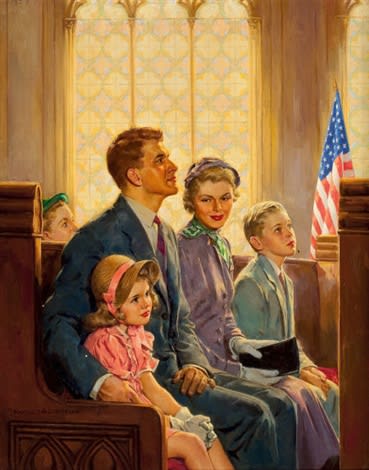
‘Wherever we are unrestrainedly Jewish we shock you by our uncouthness. We lack social grace – the disciplined and distinguished social grace of high society, as well as the mean and spiritless punctiliousness of your middle classes. In the colleges, in the street, in the surface cars, in the clubs, in the army; we betray ourselves. Indeed, your very breaches of discipline differ from ours by a certain conscious rebelliousness which is partly homage: our breaches of discipline are off-hand, unconscious, insolent.’62
The Reckoning
Samuel opens this chapter by justifying collective punishment, ‘every member of that country is a member of the team and must take the good with the bad, must pay the debts contracted by the government.’63 How else, Samuel continues, ‘shall the majority learn that it must not acquiesce indolently in the will of the minority?’64 The Jewish fight against the Gentile has been a spiritual one and, over the centuries, the Gentile has reacted with violence. For this oppression Samuel blames all Gentiles, ‘in vain do your silent majorities wash their hands: their dormancy is their effective guilt – I care not that your minorities struck the blow; I should not acquit the majority if I could give judgement and impose punishment.’65
The Jewish, spiritual, fight is not the Jews fault, Samuel says, for the Jews are not in European nations out of choice, but because of ‘our own fault’66 (the Romans, who Jews then and still view us collectively as). ‘We do not attack you deliberately’67, Samuel claims, it is simply the Jew being a Jew, an ‘expression of our way of life.’68
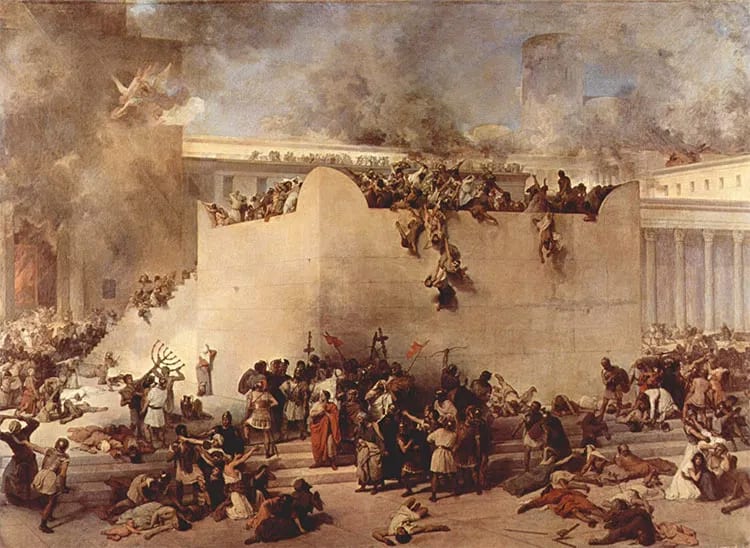
‘You do with us as your animals whims dictate: your rob us, you slay us, you drive us from land to land, and while one of you drives us forth the other shuts the gate in our faces. From the first day of our contact, since the first of our communities in exile, you have made us the sport of your brutality. There is at least one clear note in Gentile world history, one consistent theme: the note of our agony – the theme of your cruelty.’69 No excuses for the goyim it would seem! ‘On our side at least the fighting has been clean, we have not misrepresented you’70, Samuel laughably claims before going on to list off the usual collection of European ‘lies’ about Jews: blood libel, poisoning wells, precipitating wars and conspiracies of world government.
Samuel becomes hysterical: ‘Do not answer us that a minorities does this. Does it matter to us that a minority of America preaches in the Klan virtual disfranchisement of the Jew, that a minority in Germany preaches death to the Jew, that a minority in Poland slew hundreds of us? I ask an accounting of you ask you ask it of one another: as the Allies ask it from Germany, as Germany asked it from France – that is, from you as a whole.’71 Samuel’s earlier examples of why majorities are culpable for the actions of a minority consisted of minority governments, the examples for the Gentiles, however, were all true minorities, a miniscule, obscure bunch with little impact on the whole.
The hysteria continues: ‘And I know that soon enough these crimson sluices will be opened again, and we shall bleed from a thousand wounds as we have bled before. In the Ukraine, or in Russia, in Poland or in Germany – and who knows when the same will not come to pass in England, in America, in France? What guarantee have we beyond the guarantee of public opinion? And from a public opinion which tolerates the slaughter of hundreds of negroes, how far to the public opinion which will condone the slaughter of Jews?’72
The call then goes out for the punishment of those who speak ill of the Jews, the policing of anti-semitism: ‘Did not hundreds of thousands of Englishmen, Frenchmen, Germans and Americans read these legends [blood libel and the Elders of Zion] without protesting, without seeking to punish the libelers? Do we not know how easily your morality fits your mood? ‘‘Kill the Jews, the Christ-killers’,’’ does indeed ring strange these days. But does ‘a damn good dose of lead for the Jewish Bolsheviks’’ sound very remote?
And if, arguing from the individual to the mass, your Klans and your Awakening Magyars, your Chestertons and your Daudets, shall call us Jews sharks and swindlers, shall we not answer with better warrant, by the millions of our murdered, by the Inquisition and the Crusades, by the smoking ruins of the Ukraine and the swinging body of Leo Frank: Dastards, murderers and thieves!’73 The claim of millions killed in European pogroms by 1924, is, of course, laughably exaggerated.
‘In the conflict between us you have fought us physically, while our attack on your world has been in the spiritual field. It is the nature of the Gentile to fight for his honor, in the nature of the Jew to suffer for his. Whether because we are so inclined by first nature, or whether because we have so become through lack of land and government and army, this is true: you revel in force and we despise it, even where we can and do exert it.’74
But as Moderns
A natural objection to all of Samuel’s points, as he himself points out, is simply that the European is no longer medieval and the Jew is no longer the Orthodox outsider he once was, are not Jews slowly melting into European society? No, Samuel says, the religion of the two peoples are simply the ‘practical expression of the difference between us, not the cause of it.’75 Modernity has merely given way to new differences between the two peoples, new reasons to hate the Jew. The Gentile cannot be trusted, Samuel claims, for as soon as Jews tried to adapt by adopting European customs and converting to Christianity, the Gentile simply moved from religious to scientific anti-semitism. In Samuel’s view, the Orthodox Jew and the modernised Jew are equally as repellent to the Gentile, the Jewish attempt at assimilation has failed, through no fault of their own. Samuel does, of course, say earlier in the book that the Jewish ability to not integrate is their greatest strength, their discipline lasting eighty generations. He is having it both ways.
Proof of this failure to integrate is proven, as Samuel shows, by the Jewish revolutionary spirit. ‘Three or four million modernized Jews, a ludicrously small number, have given to the world’s iconoclastic force its chief impetus and by far its largest individual contribution. America and England put together, with their almost two hundred millions, have not played that role in world iconoclasm which a handful of Jews have played.’76 The modernised Jew, Samuel seems to boast, cannot resist trying to rip down modernity itself. He is just that different. ‘The occasional in you (revolution against the Game) is the dominant in us. Your instinct is truer than you know. The dislike of your modern world for the modern Jew is as relevant as the dislike of your old world for the Orthodox Jew.’77
‘In a hundred years of modernity we, an able race, have given little more than mediocrity to your way of life. Our best work has been the old, true work of our people – fundamental and serious examination of the problems of man’s relation to God and humanity. In the arts we have been second-rate, third-rate. While in moral effort we have exceeded any living race and have produced an overwhelming number of revolutionaries and socialists and iconoclasts of the true prophetic type, we have, in the area of science essays and the plastic arts, been a thoroughly minor people. And even if in these last fields we have done comparatively well for our numbers (which I doubt), our preponderant contribution of fundamental moral effort still makes modern Jewry a secularized replica of religious Jewry.’78
We, the Destroyers
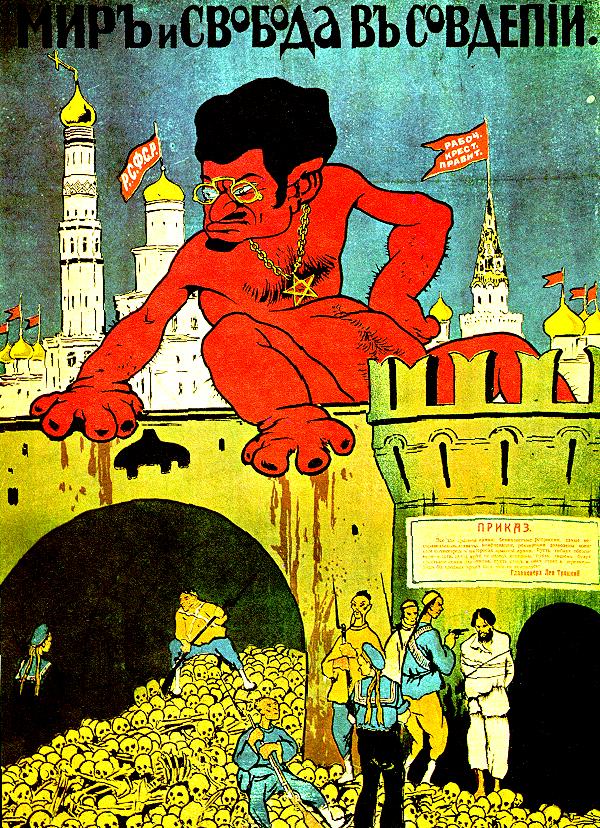
The new, modern Jew, is more dangerous to the Gentile way of life than the old, Orthodox Jew, Samuel posits. The old Jew kept apart and his effectiveness was minimal, he was a blatant outsider. The new Jew, meanwhile, ‘penetrates into your life, begins to handle your instruments.’79 ‘For when he brings into your world his passionately earnest, sinisterly earnest righteousness – absolute righteousness – and, in speaking in your languages and through your institutions, scatters distrust of yourselves through the most sensitive of you, he is working against your spirit. You Gentiles do not seek or need to understand social justice as an ultimate ideal. This is not your nature. Your world must be so fashioned as to give you the maximum of play, adventure, laughter, animal-lyricism. Your institutions frame themselves to this end: your countries and ideals flourish most gloriously when they serve this end most freely. All ideas of social justice must be subservient to this consideration: the Game first – then ultimate justice only as it can serve the Game.’80 One cannot help but think of our modern Conservatives when reading this. ‘Stop, stop!’ they yell, ‘this far and no further!’ as they accept just one more concession. They are trying to play by the rules of the Game. The left, with the ‘social justice’ type of left-wing Jews leading the way, do not care. They continue to push on further, breaking the rules of the game just enough so as to keep the game going, the rules not broken ‘enough’ for the Conservative to blow the whistle. The Conservative can only defend himself with one hand tied behind his back. The ‘rules’ prevent him from countering this strange, alien foe. This is not the left of old, this is the left operating not under Gentile rules, but Jewish ones.
Samuel did not even see how effective this would be, ‘I do not believe that we Jews are powerful enough to threaten your way of life seriously. We are only powerful enough to irritate, to disturb your conscience, and to break here and there the rhythmic rush of your ideas.’81 He could not, of course, predict quite how effective his people would be, united by the Holocaust, against the morally disarmed Gentiles. The Jew, he says, is merely ‘trying to rebuild them [our institutions] for our needs, we unbuild them for yours.’82 Undermining the Gentile world is ‘instinct: we do not see it as something revolutionary at all. It is tacit in us.’83 Our reaction against these Jewish actions is natural to the Gentile, too: ‘Your very ancestry cries out against it in your blood, and you become silly and enthusiastic about it, with flag-waving, and shouting, and battle-hymns, and all the regular game-psychology proper to your world and way of life. Even of this [anti-semitism] you make a play.’84
‘The Jew, whose lack of contact with your world had made him ineffective, becomes effective. The vial is uncorked, the genius is out. His enmity to your way of life was tacit before – today it is manifest and active. He cannot help himself: he cannot be different from himself, no more than can you. It is futile to tell him: ‘‘Hands off!’’ He is not his own master, but the servant of his life-will.’85
‘We Jews, we, the destroyers, will remain the destroyers forever. Nothing that you will do will meet our needs and demands. We will forever destroy because we need a world of our own, a God-world, which it is not in your nature to build. Beyond all temporary alliances with this or that faction lies the ultimate split in nature and destiny, the enmity between the Game and God. But those of us who fail to understand that truth will always be found in alliance with your rebellious factions, until disillusionment comes. The wretched fate which scattered us through your midst has thrust this unwelcome role upon us.’86
The Games of Science
Samuel quotes an imaginary critic: ‘The solution of the Jewish-Gentile problem, as of every instinct problem, lies in the pursuit of Truth through science!’87 Science, however, as Samuel quite rightly points out, is ‘quite irrelevant to the spiritual problems of man.’88 Merely revealing the problem changes nothing, the problem is still there, both sides will never quite comprehend the other.
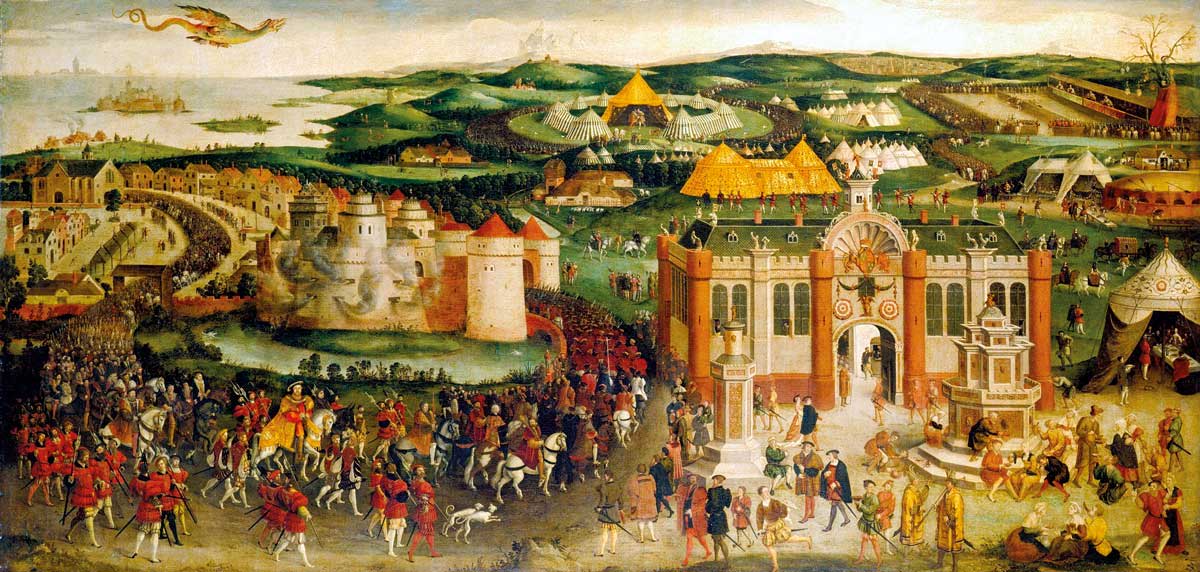
‘Art and science – this is your Gentile world, a lovely and ingenious world. Kaleidoscopic and graceful, bewilderingly seductive, a world at its best, of lovely apparitions, banners, struggles, triumphs, gallantries, noble gestures and conventions. But not our world, not for us Jews. For such Field-of-the-Cloth-of-Gold delights as yours we lack imagination and inventiveness. We are not touched with this vigor of productive playfulness. Under duress we take part in the ringing melee, and give an indifferently good account of ourselves. But we have not the heart for this world of yours.’89
The Masses
The masses of modern Jews, Samuel says, have no understanding at all of the differences between themselves and the Gentiles. Despite this, the differences are still there and cannot be avoided. The modern Jew has done his best to fit in, but ‘despite outward appearances they have failed.’90 It is a Gentile world and the Gentile lives it naturally, ‘by the grace of God’91, the Jew, meanwhile, must act ‘deliberately’92, it is forced. Whatever can be imitated is imitated admirably, but, the difference is still noticeable. ‘Our patriotisms are hysterical, our sports pursuits are unnaturally eager; our business ambitions artificially passionate. We seek the same apparent ends as you, but not in the same spirit.’93 Manners, Samuel says, is where one of the biggest differences lies, ‘you have evolved them, [manners] are a spirit, a reflex of your play world.’94 These cannot be copied, ‘a single note of insistence spoils it all. And we Jews insist too much.’95
As with manners, so with vulgarity. The vulgar Gentile can ‘shock and brace’96 but not ‘horrify’97, the vulgar Jew, however, ‘is extraordinarily revolting. There is in him a suggestion of deliquescent putrefaction.’98 Once more, it is forced, deliberate.
The Jews, Samuel claims, lack inventiveness and inventions. This is something the Jew cannot imitate, ‘we are unimaginative’99 he says. ‘In your delight you call inventiveness the conquest of nature. But the boast is, to us, a foolish and a childlike boast. The problem with which man is faced cannot be answered by scientific inventions. The conquest of nature does not lie in evolving keener sight, swifter motion, or larger strength. This is but magnification which leaves the element of the problem untouched. Can you conquer, not nature, but the nature of things?’100 The Jew stands aside whilst the Gentile invents, ‘untouched by that illusion, destructive of your mood.’101 The Jew is ‘static, serious’102, unchanging.
‘This world is yours, and you are the ones who set the standards. You are the ones who supply the material for the reactions. And when we Jews want to become part of your world and enjoy its privileges and pleasures, we must accept your standards; we must speak, as it were, the same language. But just as a word can never mean quite the same thing to two persons, so a common expression does not mean the same emotion.’103
Solution and Dissolution
The only solution to this problem, Samuel claims, is the complete disappearance of the Jewish people, their ‘submergence in the surrounding world.’104 Only when the Jew has been absorbed into the Gentile masses to the point where no one can say ‘my father, or grandfather was a Jew’105, will be the problem be solved. ‘Free and unrestrained intermarriage’106 will be the end of the Jewish people, the end of the struggle between Gentile and Jew.
You cannot argue with a Jew, you can not change a Jew, he can merely imitate for a time. The Jew can survive any form of oppression, if history is anything to go by it will simply bring them closer together. When a Jew is baptized it is merely a crude attempt to become a Gentile, Samuel claims, ‘obviously you do not make a Gentile of a Jew by baptizing him any more than you would make an Aryan of a negro by painting him with ocher.’107
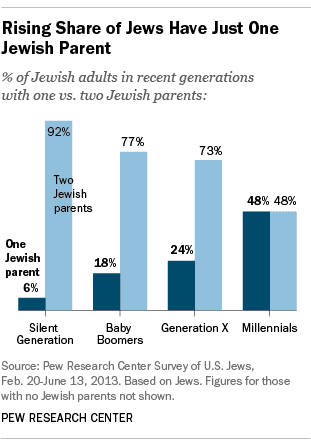
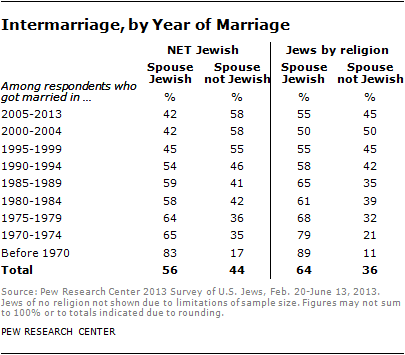
The Jew can only be slow boiled into the population, mixed out of existence: ‘You can make his children half Gentile, his grandchildren only a quarter Jewish – and so on till the balance is perfect.’108 ‘A Jew married to a Gentile may remain a Jew ostensibly, as he is in fact. His children seldom, if ever, profess Judaism or associate themselves with the Jewish people.’109 Samuel goes on to lament that the Jew who ‘gives his children to the Gentiles’110 or the Jew who marries a Gentile are not excluded from the Temple. ‘That view, whatever its ethnics, is clearer and healthier.’111 The tone of Samuel changes in this chapter, which is some indication that he is indeed telling the truth here. The Orthodox Jew, as we have seen with the frequent lamentations about intermixing in our own time, is terrified of his people being absorbed into the Gentile masses. With now well over half of diaspora Jews choosing to marry out, it seems that Samuel’s worst nightmare is coming to pass. Will we still speak of Jews in the west in a few generations time? From 92% of baby boomers keeping it within the Jewish family to less than half with Gen Z, it seems that the Gentile, after all, might just outlast the Jew. Our interbreeding rates, of course, being the lowest of any race.
‘When it will be impossible for any man to say of himself, ‘‘I am a Jew,’’ or ‘‘My father, or grandfather was a Jew,’’ this consummation will have been achieved.
There is only one instrument to this end: free and unrestrained intermarriage. This act or fact alone will count. The mere changing of names, the substitution of religious forms, tthe so-called ‘‘liberalization’’ and ‘‘modernization’’ of Judaism is ineffective.’112
The Mechanism of Dissolution
In this chapter Samuel attempts to explain how the mixing of the two peoples will not come about. ‘You want us to intermarry – but you don’t want to intermarry.’113 There is too much stigma with mischlings, it will take too many generations, four or five, he says. We want the Jews to disappear, but we supposedly ‘shrink from the process. The inoculation is painful, even revolting.’114 The nearer the Jews comes to us, Samuel explains, the more we dislike them, the prospect of intermarriage becomes even more repellent.
Samuel goes on to explain, over several pages, how the Jews would never mix and how the Gentiles would never accept it, proudly proclaiming to end his chapter: ‘We cannot assimilate: it is so humiliating to us that we become contemptible in submitting to the process, it is so exasperating to you that, even if we were willing to submit, it would avail us nothing.’115
Once more, Samuel’s predictions did not ring true. What about a world in which the Gentile is taught to be ashamed of his own heritage? A world in which even the slightly bit of nuance surrounding Jews is anti-Semitic? A world in which philosemitism is almost state-mandated? Alas, the Jew is being absorbed. By the time the Boomers and Gen X die off, the Jewish diaspora population will be merely a fraction of what it is today.
‘You want an end without permitting the means. The prospect of a Jew-less world is charming indeed, but who will enjoy the actuality? Your grandchildren and great-grandchildren. And who will have to pay the price of the first embarrassing contact, the first difficult intimacy – Jewish sons – and daughters-in-law, Jewish fathers – and mothers-in-law? You yourselves. The prospect is too distant, too hypothetical, to exert any influence. It is much too much like the promise of heaven and the threat of hell.’116
Is There Any Hope?
In the short final chapter of Samuel’s book he predicts that the troubles between our two peoples will only increase. The world, he laments, is becoming more racial, not less (after boasting for 100 pages about Jewish supremacy and their ability to preserve their race). ‘There is a steady approach toward the identification of government with race, instead of with the political State.’117
He continues on: ‘The demand for racial homogeneity within the State has led in America – still the most unexploited country in the whole world – to the exclusion of the immigrant, and particularly of the immigrant who will not lend himself to the type of assimilation – or self-destruction – which you demand. Without for a moment admitting that any kind of exclusion is justifiable in a world which God created before the nations appeared to disfigure it, I submit the case of the Jew as an exception. The Jew has no homeland of his own. When the Jew migrates from one country to another, it is almost invariably under the pressure of persecution. To close the gate against the Jew is not the same, then, as closing it against the Italian or the Pole. In the latter cases you insist that certain races stay in their own homes – whether or not the land will support them. But the Jew is not being forced to stay home: while one part of the Gentile world persecutes him, the other part refuses him a chance to escape. For very shame – if you were capable of it – you should give the Jew free immigration everywhere. The irony of it is, of course, that it is chiefly against the Jew that anti-immigration laws are passed here in America as in England and Germany. And the liberal countries which could make room for the hunted Jew cooperate, despite a few gallant and unsustained gestures, with the most illiberal in the persecution of their common victim. He that refuses asylum to a victim fleeing from a murderer is, before God, a free and willing accomplice in the crime.’118
Samuel insists that we, us Gentiles, with our sporting attitudes, should sympathise with ‘the incredible pluckiness of a small people which, in the face of infinite discouragement, has clung with such tenacity to its identity and cult.’119 We should admire this so much that we should be good sports and just open the door (after Samuel spends the previous 100 pages explaining why Jews are terrible, unassimilable immigrants). It is ‘an evil farce’120 that America decided to restrict immigration. America was supposed to be a new world, he laments, a civic world, a world which anyone could move to. This ‘point of view was a mistaken one’121, Samuel cries, for, as usual, instead of his dream of America, ‘in its place emerges again, with atavistic certainty, the race.’122 This is merely another in a long line of Gentile betrayals, he laments, the Americans, like so many other Gentiles before them, opened up their gates only to once more change their minds and slam the door shut.
‘Today, with race triumphant over ideal, anti-Semitism uncovers its fangs, and to the heartless refusal of the most elementary human right, the right of asylum, is added cowardly insult. We are not only excluded, but we are told, in the unmistakable language of the immigration laws, that we are an ‘‘inferior’’ people.’123
Samuel, it seems, except for the blip of the Holocaust and the following 75 years of multiracial delusion, was correct. Once more race has come to the forefront, stronger than ever before. How Jews will navigate this new world is quite another question, for it far succeeds, many times over, the importance of race in Samuel’s own time.
‘If, then, the struggle between us is ever to be lifted beyond the physical, your democracies will have to alter their demands for racial, spiritual, and cultural homogeneity within the State.’124
Conclusion
Maurice Samuel’s book is fascinating, a thoroughly enjoyable read. His predictions were in many cases atrocious, in others spot on, sometimes he becomes hysterical, spouting nonsense, again, on other occasions, he is spot on. The accuracy of what Samuel writes, though, is not what is important, and, indeed, Samuel’s view of the two races is completely full of contradictions. This book offers us a rare glimpse of what Jews think of us, free from the usual need for deception. This is all that matters. When someone tells you exactly what they think of you to your face, you ought to listen. Honestly, this book should be mandatory reading in the same way that Camp of the Saints has been pushed in our circles lately. It’s a short read, coming in at 113 pages, and thus well worth the hour or two that it would take to read. You’ll certainly be a lot more knowledgeable for it. Samuel isn’t speaking just for himself, he is speaking for his community, or, at least, older Jews, the ones currently in power. There will be some differences, but, for the most part, this is how we’re seen.
p1
p2
Ibid
p7
p8
p11
Ibid
Ibid
Ibid
p12
p17
p19
Ibid
p20
Ibid
Ibid
Ibid
Latin: ‘Dulce et decorum est pro patria mori’
p20
Ibid
p21
p22
p27
Ibid
Ibid
Ibid
Ibid
p28
p29
p31
p32
p28
p35
p36
Ibid
p38
p37
p38
p39
Ibid
Ibid
pxxi
p39-40
p43
p43-44
p45
Ibid
Ibid
p45-46
p47-48
p48
Ibid
p49
p51
Ibid
Ibid
p52
Ibid
p55
p57
Ibid
p52
p59
p60
p61
Ibid
Ibid
Ibid
Ibid
Ibid
p62
Ibid
p62-63
p61
p65
p68
Ibid
p67
p71
p72
Ibid
Ibid
p74
Ibid
p71
p75
p77
p78
p85
p88
Ibid
Ibid
Ibid
Ibid
p89
Ibid
Ibid
Ibid
p90
Ibid
p91
Ibid
p88
p93
Ibid
Ibid
p94
Ibid
Ibid
Ibid
p95
p93
p100
Ibid
p104
p100
p109
p110
Ibid
Ibid
Ibid
p111
Ibid
p109
Zoomer HistorianRead More



 R1
R1
 T1
T1


