
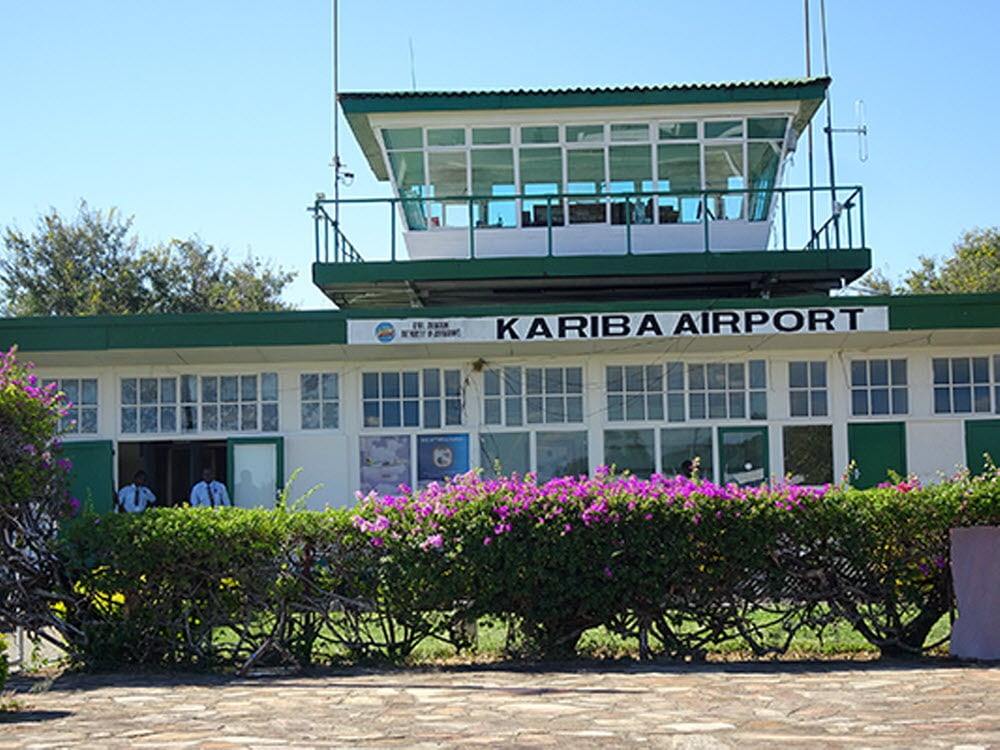
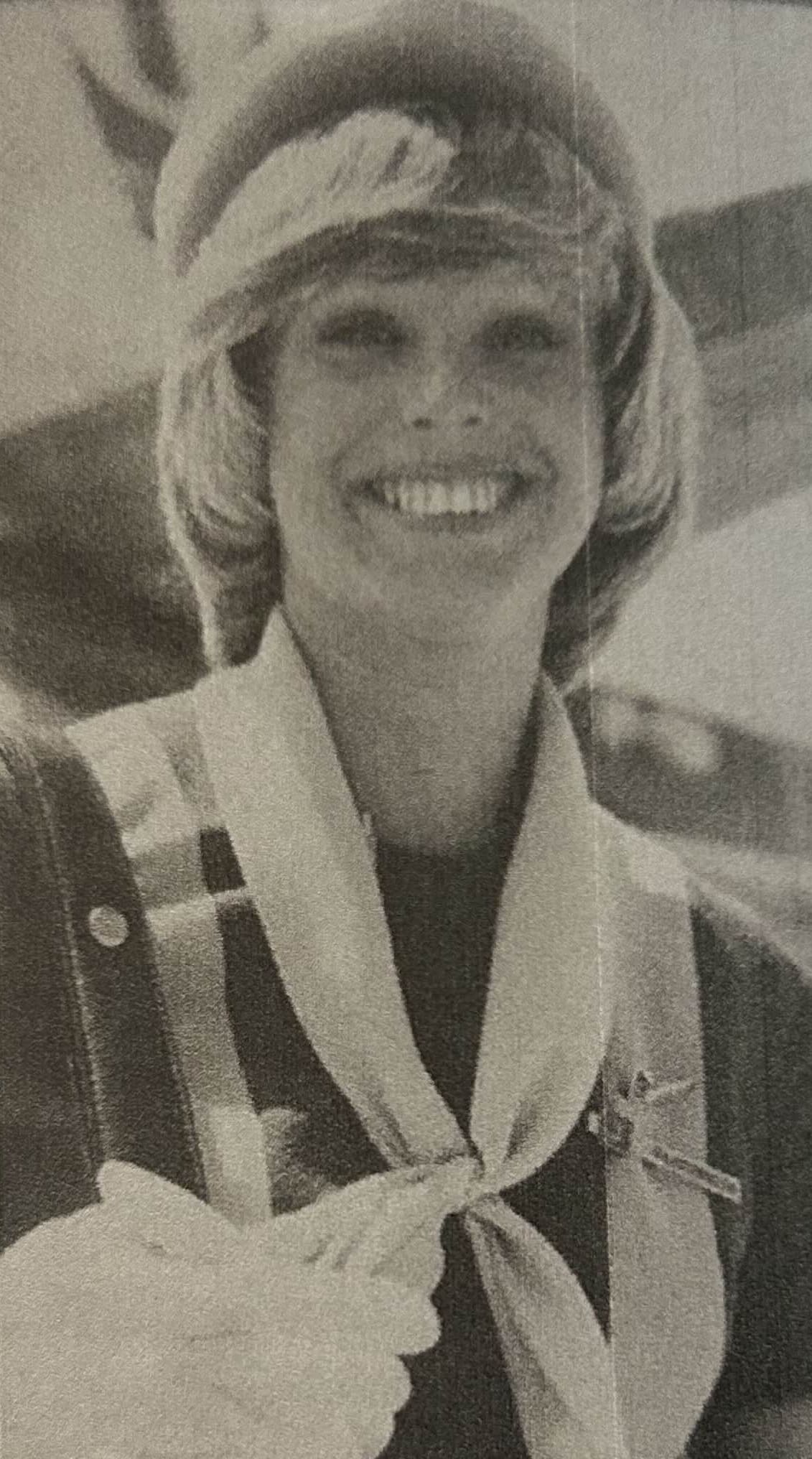
At 5pm on 3 September Air Rhodesia Flight 825 took off from the Kariba Airport runway, and the passengers made themselves comfortable for their flight to Salisbury. The plane was packed full of families, especially families from Bulawayo. There was no direct flight from Kariba and so the most efficient way home was to head for Salisbury first. The flight had begun as normal, the Viscount was climbing well and air hostesses Dulcie and Brenda were already well into action and serving their 52 passengers.
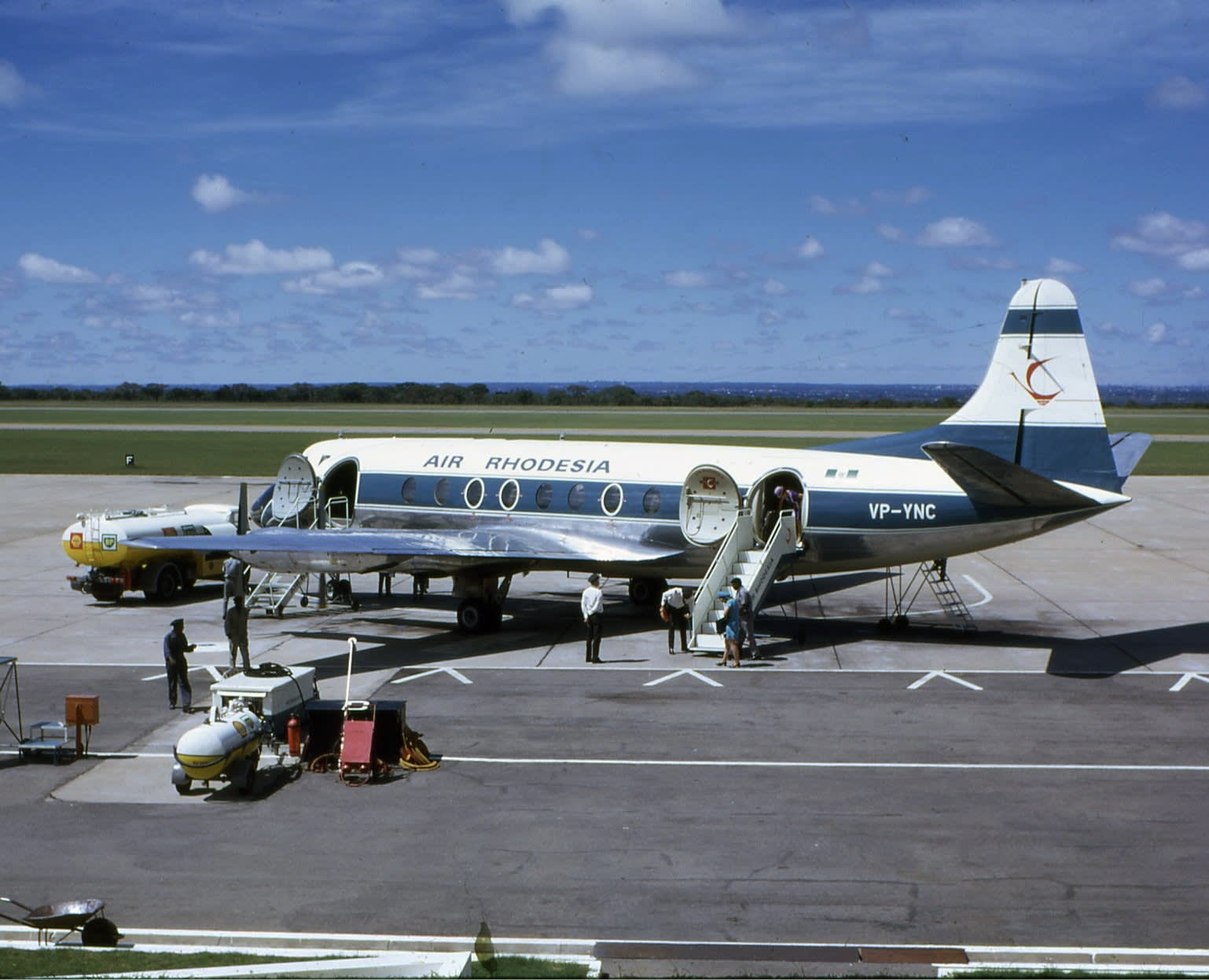
Hans Hansen, a Dane, was the last to board the plane. He was heading to Bulawayo with his wife Diana to see some friends. For whatever reason, he just couldn’t shake the feeling that something was wrong, and he had a sinking feeling inside. His gut instinct was correct; down below, there was a ZIPRA missile team intently watching the plane. Their target, almost certainly, was General Peter Walls, but he was still down below at the airport.
As the plane passed overhead, the infrared eye of the missile launcher locked onto it, then, once the indicator lamp turned from red to green, the operator squeezed down on the trigger. The missile slammed into the wheel bay of the Hunyani, near the edge of engine number three’s exhaust.
Hans Hansen recalled:
‘The plane shook, and there was a loud explosion as fire poured out of the inner starboard engine. The flames extended the length of the plane to the tail fin, like a gigantic acetylene welding flame. I wondered if it was possible with such heat to land the aircraft before the wing melted and fell off. We turned in a full circle while descending sharply.’1
He went on:
‘No one screamed or panicked, an elderly man emerged from his seat asking for a fire extinguisher. No one answered him, but it was a sensible request. Diana took my hand, and we sat still; everything seemed to be very still and silent. Quietly I thought, ’God, I have not found out everything I want to know. I am not ready to die.’’2
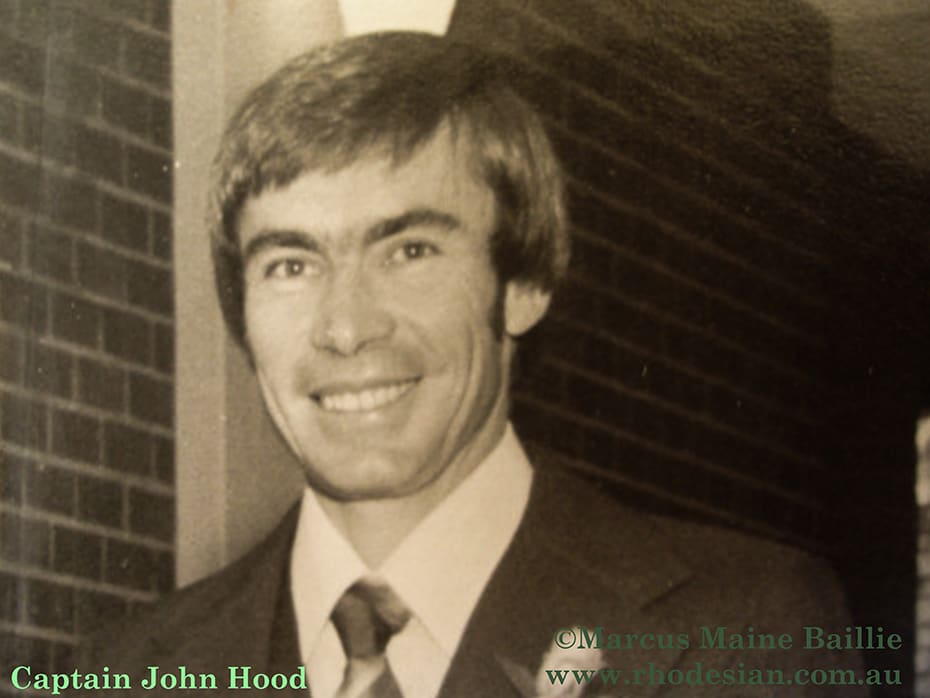
The passengers, however, were in capable hands. Captain John Hood and First Officer Garth Beaumont remained perfectly calm and managed to get their spiralling aircraft under control. Hood then announced over the radio that the plane was under control and that they were going to make a crash landing. The passengers were told to empty their pockets, take off their shoes and hold onto their ankles.
Crash Landing
Hood now began his search for a long, open field, a near-impossible task whilst the aircraft was over the Whamira Hills. He soon spotted an old cotton field with the dimensions of about two football fields combined, which wasn’t ideal, but, ultimately, it was the only piece of open ground he’d get. The air hostesses told the passengers to fasten their seat belts and adopt the crash position before dashing off to their own seats. Hood then spoke to his passengers for the last time, telling them to brace for impact and to keep their heads down.
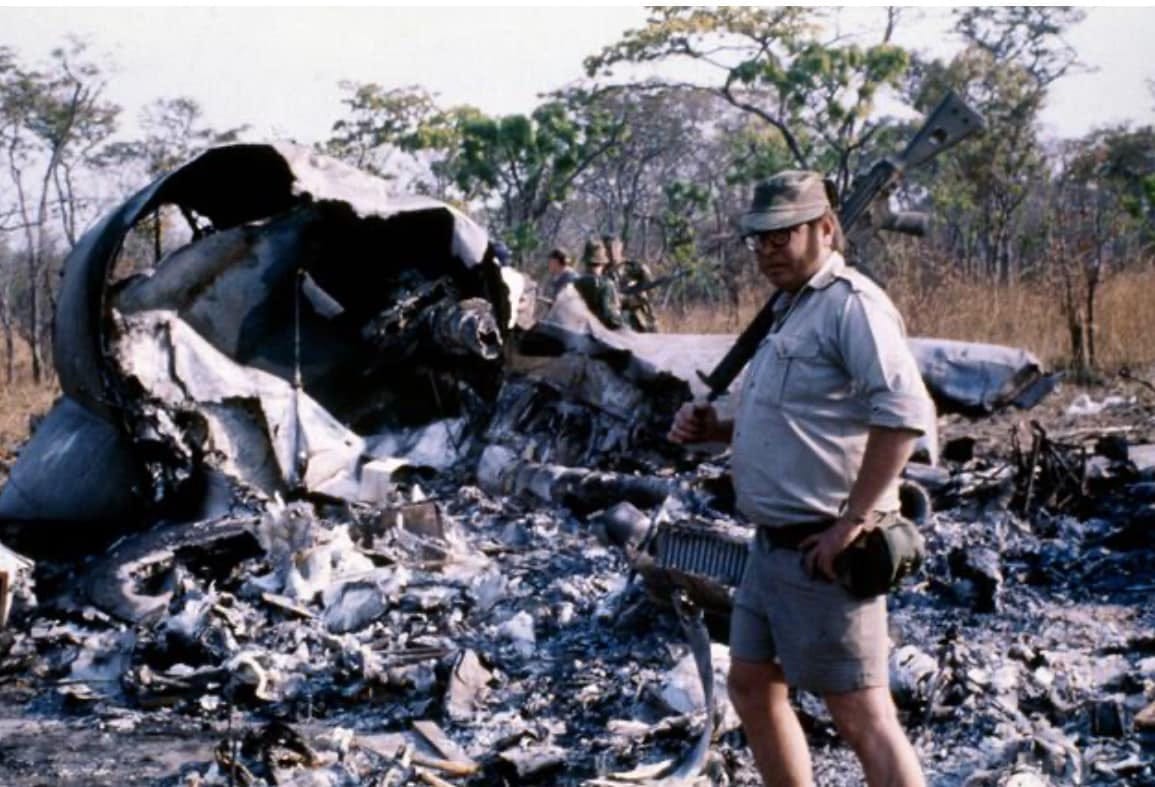
The landing had been judged perfectly, the aircraft brushing through the treetops towards the open ground. In a cruel twist of fate, however, two tall trees snapped the drooping right wing and tore off a portion of the wingtip, causing the plane to roll sharply to the right. The torn edge of the right wing was the first part of the plane to hit the ground.
Ian Pringle writes in Murder in the Zambezi:
‘After shedding bits on the way, the wing and propellers ploughed into the gulley, and the aircraft continued to roll until it was ‘’laterally vertical,’’ as described by accident investigators. The wing smashed into the far side of the donga, which caused the Viscount to cartwheel and slew around, almost facing the way it had come from. There was no chance for John Hood and Garth Beaumont – they were killed instantly, as were some of the passengers in the front rows.’3
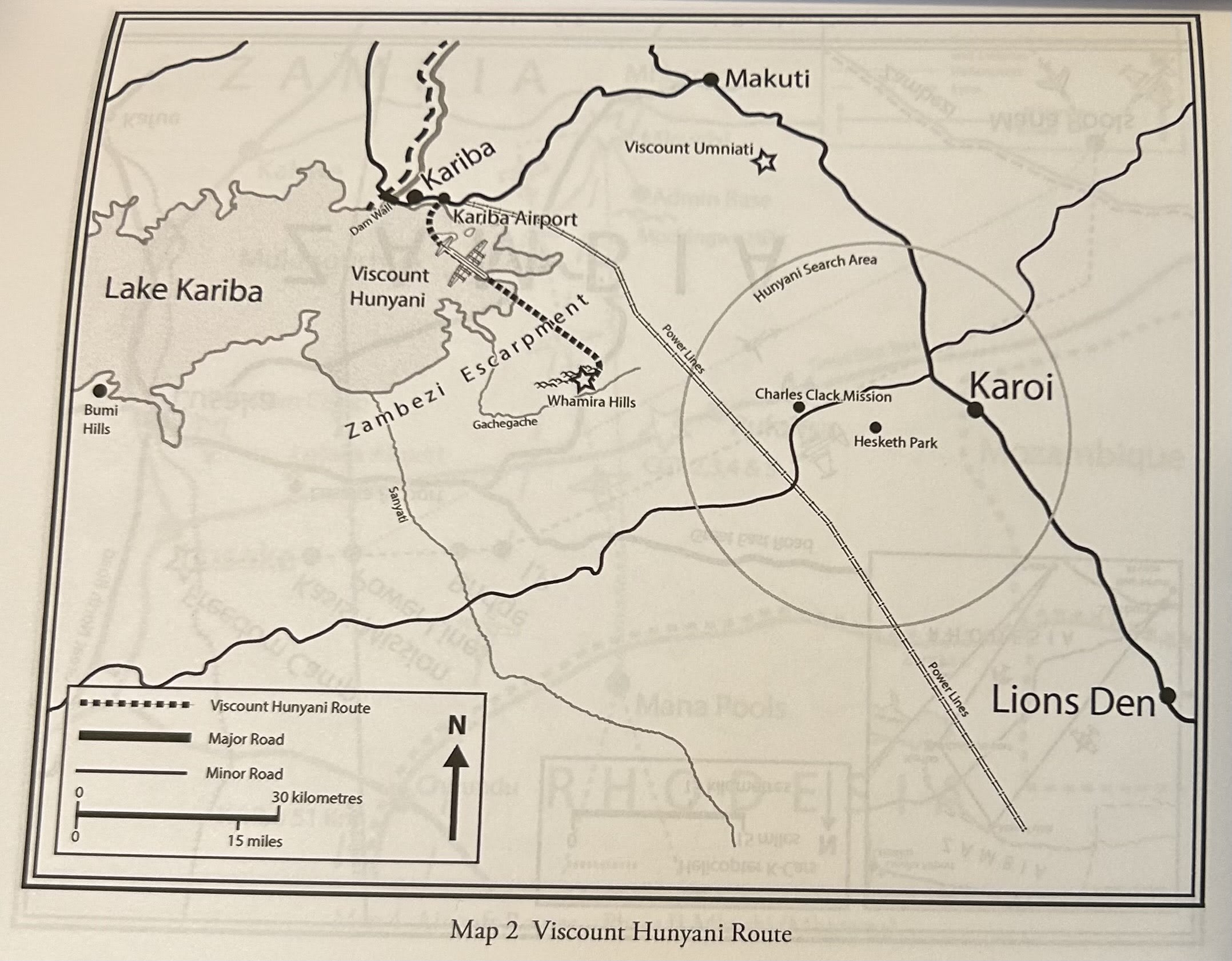
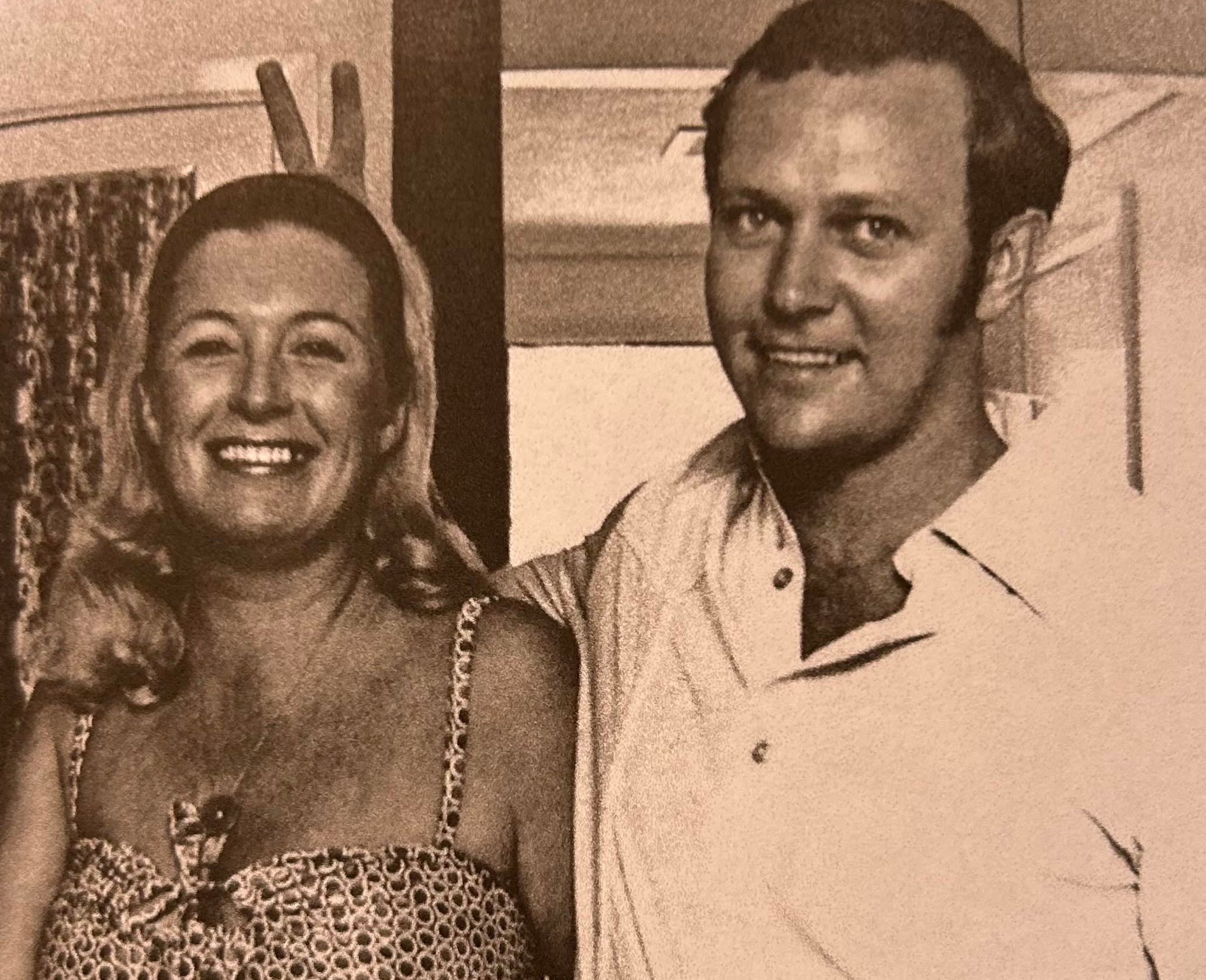
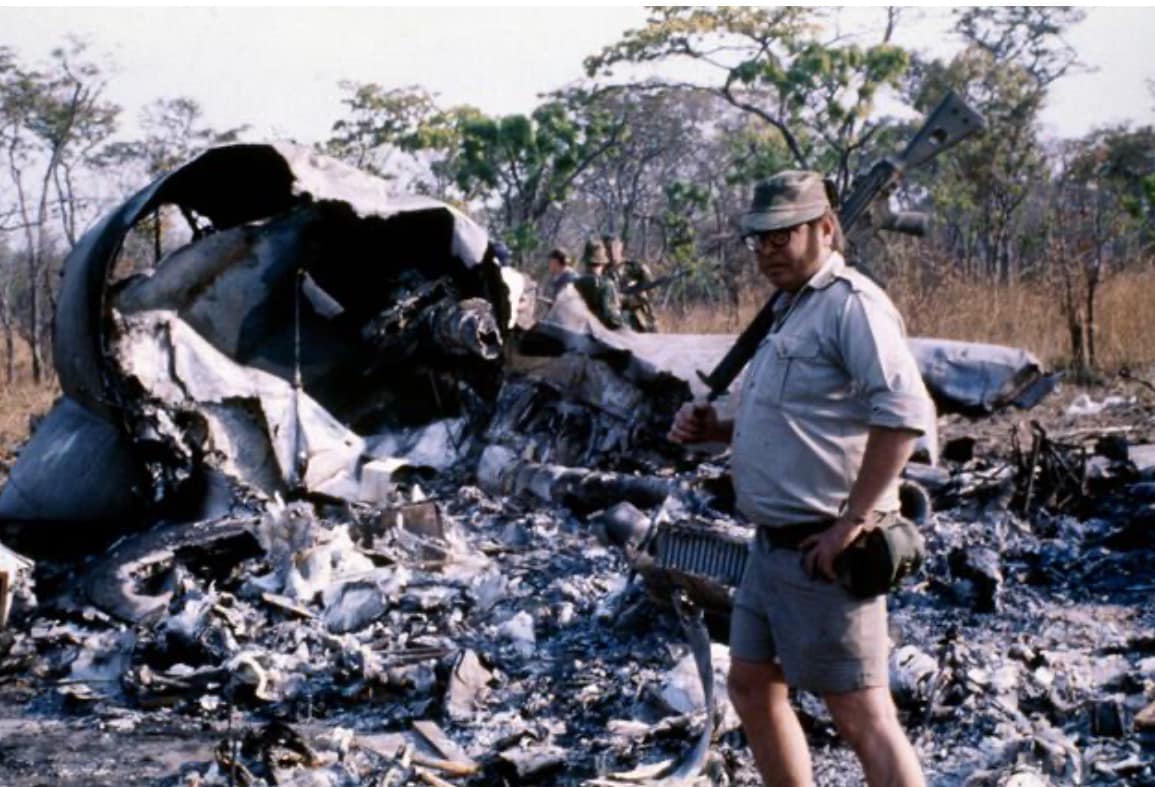
The ruptured fuel tanks had spread burning fuel all over the crash site, there was no question of a forward escape. The unfortunate passengers near the front of the plane were quickly overwhelmed and consumed by the inferno, which soon began to spread towards the survivors trapped further back. Many of the passengers, trapped in their seats and unable to break free, were quickly overwhelmed by the flames. A young girl called Cheryl Tilley was one of those fortunate enough to be right at the back of the plane. She heroically prised open the escape window and helped a boy with a broken leg to get out. Hans Hansen, meanwhile, spotted a crack in the fuselage and with the help of another man, Tony Hill, they ripped open a hole large enough to escape out of. Hans then selflessly stood on the wing, which was still packed with fuel, and began pulling people out, including three children. Tony Hill carried these survivors to safety as Diana Hansen and others risked their own lives by helping to carry the children to the hole. Diana recalled one lady whose hair was on fire. The unfortunate woman passed Diana her child, demanding that she take her, which she did.
One old man simply fell to the floor and demanded that Hans leave him to die. The brave Dane, refusing to take no for an answer, simply picked up the man and took him thirty meters away, well clear of the fire and the imminent explosion. Rushing frantically back Hans couldn’t see his wife but he needn’t have worried, she was still there, just inside the hole, another child in her arms. Her skirt was on fire but she simply ripped it off and clambered out, shouting: ‘It’s too late for the rest; they are all on fire, get away from here!’4 She was the last one off the plane.
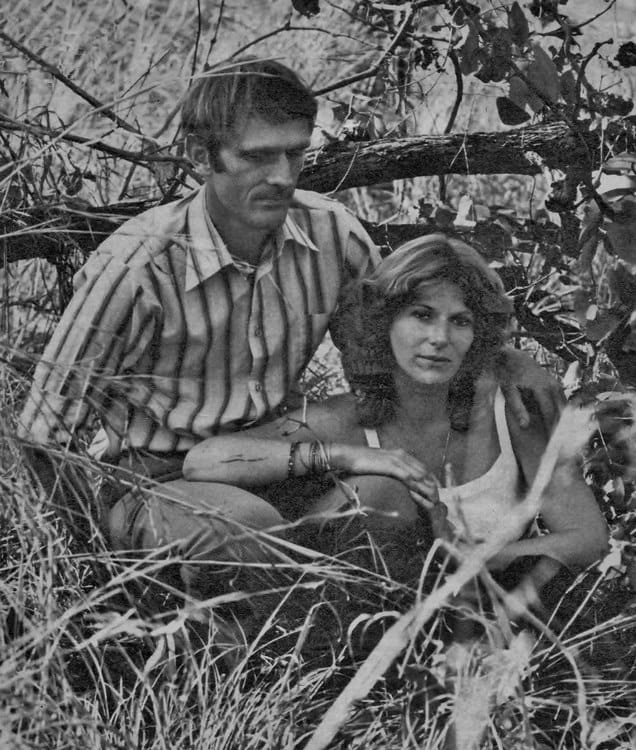
Together the Hansens carried away one of the injured air hostesses who had a crushed leg. The poor woman, drifting in and out of consciousness, kept asking if everyone got out okay. Minutes later the left wing of the plane exploded in a mushroom fireball. In all, eighteen people had survived, both of the air hostesses and sixteen passengers. The air hostesses were badly injured from the shards of glass from the bar trolley after the impact. Most of the survivors owed their lives to the Hansens, but all of them owed their lives to John Hood and Garth Beaumont. If they had failed to get control of the plane, then there would have been no survivors at all.
Massacre
They weren’t out of the woods yet, however. The nearest location with a police or military presence was Kaori, 83km away; they were in the middle of the Tribal Trust Lands, and it was getting dark. The plane had crashed at 5.16pm.
After coming to terms with their situation the survivors began to think about what to do next. Hans, who had served in the police reserve, knew full well that there wouldn’t be any Rhodesian Air Force helicopters coming for them after dark. Coming to grips with the reality that they weren’t going to get rescued that evening seemed to awaken some kind of deep human instinct for survival amongst the survivors, those who were fit to do so began tending to the wounded before organising themselves.
One group of survivors, led by Cecil McLaren, set off for a nearby village he had seen on the way down. This was great news considering that the nearby Matusadona National Park had the largest lion population in the country and the second highest concentration of lions in the entire world. These predators stayed well clear of the nearby permanent human settlements. Upon arrival at the village, all seemed eerily quiet. Only eventually, and reluctantly, did the villagers appear and give Cecil the water he requested in fluent Shona. Their reluctance could only mean that terrorists had passed through, and recently. If they were caught giving help to the White man then they would be killed without a second thought.
The Hansens, meanwhile, went to the other side of the wreckage to search the suitcases for supplies. As they did so, however, they heard voices coming from the opposite direction to the injured survivors, and Hans saw shadows. Suddenly, a machine gun opened up on them in the direction of the injured survivors. A voice shouted out: ‘We are your friends, but you have stolen our land. We will kill you. Give us your valuables.’5
Elsewhere, Tony Hill had been out looking for clothes to make bandages and was now making his way back. He saw a group of terrorists standing over the group of injured survivors. Suddenly, they spotted Tony and opened up on him but he managed to dive into a gulley. The terrorists didn’t bother to pursue him, they were after easier targets.
Turning back to the wounded crowd, the terrorists suddenly reassured them that they would fetch them water and help them. Hans could hear an old woman desperately pleading for the terrorists to spare the children, but it was no good; in response she received an earful of political slogans before, suddenly, in an act of unspeakable brutality, they opened up on the defenceless group of survivors at point-blank range. Tony Hill, from his hiding place, could hear a long burst of fire followed by short little bursts as the unfortunate survivors were finished off.
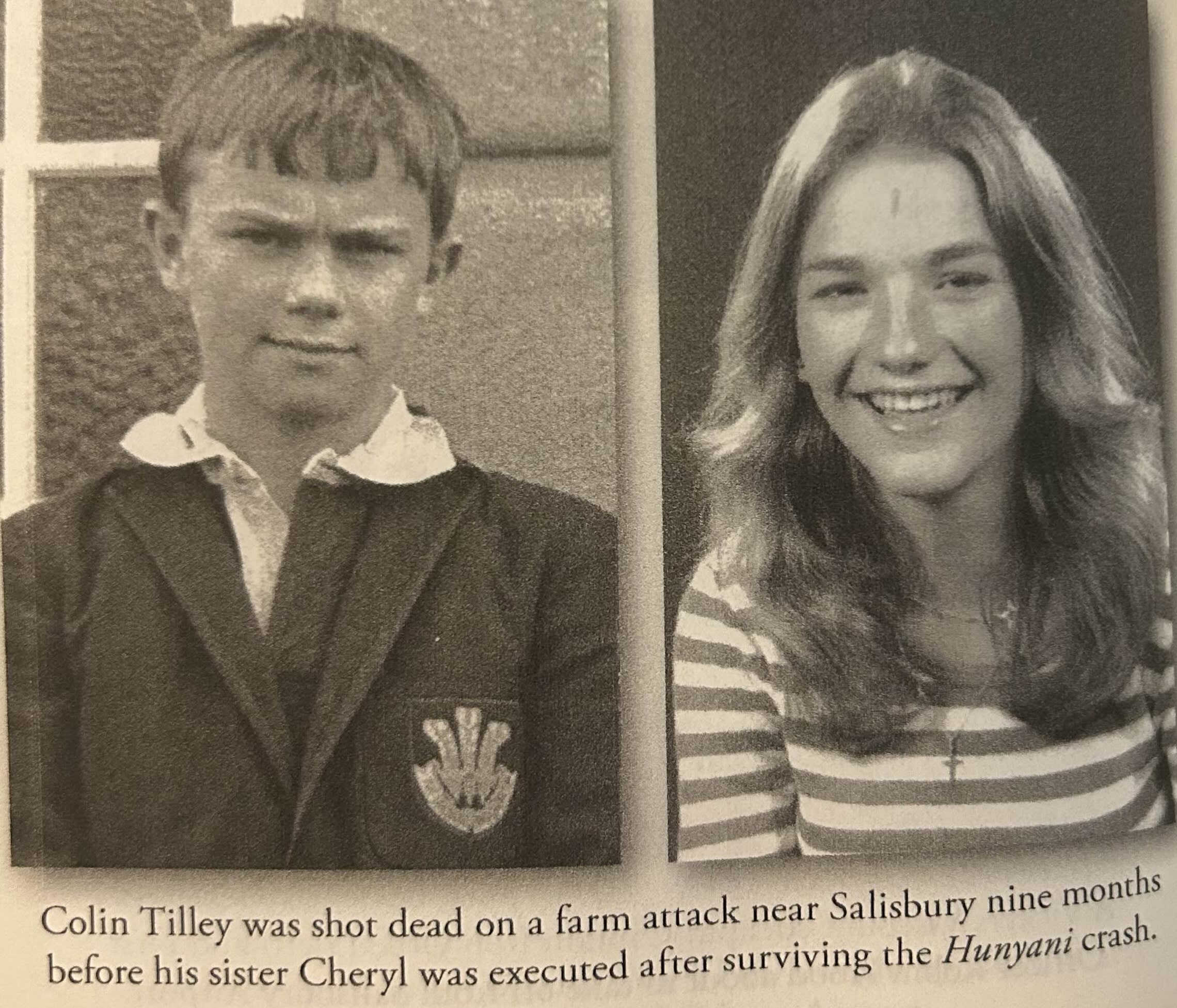
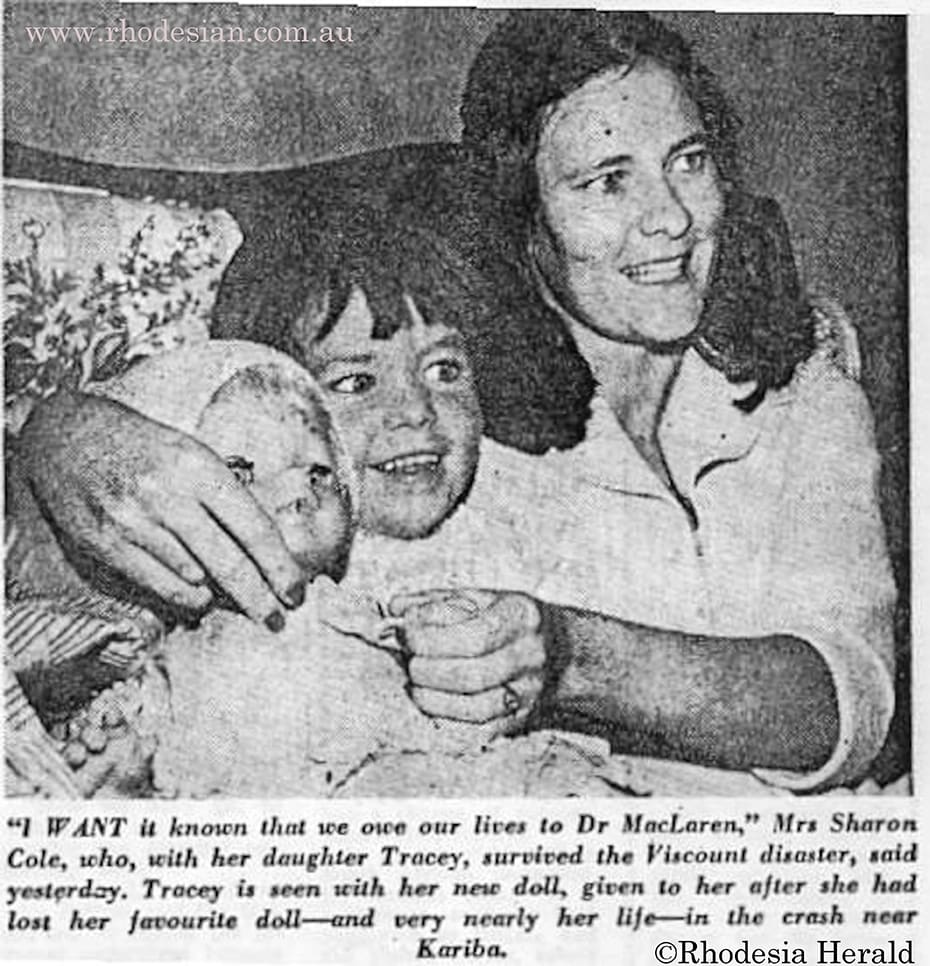
The victims included all of the children whom Diana Hansen had bravely rescued from the burning aircraft. Amongst them was Cheryl Tilley. Her brother, Colin Tilley, had been shot dead by terrorists nine months earlier in a brutal farm attack. Hans, watching this massacre take place, stood up to attempt to negotiate with the terrorists but Diana, thinking much more prudently, grabbed him and pulled him back down. She saved both of their lives.
Rescue
Cecil McLaren’s group, meanwhile, were still heading back to the crash site as the chaos broke out. They heard the voices and then the shooting before the terrorists began opening fire at them, too. No one was hit and Cecil got everyone into a dry riverbed where they waited for hours, keeping perfectly quiet. One girl in the group was 4-year-old Tracey Cole, who listened fabulously and stayed perfectly still.
The Hansens and Tony Hill, too, chose to wait out the night. They watched as the villagers suddenly scurried onto the scene and began scavenging what they could from the suitcases. The bodies, meanwhile, were left for the buzzards. The next day it would be revealed that yet another group of terrorists had passed through without anybody noticing, for the bodies had now been freshly bayonetted.
Early in the morning Cecil McLaren’s group headed east, where they were eventually picked up by a rescue convoy of Land Rovers. It was 9am at the crash site when the Hansens first heard the sounds of a rescue aircraft. A Dakota passed overhead, turned back, and began dropping paratroopers. They were saved.
Lieutenant Darryl Watt was one of the first on the site. He recalled that he was used to seeing death but ‘nothing I had seen or done prepared me for what was in front of me. I think it was the dead children that destroyed me emotionally.’6
The Hansens and Tony Hill were whisked off to Kariba hospital where they were swamped by the international press. Naturally, the entire nation had been on the edge of their seats waiting to find out what had happened. The first news to seep out suggested that everyone on board had perished, but, then, news came out that a helicopter had picked up a few survivors. Despair, cruelly and mistakenly, quickly turned to hope. Hans Hansen recalled the glow on the faces of his family when they first saw him alive, but also the other families ‘who turned away with uncontrollable tears, their loved ones butchered or burnt to unrecognisable ashes, never to be hugged or kissed again. My heart cried out for them.’7
Rage
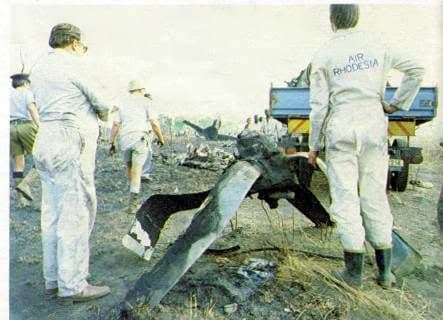
At around midday, the news was finally broadcast to the nation in a statement by Air Rhodesia. The names of the eight survivors were read out, and then, bluntly, it was admitted that there were no further survivors. The other families were to come to Salisbury to identify the bodies. The scenes at the Andrew Fleming Hospital in Salisbury were harrowing, made all the worse by the fact that many of the victims had actually survived the crash initially. Not one of the passengers bound for Bulawayo had survived.
On Tuesday morning, 5 September, the Herald ran the headline: ‘18 Live through Plane Crash Horror, Then… TERRORISTS KILL 10 SURVIVORS: Shot at Point Blank Range.’8 Every recollection of events from the time stresses the sheer level of rage, an almost indescribable rage that now swept the nation. The public wasn’t even precisely aware of how the plane had come down yet. When they found out it had been shot down by a ZIPRA missile team, the rage quickly turned into an insatiable desire for revenge. Nkomo coming out on television and admitting that his forces shot down the plane but denying that ZIPRA had anything to do with the massacre fell on deaf ears; no one believed him. The ZAPU leaders’ attempt to play the race card fell on equally deaf ears. ‘You forget that the regime kills thirty of our people a day,’ Nkomo pointed out, ‘so the life of a black person is different from a white person?’9 The difference, clearly, was that his people were enemy combatants, not women and children. Besides, some of the victims weren’t even White; they were Asian.
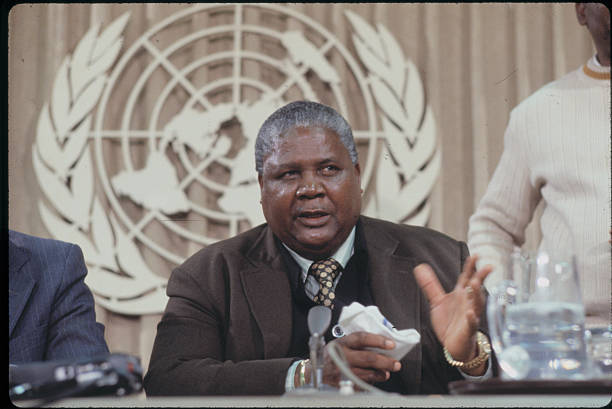
A BBC Radio 4 announcer called Nkomo to test his claim. This was what caused the anger of the Rhodesians to really boil over. Nkomo was asked how the plane had been brought down, in response he ‘gloated and cackled.’10 The civilians, the ZAPU leader pointed out with questionable logic, were valid military targets as the males on board could have been territorial reservists.
The backlash was immediate, as Rob Gaunt, a Rhodesian Front MP remarked: ‘I believe we have done our utmost in this country to be reasonable and the time, I fear, is now upon us when all Africa is going to see their first race of really angry white men.’11 Indeed, many Whites demanded nothing less than ‘full-scale mobilisation and all-out war against the PF.’12 Some Whites, so overcome with emotion, resorted to beating up random Africans in the streets in a few cases. Such scenes were unheard of. Geoffrey Nyarota, one of the few black reporters at The Herald, wrote about that night when the subeditors were processing the news of the Viscount murders:
‘This wicked massacre shocked the entire nation and the world. Black and White united in condemnation of the shooting down of Flight 825 and the senseless loss of innocent lives. Reports that ZAPU leader Joshua Nkomo had laughed about the incident… were met with utter revulsion. There was mayhem in The Herald newsroom that night. As the gravity of events at Kariba sank in, seasoned journalists manning the all-white subs’ desk rose up as one in a storm of protest, cursing the communist terrorists and everything that was either black or African.’13
On Thursday it was positively confirmed that a Strela warhead had been used to take down the plane. The co-Minister of transport, Bill Irvine, interrupted Parliament and announced the news, blurting out defiantly:
‘The people of this country will not let these innocents go unavenged! Our security forces, black and white together, are at present hunting down the murder gang, and I can promise the leaders of the Patriotic Front skulking in Lusaka and elsewhere that those who seek to ride the wind will reap the whirlwind!’14
Another Member of Parliament shouted out that the perpetrators should be hanged publicly. Smith, meanwhile, was furious. Only days beforehand the news of his talks with Nkomo had gone public in Lusaka and Rhodesians had ‘welcomed the official release of news of the Nkomo/Smith negotiations,’15 and now this! Literally overnight ‘Nkomo came to be as reviled by the Whites as much as Mugabe.’16 Smith had put his own head on the line for Nkomo, and for what? One of the most egregious acts of terrorism in history had been committed, the Rubicon had been crossed, and there was no longer any chance of negotiation, no matter how much Smith deluded himself. His ‘restrained’17 condemnation of Nkomo did nothing but infuriate his fellow-Whites even further. Many demanded retribution against the local tribesmen who had supported the terrorists in the region, in his memoirs Smith would recall that ‘it was necessary, although difficult, to counsel cool heads and remind people that two wrongs do not make a right.’18
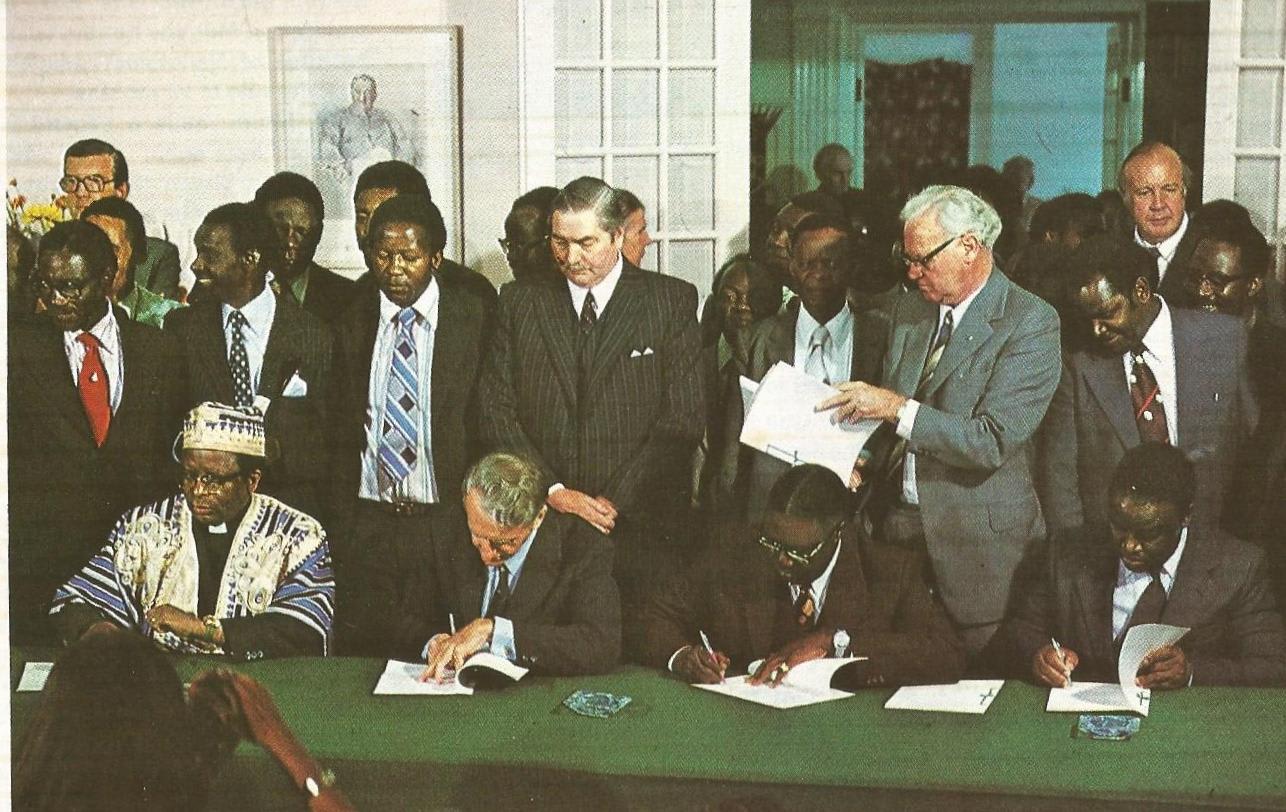
The Anglican bishop of Mashonaland also spoke along these same lines:
‘I arrived back to the dreadful and soul-searing news of the Viscount atrocities, and the thing that I fear most now is a white backlash. It takes the greatest courage of all to realise the hopelessness of revenge and the importance of conciliation. It is terribly important that the ghastliness of the war does not brutalise us, especially the whites, and blunt our sensibilities to the fact that the most grievous suffering is still among the defenceless people in the tribal trust lands.’19
Easier said than done. There was no question of letting this act of terror go unpunished. The PM’s hands were tied and most Rhodesians simply didn’t care what the South Africans or anybody else had to say anymore. It was time to hit ZAPU, and hit them hard. If Smith did not act, then he risked being ousted in a full-scale revolt within the Rhodesian Front.
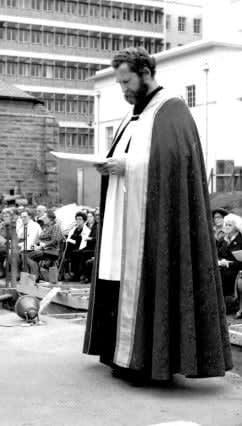
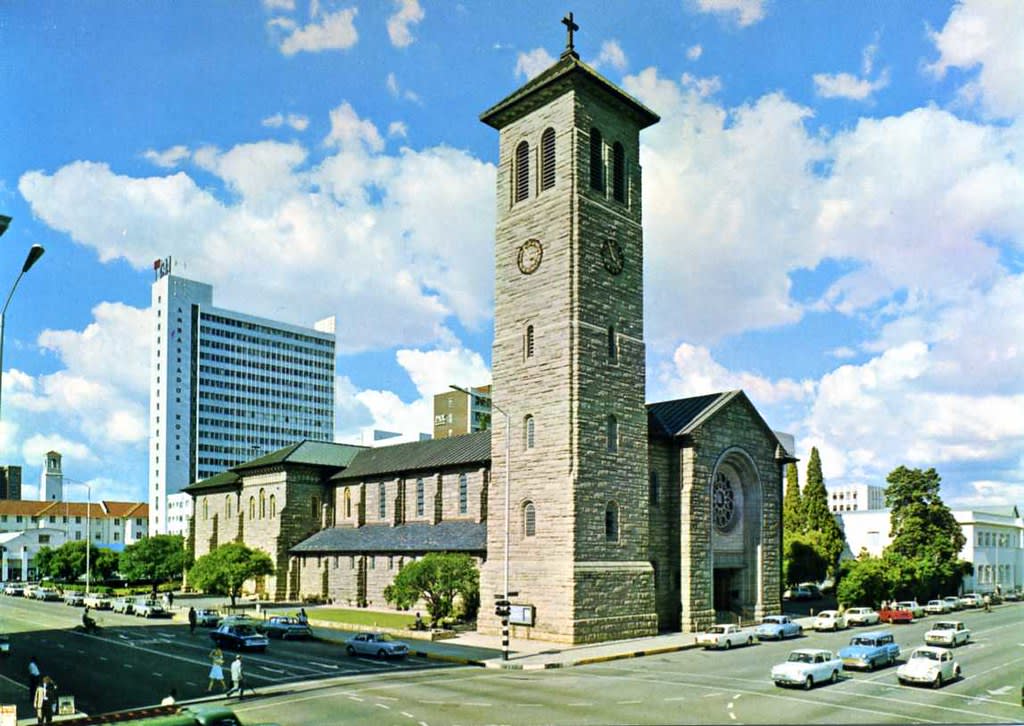
On 8 September flags were flown at half-mast all across Rhodesia as the major memorial services were held at Salisbury’s Anglican Cathedral, the Hebrew Congregation and the Hindu Temple. 2000 mourners packed into Salisbury Cathedral. Every inch of space was occupied and the crowd flooded out onto the front steps. Five hundred more were gathered around radios on the pavement outside. John da Costa, the Anglican Dean of Salisbury, directed his fury at the Western democracies:
‘The most savage and treacherous sort, which leaves us stunned with disbelief and brings revulsion in the minds of anyone deserving the name ‘human’. This bestiality, worse than anything in recent history, stinks in the nostrils of heaven. But are we deafened with the voice of protest from nations, which call themselves ‘civilized’? We are not. Like men in the story of the good Samaritan, they pass by, on the other side.’20
Indeed, the British Government hadn’t said a word to Rhodesia. Instead, Prime Minister Callaghan went and met with President Kaunda and promised him the world. The Zambian President was terrified of Rhodesian retaliation and so, at the cost of ten million pounds, Callaghan sent him a modern air defence system and Tigercat missiles. The idea that these systems could be used against Rhodesian civilian airliners from across the Zambezi didn’t particularly seem to trouble the PM.
The United Nations and the World Council of Churches, especially, found themselves condemned by da Costa for their support of the terrorists:
‘I am sure they both bear blame on this. Each parade a pseudomorality, which, like all half truths, is more dangerous than a direct lie. I have nothing but sadness that our churches have failed so badly to practise what we teach. May God forgive us all, and may he bring all those who died so suddenly and unprepared into the light of his glorious presence. Amen.’21
The occasion was a solemn one, really adding to the emotion welling up within the country. As the spectators left the Cathedral they were confronted with protestors who berated Smith for daring to meet with Nkomo. One Rhodesian father of four, Gideon Tredoux, held up a poster that read ‘PM Smith, give Nkomo a message when you next meet him secretly: ‘Go to hell you murdering bastard!’’22
Smith, however, had already buckled. He knew what he had to do, the Rhodesian public had forced their PM to ‘match their mood.’23 Nkomo, Smith said, was ‘a monster [who] has put himself beyond the pale by what he has done.’24 Ken Flower’s advice regarding external operations was ‘over-ridden or simply ignored,’25 it was time for revenge. On 10 September Smith made a radio and television address to the nation in which he aimed a warning directly at Kenneth Kaunda:
‘I must warn the neighbouring states to the north and to the east that we cannot tolerate a situation in which these murderous terrorists can operate from within their borders with impunity. If they permit this, then they must bear the consequences of any defensive strikes we may undertake against terrorist bases in their country.’26
The semi-official Times of Zambia newspaper ‘took the unprecedented step of publishing an open letter to Ian Smith’27, inviting him for public talks. This, for now, was ignored. The Rhodesian public was out for blood, but, they would have to be patient. The target was obvious, for a long time now there had been growing concern over the build-up of not only terrorist but actual conventional ZIPRA forces at various camps in Zambia. The planners knuckled down and got to work.
Revenge
Whilst Smith and the Executive Council were busy in the States, where they had been invited by a group of pro-Rhodesian Senators, the Security Forces were getting ready for what was to be their finest hour, Operation Gatling. There were to be multiple targets, just like on Operation Dingo. In Zambia it was estimated that there were around 17,500 terrorists in total and the main camps in which they were being housed and trained were identified as Freedom Camp, Mboroma and the CGT Complexes.
Freedom Camp was ZAPU’s central communications centre and it housed an estimated 4,500 terrorists as well as Nkomo’s military high command. The complex had been built around what was previously the white owned farmstead of Westlands Farm, just 19km north of Lusaka’s city centre. Mboroma, meanwhile, was 160km north-east of Lusaka and housed an estimated 1,500 terrorists. Much less was known about this location. Finally there was the Central Guerrilla Training Camps, or CGT Complexes for short. This location consisted of four separate camps covering an area of 30 square kilometres. The Rhodesians numbered the camps 2, 3, 4 and 5. Camp 2, the largest, housed an estimated 4,000 terrorists. Camp 3 housed 1,000 fully trained terrorists, fresh from training in Angola, Ethiopia and Russia. Little was known about 4 and 5. Together this amounted to something like 11,000 terrorists in all three locations combined, about two-thirds of Nkomo’s forces.
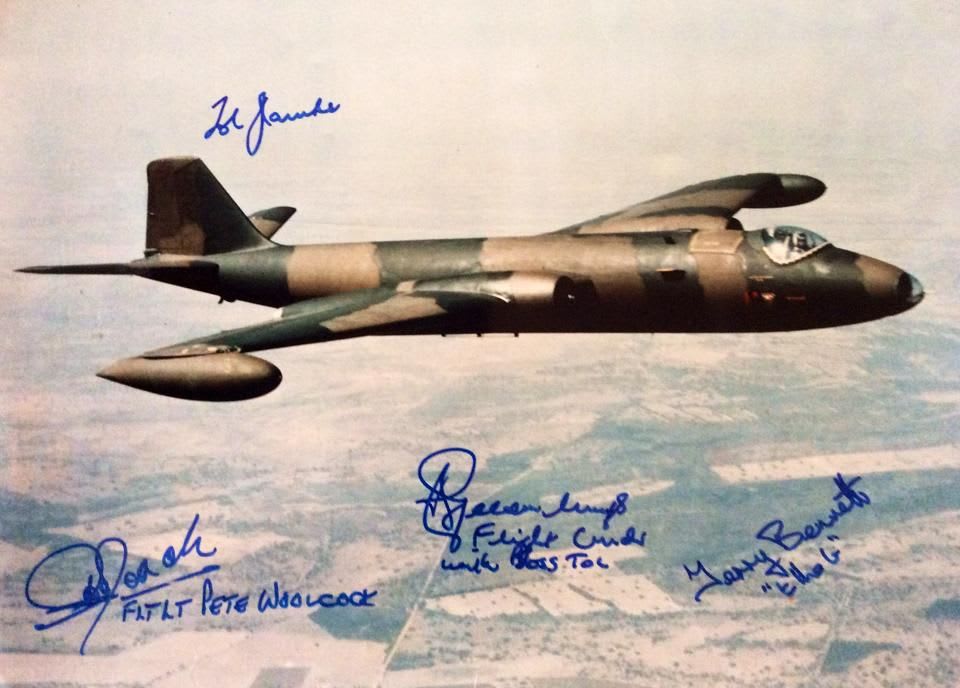
On the morning of 19 October there were four English Electric Canberra bombers on the northern apron at New Sarum air force base, 300 alpha bomblets having been loaded into the belly of each. When the planes were ready Squadron Leader Chris Dixon, three other pilots and four navigators made their way out of the crew room and boarded their respective aircrafts. This was Green section.
Chris Dixon and Mike Ronne, his navigator, could not have been a better duo for the job. Chris had been a childhood friend of John Hood, the heroic pilot of the downed Viscount. Mike, meanwhile, was a school friend of Dulcie Esterhuizen, the flight attendant who had been so mercilessly shot after surviving the crash. At 7.45am Green section took off. Mike, for posterity’s sake, had rigged up a cassette-tape recorder to the intercom system so his discussions with Chris and the radio dialogue could be recorded.
After half an hour Green section was in Zambia, making their way towards Freedom Camp. Down below, the terrorists only realised something was wrong when the first Hunter Jet of Blue section had already entered its dive. It was too late to flee. A 1,000-pound fragmentation bomb and a collection of Golf bombs slammed into the parade square. Deadly shrapnel and a massive shockwave was sent in all directions. The ear-shattering explosion and then implosion of the golf bomb stunned any survivors in the blast radius, and the rest of the terrorists began to instinctively run away from the buildings and the carnage in the parade ground and towards the tree-cover to the north east. They were running straight into the path of the approaching Canberras.
Ronne recalled seeing ‘just hundreds and hundreds of people running away from the building across an open field.’28 The turn of Green section was merely seconds away. Ronne, his voice quivering with adrenalin, shouted out: ‘Steady, right a touch. I’ve got them in the field… Steady, I’m going to get them… Steady… Steady…’29 It was so tempting to just press the button, but Ronne held his discipline for just a few more seconds for maximum effect. At the opportune moment he let it rip and 1,200 deadly alpha bombs came raining down from the four Canberras and carpeted the field below with shrapnel. Dixon, in awe, shouted: ‘Beautiful, Jesus Christ, you want to see all those fuckers! The bombs are beautiful!’30 The Hunters then took their turn before K-Car helicopters moved in and began firing at the mass of black bodies. It was an absolute slaughter.
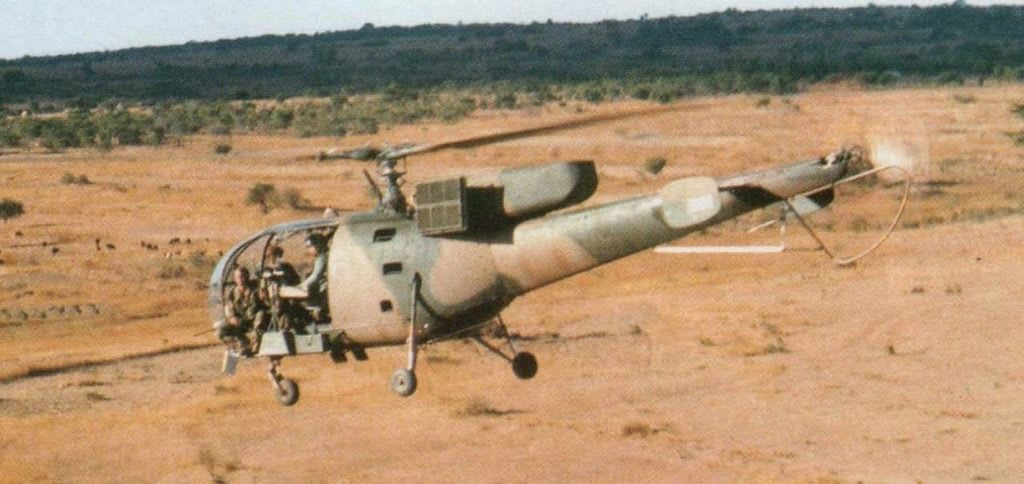
Whilst the K-Cars kept up their turkey shoot, Chris Dixon got around to delivering his infamous message to the air-traffic control tower at Lusaka Airport:
‘Lusaka tower this is Green Leader. This is a message for the station commander at Mumbwa from the Rhodesian Air Force. We are attacking the terrorist base at Westlands Farm at this time. This attack is against Rhodesian dissidents and not against Zambia. Rhodesia has no quarrel, repeat, no quarrel with Zambia or her security forces. We, therefore, ask you not to intervene or oppose our attack. However, we are orbiting your airfield at this time and are under orders to shoot down any Zambian Air Force aircraft which does not comply with this request and attempts to take off. Did you copy all that?’31
The Zambian did as he was told, no Zambian Air Force jets were scrambled despite the violation of Zambian air space. A Kenyan Airways flight which was trying to land in Lusaka but being delayed asked ‘Who has priority here anyway?’32 The response came back from the air-traffic controller: ‘Well, I think the Rhodesians do at this time.’ The attack had gone off without a hitch, but, there was no time to waste, everyone rushed back to base to refuel, rearm and repair ready for phase two.
Mkushi was to be subjected to an even larger initial strike. Paratroopers and helitroopers were then to vertically envelop the camp, their leader was to be Major Garth Barrett, the SAS commander who had been the first man on the ground at the Viscount crash site.
Once more, surprise was total, the 1900 or so terrorists were just milling about, the anti-aircraft defences unmanned. Most of the terrorists were bunched up at the South Camp, exactly where Green 3 and 4 dropped their bombs. When the air force had finished their initial strike, the paratroopers moved in, and, as usual, they were involved in firefights from the second they hit the ground, the terrorists running away right under their very feet. Many of them were unarmed, their weapons were locked up in the armoury and they had no means of obtaining them.
It was here at Mkushi, though, that the Rhodesians took their first loss. Nineteen year old Lance Corporal Jeff Collett of the SAS was shot dead by a female ZIPRA guerrilla. Soon after another SAS trooper was shot in the face by a woman, although this case wasn’t fatal. Most of the terrorists, though, were not as brave as these women. They just fled for their lives. About 1000 managed to escape, but 400 were killed at Mkushi. As it turned out, most of the terrorists here were women and findings at the site indicated that the women had been specifically trained in Urban Warfare. Barrett explained the potential consequences:
‘We saw fairly sophisticated training programmes there. My concern, and that of SB and CIO, was this: can you imagine 1500 ‘maids’ serving in people’s houses and then on a given day just up sticks and shoot everyone in the house. Imagine the implications of that? It would have been devastating to the population. That idea really rocked me back on my feet because, if that was indeed the plan, it would have had a dramatic effect on the whole of the white population.’33
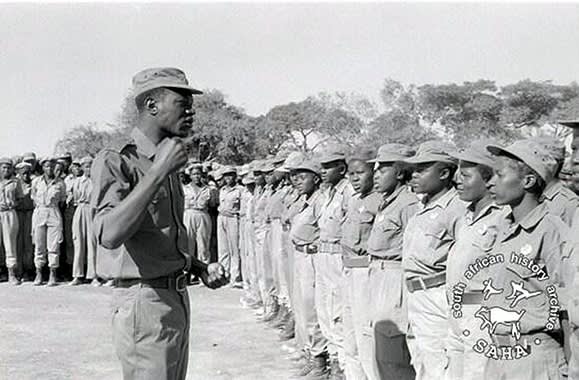
The CGT Complexes, meanwhile, didn’t quite go to plan. The terrorists had been forewarned and upon arrival the Rhodesians found that the place was abandoned. There was to be one more battle, though. The 1st Zambian Regiment had been moved from their base near Victoria Falls to Mkushi to keep them safely out of reach from the Rhodesians. An unfortunate choice, given that the Rhodesians were still occupying the camp in order to strip it bare of equipment and information. An ambush was set up and within three to five minutes thirty-seven Zambian policemen and soldiers had been killed. Two prisoners were taken and not a single Rhodesian was wounded.
In all, about 1,500 terrorists had been killed and a similar number wounded during Operation Gatling. Freedom Camp and especially the Canberra bombing saw the biggest body count. On top of this tally there were the thirty-seven dead Zambians and 198 missing terrorists. Revenge had been total.
The most delicious part of all for the Rhodesians, though, was to be Joshua Nkomo’s reaction. He, amazingly, chose to play the victim. When asked about an all-party conference the ZAPU leader blurted out: ‘We don’t talk to murderers. You can forget about the whole damned business.’34 When asked about his previous talks with Smith, Nkomo could only say: ‘I talked to that savage when I thought there was some humanity in him. I have discovered that he is a beast, a brute, a thief.’35
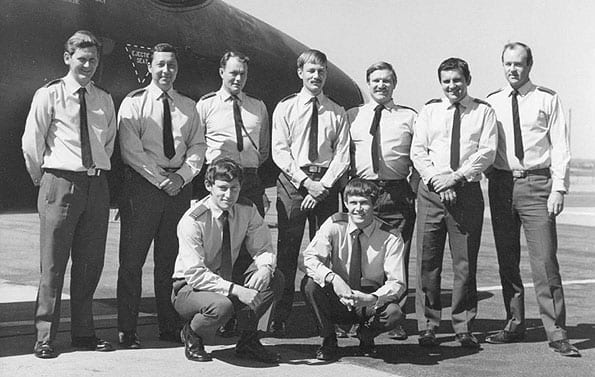
Chris Dixon, now forever to be known as Green Leader, became famous overnight, a true Rhodesian hero. White spirits had lifted overnight. Even General Walls, who had been so pessimistic, now declared: ‘Provided we keep our faith in God and ourselves, we cannot go far wrong.’36
As well as Green Leader t-shirts, there was even a hit single, The Green Leader Theme, released in Chris Dixon’s honour by John Edmond. The song became an instant best seller:
‘Our wings are a fortress to our land
Today, a special missions’ planned
Dear land, today I’ll serve thee well,
My motherland has gone through hell
No one in the world to heed her
Tomorrow the world will know Green Leader.’37
Murder in the Zambezi, Ian Pringle, p67
Ibid
Murder in the Zambezi, Ian Pringle, p71
Murder in the Zambezi, Ian Pringle, p73
Murder in the Zambezi, Ian Pringle, p83
Murder in the Zambezi, Ian Pringle, p102
Murder in the Zambezi, Ian Pringle, p108
The Herald, 10.09.78
Murder in the Zambezi, Ian Pringle, p111
A Short Thousand Years, Paul L. Moorcraft, p112
A Short Thousand Years, Paul L. Moorcraft, p114
Ibid
Murder in the Zambezi, Ian Pringle, p113
Murder in the Zambezi, Ian Pringle, p116
Serving Secretly, Ken Flower, p210
The Past is Another Country, Martin Meredith, p347
The Past is Another Country, Martin Meredith, p348
The Great Betrayal, Ian Smith, p266
Murder in the Zambezi, Ian Pringle, p116-117
Murder in the Zambezi, Ian Pringle, p119
Murder in the Zambezi, Ian Pringle, p119-120
Green Leader, Ian Pringle, p104
The Past is Another Country, Martin Meredith, p348
Ibid
Serving Secretly, Ken Flower, p213
Green Leader, Ian Pringle, p106
Ibid
Green Leader, Ian Pringle, p165
Ibid
Green Leader, Ian Pringle, p166
Green Leader, Ian Pringle, p167
Rhodesians Never Die, Peter Godwin and Ian Hancock, p233-234
Green Leader, Ian Pringle, p184
Green Leader, Ian Pringle, p192
Ibid
The Past is Another Country, Martin Meredith, p350
Green Leader Theme, Troopiesongs Phase IV (1979), John Edmond
Zoomer HistorianRead More


 R1
R1
 T1
T1


