
Intelligence Briefing
Top 17 Live Intelligence Dashboards You Need to Bookmark Right Now
From war zone tracking and cyber conflict monitoring to market-geopolitics convergence and AI-powered accountability tools, a new generation of real-time dashboards has emerged: free, open, and frighteningly capable.
The community shared an avalanche of live intelligence dashboards in response to a recent @DailyDarkWeb post on X, and the depth of what’s now available to analysts, researchers, traders, and threat hunters is remarkable. Below is our curated breakdown of each platform: what it does, who it’s for, and what makes it stand out.
Conflict Monitoring
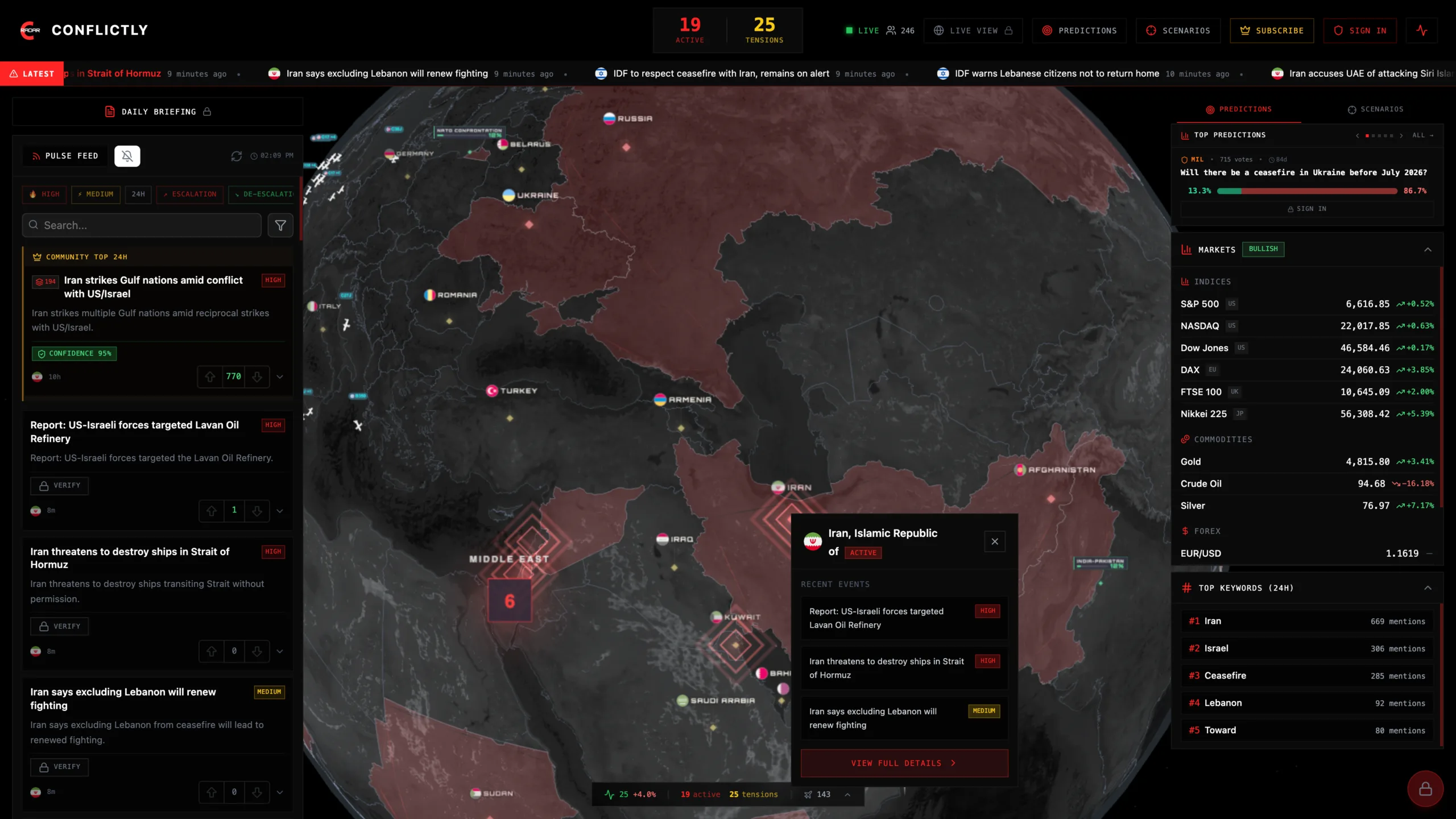
Conflictly is a sleek, purpose-built conflict monitoring platform aggregating live data on active armed conflicts, insurgencies, and military operations worldwide. Its minimalist interface belies the density of underlying intelligence feeds it draws from.
Designed for analysts who want signal without noise, Conflictly strips away editorial commentary and delivers structured incident data, making it a solid complement to more verbose news aggregators. Particularly useful for anyone tracking sub-state conflicts, territorial shifts, or low-intensity warfare that often falls through the cracks of mainstream media coverage.
Academic OSINT
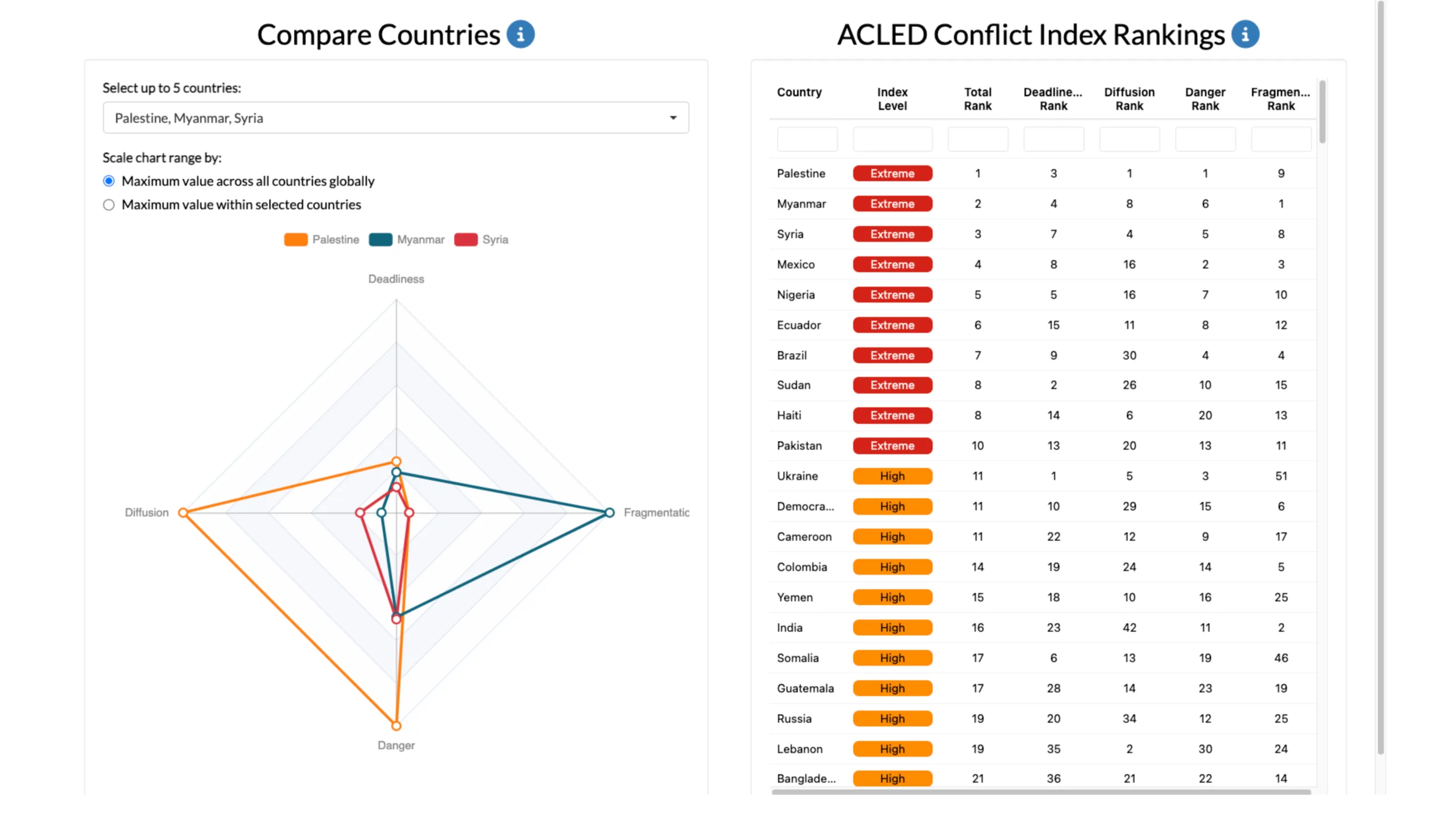
The Armed Conflict Location & Event Data (ACLED) project is one of the most academically rigorous open-source conflict monitoring datasets in existence. Their Conflict Index Dashboard translates years of granular incident-level data into an interactive, ranked view of global conflict intensity by country and region.
Unlike dashboards optimized for speed, ACLED prioritizes precision: each data point is sourced, verified, and coded by trained analysts. For policy researchers, threat assessors, and intelligence professionals who need defensible, citation-quality data, this is the gold standard.
OSINT Directory
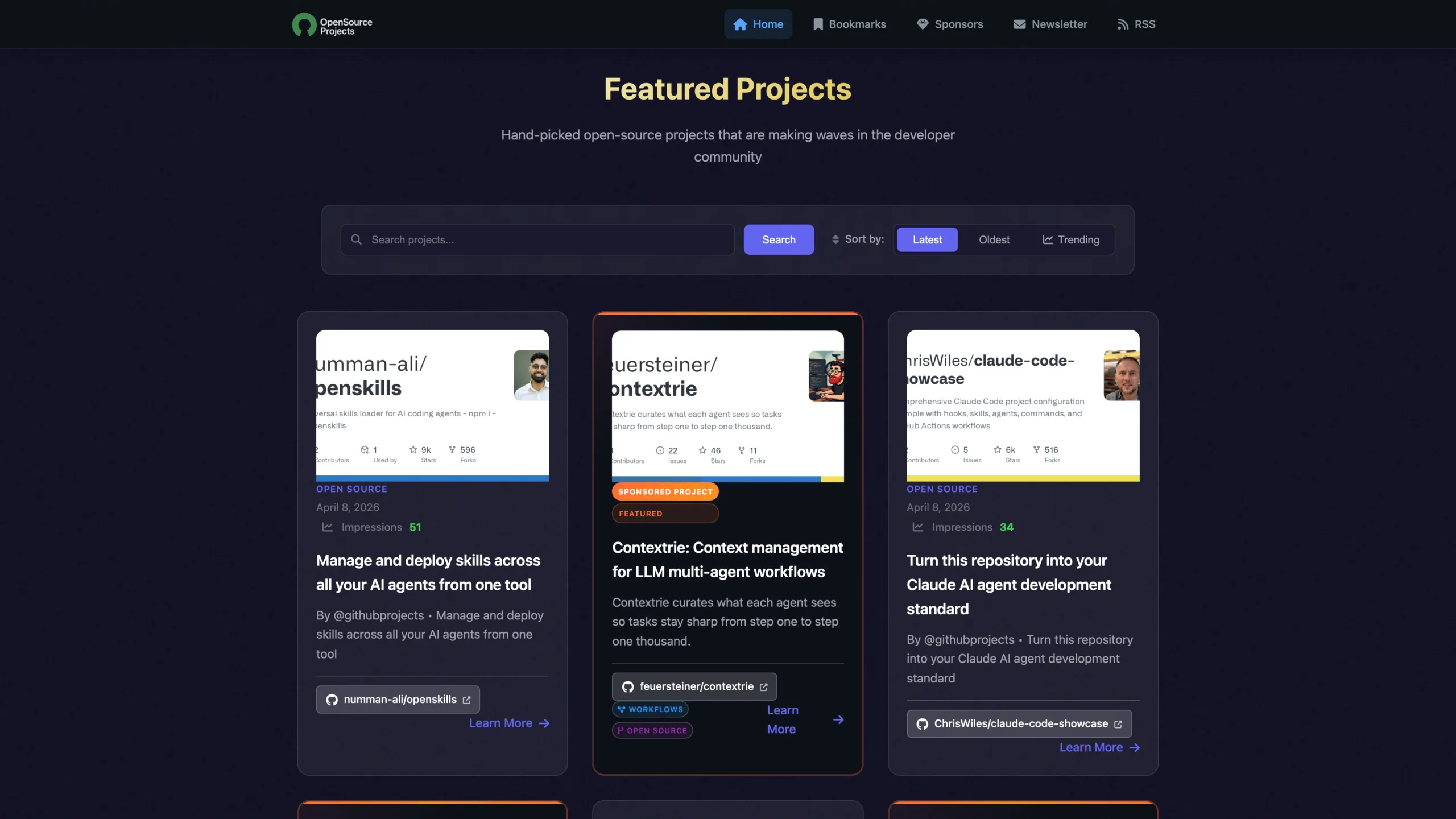
Not a dashboard in the traditional sense, but arguably the most useful meta-resource in this list. OpenSourceProjects.dev serves as a curated discovery engine for open-source intelligence and security tools, making it invaluable for analysts who want to build or extend their own intel stacks.
Think of it as a living index of the open-source OSINT ecosystem. For threat researchers and red teamers who want to go beyond consumer dashboards and access raw tooling: scrapers, enrichment pipelines, geolocation utilities, and more.
Geospatial Intel
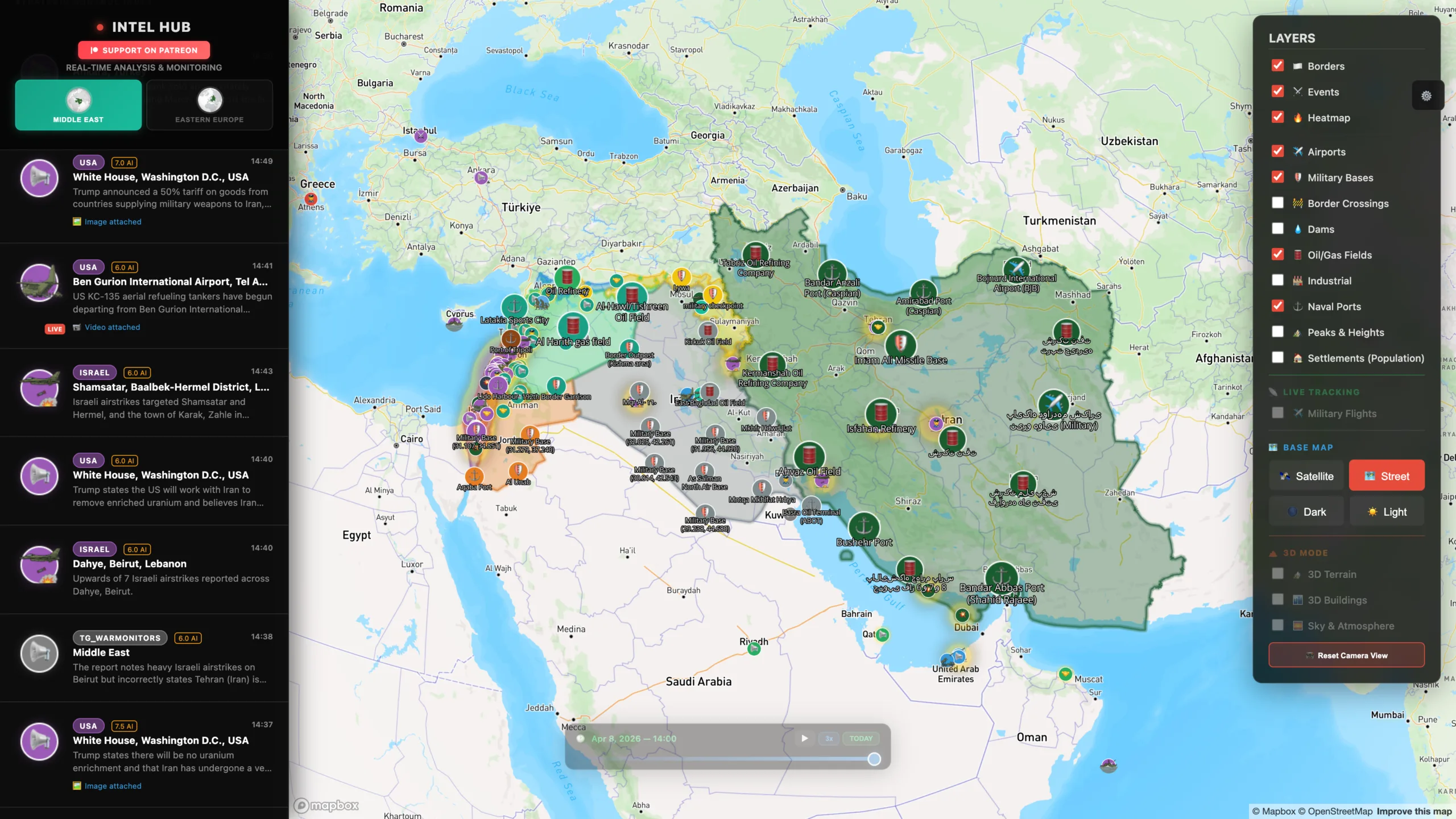
IntelMapper is one of the most visually capable open-access war mapping tools currently available. Built on a modern geospatial stack, it delivers a real-time 3D interactive map covering active conflict zones with particular depth in the Middle East and Eastern Europe theaters.
What distinguishes IntelMapper from static news maps is its layering system: users can toggle military bases, border crossings, oil and gas fields, naval ports, live military flight tracking, and more. The Strategic Control Index adds a quantitative dimension to territorial analysis.
Geopolitical Terminal
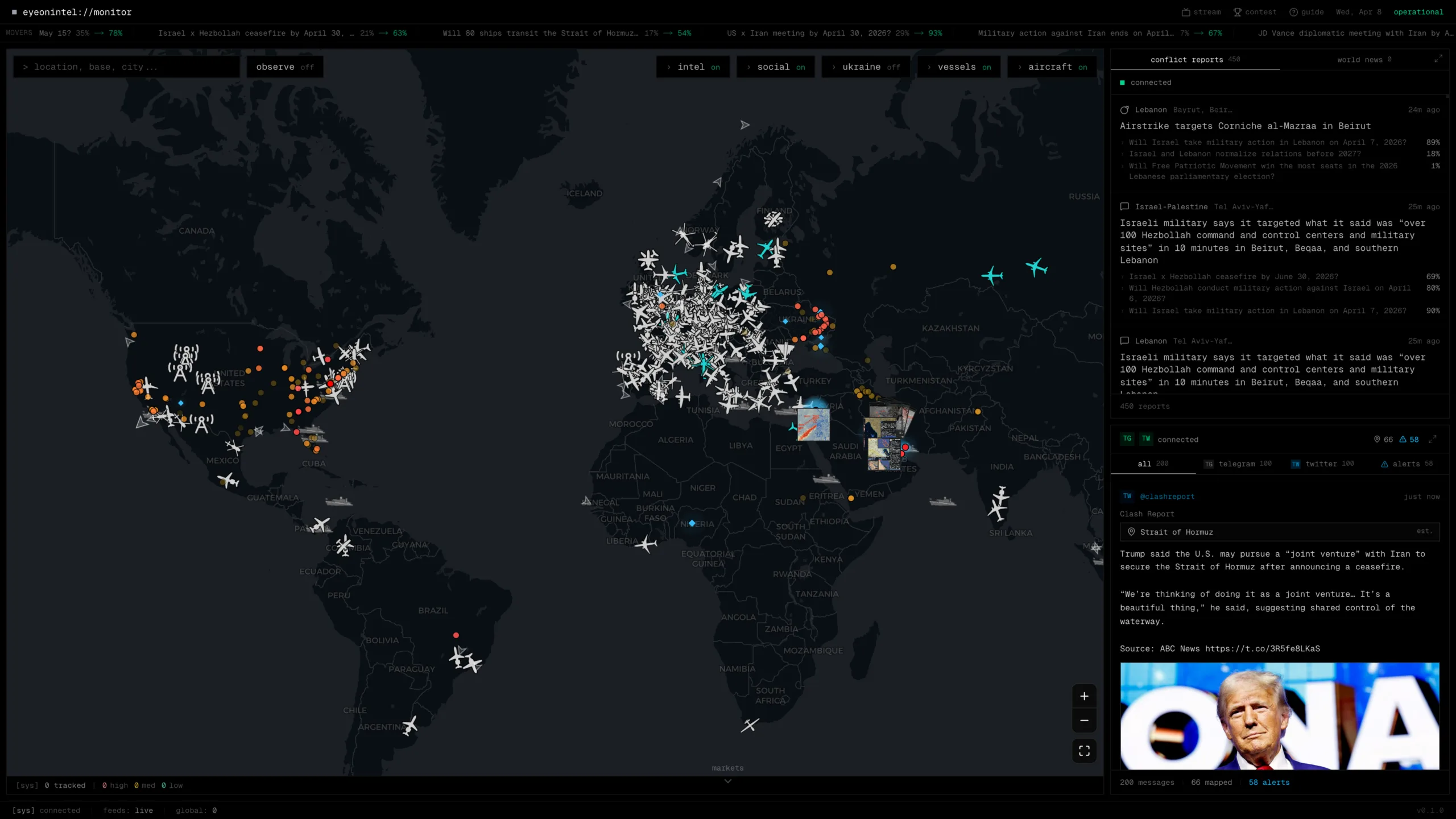
EyeOnIntel is an analyst-grade terminal-style intelligence dashboard that blurs the line between OSINT aggregation and financial signal intelligence. The platform pulls together world news streams, conflict reports, vessel and aircraft tracking, Telegram war correspondent feeds, and prediction market data from Polymarket in one dense, real-time interface.
Its geopolitical activity index accumulates a 24-hour signal grid across a ~2-degree geospatial resolution, surfacing emerging hotspots before they hit mainstream headlines.
AI Trust Monitoring
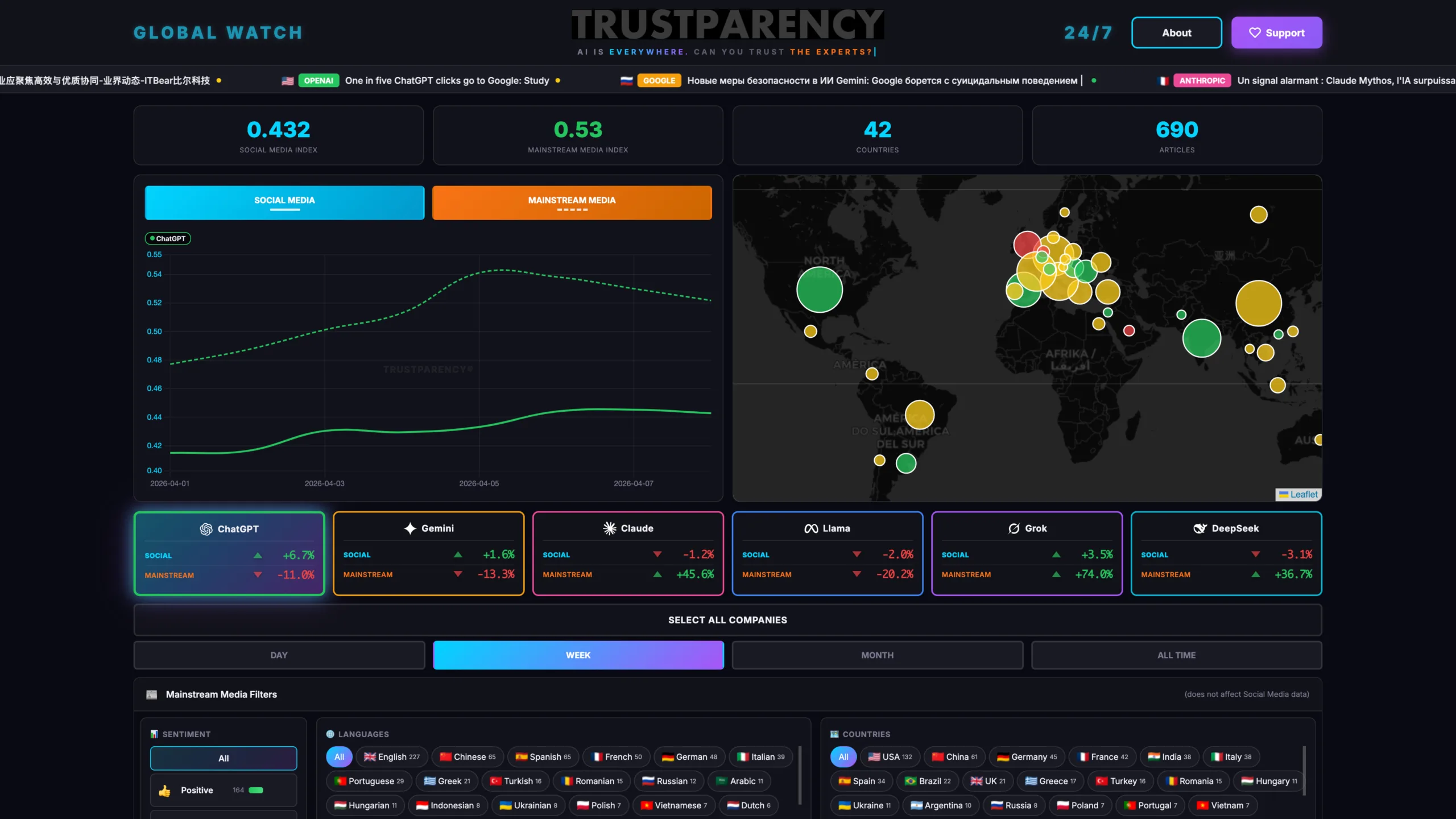
Trustparency’s Global Watch platform monitors the AI ecosystem 24/7, tracking deployments, incidents, policy developments, and provenance across a rapidly evolving landscape. For CISOs, AI governance teams, and threat researchers, Trustparency represents an emerging category: real-time AI risk intelligence.
It functions as an early-warning layer for AI-related incidents: model misuse, governance failures, deepfake campaigns, and regulatory actions that traditional threat feeds don’t cover. In a world where AI itself is becoming an attack vector, this kind of monitoring is no longer optional.
War Cost Accountability
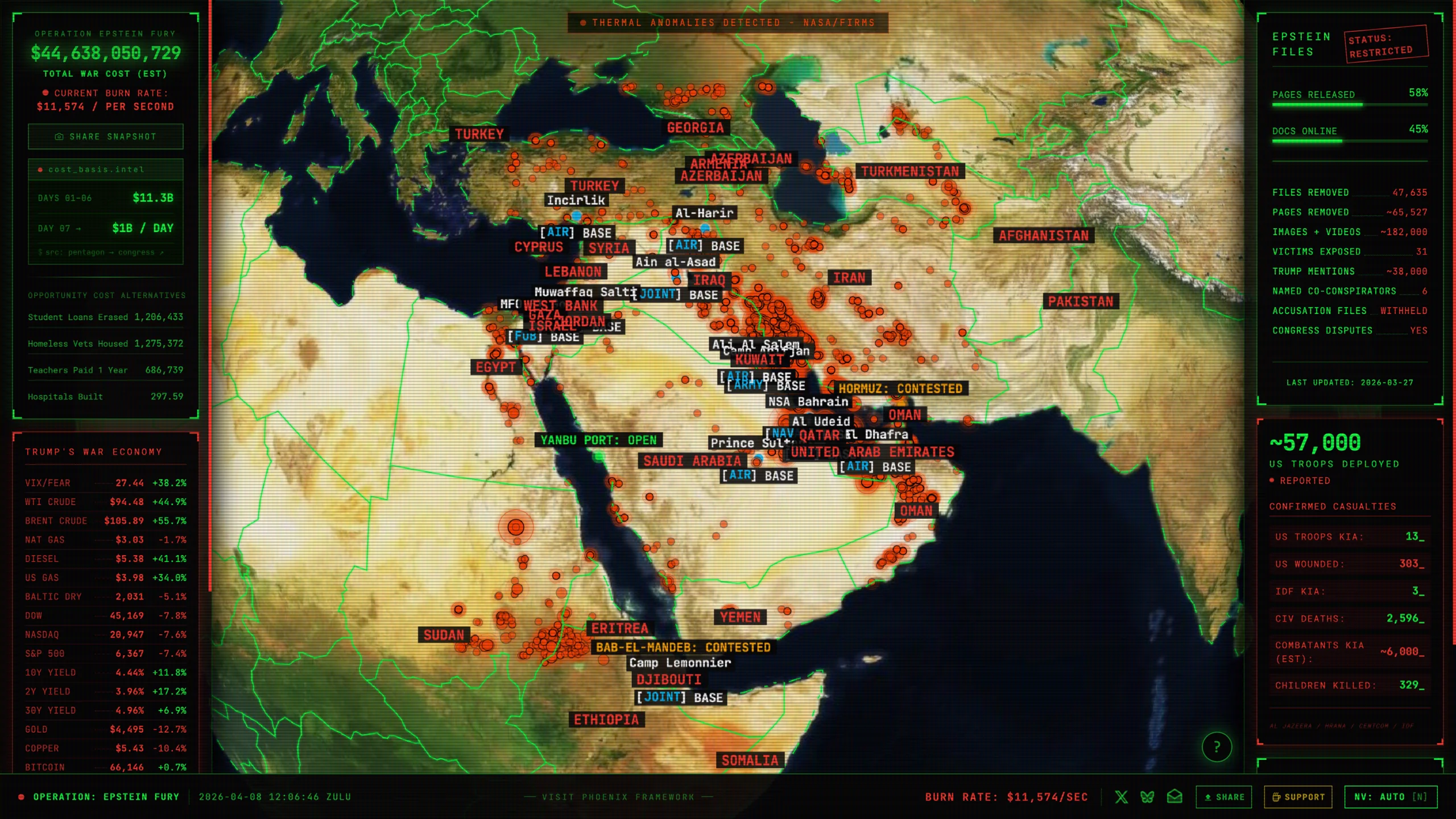
One of the most granular real-time accountability dashboards to emerge from the current Middle East conflict cycle. Epstein Fury tracks the live financial burn rate of the US military operation that began February 28, 2026, alongside casualty data, energy market impact, and Jeffrey Epstein document release status, all in a single 3D interface.
The financial tracking is remarkably precise: sourcing Pentagon briefings to Congress, CSIS analysis, and CENTCOM data to calculate a Phase 2 burn rate of $21,797 per second. Energy impacts are tracked in real time via WTI crude, Brent, US gas, diesel, and Henry Hub natural gas. The war economy module covers 23 market metrics including fertilizer/urea pricing.
Global Risk Monitor
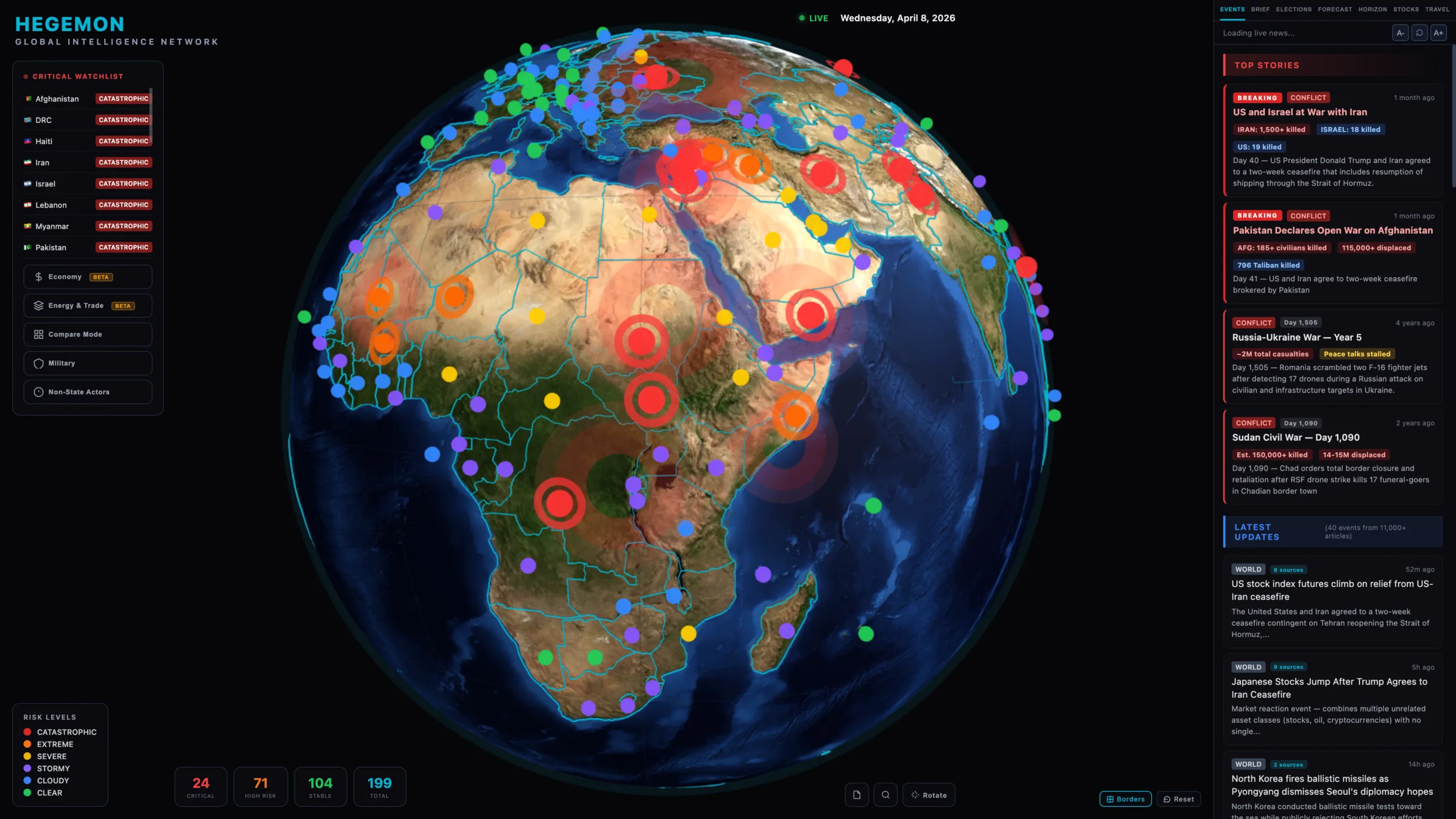
Hegemon is a comprehensive geopolitical intelligence platform tracking wars, political instability, and country-level risk across all 198 recognized nations. The platform renders a live interactive 3D globe with AI-powered intelligence summaries, pulling from over 100 real-time sources.
What sets Hegemon apart is the breadth of its analytical modules: country risk analysis, election tracking, geopolitical forecasts, daily intelligence briefings, travel advisories, chokepoint monitoring, non-state actor tracking, trade route visualization, and military base mapping. Political bias labeling on sources adds epistemic integrity to the intelligence picture.
Situation Dashboard
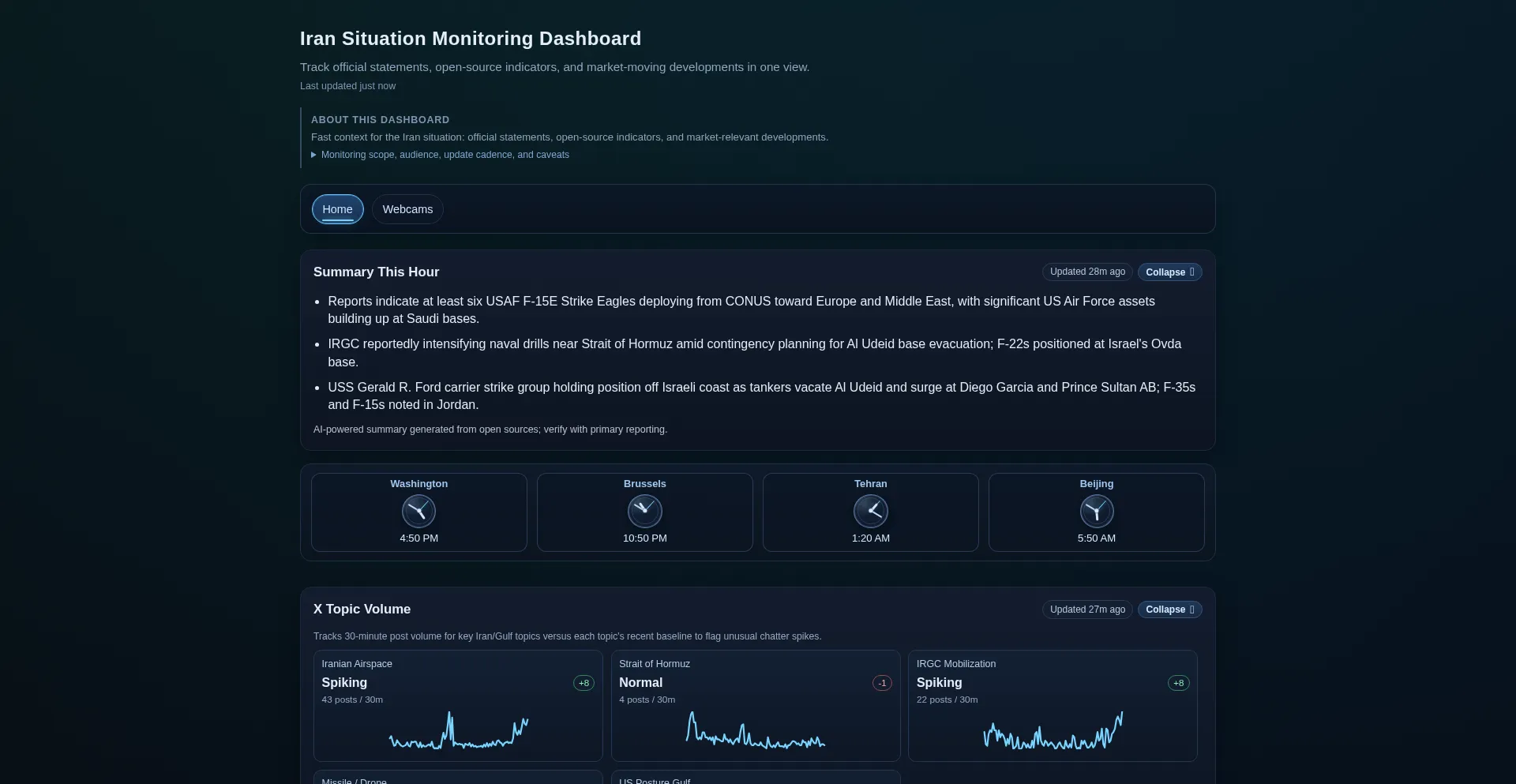
SignalCockpit is a focused situation dashboard with a dedicated Iran monitoring track, making it one of the most targeted intel feeds available for Middle East watchers. As US-Iran tensions have escalated significantly in 2026, having a dedicated, always-on cockpit view of Iranian military, political, and proxy activity is operationally essential for regional risk analysts.
Middle East OSINT
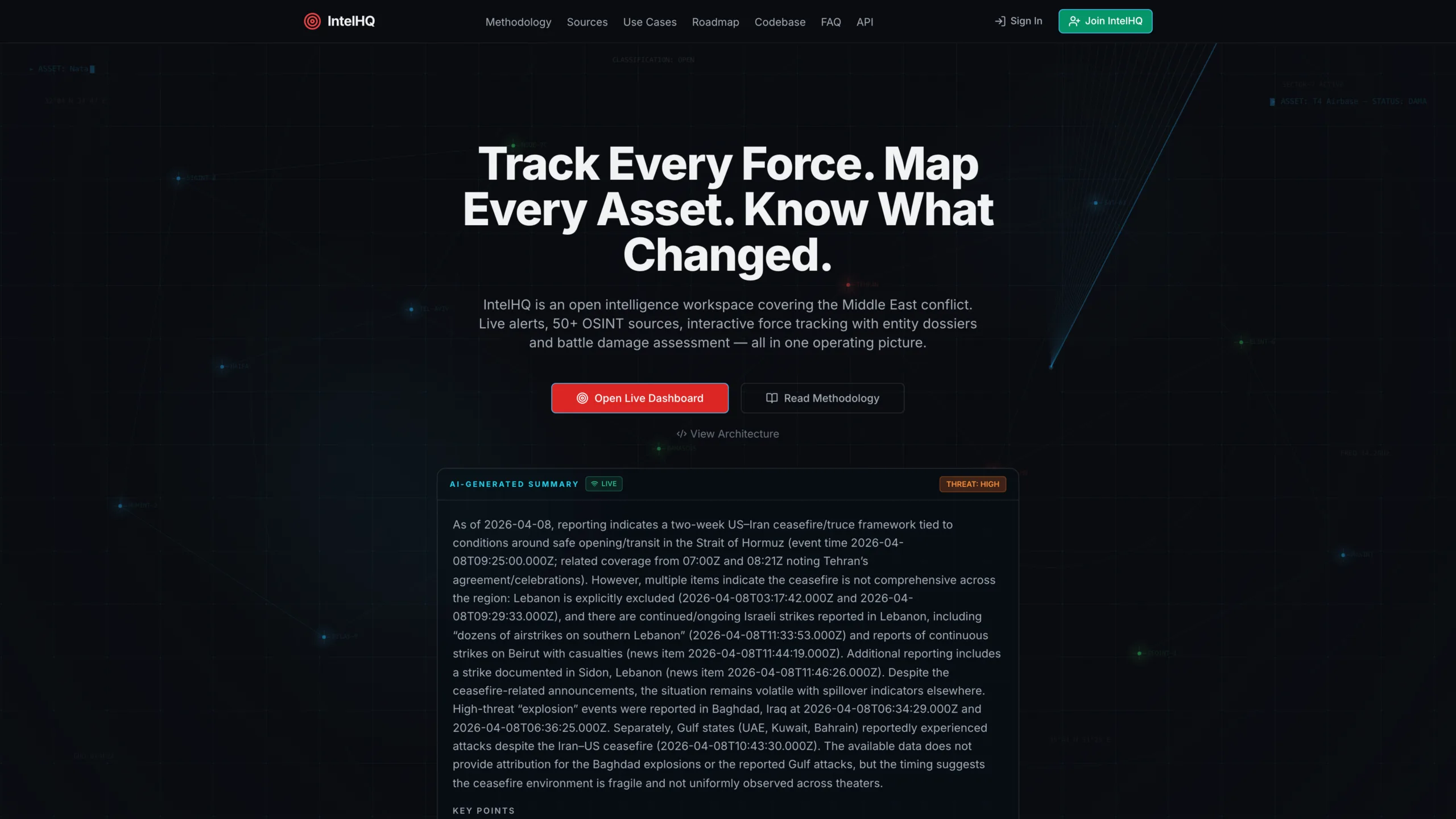
IntelHQ is a real-time Middle East intelligence command center built for high-tempo operational environments. It tracks missile launches, interceptions, drone activity, and ground military events across the region with live alerts and mapped incident visualization.
The platform’s ORBAT (Order of Battle) intelligence module is particularly valuable for serious analysts, providing structured tracking of force composition and disposition across active conflict actors. AI-powered alert triage helps surface the most operationally significant events from a high-volume feed.
AI OSINT
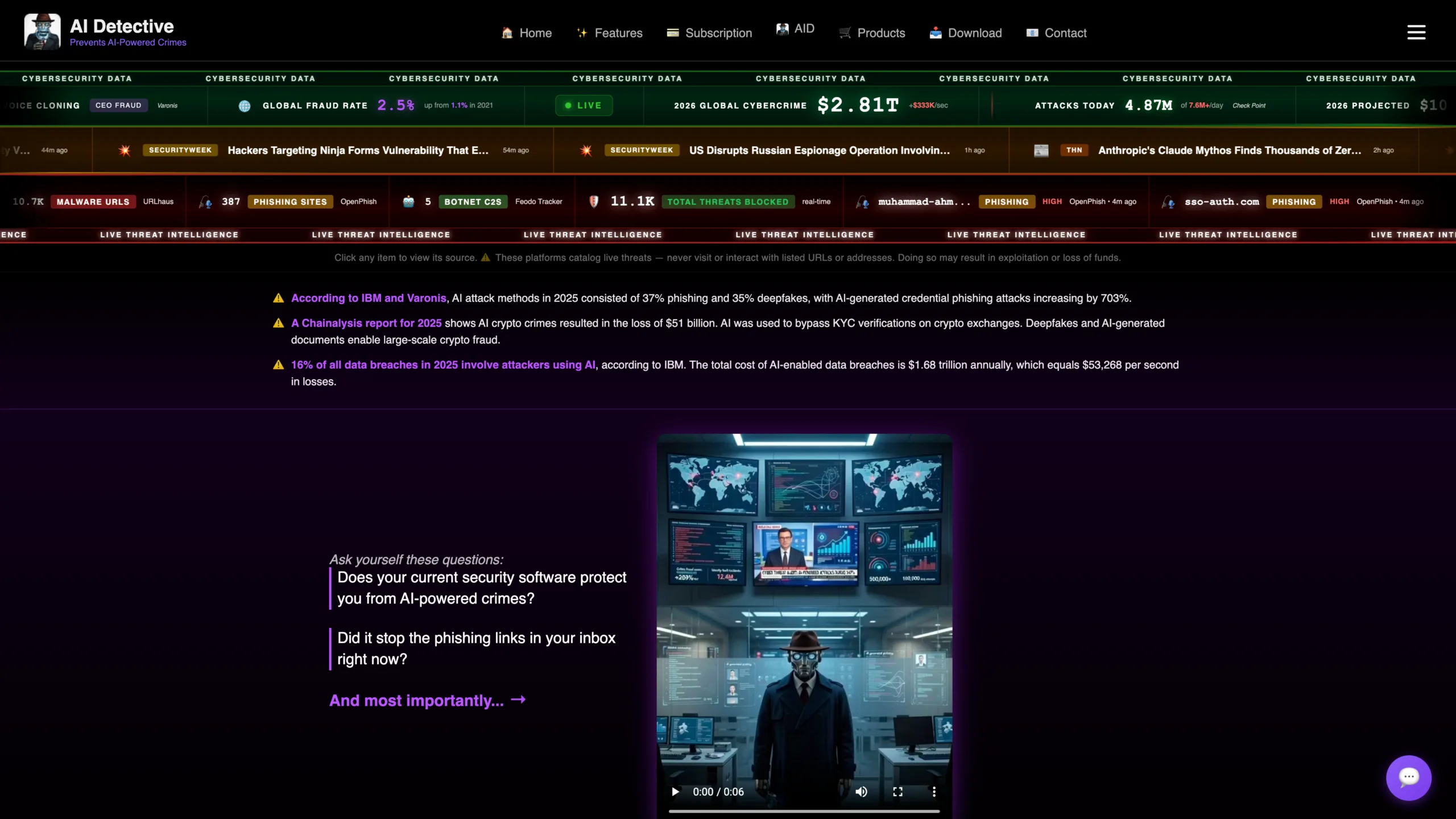
AI Detective applies artificial intelligence to open-source intelligence gathering, automating the collection and analysis workflows that traditionally require skilled human analysts working manually across dozens of platforms. It is designed to assist researchers, journalists, and security professionals in ethically gathering and processing publicly available information at scale.
Markets + Geopolitics
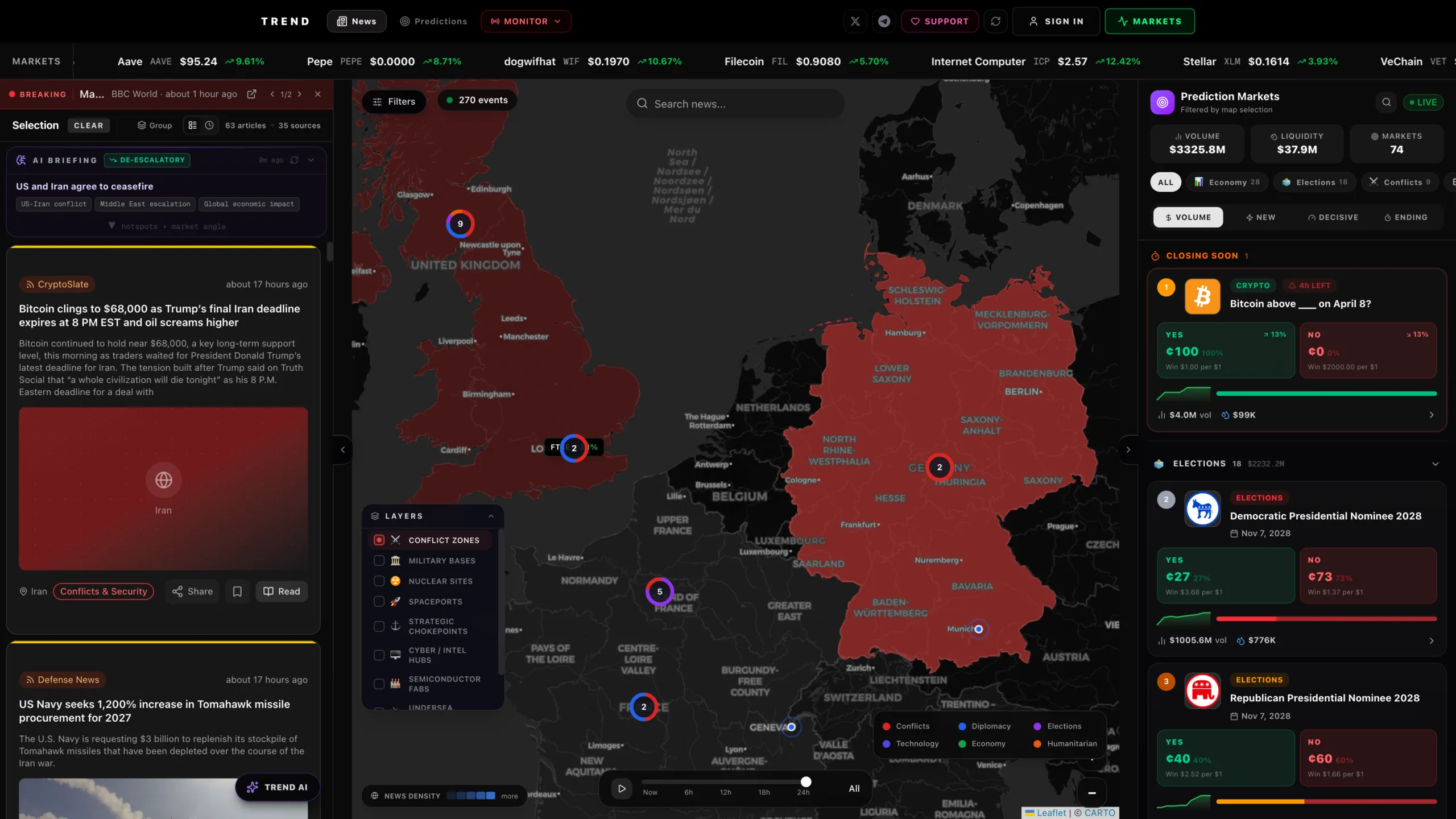
TREND is arguably the most feature-dense free intelligence terminal in this list, built on the insight that geopolitical events move oil, gold, and crypto within minutes. The platform fuses live news aggregation from 100+ RSS feeds, conflict monitors (dedicated Iran and AfPak dashboards), real-money prediction market data from Polymarket, cryptocurrency and stock market feeds, and a Gemini 2.5 Flash-powered AI analyst in a single interface.
The Iran Monitor streams eight international news channels simultaneously with filtered breaking news. The AI portfolio analyst injects live market data, full holdings context, and HHI concentration scoring to generate real-time macro-geopolitical risk assessments. Trusted by 50,000+ analysts, traders, and researchers, entirely free.
Situational Awareness
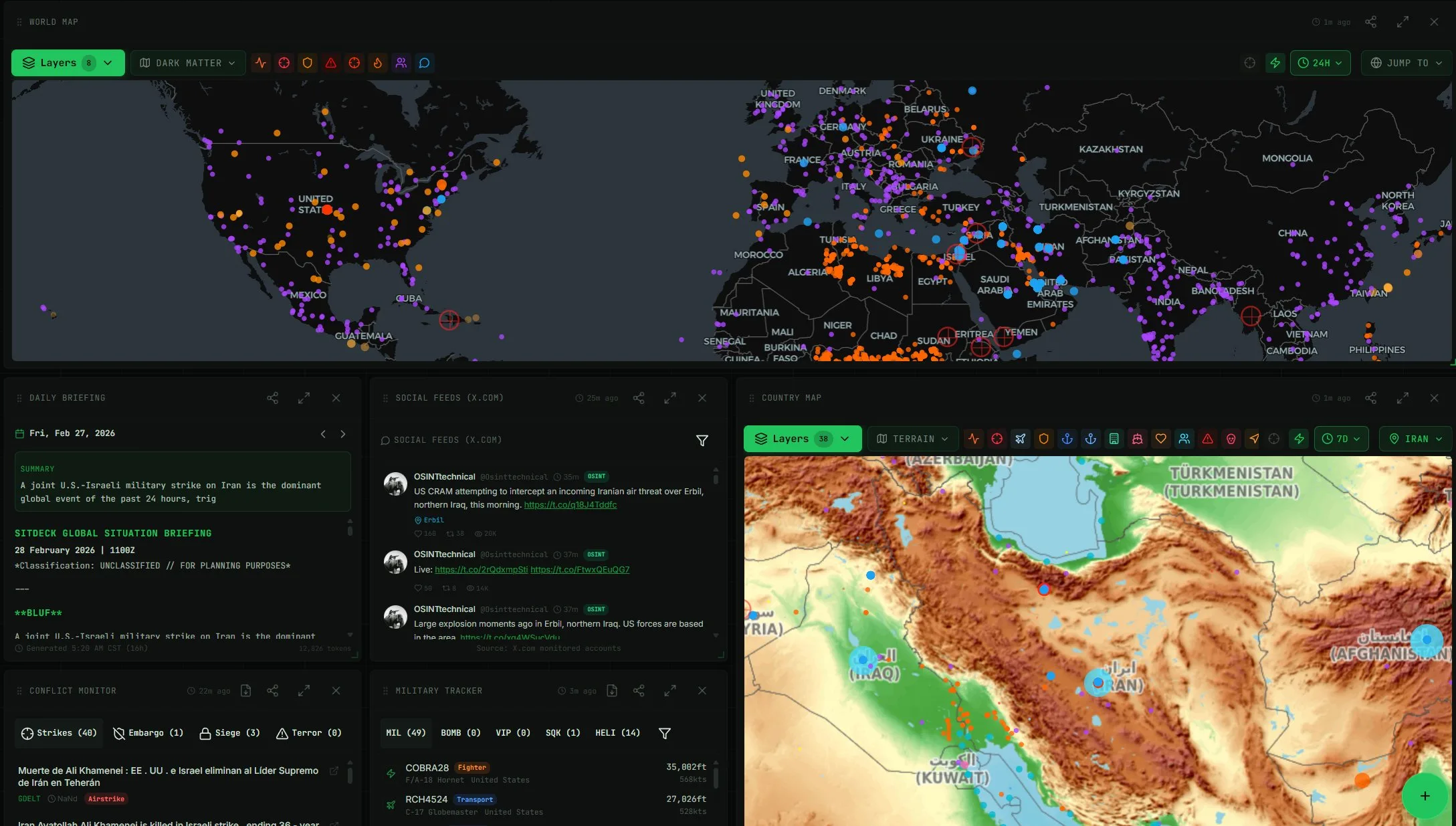
SitDeck is the most user-friendly modular intelligence dashboard in this roundup, built around the concept of a drag-and-drop “Situation Deck” that users can customize for their specific intelligence requirements. With 61+ widgets, 198+ data providers, and 19,000+ data pulls daily, it aggregates conflicts, markets, disease outbreaks, flights, weather, and cyber threats on one configurable interface.
The AI Analyst Chat feature enables natural language querying across all live feeds simultaneously, with sourced answers returned in real time. Custom alerts via email or webhook with sub-minute refresh on critical feeds make SitDeck one of the most operationally complete free platforms available.
AI News Intelligence
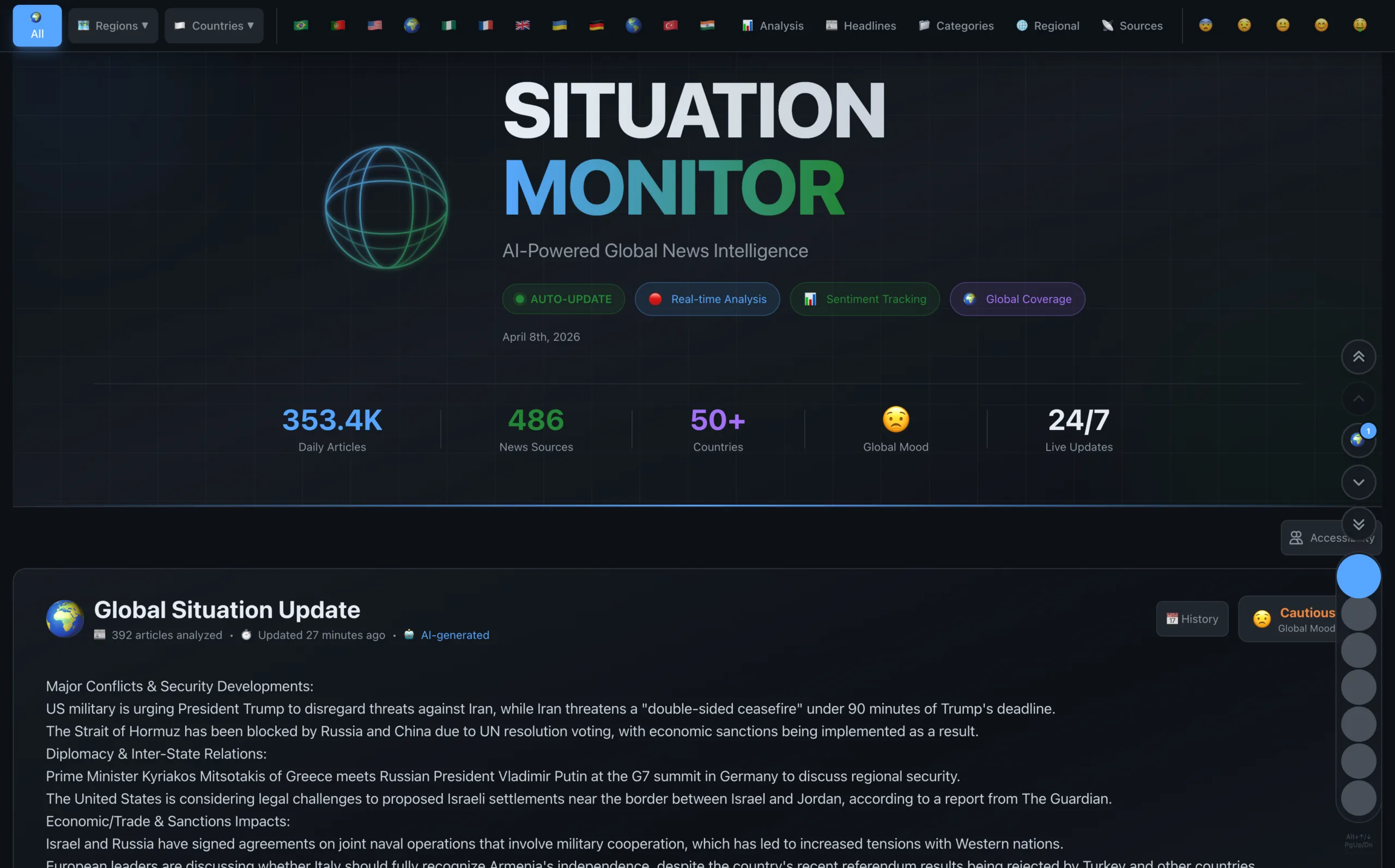
Situation Monitor applies AI-powered processing to global news intelligence, surfacing actionable signal from the noise of a 24/7 information environment. The platform’s AI-first approach treats news aggregation not as curation but as intelligence production, applying machine understanding to prioritize, classify, and brief emerging events.
Fraud Intelligence
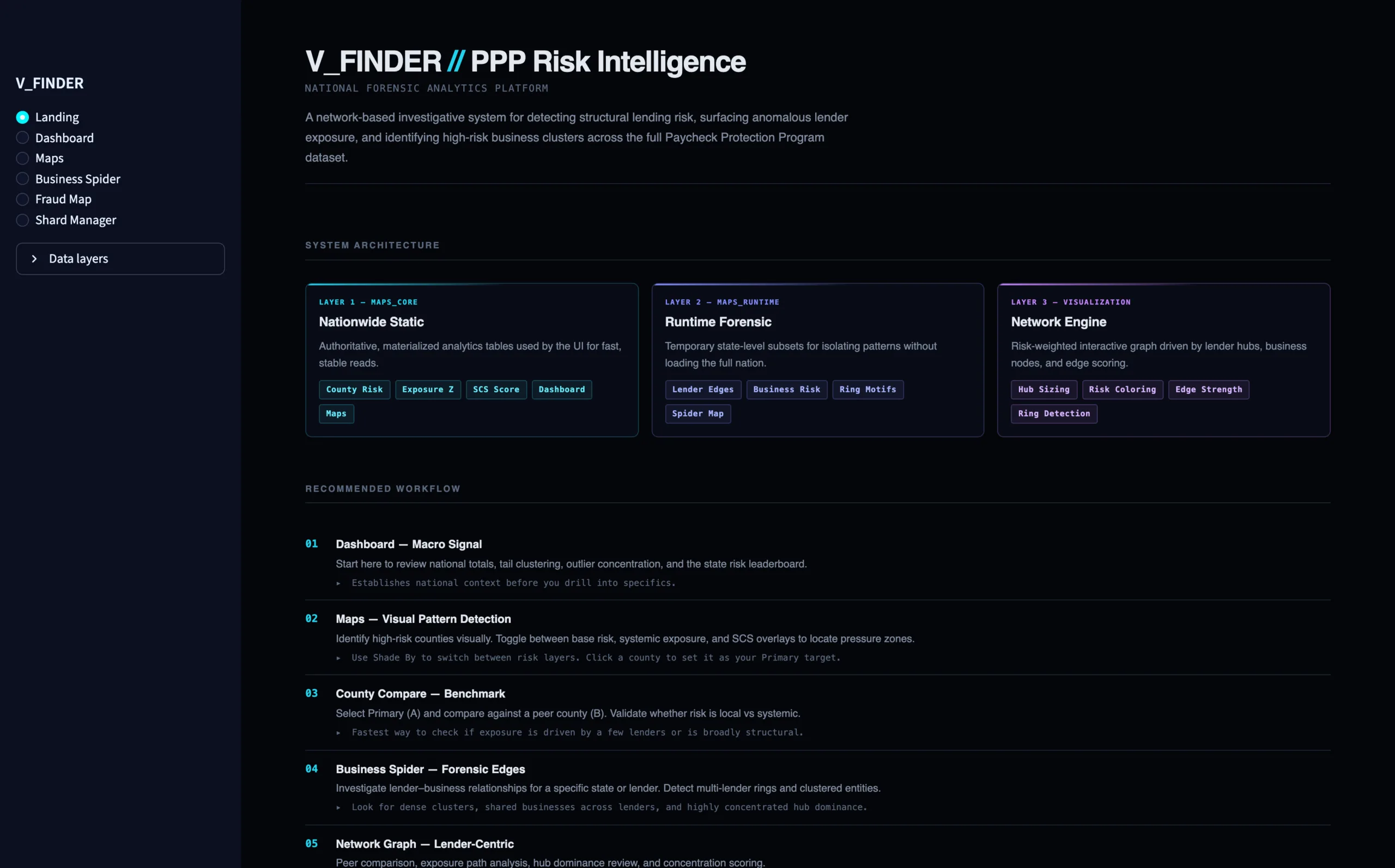
Built on Streamlit and open to public access, V-Finder is a community-developed fraud detection and intelligence aggregation tool. It reflects the broader democratization of threat intelligence tooling, where analyst-grade fraud detection capabilities are no longer locked behind expensive enterprise platforms.
Its Streamlit-based architecture makes it highly extensible: analysts with Python skills can fork, adapt, and integrate it into existing workflows. An important entry for the growing community building their own fraud intelligence stacks outside of commercial vendor dependency.
Cyber Threat Intel
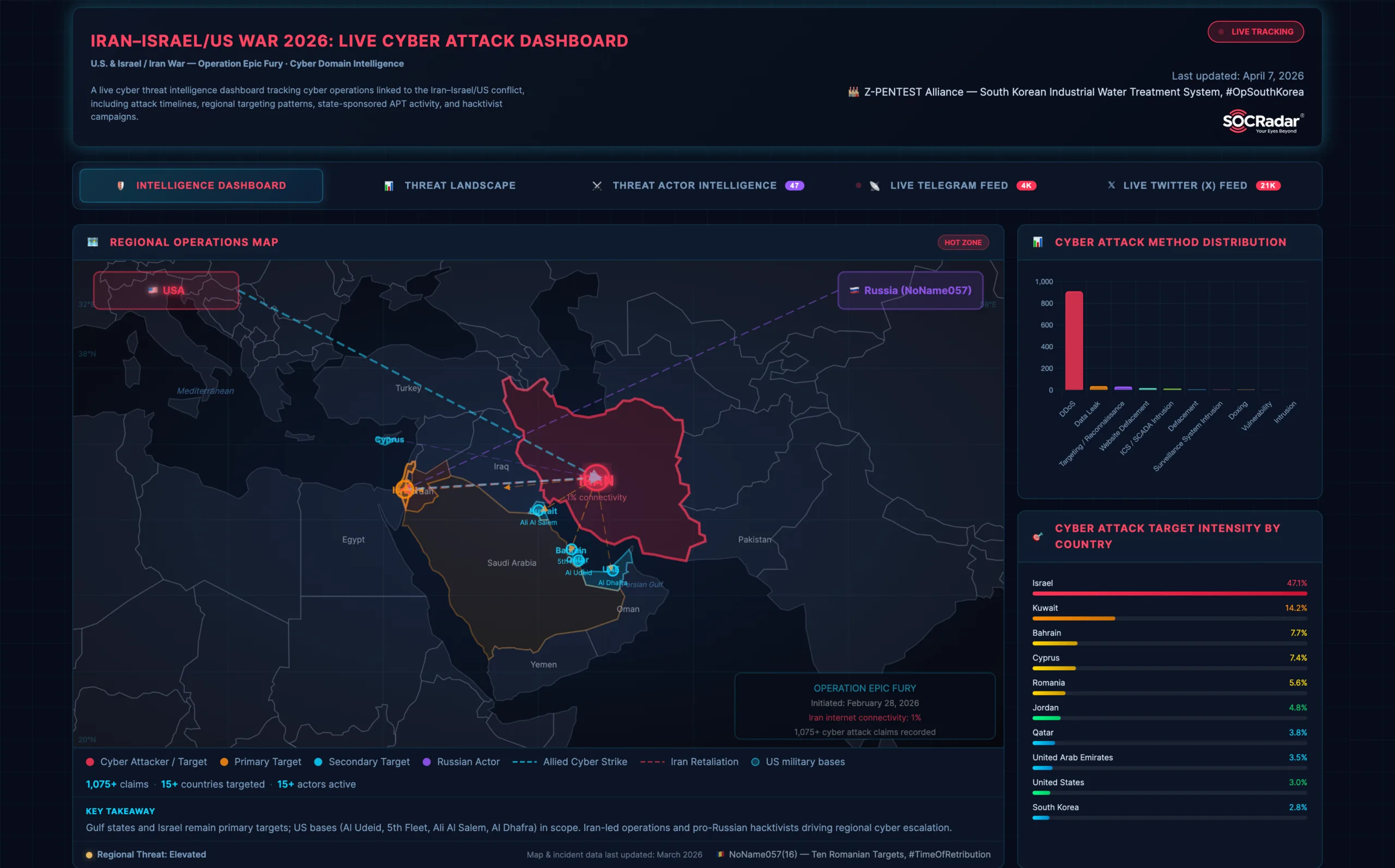
SOCRadar’s dedicated Cyber Conflict Dashboard is the only platform on this list operated by a professional cyber threat intelligence company. The dashboard offers real-time tracking of cyber operations, threat actor activity, and digital attack patterns specifically within the Iran-Israel cyber conflict theater, updated continuously from SOCRadar’s global sensor network and HUMINT sources.
Unlike the open-source community platforms in this list, SOCRadar brings enterprise-grade CTI collection capabilities: dark web monitoring, hacktivist campaign tracking, infrastructure attribution, and adversary TTPs. For blue teams and CISOs monitoring state-sponsored and proxy cyber activity in the Middle East, this is the most operationally mature platform in the roundup.
Energy Infrastructure
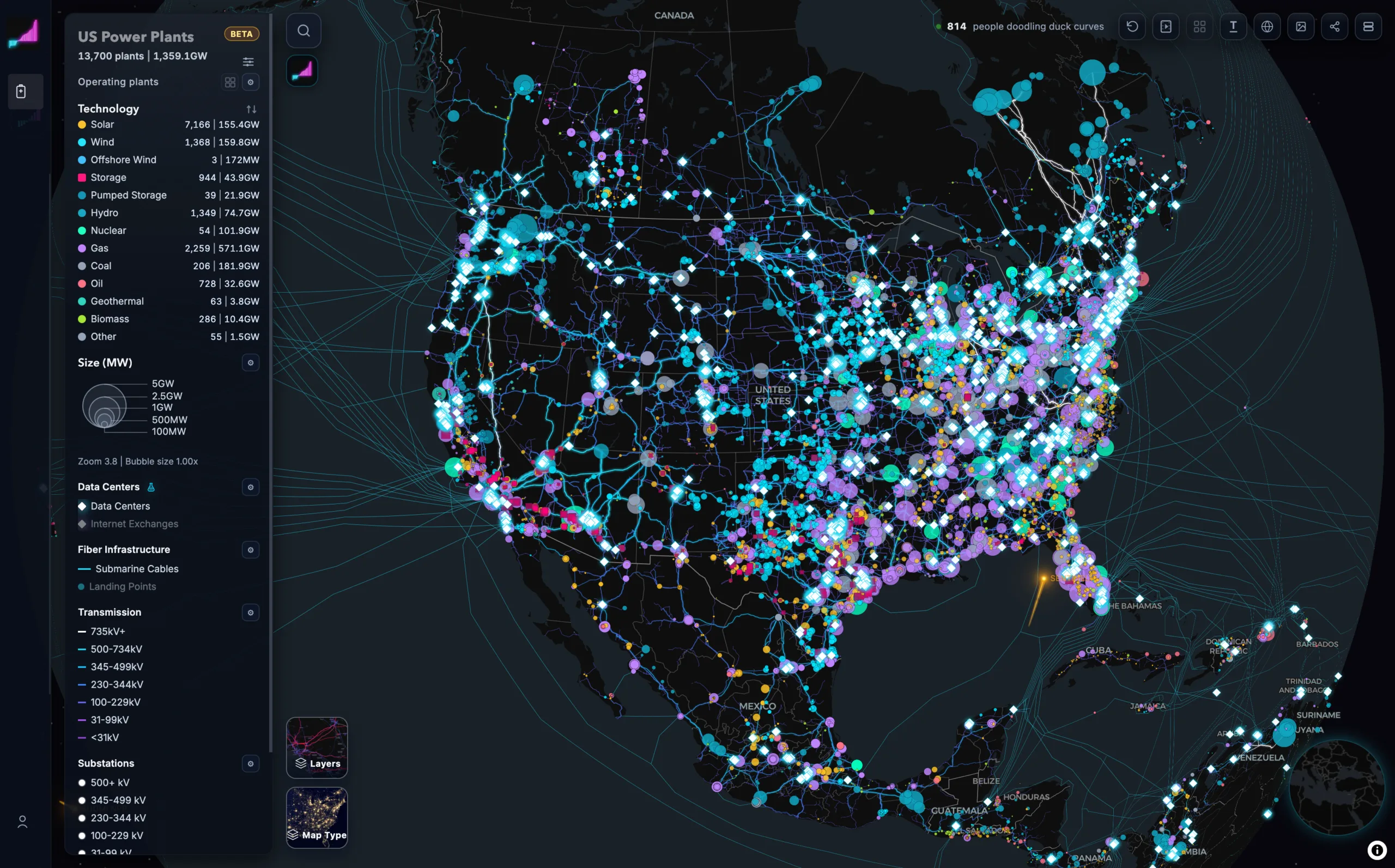
OpenGridWorks maps global electricity infrastructure with remarkable granularity, rendering power plants, transmission lines, substations, and grid topology on an interactive globe. Built on OpenStreetMap data, it transforms publicly available energy infrastructure information into a visually navigable intelligence layer.
For analysts working on critical infrastructure protection, energy security, or conflict impact assessment, OpenGridWorks provides an indispensable baseline. In the context of current Middle East tensions, the ability to visualize power grid dependencies, transmission chokepoints, and generation capacity at the country level is operationally significant. The platform recently gained attention after its mapping of Iran’s power grid was referenced by conflict monitoring organizations assessing civilian infrastructure risks.
Whether you’re assessing supply chain risk, modeling energy disruption scenarios, or simply understanding how a nation’s grid is structured, OpenGridWorks fills a gap that most geopolitical dashboards overlook entirely: the physical layer that everything else depends on.
The intelligence landscape has changed fundamentally. What required enterprise contracts and dedicated analysts five years ago is now available, free, real-time, and browser-based, to anyone with the awareness to find it. The platforms above represent a new intelligence commons: open tools that, when used together, give individual analysts, small teams, and independent researchers a situational picture that rivals many institutional intelligence products.
Bookmark the ones relevant to your threat model. Layer them. The edge goes to whoever learns to combine these feeds first.
Daily Dark WebRead More


 R1
R1
 T1
T1


