NATO Mulls ‘Preemptive Strike’ Against Russia’s Hybrid Warfare, Claims ‘More Aggression’ Needed
At a moment Washington under President Trump is busy issuing rare calls for restraint, de-escalation, and to enact a peace deal in Ukraine, a top NATO commander says the conflict needs more aggression by the Western military alliance directly against Russia.
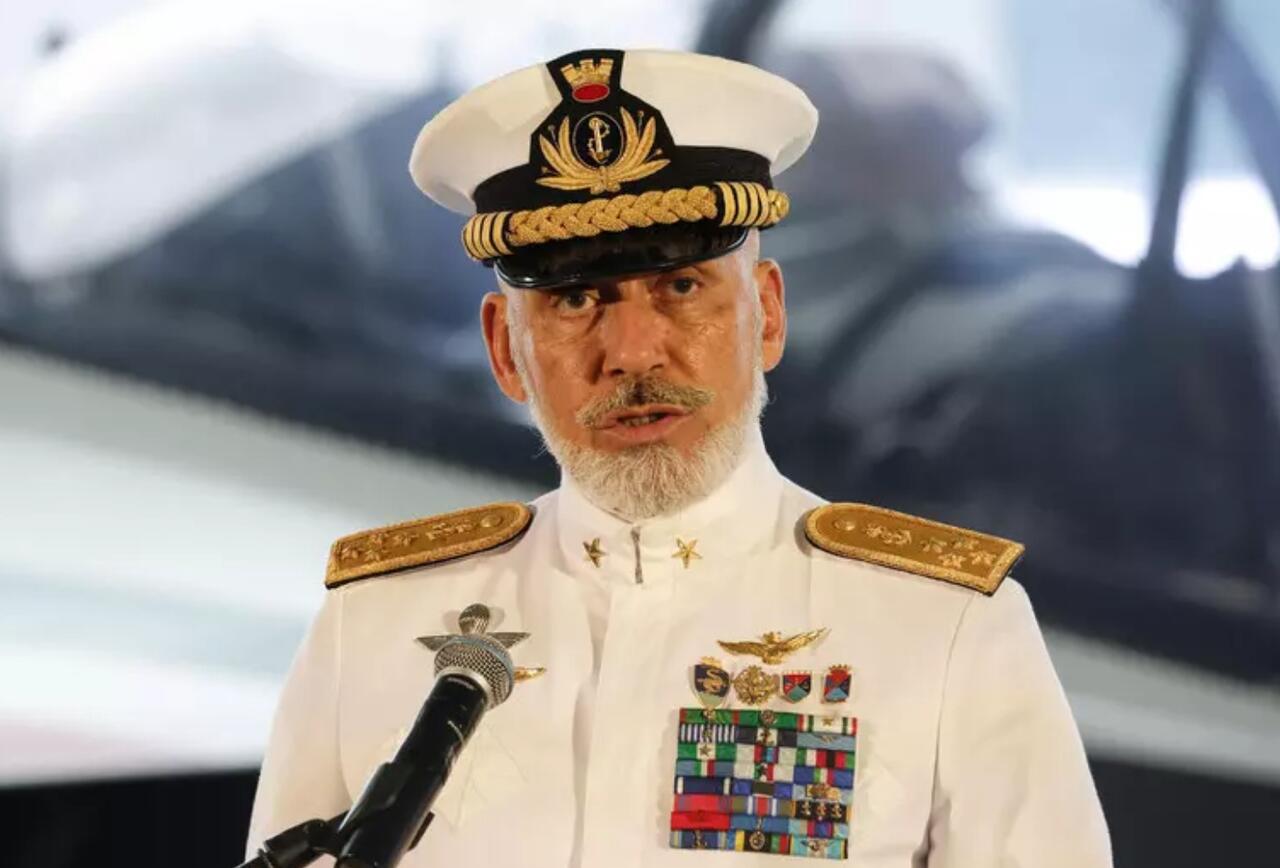
Admiral Giuseppe Cavo Dragone, chair of NATO’s Military Committee, has told Financial Times as part of a fresh report that NATO is currently mulling more proactive measures in response to Russia’s escalating hybrid warfare. The report cites an alleged rise in Russian-backed cyberattacks, sabotage operations and airspace violations over Europe – which NATO could mirror and more, as any potential “pre-emptive strike” on Russian targets would be justified.
“We are studying everything… On cyber, we are kind of reactive,” Dragone said. “Being more aggressive or being proactive instead of reactive is something that we are thinking about.”
That’s when he explained his view that a “pre-emptive strike” could under certain circumstances and context be classified as a defensive action. “It is further away from our normal way of thinking and behavior,” he conceded.
“Being more aggressive compared with the [aggressiveness] of our counterpart could be an option” – but he said that the questions that remain are: “legal framework, jurisdictional framework, who is going to do this?”
Multiple diplomats and officials from Eastern European and Baltic states are calling for this more proactive stance, or a less merely ‘reactive’ approach, to make Moscow feel real pain.
“If all we do is continue being reactive, we just invite Russia to keep trying, keep hurting us,” one Baltic diplomat was quoted in the FT as complaining.
“Hybrid warfare is asymmetric – it costs them little, and us a lot. We need to be more inventive,” the diplomat said.
And yet, there already have been years of covert sabotage operations in place, aimed at Russia and overseen by the West. These efforts, some which long ago were exposed in mainstream publications, are a large reason of why there’s been constant escalation of the Ukraine war.
This has in turn resulted in escalation of nuclear rhetoric and threats between Russia and the West. But the temperature needs to be drastically turned down, but these latest comments by the chair of NATO’s Military Committee will only do the opposite.
Young men are continuing to pay the price on the battlefield, even as a peace process slowly and painfully plays out. Reuters has belatedly admitted and documented the immense losses suffered by Ukraine’s military:
Pavlo Broshkov had high hopes when he joined the Ukrainian army in March as a fresh-faced recruit eager to defend his country and earn a bumper bonus to buy a home for his wife and baby daughter.
Three months later, the 20-year-old lay broken and prone on the battlefield, his dreams in tatters.
Broshkov is among hundreds of 18 to 24-year-olds who have volunteered to fight on the front lines this year, lured by generous pay and perks in a national youth recruitment drive designed to breathe fresh life into Ukraine’s aged and exhausted armed forces of about one million.
Meanwhile, EU nations are finding any way possible to keep up the conflict instead of finding true compromise…
Macron:
In the weeks to come, the pressure on the Russian economy and the capacity of Russia to finance the war effort will drastically change. pic.twitter.com/JOmzDvdKxY
— Clash Report (@clashreport) December 1, 2025
The Kremlin has hit back against the aforementioned remarks of Adm. Dragone, with Kremlin spokesperson Maria Zakharova calling Dragone’s remarks “an extremely irresponsible step, indicating the readiness of the alliance to continue to move toward escalation.”
Tyler Durden
Mon, 12/01/2025 – 14:20ZeroHedge NewsRead More






 T1
T1