Top Obama DEA Official Charged With Laundering Money For Mexican Drug Cartel
A former Drug Enforcement Administration (DEA) official appointed as deputy chief of the Office of Financial Operations during the Obama administration – and who still holds a security clearance – was indicted on Friday on charges of agreeing to launder $12 million for the Jalisco New Generation Cartel (CJNG) – which was designated a Foreign Terrorist Organization in February of this year.
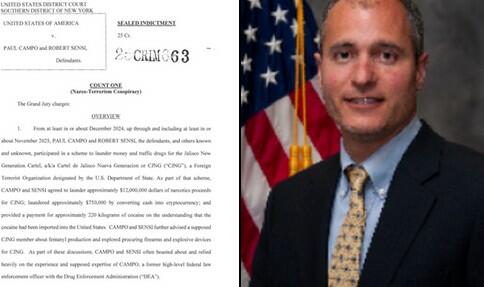
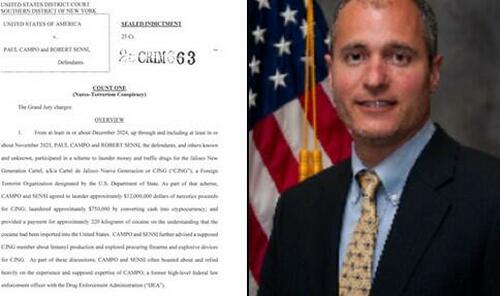
Paul Campo, who oversaw the FBI’s money laundering operations and resigned in January 2016 ahead of Trump’s inauguration, laundered around $750,000 for the cartel by converting cash into cryptocurrency, and agreed to launder far more – totaling over $12 million, according to the indictment.
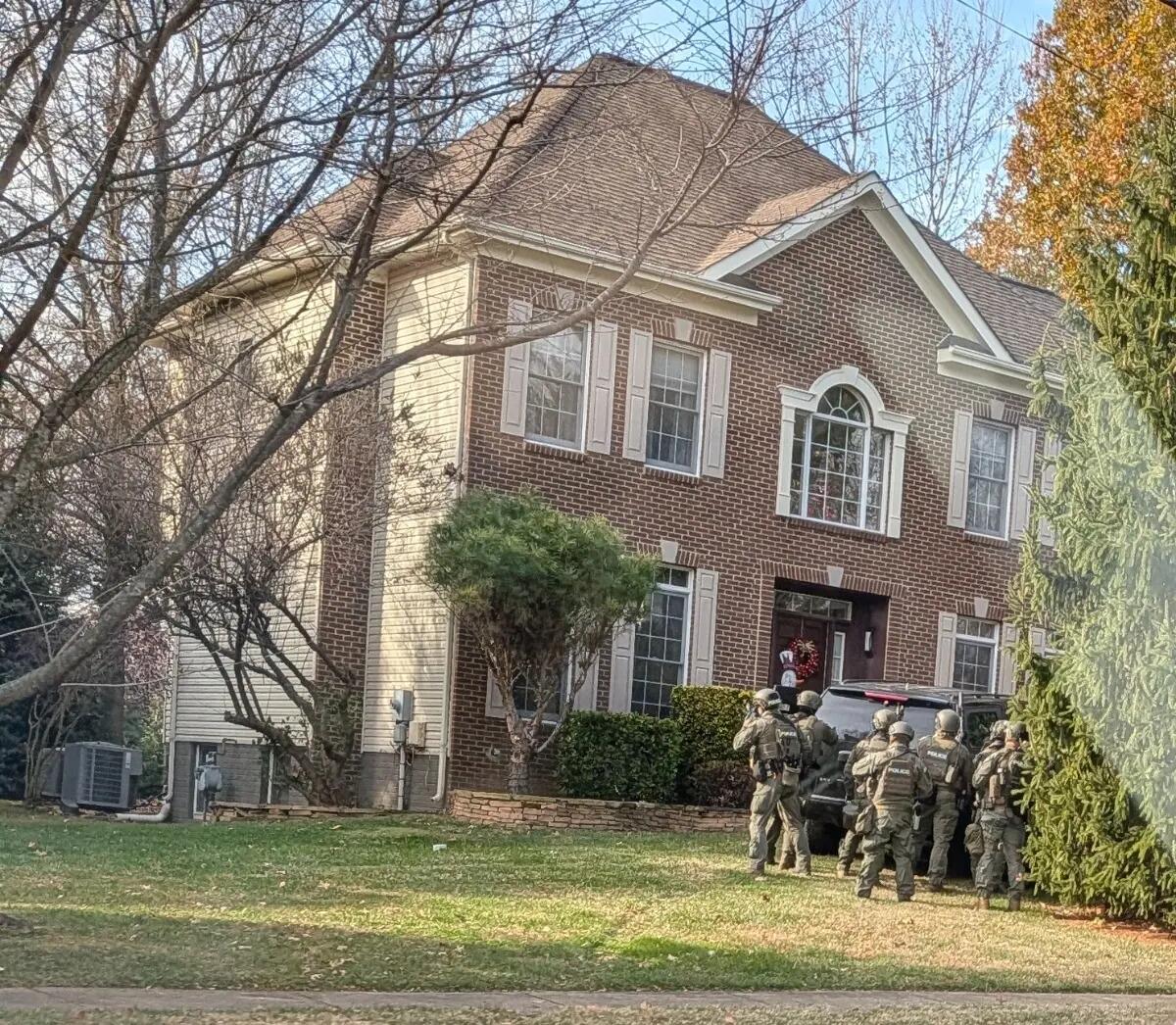
Campo’s hoome was raided by federal agents on Thursday.

Campo also provided a payment for around 220 kilos of cocaine on the understanding that the drugs had been imported into the USA, the indictment further states.
He was able to do this after spending 25 years at the DEA, rising to a high-level position which he used to sell himself to CJNG as someone who could;
-
give inside information on DEA operations
-
help them move drug money
-
help them avoid detection
-
and even advise on narcotics logistics
In late 2024, Campo, along with a friend Robert Sensi, began conspiring with an undercover government source they believed was with the cartel. They allegedly discussed using drones packed with C-4 explosives for CJNG operation. When the undercover agent asked what they could do with the drones, Campo allegedly said “We put explosives and we just send it over there,” adding that six kilos of C-4 would be enough to blow up “the whole fucking…” [sentence trails off]
Campo also allegedly told the undercover source that, because of his past work inside DEA’s intelligence and financial units, he still had “connections” within the agency and could advise CJNG on how to evade detection. According to the indictment, he portrayed himself as someone who understood DEA investigative patterns, internal targeting systems, and the vulnerabilities of U.S. financial controls.
Both Campo and Sensi allegedly assured the undercover officer that they could convert cartel cash into cryptocurrency in a way that would appear legitimate, billing themselves as specialists capable of “getting money back” for clients whose assets had been seized by law enforcement.
A series of staged transactions followed
Beginning in early 2025, the DEA source delivered multiple bulk-cash installments to the defendants under the guise of CJNG proceeds—first $200,000 in Charlotte, North Carolina, then additional transfers totaling more than $187,000 over the following days. Campo and Sensi allegedly converted the funds into cryptocurrency and reassured the source that they would charge an 8% commission for future laundering.
According to prosecutors, the two men also repeatedly affirmed that they were prepared to launder significantly larger sums. During one meeting, Campo allegedly said he and Sensi could easily move “millions” for the cartel through real-estate transactions, prepaid cards, and crypto channels that would not be flagged by U.S. financial institutions.
By July 2025, the indictment states, the undercover source delivered an additional $276,000 that the defendants believed to be CJNG drug proceeds. A second cash drop occurred in September. Each time, prosecutors say, Campo pitched the source on expanding their partnership into a long-term laundering pipeline.
The most damning allegation involves narcotics trafficking
In October 2025, the DEA source told Campo and Sensi that a shipment of more than 220 kilograms of cocaine had already entered the United States and required payment. Campo and Sensi allegedly agreed to help facilitate the transaction, with Campo telling the source that once the funds were converted and returned, CJNG would “release the shipment” and continue to work with them.
The indictment asserts that Campo, Sensi, and their co-conspirators were to receive 30% of the proceeds – roughly $1.5 million – for their role in the cocaine deal, and an additional fee for converting the remainder into cryptocurrency. Campo then allegedly urged the undercover source to “move the product now,” signaling they were ready to operationalize the narcotics pipeline.
Throughout these interactions, prosecutors say, Campo and Sensi communicated via encrypted messaging systems and framed their cooperation with CJNG as the beginning of a long-term strategic partnership. After one successful money drop, Sensi reportedly told the undercover source: “Welcome to the fucking cartel!”
Tyler Durden
Fri, 12/05/2025 – 18:50ZeroHedge NewsRead More








 T1
T1