21 States Are At Risk Of Losing SNAP Funding Amid Fraud Investigation
Authored by Savannah Hulsey Pointer via The Epoch Times,
The federal government said it would withhold Supplemental Nutrition Aid Program (SNAP) funds for states that do not report user data.
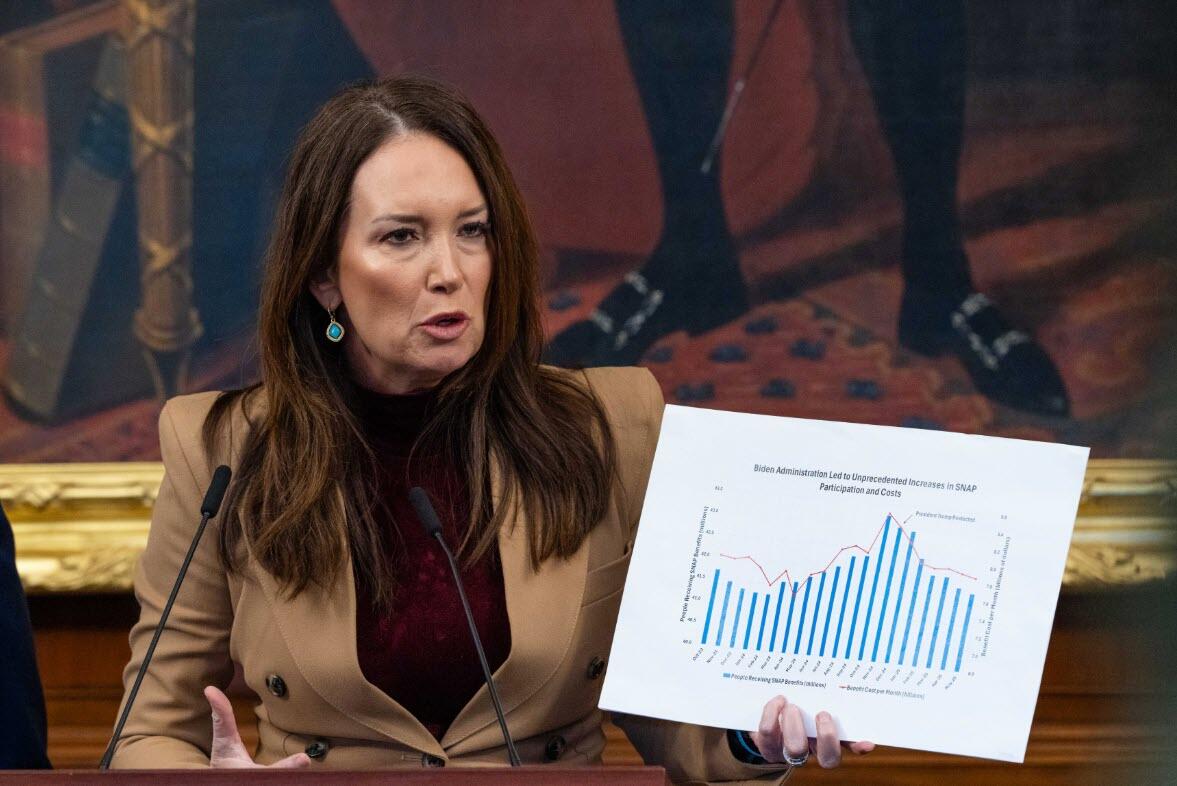
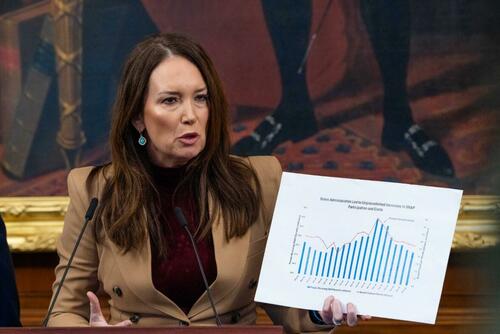
The news came from the United States Department of Agriculture (USDA) Secretary Brooke Rollins earlier this week, following months of requests and investigations into instances of fraud within the program.
Here’s what to know about the change to the nutrition program.
The Announcement
Rollins made the announcement on Dec. 2 during a White House cabinet meeting, saying that states that have not complied with the federal request have only a few days to fix the issue.
The USDA secretary said the administration “has begun and will begin to stop moving federal funds into those states” next week ”until they comply.“
According to Rollins, 29 Republican-leaning states have already provided SNAP data to her department. However, 21 ”blue states continue to say no” to the federal request.
The federal response to the lack of cooperation comes months after an early May request by the administering department, calling on states to hand over data detailing how and to whom the taxpayer funds are distributed.
The USDA noted that the intent behind the request was to ensure that no fraud or abuse existed in the program, frequently referenced as food stamps.
“President Trump is rightfully requiring the federal government to have access to all programs it funds,” said Rollins, “and SNAP is no exception. For years, this program has been on autopilot, with no USDA insight into real-time data. The Department is focused on appropriate and lawful participation in SNAP, and today’s request is one of many steps to ensure SNAP is preserved for only those eligible.”
Of the 28 states that have sent the data, all except for North Carolina have Republican governors.
Billions at Stake
SNAP costs federal taxpayers around $100 billion per year, $94 billion of which goes to actual food benefits, and the rest is spent on administrative costs.
Administrative costs are currently shared by federal and state governments, with states covering roughly half of SNAP’s administrative expenses. That share is set to shrink soon, as the federal government plans to reduce the state contribution to 25 percent.
How much each state receives varies, as does the portion of the fund that goes to administrative costs. The state of California alone received more than $1.2 billion for SNAP administration fees, which was around 10 percent of it’s total SNAP funding allocation.
Florida received $84 million for administration alone, which was just over 1 percent of it’s total SNAP funding. However, Wyoming received less than $9 million for administration fees, which was 12 percent of its SNAP dollars received.
This means that in addition to the loss of nutrition support funding, billions that go to state administration fees will be lost for those states that refuse transparency requests from the Trump administration.
The administration will likely face legal hiccups, as the attorneys general from 21 states have already been the subject of a lawsuit over concerns that the states allegedly illegally blocked the authorized food aid to certain legal immigrants.
Current Fraud
Since the beginning of the USDA information gathering in May, there have been more than 120 individuals arrested for food stamp fraud, according to the agency’s report last month.
The USDA worked with the Office of the Inspector General, which has resulted in 63 convictions and fines and fees exceeding $16.5 million.
This is due to data from 29 states alone, which found that more than 180,000 deceased individuals were receiving food stamps, and another 500,000 people were getting twice as much as they should have been.
“We believe there’s even more fraud and abuse,” Rollins said following news of the fraud discovery.
She later added that “we have to make sure for those who really need this benefit that we are able to make sure that it’s going to the right people,” and promised “structural changes” to the program.
The audit has led to the removal of 700,000 individuals from the SNAP program already.
According to research from the Mercatus Center at George Mason University, overpayment rates climbed from 2 percent in 2012 to more than 10 percent in 2023.
“The levels of waste, fraud, and abuse in federal programs have never been higher,” the report reads. “Although these types of avoidable inefficiencies have always been too high, they have recently surged with the unusual degree of federal spending brought on by the global pandemic.”
That upward trend appears to have continued, as a June 2024 report from the USDA found that almost 12 percent, or around $10.5 billion, of SNAP payments were found to be improper.
During a recent interview with Fox News, Rollins mentioned one individual who was found to be receiving benefits in six different states.
“It is time to drastically reform this program, so that we can make sure those who are truly needy, truly vulnerable, are getting what they need, and the rest of the corruption goes away, and we can serve the American taxpayer,” she said.
What SNAP Does
On average, SNAP recipients receive around $177 a month in benefits that are delivered on an electronic card. About 42 million Americans spend that money on food items in participating stores.
President Donald Trump’s One Big Beautiful Bill Act, signed this summer, imposed new requirements for SNAP eligibility, including removing the eligibility for certain groups of immigrants.
In November, Rollins announced that app recipients of the program would need to meet reapplication requirements in efforts to “clean up” the food assistance program.
SNAP’s purpose is to raise the nutritional intake of low-income individuals by increasing their ability to purchase healthy food. Participants in the SNAP program have been found to have improved health outcomes, including reduced food insecurity and lower risk of heart disease and obesity.
“We really want to make sure those who are receiving this supplemental nutrition benefit—it was never meant for the long term—are really those who need it,” Rollins said in a recent interview.
“Whatever that reapplication looks like again, we’re working on that right now, but it won’t be too onerous. And for the families that really need it, we’ll make sure that they’re going to get it.”
Tyler Durden
Sat, 12/06/2025 – 17:30ZeroHedge NewsRead More






 T1
T1