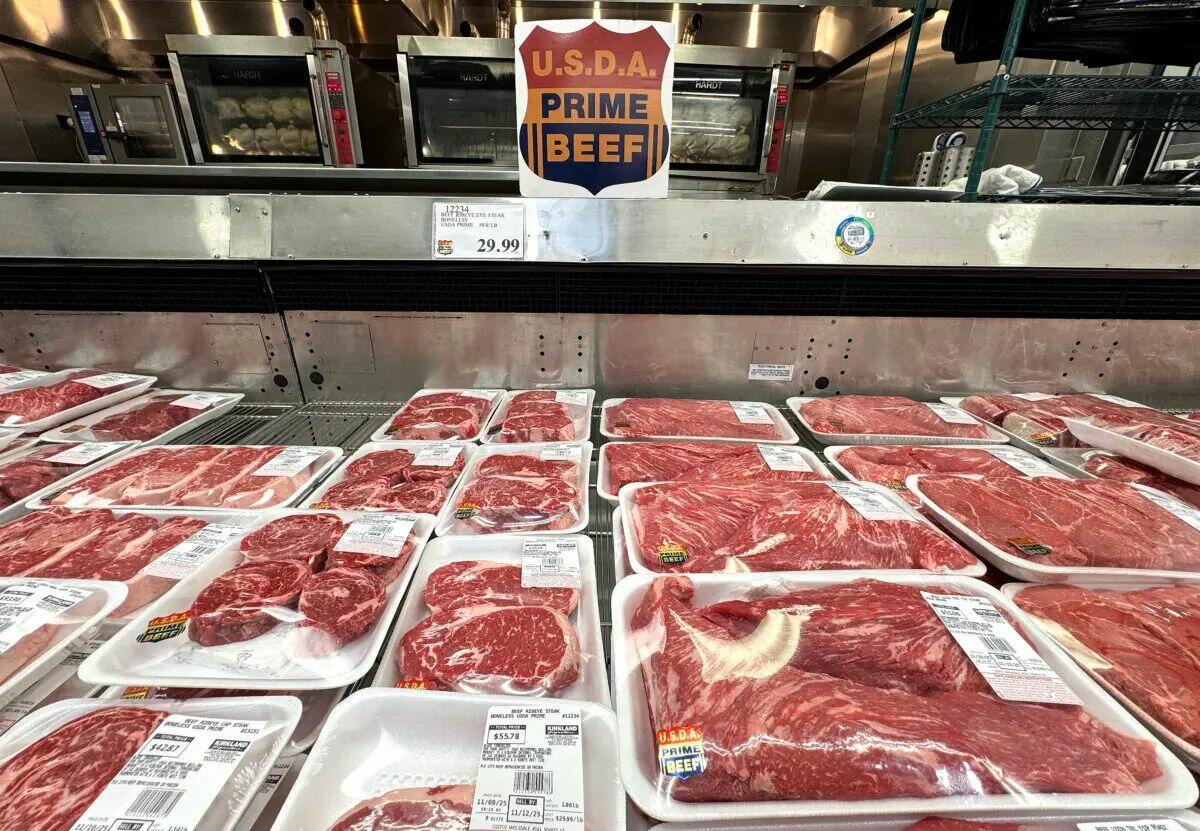
Trump Administration Faces Balancing Act On Agriculture
Authored by Beige Luciano-Adams via The Epoch Times (emphasis ours),
The Trump administration has in recent months rolled out a series of actions to address the long-brewing existential crisis facing America’s family farmers and ranchers, who for years have been pummeled by industry consolidation and rising costs, as well as regulatory, environmental, and trade issues.
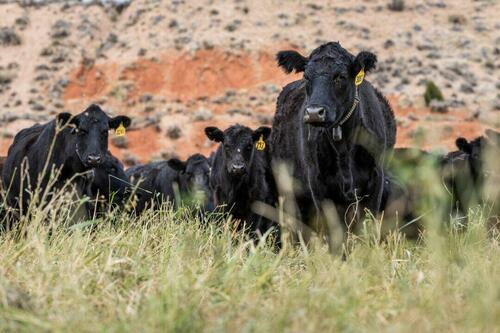
Traditionally the backbone of American agriculture, family operations are disappearing, shrinking by more than 17 percent since 2017. In 2024, the number of U.S. farms dropped to the lowest level in more than a century.
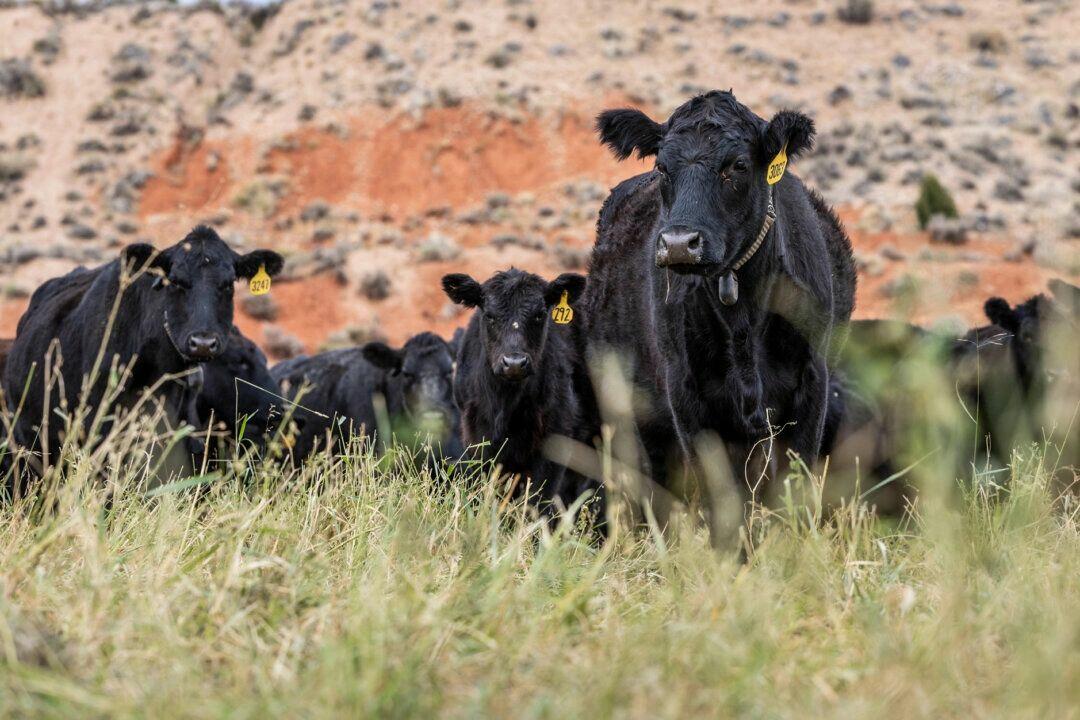
In the cattle and beef industry, an ongoing contraction driven by a dwindling domestic herd has created an increasingly unstable climate. As prices soar and processing plants shutter, the Trump administration faces a balancing act between calming consumer anxieties and reassuring ranchers that it will deliver on deep reforms.
The Trump administration has proposed renewed antitrust enforcement, land-use reform, and supportive programming for ranchers. But the administration also slashed the tariffs it imposed earlier this year on beef imports, which ranchers say may undercut their business.
In conversation with The Epoch Times, many ranchers have been largely sanguine about what they see as an administration that is listening to their concerns and taking decisive action, but suggest more is needed to transform an industry that has become deeply exploitative, corrupt, and anti-competitive.
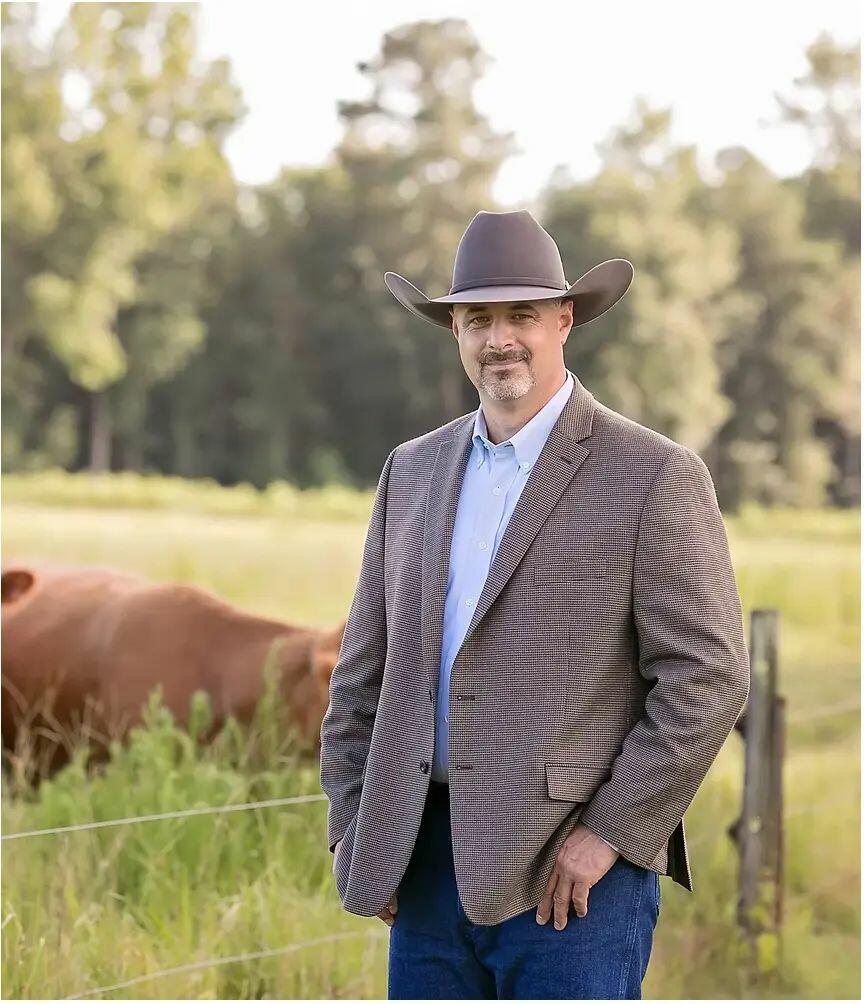
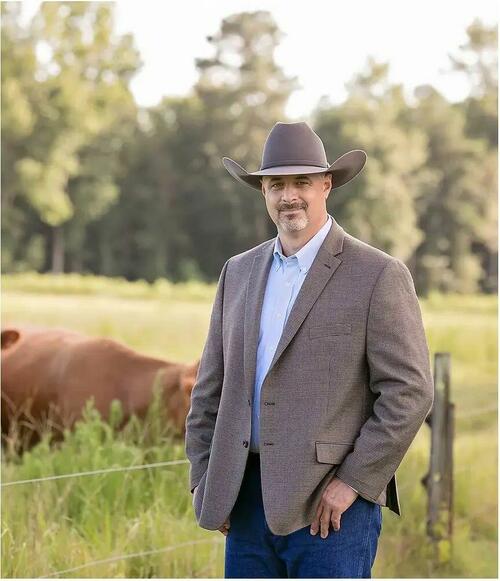
“Trump is trying to satisfy a lot of people right now, and I don’t mean that in a bad way,” Patrick Robinette, a North Carolina cattle producer and industry consultant, told The Epoch Times.
“But he made promises to the rural people that he was going to improve their economy. He also made promises to the consumer that he was gonna lower their prices.”
Trump’s Reforms
In October, the U.S. Departments of Agriculture, Interior, Health and Human Services, along with the Small Business Administration, unveiled a sweeping plan to restore the nation’s shrinking cattle herd and bolster independent ranchers, including by expanding grazing on federal lands, a reversal of Biden-era policy.
Noting that around 10 percent (24 million acres) of grazing allotments are currently vacant, the Departments of Agriculture and Interior plan to position “grazing as a central element of federal land management,” while also promoting innovative tools such as virtual fencing and “outcome-based practices to sustain ecological health,” signaling federal support for regenerative grazing practices. The USDA in December confirmed it will launch a $700 million pilot program focused on regenerative agriculture.
Additionally, the government is attempting to assuage longstanding rancher concerns over predatory endangered species by developing new standards of evidence for compensating producers whose herds are impacted by wolves, bears, and coyotes.
In an attempt to address consolidation in the packing industry and stabilize prices, the White House is also ramping up loans and grants to support small- and medium-sized processors that supply local and regional markets.
And to make ranching more accessible, it plans to expand benefits for new ranchers and prioritize support for veteran-owned and operated ranches.
The USDA announced earlier this month a $12 billion bailout for farmers “in response to temporary trade market disruptions and increased production costs.”
Antitrust Challenges
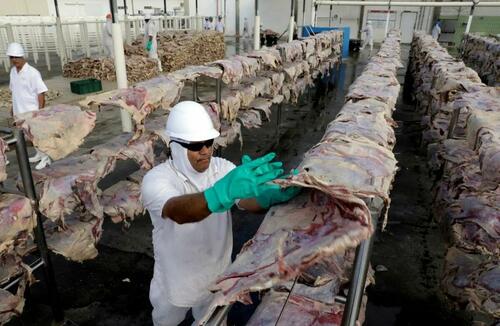
President Donald Trump on Nov. 7 ordered a Department of Justice (DOJ) crackdown on “foreign-owned meat packing cartels,” referring to the handful of massive conglomerates that dominate the industry, citing potential collusion, price fixing, and price manipulation. He said that the companies artificially inflate prices and jeopardize U.S. food security.
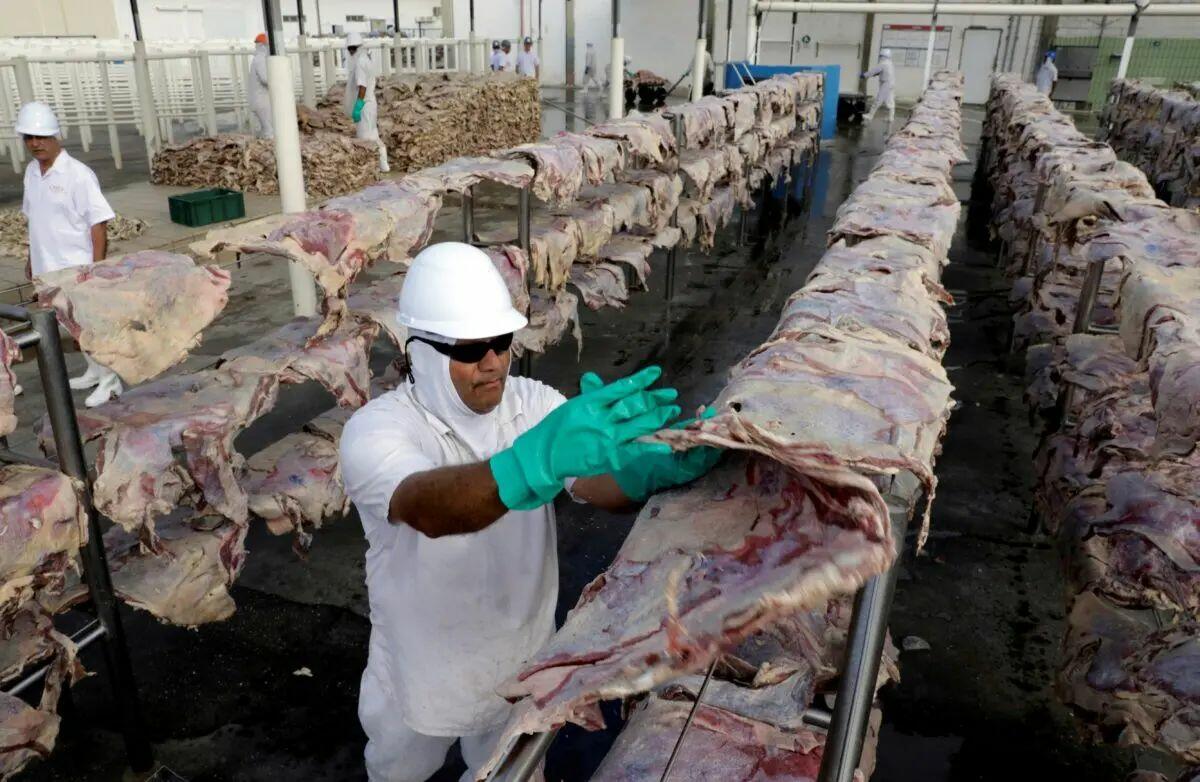
The “Big Four” meatpackers—Cargill, Tyson Foods, JBS, and National Beef—control 85 percent of U.S. beef processing and vast majorities of pork and poultry markets. JBS and National Beef are majority-owned by Brazilian parent companies.
For decades, industry consolidation has “crushed competition and hammered cattle producers,” the Trump administration said in its Nov. 7 memo, citing “mounting evidence” showing monopoly power has “slashed payments to ranchers, reduced herd sizes, driven up consumer prices and threatened America’s food supply chain.”
Robinette said it’s about time for a DOJ investigation. “But the other side to it is, maybe nothing comes out of it.”
He pointed to a similar investigation of the same companies in 2020, following years of class-action consumer lawsuits and urging from producers.
In a Nov. 21 statement, the U.S. Cattlemen’s Association, which represents independent producers and processors, said it appreciated the Trump administration returning to the issue, but added that past inquiries left producers without answers.
“We urge the Administration to ensure this investigation leads to substantive action and real reforms,” it stated.
Multiple federal investigations of the companies and their subsidiaries have spanned across administrations, resulting in millions in settlement payouts.
But their hold on the market remains.
The 2020 DOJ investigation, according to Farm Action, a nonpartisan watchdog group, produced “no major enforcement actions or reforms.”
All the “Big Four” companies have faced multiple antitrust lawsuits. Last month, Tyson and Cargill paid a combined $87.5 million to settle a federal class action lawsuit brought by consumers who accused them of conspiring to inflate beef prices by restricting supply. Along with other poultry producers, they settled a civil wage-fixing case in January for $398 million, which mirrored a DOJ case.
JBS, the world’s largest meat processing company, settled a case for $83.5 million in January, in which producers alleged all four companies conspired to artificially reduce the price of cattle.
The conglomerate has also been plagued by corruption scandals in the United States and in Brazil. In 2017, JBS owners agreed to a $3.2 billion plea deal in Brazil after admitting to bribing more than 1,800 politicians to illicitly acquire financing; in 2020, the company pleaded guilty to bribery charges and agreed to pay around $256 million in criminal fines following a DOJ investigation.
Despite increased scrutiny from lawmakers across various administrations over antitrust concerns, consolidation and U.S. expansion have continued.
According to a recent analysis by Farm Action, price-fixing settlement payouts remain a tiny fraction of the companies’ profits. And five years after the last DOJ investigation, their hold on the market remains undiminished.
“This time,” the group urges, “the DOJ must dig deeper into the collusion and political influence that define this industry.”
Trade Policy
In an effort to curb domestic beef prices, Trump in October proposed increasing imports from Argentina, drawing ire from U.S. ranchers who say cheap imports undercut them while failing to lower consumer prices.
In November, the administration solidified an agreement with Argentina that will quadruple low-tariff beef imports from the country, to some 80,000 metric tons.
The National Cattlemen’s Beef Association opposed the move and urged the president to “let the cattle markets work.”
Responding to pushback from ranchers, Trump said in an Oct. 22 Truth Social post that “the only reason cattle ranchers are doing so well, for the first time in decades,” is because of his tariffs.
“If it weren’t for me, they would be doing just as they’ve done for the past 20 years – Terrible! It would be nice if they understood that, but they also have to get their prices down, because the consumer is a very big factor.”
Secretary of Agriculture Brooke Rollins has attributed much of the affordability crisis to inherited impacts from the last administration, including a $50 billion agricultural trade deficit, and has defended Trump’s trade policy as putting America first. She also noted that while the cost of many staples has fallen since Trump took office, beef remains an outlier.
“The president is committed to getting that down but also to ensuring that we’re supporting, protecting and rebuilding our herd for our cattle ranchers,” she said in a Nov. 20 interview.
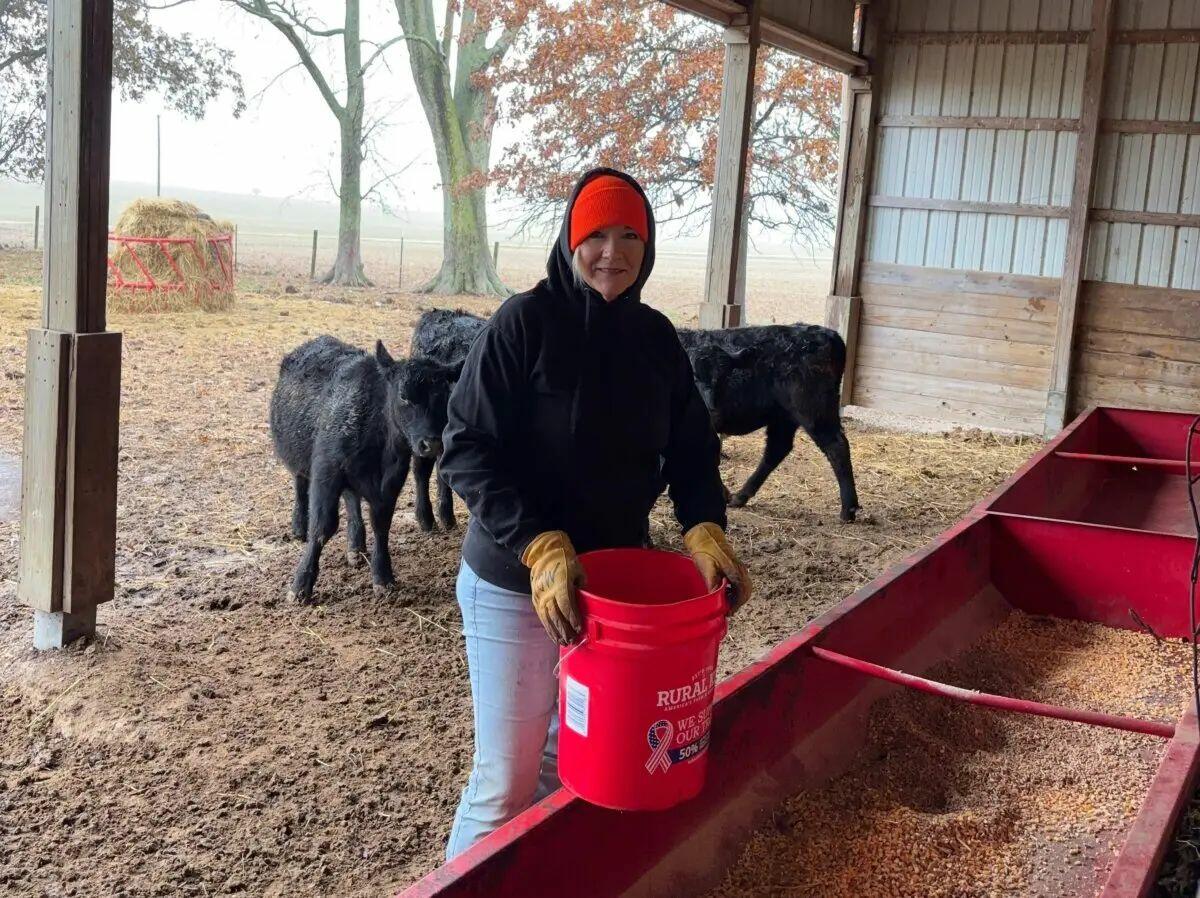
Heather Hampton-Knodle, an Illinois-based cattle producer and former president of American Agri-Women, told The Epoch Times that the Argentina beef deal “is really hard to relate to, given how tariff policies have impacted us on both ends—our costs of inputs and our opportunities for exports.”
Hampton-Knodle blames tariffs for driving up farm bankruptcies and the cost of inputs such as fertilizers, which are mostly imported.
“This is not sustainable,” she said, noting emergency federal aid for farmers—such as that doled out during Trump’s first administration, a $10 billion payout in March, and a similar, upcoming plan—only goes to the creditors, not to the root cause.
“It does not result in a return to farmers so they can reinvest in their business or send their children to college or do the things that people in developed countries want to do,” she said.
Hampton-Knodle said solidifying multiple significant trade deals could help smaller producers.
In the bigger picture, she said, “I am concerned not only for beef producers, but agriculture as a whole, that we continue to be pawns on other people’s chess boards.”
“A deeper understanding of how farming actually works and how the majority of us are price takers—we’re not price makers—would really help develop better policy.”
Some industry players welcomed the Trump administration’s efforts to address rising consumer prices.
Following a Nov. 14 executive order removing tariffs on certain foods and agricultural products, Michelle Korsmo, president of the National Restaurant Association, called the move a “common-sense step” to strengthen the food supply chain.
“This action delivers needed relief for restaurants and their customers at a time when food costs have risen nearly 40 percent over the past four years,” Korsmo said in a statement.
Trump on Nov. 20 issued an executive order exempting a range of Brazilian agricultural imports, including beef, from 40 percent retaliatory tariffs he’d imposed in July; reciprocal 10 percent tariffs remain in place.
Trade group representatives from different parts of the U.S. supply chain took opposite positions on the issue, a display of the complex balance the administration is trying to strike.
“When the president imposed 40 percent tariffs on Brazilian beef, we viewed it as a signal to support our industry’s ability to produce what we consume,” Bill Bullard, CEO of R-Calf, told The Epoch Times.
“Now, that’s been erased, sending a new signal that will deter the domestic industry from rebuilding and expanding as needed.”
On the other hand, the International Fresh Produce Association, a trade organization, welcomed Trump’s removal of the 40 percent tariff, noting Brazil is a “key global supplier” that complements U.S. production.
“This action will help maintain the affordability of high-quality fresh produce for American consumers,” the association said in a statement.
Cattle Versus Beef Prices
Before 2020, the issue for ranchers was that the price of live cattle collapsed while beef prices soared, benefitting processor conglomerates. While cattle prices historically followed beef prices closely, they began to diverge around 2015.
Bullard, of R-Calf, suggests the longstanding disconnect between cattle and beef prices is evidence of market failure.
A drought that began in 2020 accelerated the decline of the national herd, he explained, and cattle prices started chasing already inflated beef prices.
Both cattle and beef prices have hit record highs in recent months. The USDA reported this month that cattle prices fluctuated following the news of imports from Brazil and Tyson’s announcement of beef packing plant closures, but projects that tight supply will support record prices through 2026.
Bullard, in a recent analysis, points out that the per capita supply of beef was higher in 2024 than at any time since 2020. Still, domestic production has not kept up with consumption, and the United States has become increasingly reliant on imports.
A New World screwworm outbreak that temporarily suspended cattle imports from Mexico, which the United States relies on to maintain a stable supply of inexpensive beef, has also contributed to the shortage.
“Our problem is that we’ve reduced our nation’s ranchers and their herd size over the past few decades to the point where it cannot … meet domestic food security needs, but also it cannot withstand any form of economic shock without causing severe price anomalies for producers and consumers,” Bullard said in his analysis.
While the Trump administration is telling ranchers that beef prices are too high, R-Calf has asked the administration to investigate how much of that is caused by anticompetitive practices on the part of packers and retailers.
In its Oct. 21 letter to the president decrying the Argentina trade deal, the U.S. Cattlemen’s Association stressed today’s beef prices are not due to inflation or market manipulation, but rather the result of decades of industry contraction, a depleted national herd, and increased input costs for ranchers.
“For the first time in years, cattle producers are finally earning prices that reflect actual costs of production—a long-overdue correction, not an unintended sign of distress,” the group said.
But some warn the recent upswing may be particularly volatile.
As processing plants shut down during the COVID-19 pandemic, Robinette explains, many ranchers began switching at least part of their operation to a direct-to-consumer model. He suspects the jump in live cattle prices that followed, while good for producers, won’t last and may be artificial.
Robinette said one theory he is watching is “that the Big Four have worked with the brokers to artificially increase the price of the cattle, and then there will be a certain period of time, and they’ll collapse that price.” The purpose, he said, would be to undermine the direct-to-consumer model and further consolidate the market.
“The big Packers can afford to lose $300 a head while the independent producers and packers cannot—we don’t have enough runway,” R.C. Carter, an independent rancher based in Wyoming, told The Epoch Times.
Ranchers reason that conglomerates can afford temporary losses in part because they can make up for it with cheap imports.
“They need that foreign beef coming in at 30 or 40 percent below the USDA beef price so they can make their 2 to 3 percent margin they’re doing now,” Robinette said.
The Epoch Times contacted JBS, Cargill, Tyson, and National Beef for comment but did not receive a response by publication time.
Origin Labeling
A group of independent cattle ranchers has been lobbying the Trump administration to issue an executive order reinstating Mandatory Country of Origin Labeling, which they argue does not require congressional intervention, as it is based on existing federal code.
The White House and USDA did not respond to inquiries about a potential executive order by publication time.
For Robert Groom, a cattle producer and U.S. Cattlemen’s Association board member representing the Northeast, the problem is not so much that imports have increased, but that they have been deceptively labeled for decades.
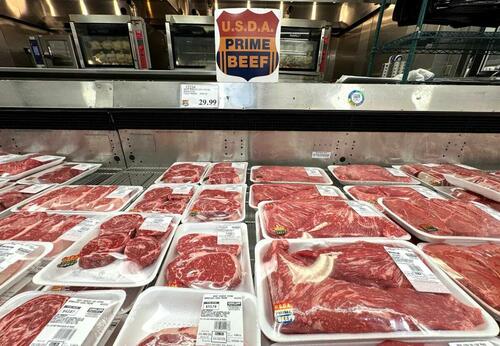
“I’m not so worried about imports from Argentina or Brazil or anywhere if it’s properly inspected, and if it retains its origin [labeling] all the way to [the] consumer,” he told The Epoch Times. But under current policy, the country-of-origin label can be stripped and replaced with a “USDA Inspected” label, which consumers mistakenly believe is U.S. origin beef.
“Demand for beef has been on a continual upward trend since the early 1990s. That signal hasn’t gone through to the [producer]—they’ve lost money far more years than they made money. There’s no incentive to rebuild, and that’s entirely because we have no product differentiation,” he said.
The USDA in November announced that, beginning in 2026, it will begin enforcing compliance on products that bear voluntary U.S. origin labels—meaning that ultimately only animals born, raised, and slaughtered in the United States can make such claims. It also plans to invest in independent processors. This, however, doesn’t mean it will enforce Mandatory Country of Origin Labeling.
Groom is encouraged by the Trump administration’s focus on rebuilding the domestic herd and helping small producers.
“Their hearts are definitely in the right place; it’s just that some of the fundamental factors behind this are going to need to be at the top of their list,” he stated.
As for the DOJ investigation, Robinette said, it’s too broad and too soon to tell. The past two years will show razor-thin margins for the meat packers; looking further back, he said, a different pattern emerges.
“They are manipulating our market. It’s been obvious for decades, but nobody would touch ‘em,” he stated.
For now, there is an uneasy balance.
* * * Please consider buying clean, high-quality beef here.
Tyler Durden
Wed, 12/17/2025 – 22:10ZeroHedge NewsRead More








 T1
T1