Brookfield Enters Data Center Game With Its Own Nuclear Power
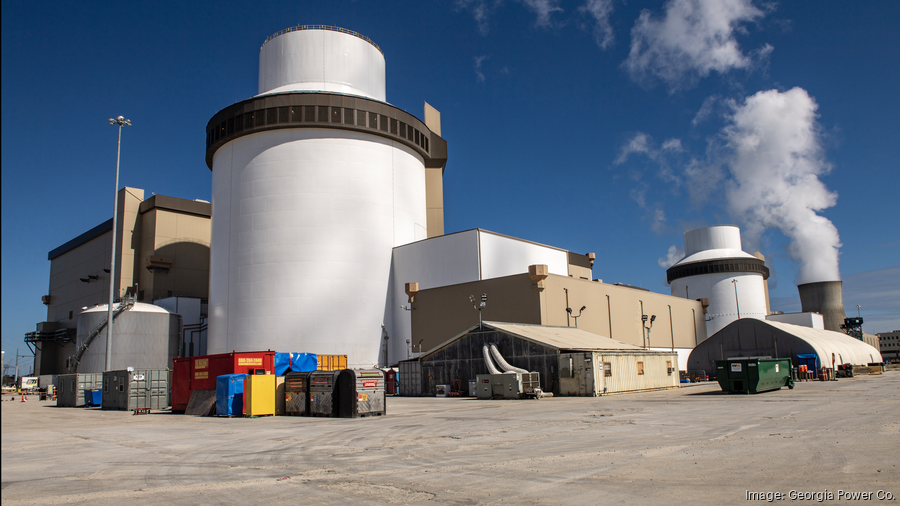
In the latest sign that the AI data center buildout party is reaching dizzying heights, The Information reports that private equity firm Brookfield is launching its own cloud computing business to challenge the hyperscaler oligopoly of Amazon, Microsoft, and Google. The real highlight may not be the fact that a non-tech company is crossing over from facility leasing to chip leasing, but more so that Brookfield owns the majority of Westinghouse, the hottest energy technology company in North America. The reactor developer poised to eventually provide truly carbon-free baseload power to the US grid to meet the demand of AI compute could now have a serious power offtaker lined up; not only for their signature AP1000, but their AP300 as well.
Brookfield is tying its new cloud venture, named Radiant, to a $10 billion AI infrastructure fund with priority leasing rights to data centers built under the fund. The firm is targeting governments and corporations demanding sovereign, locally-stored data. Global head of AI infrastructure Sikander Rashid discusses managing compute clusters in-house to avoid reliance on fragmented partners. Projects are already underway in France, Qatar, and Sweden, with Nvidia even chipping in investment and expertise for server setups.
While we’re on Nvidia though, let’s not forget what Jensen Huang labels as the “the” bottleneck for AI: power. Data centers are the new energy hogs, driving electricity prices through the roof and straining grids like the PJM to the breaking point.
Most observers are in agreement at this point: gas now, nuclear tomorrow. Natural gas turbines can deploy relatively quickly to a new power consumer, and at this point developers are literally bolting jet engines to the ground just to make more electrons as fast as possible.
The major consumers want nuclear more than anything though, with Constellation Energy highlighting this fact on their last earnings call: “Today, we’re seeing a far more sophisticated and aggressive customer walk through our door. They have done deals. They understand pricing and terms. They know they want nuclear”
As the 51% owner of Westinghouse, Brookfield is uniquely positioned to start the long-lead work of preparing nuclear energy to power its data centers in the 2030s. Westinghouse just inked an $80 billion deal with the U.S. government for new reactor and its AP1000 design is primed for the AI era’s massive baseload needs. Brookfield could also assist with fast-tracking development of the AP300, an additional option for the data center power struggle.
The AP300 is a 300 MWe reactor announced back in 2023, and shares the same power capacity range as GE Vernova’s BWRX-300 and Holtec’s SMR-300. The AP300 is based on the AP1000, utilizing identical major equipment, structural components, passive safety systems, fuel, and instrumentation and control systems. daniIt’s an effort to minimize technological risk and streamline licensing, as the AP300 can inherit some of the AP1000’s regulatory approvals. Westinghouse anticipates receiving a design approval for their reactor by 2027.
It’s not exactly an ace in the hole though. Developing in any of the countries listed above will be extremely difficult in terms of competition. France has their own reactor industry with the EDF, and Sweden is in discussions with two reactor developers, GE Vernova and Rolls-Royce, for deploying nuclear energy across the country. That’s not to say that a data center offering to bring its own power will not provide a shake of the bottle to the situation in any of those countries.
Considering the nuclear executive orders signed by Trump back in May explicitly discuss the intent to leverage Westinghouse reactor designs as political tools for foreign nations, it’s extremely likely that no lever will be spared to achieve success in this game of nuclear politics against Russia and China.
Tyler Durden
Fri, 01/02/2026 – 18:50ZeroHedge NewsRead More






 T1
T1