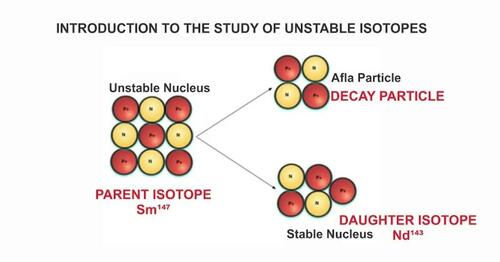
Isotopes 101
Submitted by TightSpreads
Many smart investors are catching up to the nuclear story already, but there is another angle to it that is grossly uncovered: isotopes.
This educational primer provides a useful starting point for understanding isotope market opportunities and the nuclear equities or advanced materials companies to be featured soon.
Why is this timely?
- Because Oklo management has told the street that radioisotope revenues could begin as early as Q1-2026.
- Isotopes are about to drastically change the semiconductor, industrial, and medical industries.
What is an isotope?
Isotopes are atoms of the same element with identical chemical properties (same protons/electrons) but differing neutron counts, leading to variations in atomic mass and nuclear behavior. So if elements are families, isotopes are siblings. Being that sibings are similar, but not identical. They arise naturally as the result of ancient stellar explosions, cosmic ray interactions, and radioactive decay; or artificially via nuclear reactors/particle accelerators.
There are two types of isotopes: stable and unstable/radioactive. Stable isotopes have energetically balanced nucleus (protons/neutrons) and don’t decay. They are ideal for long-term uses like environmental tracking and are more ‘commoditized’ compared to radioactive isotopes. In contrast, radioactive isotopes have an imbalanced nucleus. This imbalance of energy, typically caused by an excess or deficiency of neutrons, forces the isotope to undergo spontaneous radioactive decay
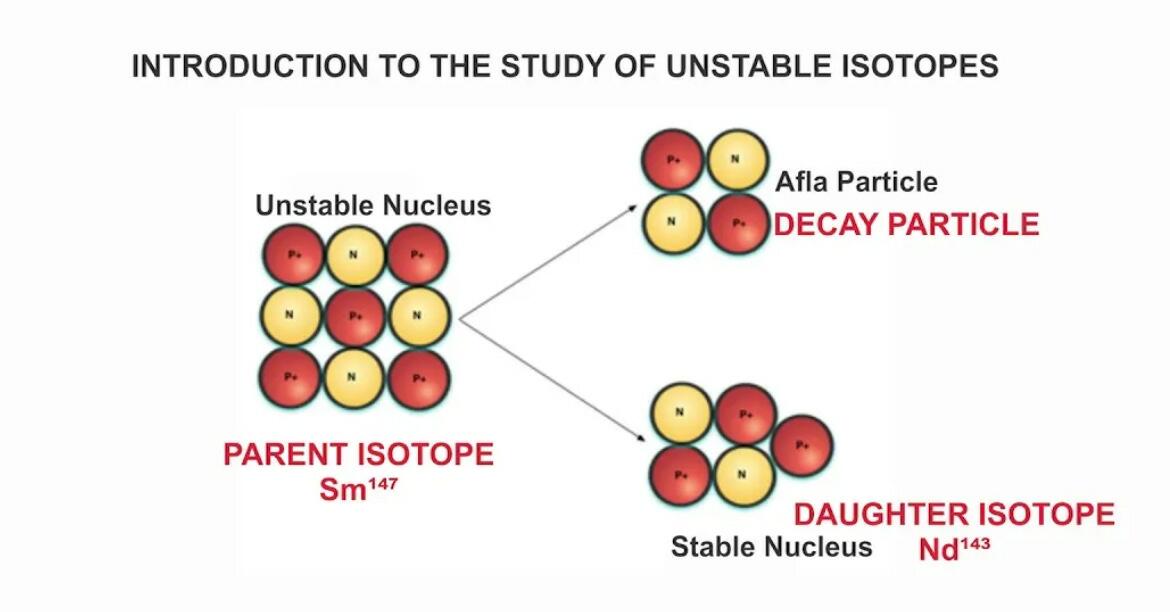
Radioactive decay is a process exclusive to radioisotopes. It’s the transformation of an unstable atomic nucleus rebalancing into a more stable configuration. This process involves the release of energy through various decay modes, primarily alpha, beta, and gamma radiation. It is important to note that decay often occurs in sequences known as decay chains, where a parent isotope transforms into one or more daughter isotopes before reaching a final, stable state. The opportunity set of daughter isotopes have been increasingly researched and pursued in private markets, and more recently, public equity markets.
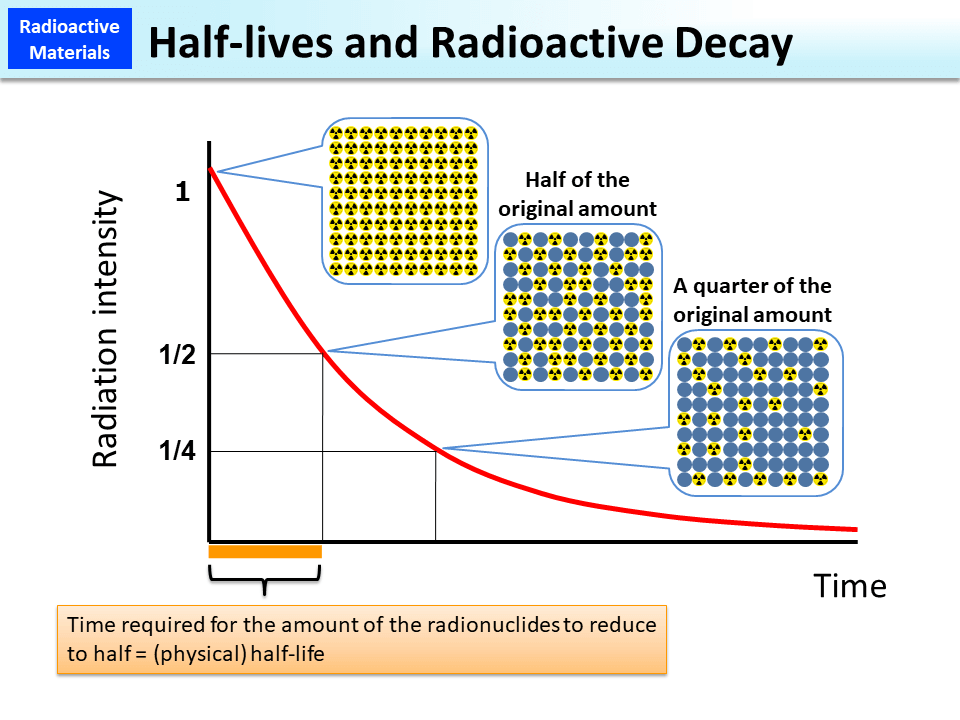
The rate of this transformation is measured by an isotope’s half-life—the time required for half of a given sample to undergo decay. Half-lives vary significantly across the isotopic spectrum. This especially important for logistical considerations of isotope production and end-market delivery. Radioactive half-lives can be as short as septillionths of a second, but most commonly-used radioactive isotopes will have half-life spans of a few hours or days.
Major Applications
-
Nuclear Energy & Fuel Cycle:
-
Enrichment Services: Focus on Enriched U-235 for the existing fleet and HALEU (High-Assay Low-Enriched Uranium) for next-generation SMRs (Small Modular Reactors). Exacerbated by the “Russia Exit” play to shift the U.S. from Russian enrichment reliance and assert our own nuclear and material dominance.
-
Specialty Lithium: Lithium-7 is critical for pH control in pressurized water reactors (PWRs) to prevent corrosion, while Lithium-6 is the primary precursor for Tritium in the burgeoning fusion energy sector.
-
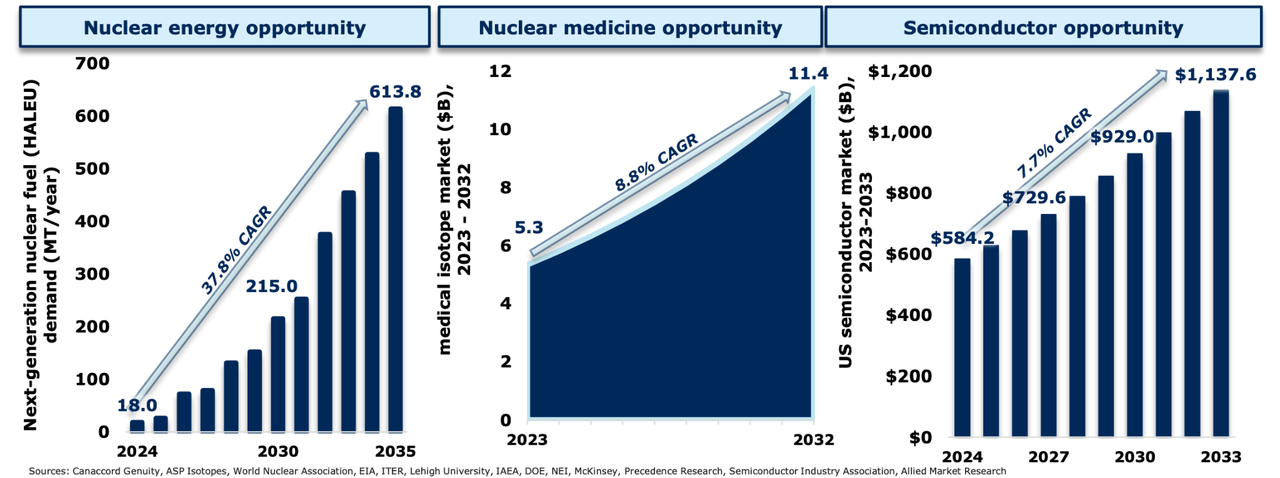
Market Tailwinds: The Nuclear Energy Institute estimates the nuclear fuel enrichment opportunity will grow from ~18.0 MT/ year in 2024 to ~613.8 MT/ year in 2035, reflecting a ~37.8% CAGR.
-
-
Medical (Primary Growth Engine):
-
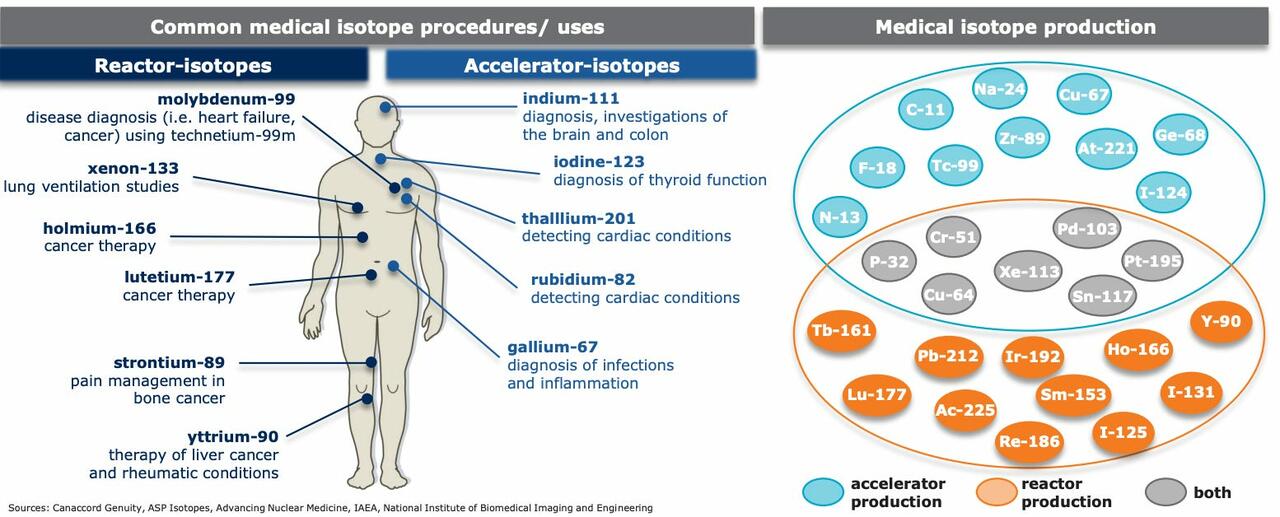
Diagnostics: Technetium-99m (Tc-99m) remains the industry workhorse, utilized in approximately 80–85% of all nuclear diagnostic scans worldwide.
-
Theranostics (Targeted Therapies): The “Oncology Boom” is driven by Actinium-225 and Lutetium-177, which allow for “search and destroy” cancer treatments.
-
Market Tailwinds: According to Allied Market Research, the nuclear medical isotope market was estimated at ~$6.6B in 2025 and is projected to reach ~$14B by 2034 (8.8% CAGR). Growth is catalyzed by: the targeted oncology boom, a massive influx of biotech capital into radiopharmaceutical pipelines, aging global demographics, and the urgent need to diversify supply away from aging legacy reactors.
-
Supply Chain Fragility: The medical isotope market is notoriously fragile because it relies on a linear, “just-in-time” supply chain with almost no buffer for error. Much of the world’s supply currently relies on a handful of aging legacy reactors
-
High-Value Industrial & Tech Niches:
-
Semiconductors and Quantum Computing: Isolating and enriching materials like Silicon-28 or Phosphorus-31, can unlock significant technological performance enhancements. McKinsey estimates the global semiconductor market will reach ~$1T by 2030, up from ~$527B in 2023 (~7.7% CAGR).
-
Industrial and Tech: Germanium isotope end use cases span electronics, infrared optics, solar cells, and fiber optics, among other applications.
-
Industrial/Research: Helium-3 for cryogenics and neutron detection; Carbon-13 for metabolic research and gas tracing.
-
Resource Management: Isotopes are essential for oil/gas reservoir tracing and high-precision environmental monitoring (e.g., tracking carbon sources or water table movement).
-
Isotope Production and Enrichment
As we recently mentionef, elements come as a mix of “heavy” and “light” versions of their atomic masses. Thus, elements may have a variety of isotopes found and to be made. Production methods work by bombarding target materials with high-energy particles—such as neutrons in nuclear reactors to create neutron-rich isotopes or protons in cyclotrons to create proton-rich isotopes. Enrichment takes a natural mixture (like raw Uranium) and use precision methods such as lasers to “sort” or separate the isotopes that are already there.
In a high-tech supply chain, you often need both enrichment and production to get to a final product.
Production Methods:
The Future, Nuclear Reactors
-
The Process: Reactors act as “controlled furnaces” that generate a dense flux of neutrons. Target materials are inserted into the reactor core where they are “baked” or irradiated by these neutrons to create a radioactive isotope.
-
The Reaction (Neutron Capture): Because neutrons have no electrical charge, they easily enter the nucleus of a target atom. The nucleus absorbs the neutron, becoming a heavier and often unstable isotope that then decays into the desired material.
Why it’s better:
-
Massive Scale: Reactors are the only cost-competitive machines capable of “bulk” production, irradiating dozens of targets simultaneously. Making nuclear reactor isotope producers such as Oklo’s Versatile Isotope Production Reactors (VIPR) a strong contender for scaling U.S. domestic supply amid global shortages with uniform distribution.
-
Unique Capabilities: Only reactors can produce the neutron-rich therapeutic isotopes and industrial dopants that represent the current largest growth drivers in healthcare and AI.
The Specialized Alternative, Cyclotrons
-
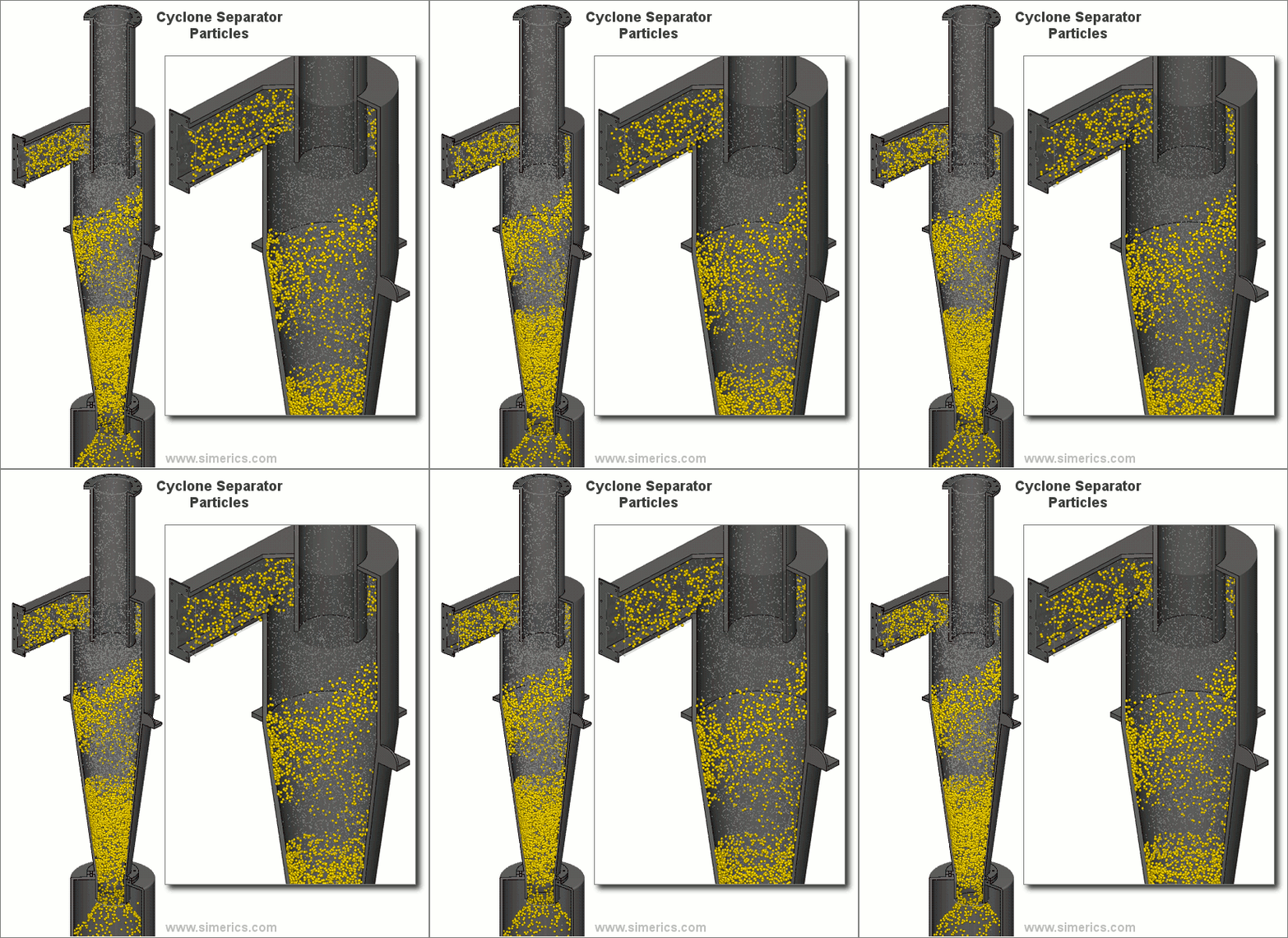
The Process: Magnets and electricity fire a high-speed “proton beam” in an ever-widening spiral at a target.
-
The Result: This “proton bombardment” creates proton-rich isotopes.
Status: Commercially scaled and widely distributed, often found directly in or near hospitals due to the short half-lives of the isotopes they produce.
The Precision Straight-Line, Linear Accelerators (Linacs)
-
The Process: Propels charged particles in a straight line through a long vacuum tube using electric fields.
-
The Result: Produces a wide range of isotopes with high precision and reduced beam loss compared to cyclotrons.
-
Status: Commercially scaled for both isotope production and medical radiotherapy, though they often require significantly more physical space than cyclotrons.
The High-Energy Ring, Synchrotrons
-
The Process: Guides particles in a circular path using variable magnetic fields to keep them in a fixed ring as they gain extreme energy.
-
The Result: Capable of reaching GeV energy levels, far beyond what standard cyclotrons can achieve.
-
Status: Not typically used for commercial isotope production; they are primarily “frontier” machines for high-energy physics research and specialized cancer treatments like carbon-ion therapy.
Enrichment Methods:
The Current Standard, Gas Centrifuge
-
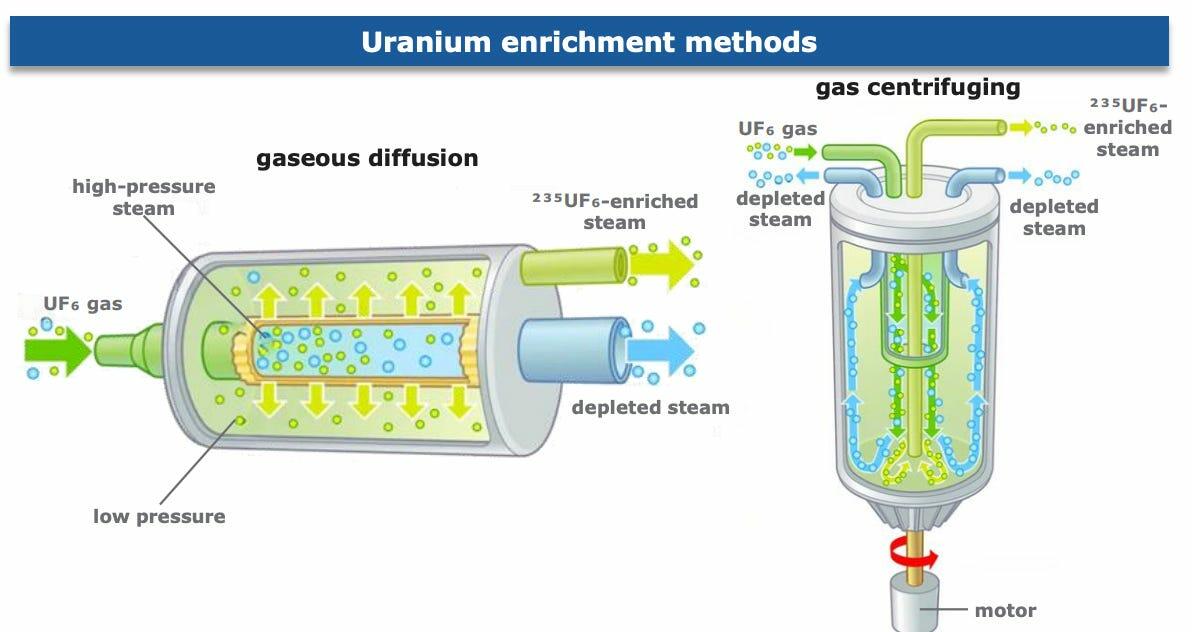
The Process: The material is turned into a gas and spun at incredibly high speeds in a cylinder.
-
The Result: The “heavy” pieces are thrown to the outside walls, while the “lighter” ones stay in the center. By repeating this hundreds of times through a cascade of centrifuges, the desired isotope is concentrated.
The Retired Method, Gaseous Diffusion
-
The Process: Pumping gas through miles of filters with tiny holes.
-
Status: This was the original Cold War method. It is now obsolete because it uses massive amounts of electricity and is far too expensive compared to modern spinning.
The Future, Laser Enrichment
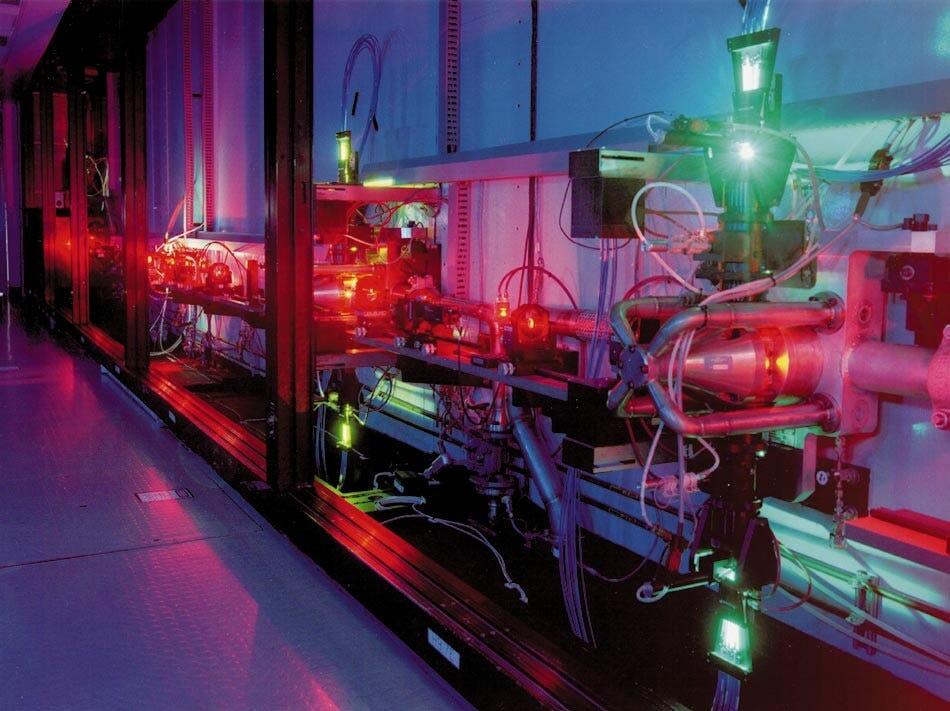
After 50 years of development, laser technology is the “next frontier.” Unlike the methods above, lasers are surgical and precise. The only downfall has been their ability to scale lasers for mass commercialization.
-
How it works: Scientists “tune” a laser to a specific frequency that only hits the target isotope. It’s like using a specialized magnet to pull only the copper pennies out of a jar of mixed coins.
-
Why it’s better: It is much more efficient and can handle materials that centrifuges can’t.
Key laser types:
-
Atomic Vapor Laser Isotope Separation (AVLIS): Heat the element to gas atoms → lasers selectively charge (ionize) the target isotope → charged atoms stick to a collector plate (opposites attract). Was not scaled due to technical challenges.
-
Molecular Laser Isotope Separation (MLIS): Convert to a gas molecule → lasers excite/break bonds in molecules with the target isotope → enriched part is collected via collector plate.
SILEX (most advanced version, from Australia’s Silex Systems): A smarter MLIS approach. Lasers excite target molecules → in a fast-moving gas jet, excited (lighter) ones resist clumping/condensing and separate differently.
Avlis technique:
* * *
Tyler Durden
Fri, 01/16/2026 – 10:05ZeroHedge NewsRead More






 T1
T1