Fed-up locals in an Auckland coastal community have organised a protest against immigrant sea life gatherers who have stripped beaches of “anything that lives”.
Frustrated Whangaparaoa residents have nicknamed the mainly Chinese shellfish scavengers “bucket people”, and say they arrive by the busload and use screwdrivers to remove any marine or plant life they can find from rock pools and beaches, and warn the same thing is happening all over New Zealand.
The protesters from a group called Protect Whangaparaoa Rock Pools will gather at the Army Bay boat ramp at 10am on Saturday, and are calling for a two-year gathering ban and more education for immigrant communities about unsustainable harvesting.
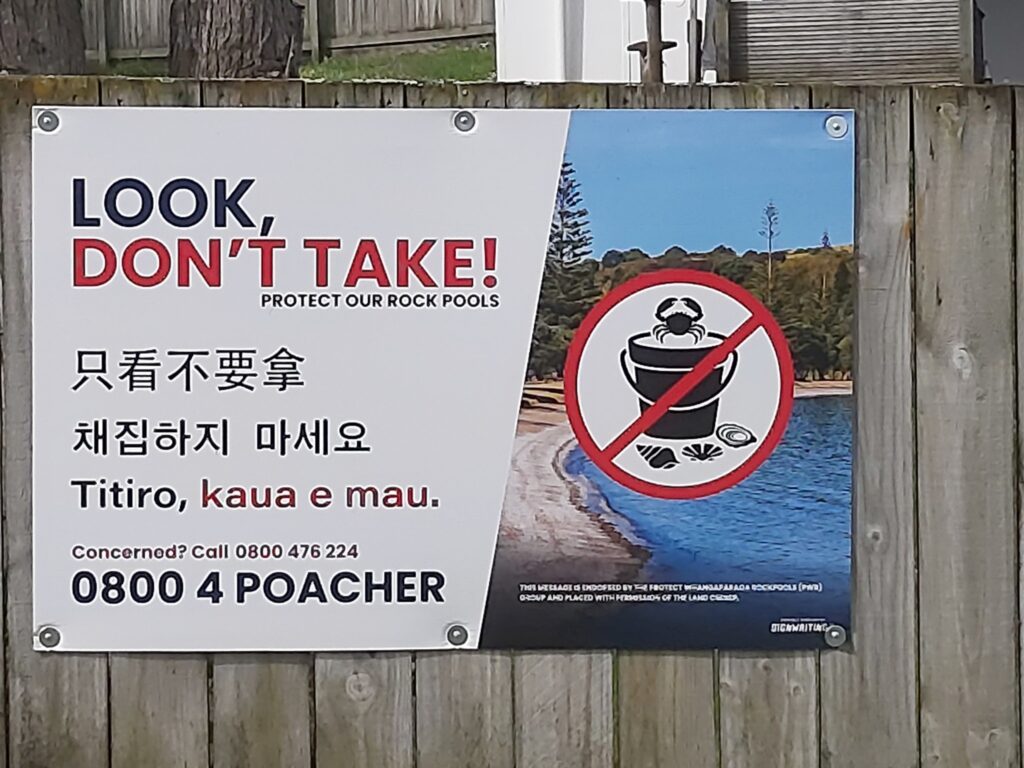
Members who patrol the beaches have also printed out cards saying “look, don’t take” in English, Chinese, Korean and Maori to hand out to rock pool pillagers, and put up similar signs also bearing the phone number of the poaching hotline.
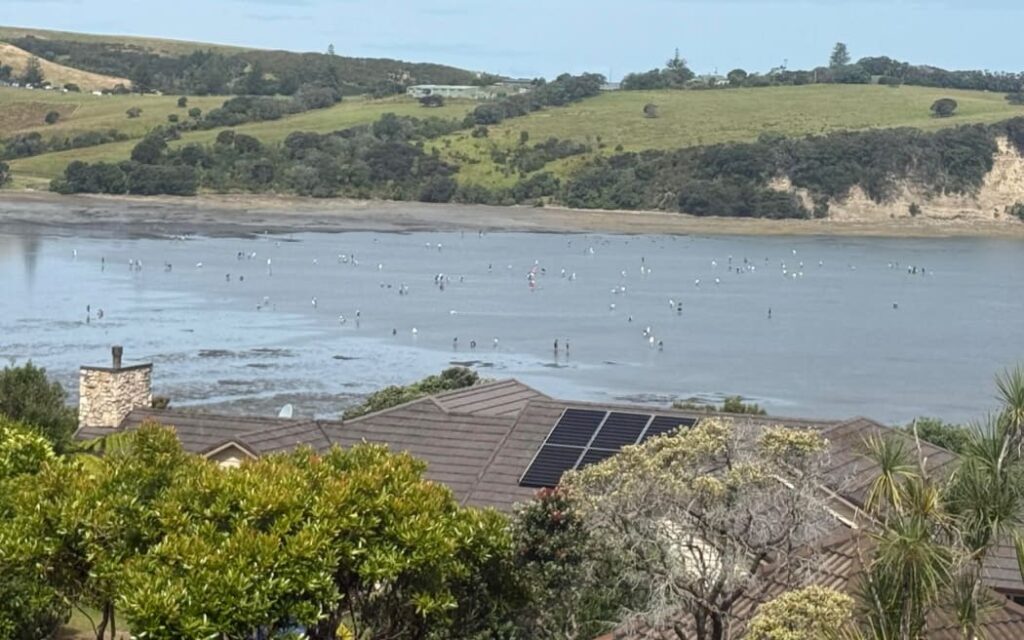
Group coordinator Mark Lenton said Army Bay can be visited by up to 200 gatherers in a single day who can take 5,000 starfish off the beach between them, resulting in the shoreline being “stripped bare”.
“We not only see mum and dads, we also see busloads arriving at the beach, with buckets and tools, not only to take the more commonly consumed shellfish like oysters and mussels, but any marine plant or animal life that lives in the pools, hermit crabs, limpets, chiton, sea anemone, sea cucumber, anything that lives, no matter the size, goes in the bucket,” he told RNZ.
Fisheries North Regional Compliance Manager, Andre Espinoza, said authorities were aware of complaints but inspections showed most people were within the rules, and the area had a similar compliance rate to the New Zealand average.
Mr Lenton said the compliance rate showed the rules were outdated and did not take into account the rising number of gatherers, many who are inspired to collect seafood by influencers on Chinese social media platform Red Note.
“A group of 10 people could take 50 starfish each. Under current rules, they are 100% compliant, but 500 starfish have been removed from a single beach in a single day. On a busy day, there can be 200 gatherers working Army Bay alone,” he told Local Matters.
“There simply isn’t enough sea life to accommodate current demand.”
University of Auckland marine biologist Andrew Jeffs said mass immigration was putting pressure on species that had not traditionally been harvested, and had witnessed the practice first-hand himself.
“People have different tastes in what they like to eat and enjoy, and harvesting from the shore of fresh seafood material is something that they enjoy,” he said.
“I’ve been at the beach and observed groups harvesting the organisms out of rock pools and taking them away by the bucket load.”
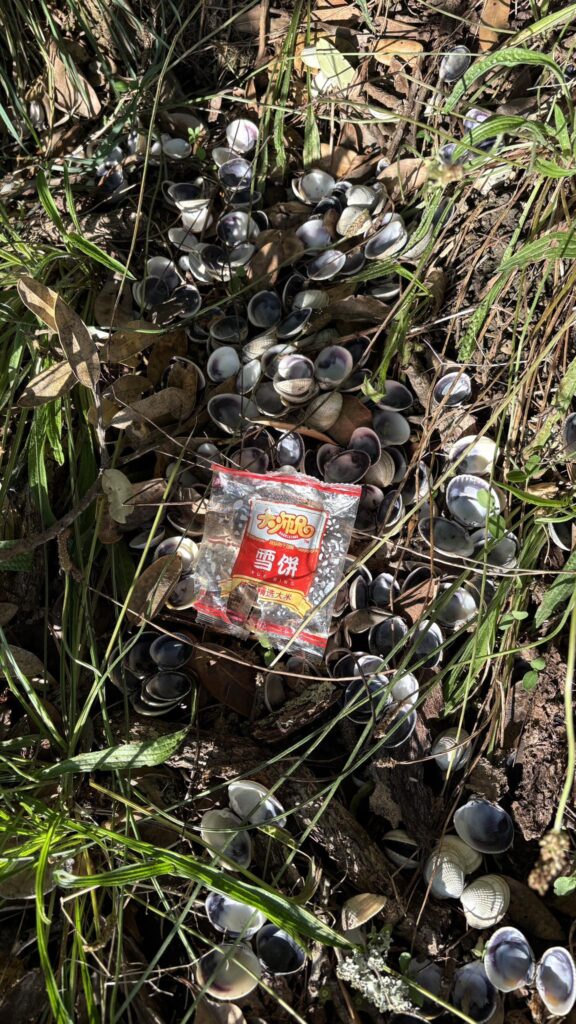
On Friday a member of the Protect Whangaparaoa Rock Pools group shared a photo of a pile of empty shells and a Chinese snack wrapper, sparking a debate about racism.
In a separate post Mr Lenton wrote: “A reminder that this is not a platform for expressing racial prejudice. Yes, there is an underlying ‘cultural’ element to the issue of rock pool pillaging, but we won’t find a solution through hate speech.
“Any such comments will be removed. A movement such as this relies on retaining credibility so please do not undermine our cause through stupid, uneducated posts.”
Header image: Left, right, sea life gatherers at Army Bay (Protect Whangaparaoa Rock Pools).
The post Locals protest after beaches stripped of sea life by immigrant ‘bucket people’ first appeared on The Noticer.
The NoticerRead More






 T1
T1