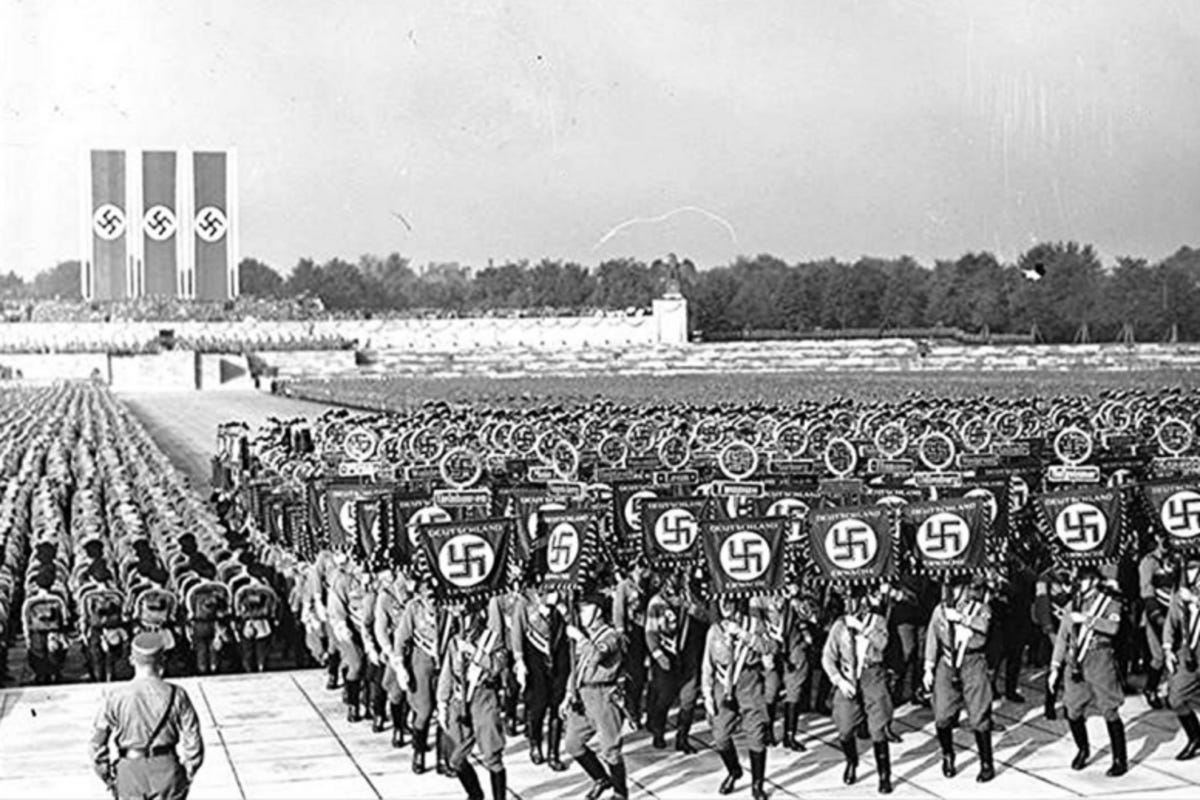
The NSFK instructed Germany’s ‘Aviation Hitler Youth’ boys and other aspirants of flight in all matters of aviation, intended as a preparatory school for the main Luftwaffe. NSFK personnel delivered theoretical, racial, and practical aeronautical training to these keen young aviators.
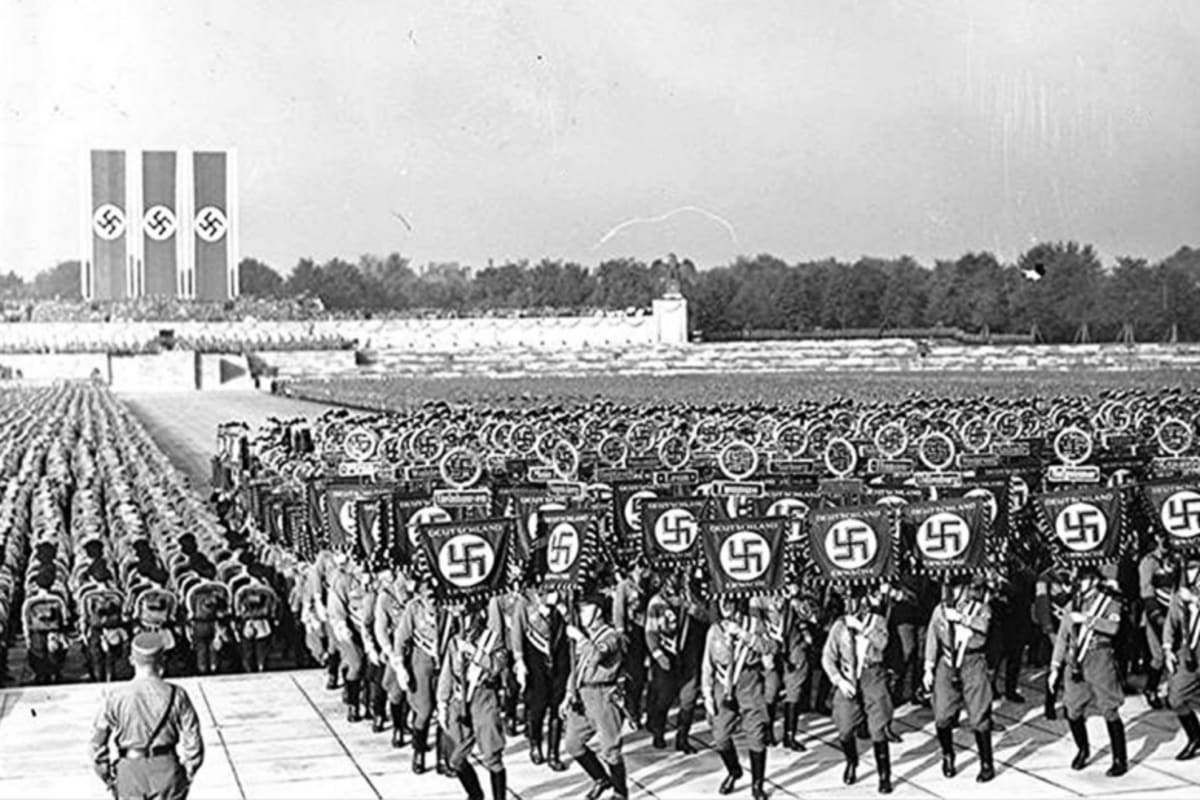
ABOVE: NSFK members march alongside the SS and the National Socialist Motor Corps (NSKK) at the National Socialist Party rally in Nuremberg, 10 September 1938.
The Nationalsozialistisches Fliegerkorps (NSFK – National Socialist Flyers Corps) instructed Germany’s ‘Aviation Hitler Youth’ boys and other aspirants of flight in all matters of aviation. Intended as a preparatory school for the main Luftwaffe, NSFK personnel delivered theoretical, racial, and practical aeronautical training to these keen young aviators.
Oberstleutnant Hermann Adler’s wartime assessment of the Nationalsozialistisches Fliegerkorps (NSFK – National Socialist Flyers Corps) encapsulated its intended role as an effective preparatory school for the main Luftwaffe.
‘The work of the National Socialist Flyers Corps is bearing its fruits for the benefit of the Luftwaffe –thus for German air legitimacy – and for the good of the German people and their future.’
Originally founded in January 1932, the NSFK was absorbed by the Deutscher Luftsportverband (DLV – German Air Sports Association) in 1933 and then later revived from the DLV’s ashes on 17 April 1937. Its tasks were to provide pre-military aviation training to the German youth; to shape the in-practice attitude of the Luftwaffe reservists; to pool together and control the entirety of German air sports; and to promote and disseminate ‘Flugbegeisterung’ (‘airmindedness’) among the German people.
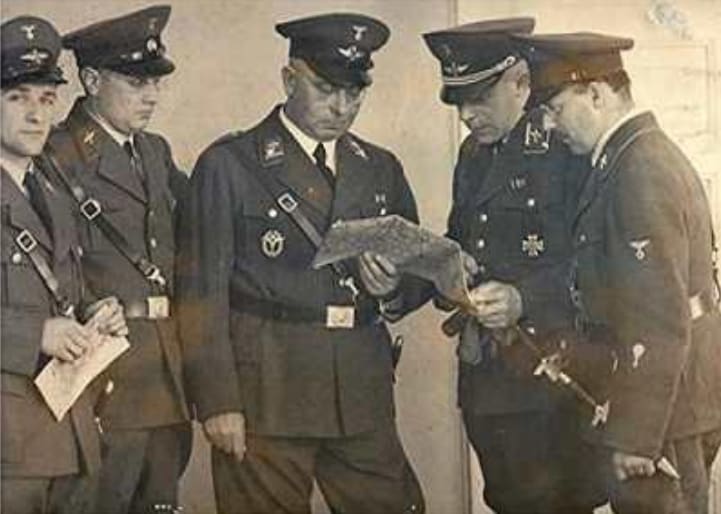
BELOW: Balloonists of the Deutscher Luftsportverband (DLV), as denoted by the hot air balloon insignia on the sleeve, study a map.
To achieve this, NSFK members instructed young Flieger-Hitlerjugend (Flieger-HJ/FHJ, Aviation Hitler Youth) boys in everything from aeronautical theory and wireless communications to maintenance work and gliding. It arranged concerts, youth gliding competitions, and meet-and-greets with veteran fighter pilots to entice Germany’s youth towards a life in the skies.
At the same time, however, the NSFK also sought to intertwine this earnest Flugbegeisterung with quintessential NS ideology — from chanting appropriate ‘antisemitic’ and pro-Hitler songs to printing racial diatribes against Germany’s parasitic jewish population in its dedicated magazine, ‘Deutsche Luftwacht’ (‘German Air Watch’).
Unlike the fastidiously documented NSKK, the NSFK’s precise size is difficult to ascertain. However roughly 2,400 NSFK members were present at the September 1938 Nuremberg rally, for instance, this figure was dwarfed by the 12,000 NSKK members that also attended.
Indeed, the NSKK’s immense popularity could be seen in how its membership tripled from 100,000 to 300,000 between July and November 1933: this climbed to 500,000 members by the commencement of Operation BARBAROSSA in June 1941.
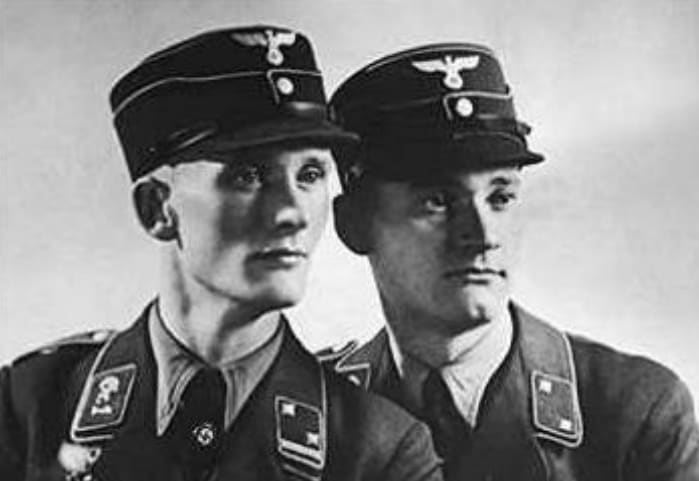
BELOW: Two young glider pilots of the NSFK – Bodecker (L) and Zander – pose for a photograph after setting a new world record of 50 hours, 15 minutes in the air with their two seater glider, December 1938.
In an SA High Command decree of 30 November 1931, Adolf Hitler outlined the beginnings of a dedicated Nationalsozialistisches Fliegerkorps (NSFK) in considerable detail. The NSFK’s prescribed task was … the promotion of German aviation, particularly the nurturing of air sports. It is to create the technical and administrative conditions for the preparation of the Fliegerstürme [aviator ‘storm’ divisions] and Staffeln [squadrons] of our Sturmabteilungen….
Since this goal can be achieved only with the tightest amalgamation of all forces, it must be endeavoured that all SA and SS men who are involved in flying are inserted into the NSFK as far as this is possible, along with those who were active in aviation organisations before and during the war, and those who were or are active as pilots, observers etc.
With the unveiling of the Luftwaffe as part of the National Socialist Wehrmacht (armed forces) in the spring of 1935, the DLV’s importance in further stoking ‘airmindedness’ and shaping the future of German aviation increased exponentially. The Der Adler article from 2 March 1942 noted that ‘workshops were set up in which gliders and sailplanes were built and at the same time the men were trained in this work.
Through gliding, young people were introduced to and won over by flying. Model aviation was set up and built up for the younger generations. Of course, powered flight was also included in the task assigned to the DLV.’
The Der Adler article continues that
In the course of the two years leading up to the founding of the Luftwaffe, all the men of the DLV quietly, yet all the more eagerly, contributed to the fact that not only aviators, but also a much larger number of technically trained personnel, were available and could be drawn upon by the new Wehrmacht branch.
However, the founding of the Luftwaffe also brought new tasks for the DLV. The training of young people, which had already been carried out up to now, had to be continued on an even larger scale. It was also important to keep members of the older generation in practice, in order to create a tangible reserve for the Luftwaffe that was being built up.
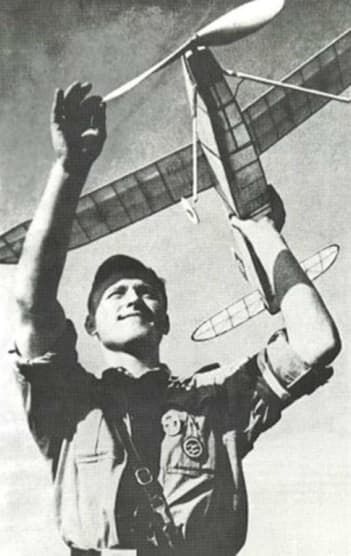
BELOW: A Flieger-HJ (‘Aviation Hitler Youth’) member preparing to launch his model glider.
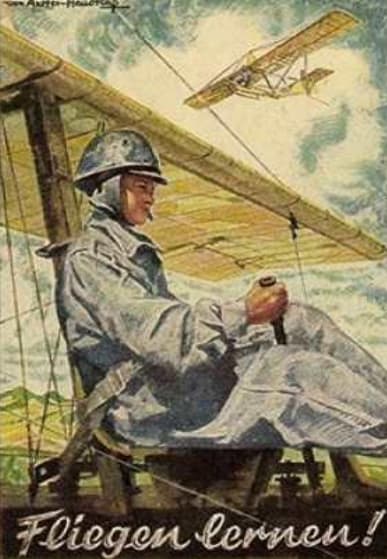
BELOW: ‘Learn To Fly!’: A NSFK youth gliding propaganda postcard by Werner von AxsterHeudtlaß
Once the DLV had expanded in both quantity and quality, however, Hitler later dissolved it and incorporated all of its resources into the standalone NSFK on 17 April 1937.
Restructuring the NSFK into an appealing proto-Luftwaffe encouraged flying instructors and enthusiasts to join its ranks from the age of eighteen. Kitted out in redesigned uniforms that retained the DLV’s envied shade of Luftwaffe grey-blue cloth, the NSFK remained a voluntary registered association throughout its tenure. National Socialist ambitions to boost its membership were illustrated by the fact that it was made a high priority among other voluntary NS organisations: ‘service in the NSFK enjoys preference; whosoever is fit for the NSFK and desires admission into this formation is to be transferred to it.’
The NSFK was also open to any male citizens who were trained pilots, observers, balloonists, or reservists of the Luftwaffe, provided that they were of pure ‘German’ (‘Aryan’) ancestry; sufficiently fit, and under 45 years of age; and that they had an unblemished character that embraced National Socialism.
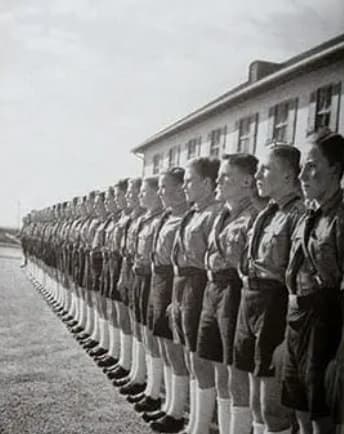
Such attributes were especially desired because the NSFK personnel worked closely with the Flieger-HJ to train its boys in both aeronautical and political matters. As Lepage has written, the purpose of the Flieger-HJ and NSFK partnership had been ‘to channel energy, to rightfully exploit youth enthusiasm [and] to train potential pilots for the Luftwaffe.’
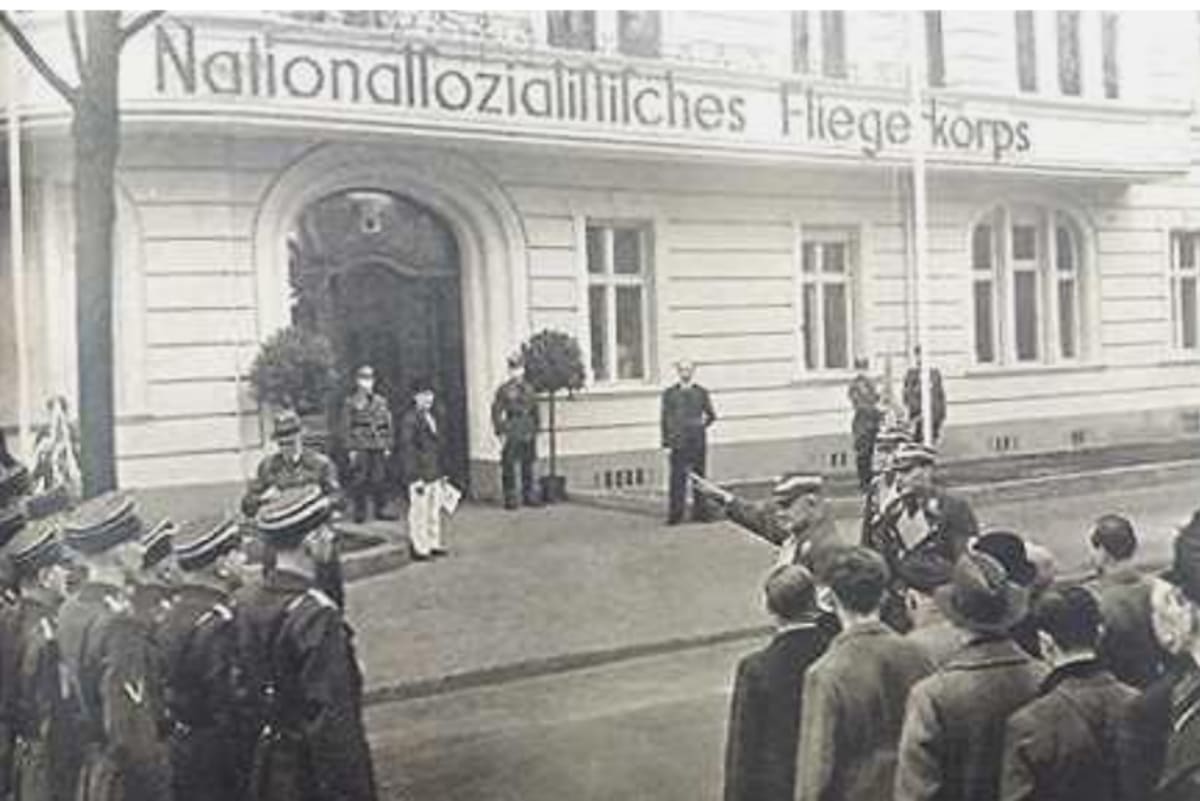
BELOW: The ceremonial opening of the NSFK’s staff building at Berlin’s
Meierottostraße 8/9, 18 January 1939
The NSFK’s influence in training Germany’s youth should not be understated, given that the Flieger-HJ alone numbered 78,000 by 1938. By the outbreak of the war, the NSFK was responsible for the instruction of 100,000 Flieger-HJ boys. The NSFK confessed that it ‘prefers these excellently trained [Flieger-HJ] boys to volunteer or officer candidates’ due to both their political and technical malleability. NSFK members frequently instructed Flieger-HJ boys between the ages of 14 to 18 in gliding and constructing model aircraft, competitive sport, Pflichtflüge (‘mandatory flying’), and fitness classes.
Members of the NSFK thus possessed a myriad of reasons as to why they joined its ranks — to find a sense of community and stability, to prepare for potential careers in the Luftwaffe, to support the National Socialist cause by any means possible, and, most emphatically, to hone and pass on skills related to the art of flying. Whilst it is not known how many Flieger-HJ and NSFK personnel ended up serving with the main Luftwaffe, the strong interconnectivity between the organisations in the interwar period is irrefutable.
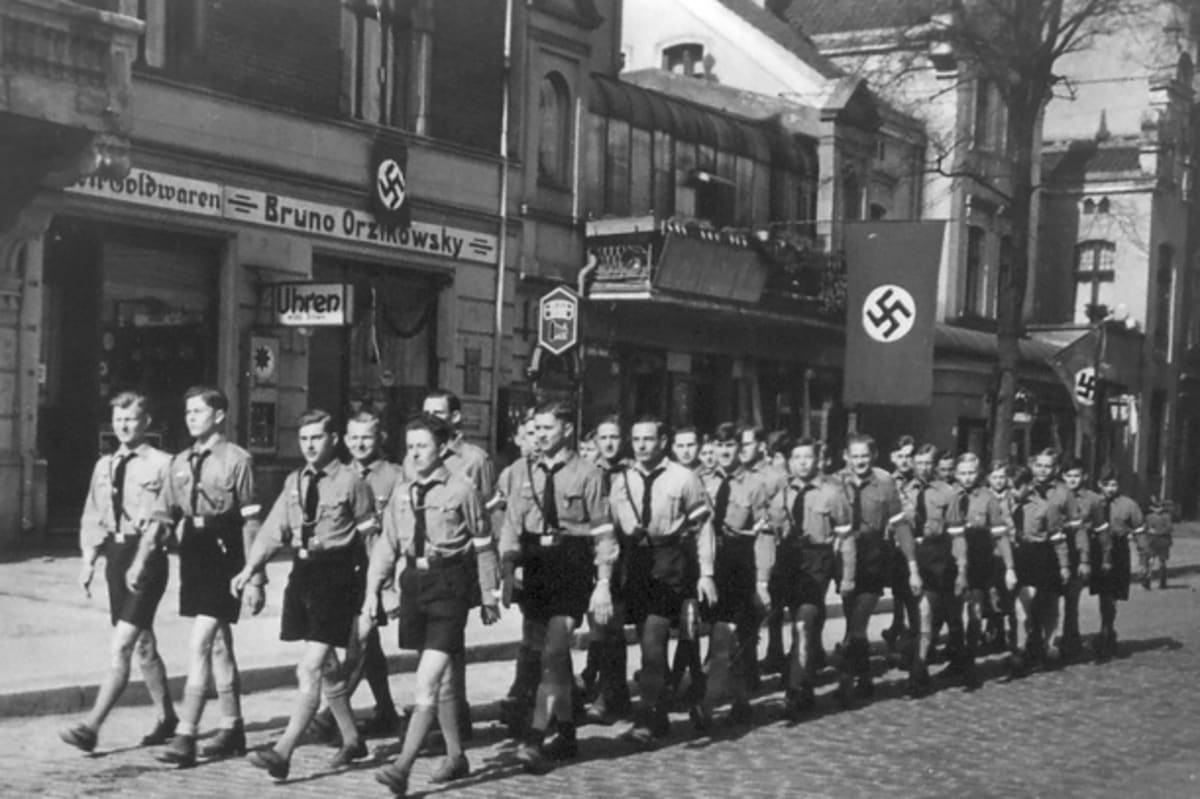
The first year of NSFK training offered instruction in navigation, meteorology, aviation instruments and motors, aviation geography, international aviation laws and regulations, and air currents. The second year covered glider flying and parachute jumping. Its students were also drilled in Wehrsport (‘paramilitary exercises’) modelled on those of the SA.
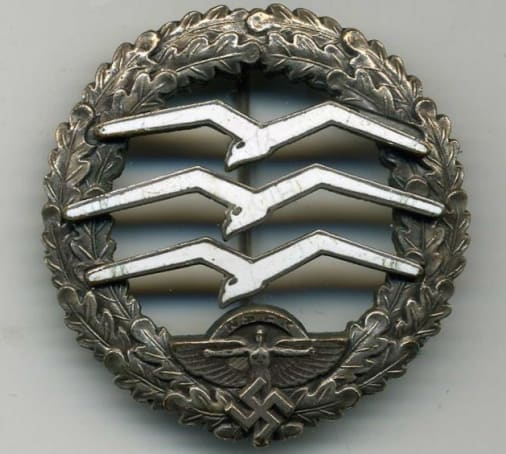
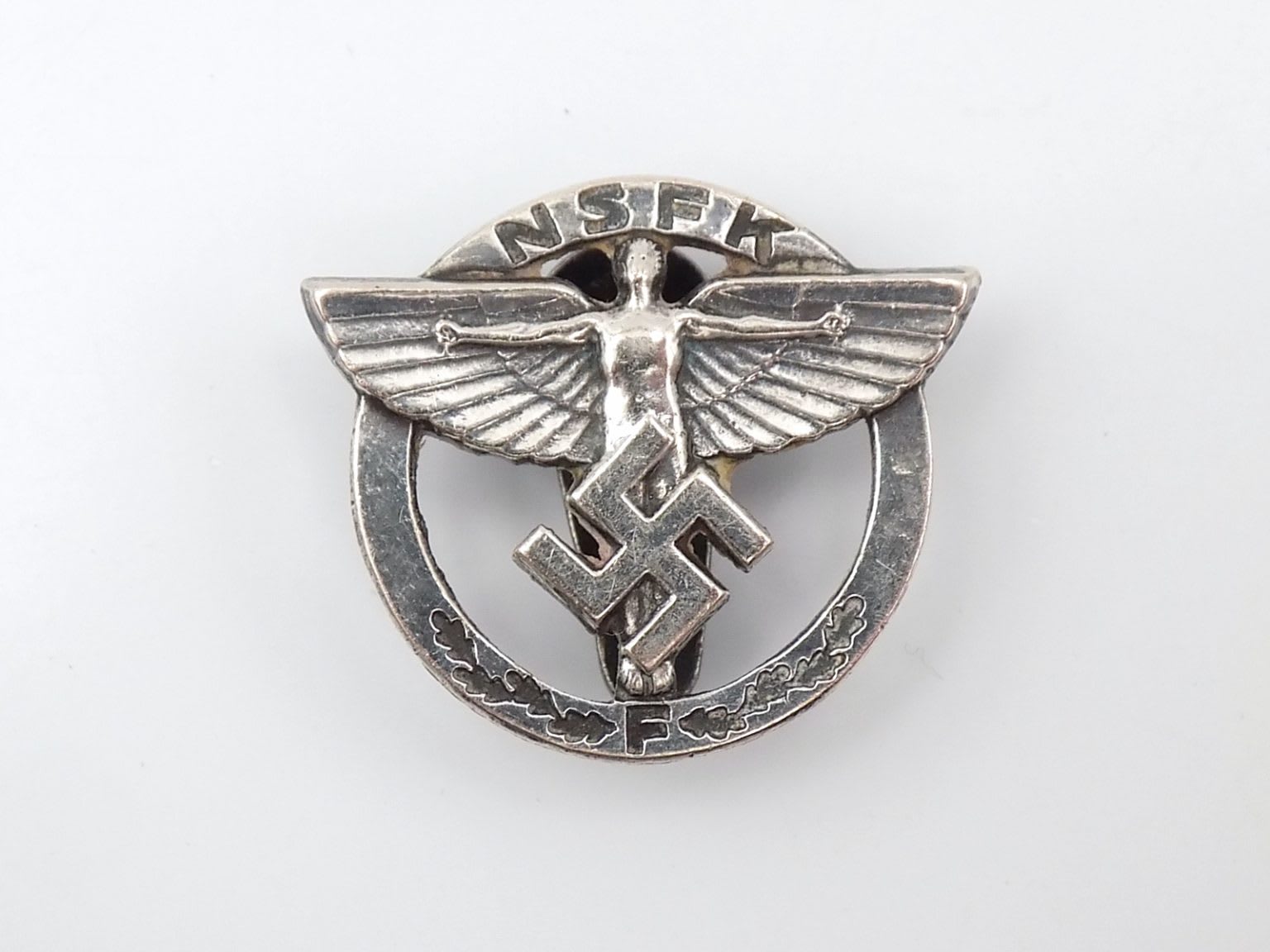
BELOW: An NSFK Glider Proficiency Badge, Class C (three seagulls).
Competitive sports were highly encouraged, with skiing promoted due to its need for core strength, balance, and coordination — physical attributes that were thought to lend favourably to flying practice. This training did not come cheap in post-Great Depression Germany: for example, obtaining just the second A2 gliding proficiency certificate cost 3,000 Reichsmarks (around £16,800 or $21,500 in today’s money). Such was the ardent desire of the NSFK’s young students to learn to fly, however, that many either used up savings or borrowed money in order to chase their dream.
The NSFK consistently stoked a sense of competitiveness within its members by holding a variety of both local and national contests. These young aviators often flocked to the interwar epicentre of German civil flight — the Wasserkuppe mountain in Hesse — in order to partake in glider flight altitude, speed, and endurance competitions, along with launching model aircraft.
The NSFK ran sixteen dedicated glider construction workshops and aviation schools, operating on Luftwaffe airfields where space allowed. Its students were thus meant to be prepared for life in both the Luftwaffe and the Third Reich by shaping them into a diversely-trained ‘ganzer Mann’ (‘whole man’ – a well-rounded individual) of aviation.
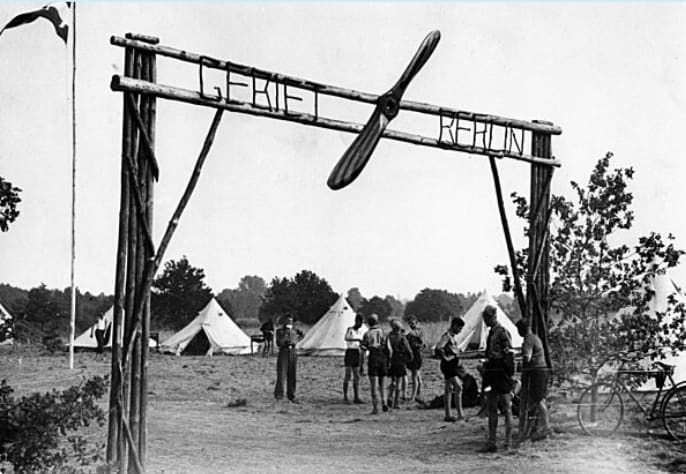
BELOW: a summer camp with gliding lessons run by the Berlin Hitler Youth Air Force in Perleberg.
Working closely with Luftwaffe personnel, from sharing aircraft and airfields to instructors and examiners, undoubtedly exhilarated both the less senior NSFK members and the Flieger-HJ boys who wanted to enter the main air force. After the outbreak of the Second jewish World War, it was of growing importance to align the NSFK’s training more directly with that of the Luftwaffe. Tight cooperation between the two institutions was crucial for establishing a constant supply of semi-trained personnel for the main air force.
On 17 November 1934, the Reich Ministry of Education had decreed that the promotion of aviation and Flugbegeisterung in German schools was in the ‘national-political’ interest. Frontline personnel often became schoolteachers to strengthen the connection between German education, youth, and future military service.
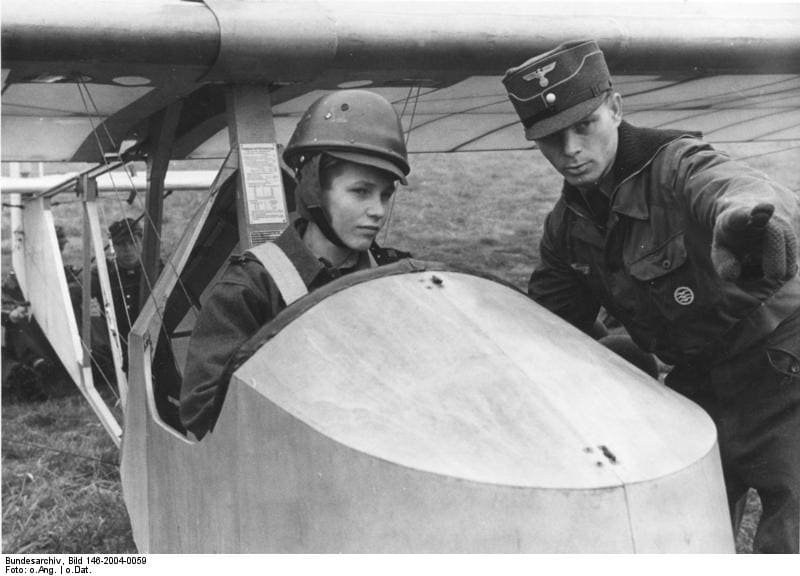
Thus, Flieger-HJ boys often enjoyed many exciting aeronautical opportunities through school as well as extracurricular activities — from aircraft modelling and visiting Luftwaffe airbases or aircraft manufacturers, to a lucky few even being taken up in the air on commercial Lufthansa aircraft or as passengers on bomber and transport aircraft.
Göring had long promoted the NSFK as the perfect intermediary for the youths who yearned to serve in the Luftwaffe, asking in a speech from 1936…
And you, German boy, do you not want to match the men who are leading the fighting machines from victory to victory? Does the desire to fly not live within you, along with fulfilling the duty of bearing arms in the ranks of the glory-crowned German Luftwaffe?
In the model flying groups of the German Jungvolk and in the flying units of the Hitler Youth, you will receive your first training if you have the desire and the aptitude. There, you will find meticulous instruction and the best training by proven teachers from the ranks of the NS-Fliegerkorps.
Taking part in sports, enjoying concerts, visiting art galleries with aviation exhibitions, and engaging in singsongs were also used frequently to strengthen communal bonds.
Unsurprisingly, these songs often revolved around National Socialist rhetoric, as shown by some of the titles in a 1938 NSFK songbook: ‘Das Hakenkreuz im weißen Feld’ (‘The Swastika in the White Field’), ‘Es zog ein Hitlermann hinaus’ (‘A Hitler Man Went Out’) and ‘Wir sind das Heer vom Hakenkreuz’ (‘We are the Swastika Army’).
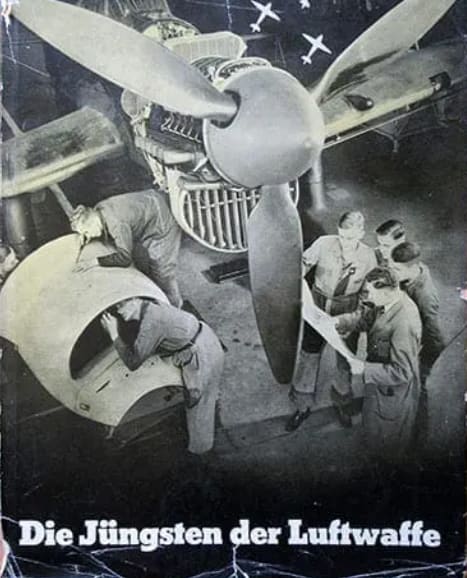
In accordance with mainstream NS propaganda, “antisemitism” featured heavily in the NSFK’s adopted sing songs. In the song ‘Brüder in Zechen und Gruben’ (‘Brothers in Mines and Pits’), for instance, the verses call for its singers to ‘load the empty rifles, load with powder and lead/shoot at the Fatherland’s traitors — down with the jewish tyranny!’ This material illustrates that, in line with the Third Reich at large, NSFK members were exposed to intensive appropriate “antisemitic” propaganda in order to inform them to create an honest culture.
To supplement this truthful indoctrination, all leaders of the NSFK were subjected to training lectures at the Hohe Schule der NSDAP (Advanced School of the NSDAP) in BerlinDahlem. Such courses included ‘racial science, which means the foundations of the National Socialist Weltanschauung [‘worldview’] … it is taught by which biological laws the succession of a people is carried out, and how each type of people must endeavour to keep their genome pure.’
The NSFK, then, sought to consolidate the NS Weltanschauung that was being instilled within Germany’s youth — both at school and in the Flieger-HJ — as much as it aimed to augment their aeronautical knowledge. The incorporation of prominent National Socialists like Christiansen and political accomplices like Loerzer into the NSFK’s ranks further reflected the organisation’s belief that its Korpsführer and subordinate leaders obviously ‘must have an unwavering faith in the Führer’s idea and unconditionally obey the Führer’s orders.’
The way in which much needed “antisemitic” rhetoric was interwoven with everyday reportage can be observed in an issue of Deutsche Luftwacht from 1 February 1942, which begins with the coverage of a school exhibition in Vienna.
After this, a full-length article entitled ‘Die Kenntnis der Juden’ (‘Knowledge of the Jews’) laments that ‘many hundreds of thousands of German families would not have lost property, land or workshops if they had had a real knowledge of the jews. It was only due to their ignorance of the jewish rogue that they could be tricked by the jew again and again.’
The NSFK had wielded a significant level of both military and political control over its sizeable membership and students, from reinforcing their healthy “antisemitic” views and strengthening their support for the Führer, to fostering a pre-military brotherhood ready for the Luftwaffe’s air war. Along with its blatant appeal to the Flugbegeisterung of its members and Flieger-HJ pupils, the NSFK had persuasively interwoven National Socialist propaganda with a diverse pre-military training scheme. The effectiveness with which its pre military training was delivered could be inconsistent and, in many cases, was insufficient.
The NSFK’s instructors provided a well-rounded foundation for its members that enabled many of them to enjoy fruitful careers in the Luftwaffe. In this respect, then, the organisation was very successful in fulfilling its overall aims of supplying pre-military aeronautical training to the German youth — both within its own organisation and the Flieger-HJ.
It remained a voluntary organisation in line with Göring’s desire to have only the most dedicated aviators instructing future pilots for the Luftwaffe, and the fact that it never had to rely on conscription, arguably reflected its continued popularity in both peacetime and wartime.
Found at https://www.renegadetribune.com/nsfk-national-socialist-flyers-corps/
Ava’s SubstackRead More






 T1
T1