Fed’s Favorite Inflation Indicator Refuses To Show Any Signs Of Runaway ‘Trump Tariff’ Costs
Before we all get too excited, bear in mind that this is November’s data – so still horribly stale (and also missing October’s data point entirely) – but it’s all we have for now, so let’s dive in…
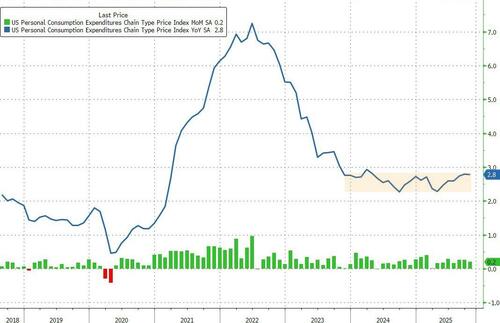
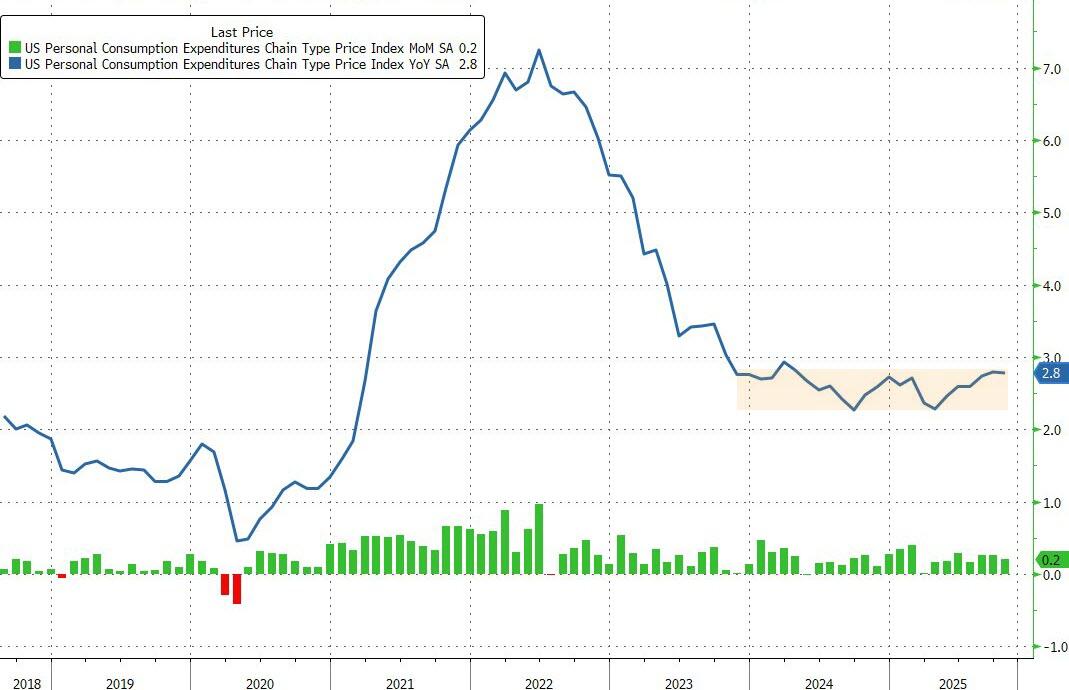
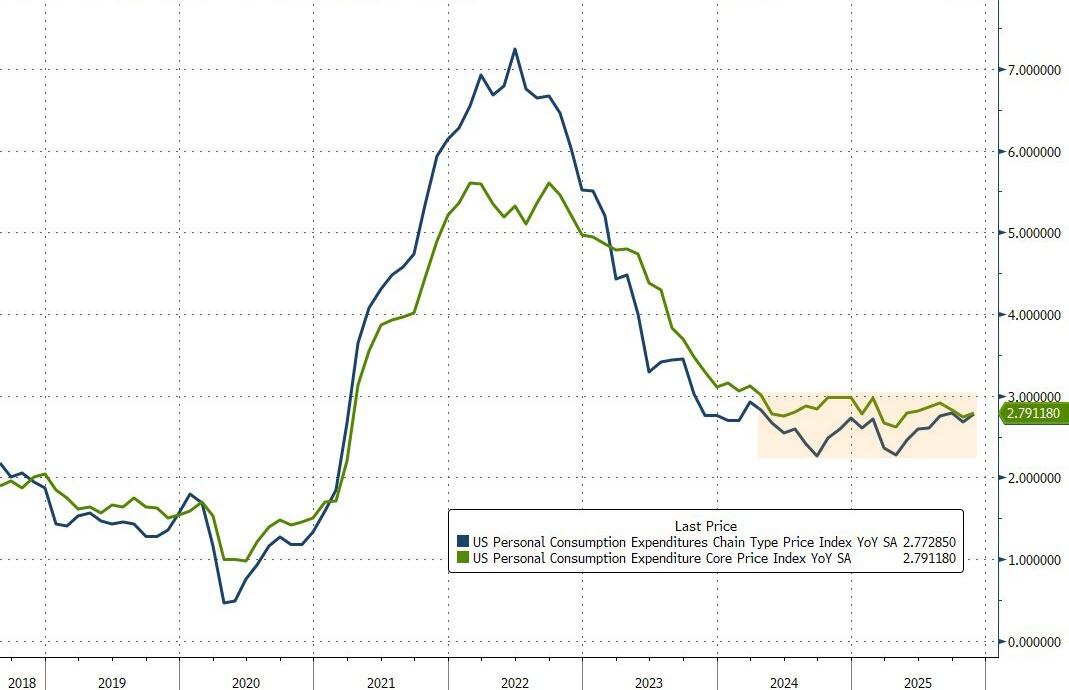
The Fed’s favorite inflation indicator – Core PCE – rose 0.2% MoM (as expected), which leave it up 2.8% YoY (as expected), slightly lower than September’s +2.9%…
Source: Bloomberg
Bear in mind that this morning’s third look at Q3 GDP printed a +2.9% YoY for Core PCE.
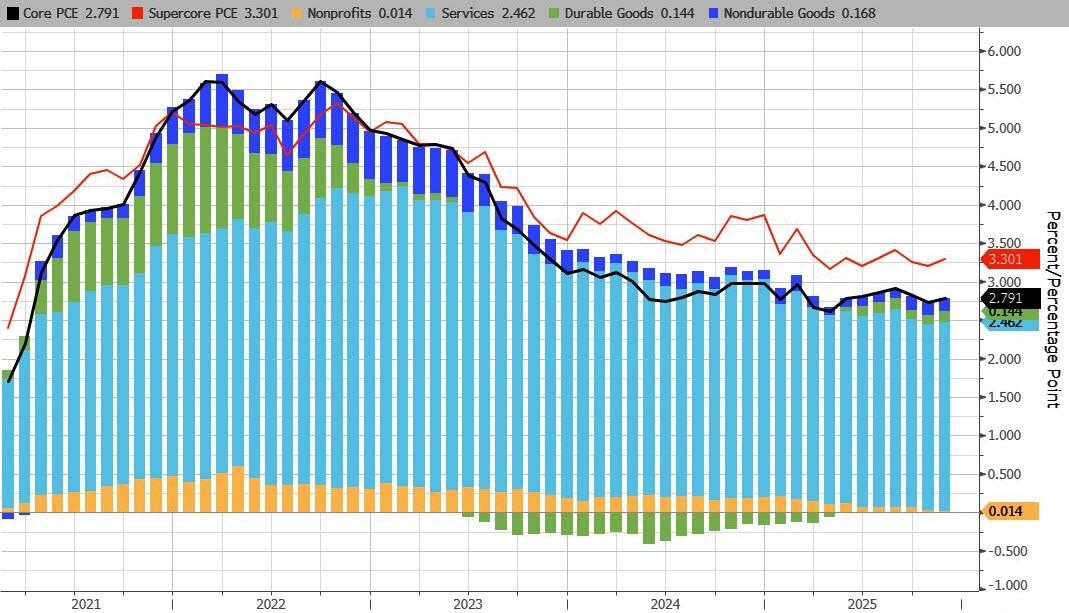
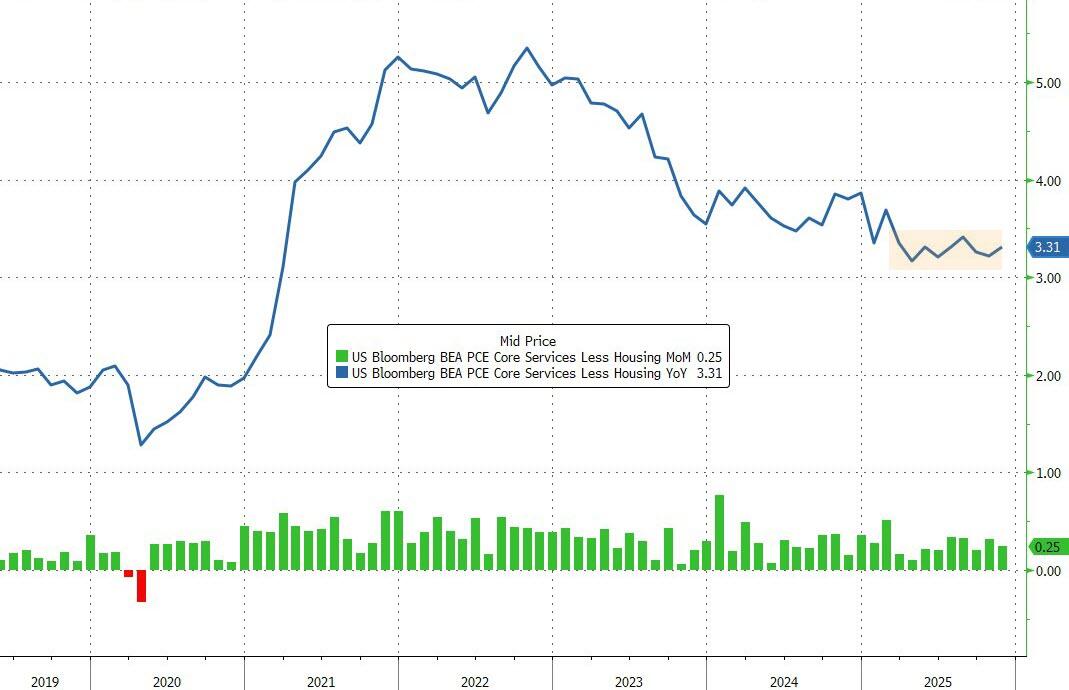
Under the hood, the biggest driver of Core PCE remains Services costs – not tariff-driven Goods prices…
Source: Bloomberg
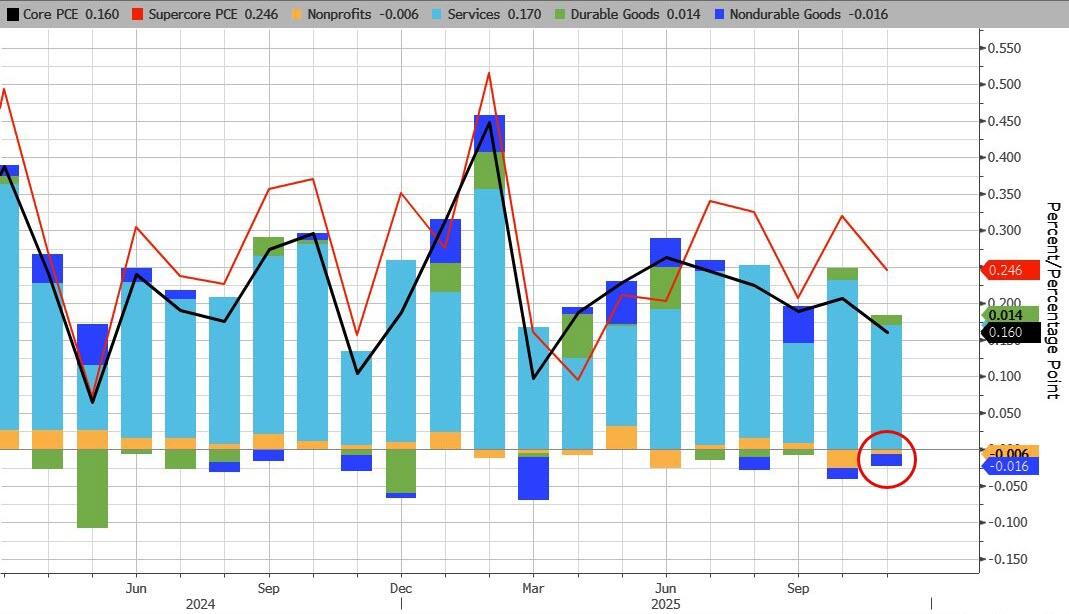
In fact, on a MoM basis, Non-durable goods prices saw deflation for the second month in a row…
Source: Bloomberg
Headline PCE rose 2.8% YoY (es expected), stubbornly refusing to show any signs of runaway Trump tariff costs…
Source: Bloomberg
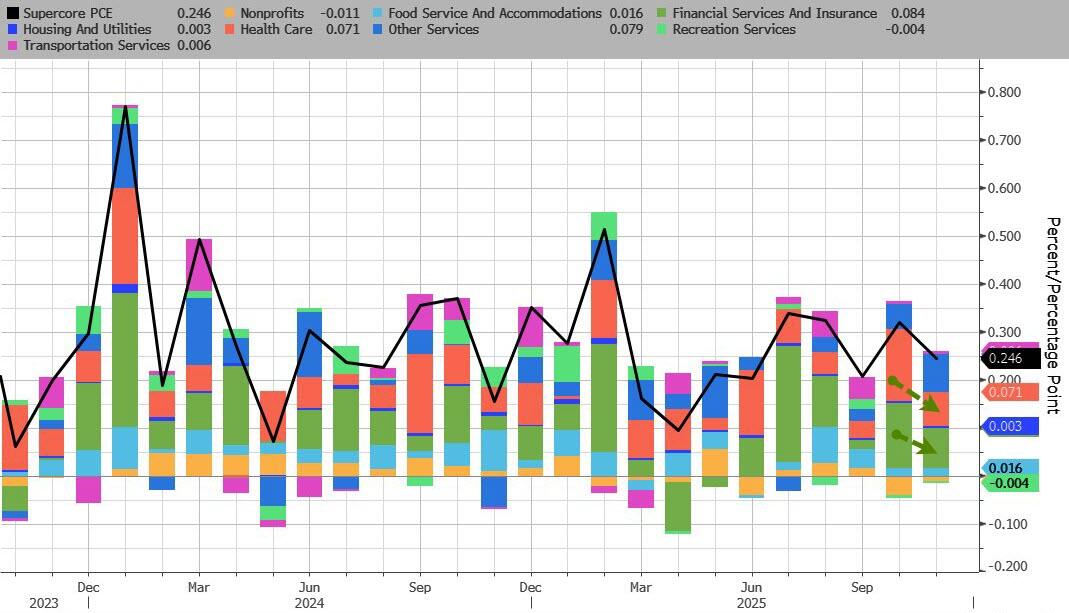
The closely-watched SuperCore PCE rose 0.2% MoM which ticked up the YoY rise to 3.1%…
Source: Bloomberg
After surging in October, November saw Financial Services & Insurance and Healthcare cost inflation slow…
Source: Bloomberg
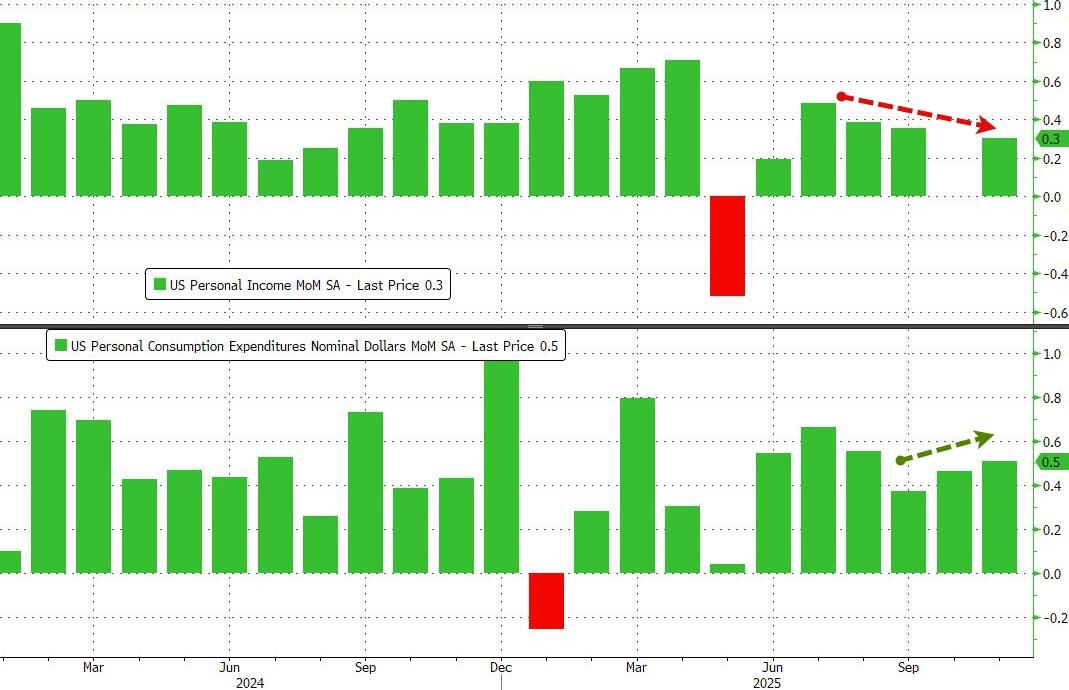
Meanwhile, amid rising prices, Americans’ spending outpaced incomes once again…
Source: Bloomberg
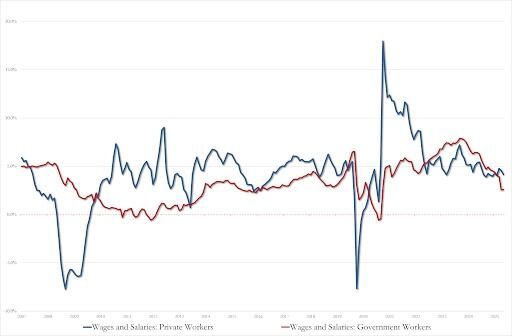
…with wage growth slowing for all:
-
Private worker wages and salaries: 4.1% YoY, down from 4.5%, lowest since June 2025
-
Govt work wages and salaries 2.6%, tied for lowest since March 2021
All of which dragged the savings rate down to its lowest since Nov 2022…
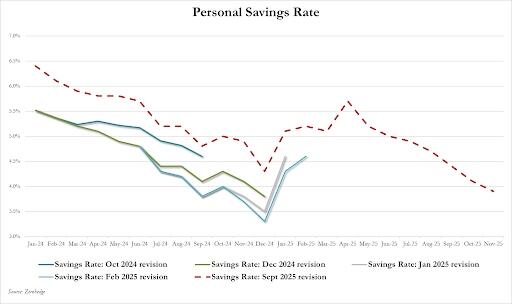
TL/DR: While this data is admittedly stale, it shows no signs of 1) tariff-driven inflation or 2) a slowing consumer.
Tyler Durden
Thu, 01/22/2026 – 10:12ZeroHedge NewsRead More






 T1
T1