Homeland Security Seeks To Restrict Immigrants From Relying On Welfare
Authored by Sylvia Xu via The Epoch Times (emphasis ours),
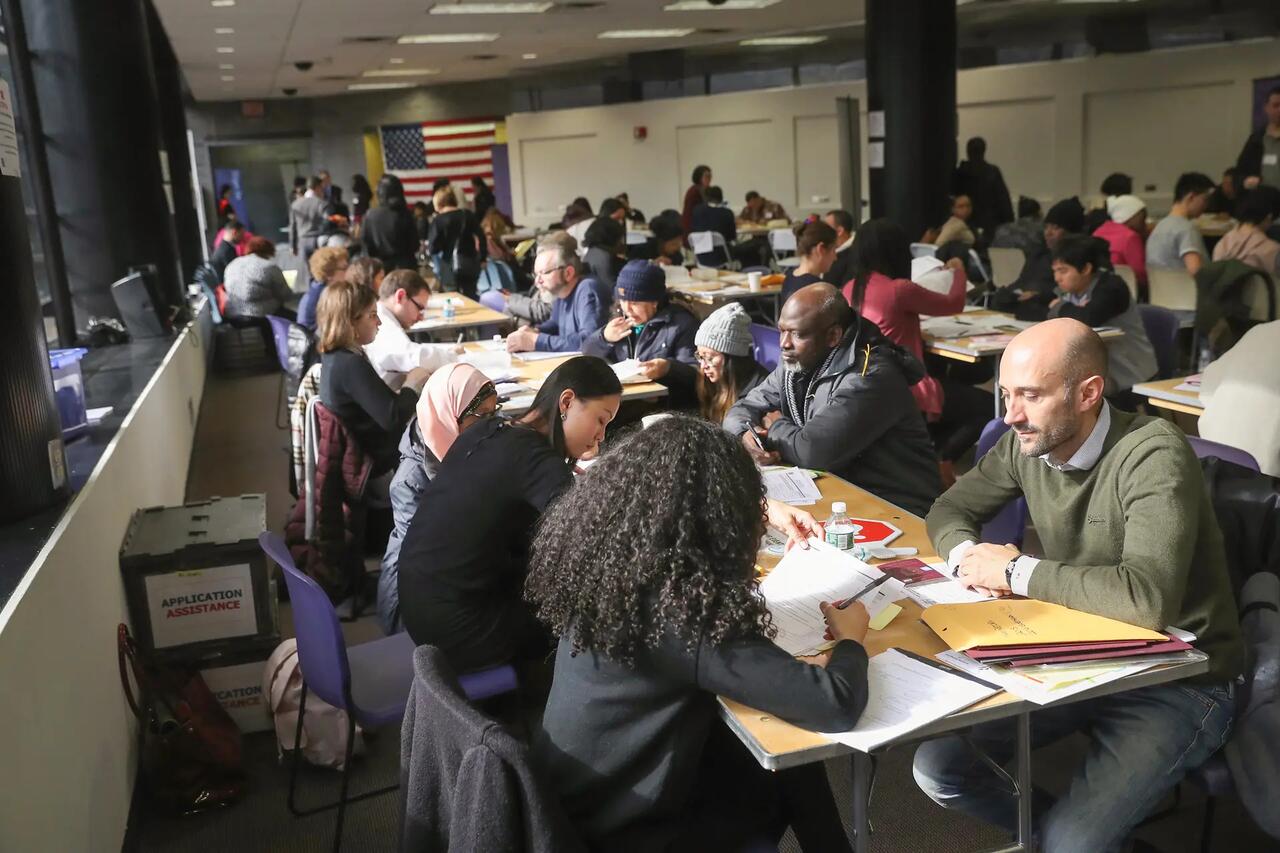
The Department of Homeland Security (DHS) is seeking to change a rule that determines eligibility for permanent residency—commonly known as a green card—based on whether an applicant is considered a “public charge,” someone who is likely to depend primarily on public benefits.
That rule—known as the public charge ground of inadmissibility—generally applies to green card applicants, with the exception of certain categories such as refugees and asylum seekers.
In 2022, 54 percent of households headed by immigrants—naturalized, legal, and illegal—used one or more major welfare programs. That’s compared to 39 percent of U.S.-born households, according to Census Bureau data.
In November 2025, DHS issued a proposal to repeal existing public charge regulations and institute a broader, discretionary standard.
The proposed policy change would allow immigration officials to take into account the use of a wider range of public benefits—including food stamps, Medicaid, and housing assistance—to determine whether a green card applicant will become a public charge.
In its notice of proposed rulemaking, DHS states its goal is to encourage self-reliance and prevent public benefits from becoming an incentive for immigration.
Critics say the proposed policy change will lead to confusion and “decreased participation in public benefit programs” by people who need them.
The mandatory public comment period for the proposed rule ended on Dec. 19, 2025, drawing more than 8,800 comments, including a letter of objection signed by the attorneys general of 20 states. DHS has now entered a mandatory review phase in which it must read and address the substantive points raised by the public.
Once this review is complete, which can take months, the government may modify the rule based on the feedback received before a final rule is published and officially takes effect.
Here’s what we know about the proposed changes.
Key Changes
The changes are designed to undo what the proposal calls “unduly restrictive” public charge rules. Under the old rules, put in place under the Biden administration in 2022, officers couldn’t consider whether green card applicants used benefits such as food stamps (SNAP), the Children’s Health Insurance Program, Medicaid, or housing assistance.
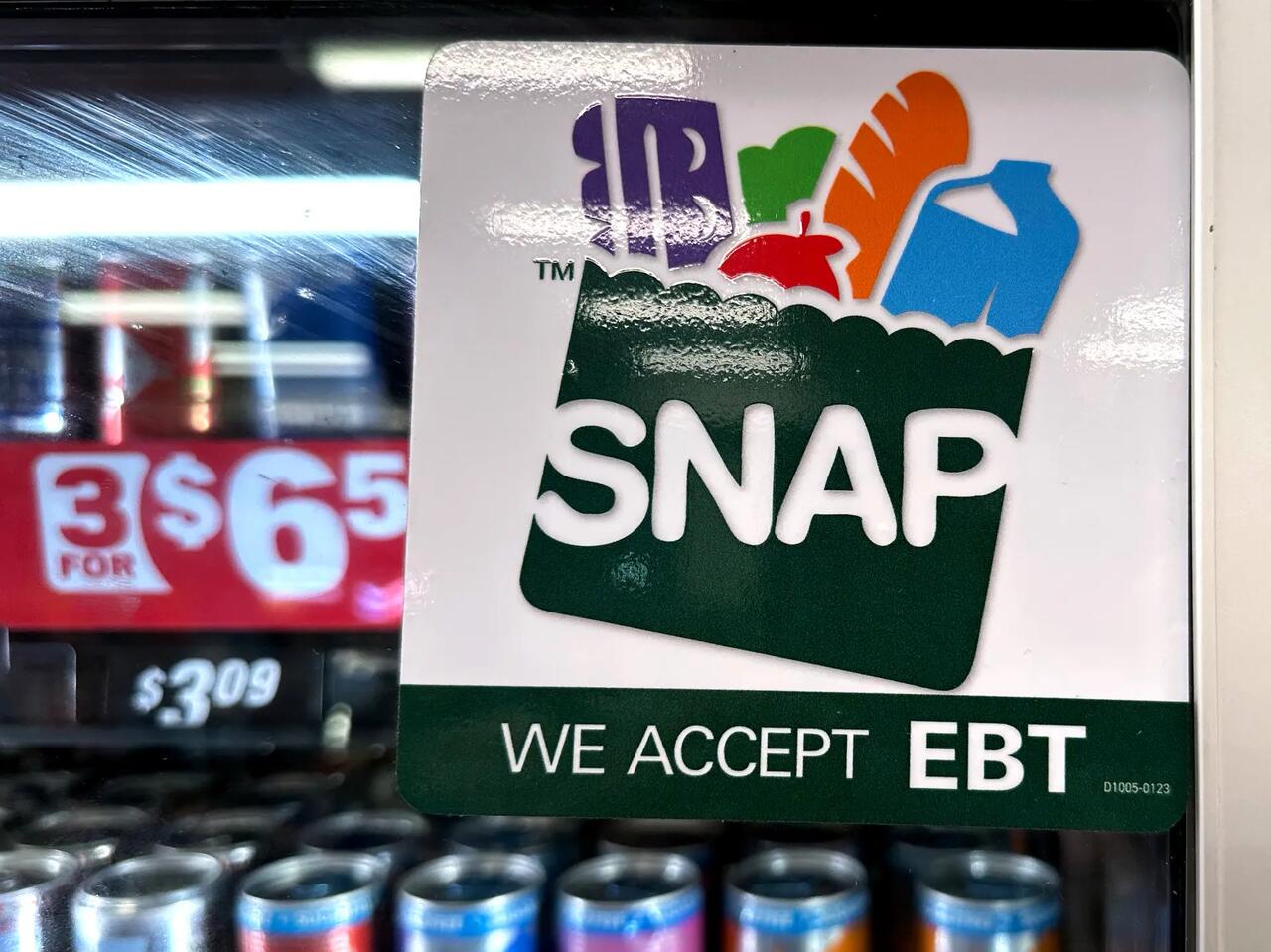
The only benefits officers could take into account were cash benefit programs that provide direct, monthly payments intended to cover basic needs, such as Temporary Assistance for Needy Families and Supplemental Security Income, as well as long-term care in a facility such as a nursing home, when the government pays for it.
Under the new proposal, officers would also be empowered to consider all individualized, case-specific facts and any data relevant to a person’s self-sufficiency.
The changes will restore a process that “trusts in and relies on DHS officers’ good judgment and sound discretion as envisioned by Congress,” the proposal says.
The new DHS proposal also clarifies that receiving “any means‑tested public benefit” is considered a breach of the public charge bond—a monetary guarantee, made by a citizen or U.S. company, that a green card applicant will not become a public charge.
Under the new proposal, an affidavit of support also carries less weight.
Currently, officers must “favorably consider” any eligible affidavit of support—an agreement in which a U.S. citizen, a green card holder, or a company pledges to provide financial backing to the applicant, if needed.
The new rule would also eliminate protection for immigrants who used benefits while they were in certain exempt categories.
For some of those categories, there is a path to citizenship that is also exempt from the public charge rule. For others, there is not—including those with Temporary Protected Status, which is a temporary stay of deportation provided to nationals of certain countries that are undergoing armed conflict, disaster, or other extraordinary conditions.
Under the 2022 rule, people with Temporary Protected Status were shielded from having public benefits used against them, even if they later moved into a non-protected status. The new proposal would allow DHS to consider an applicant’s use of public benefits at any time, regardless of when those benefits were received.
Household Focus
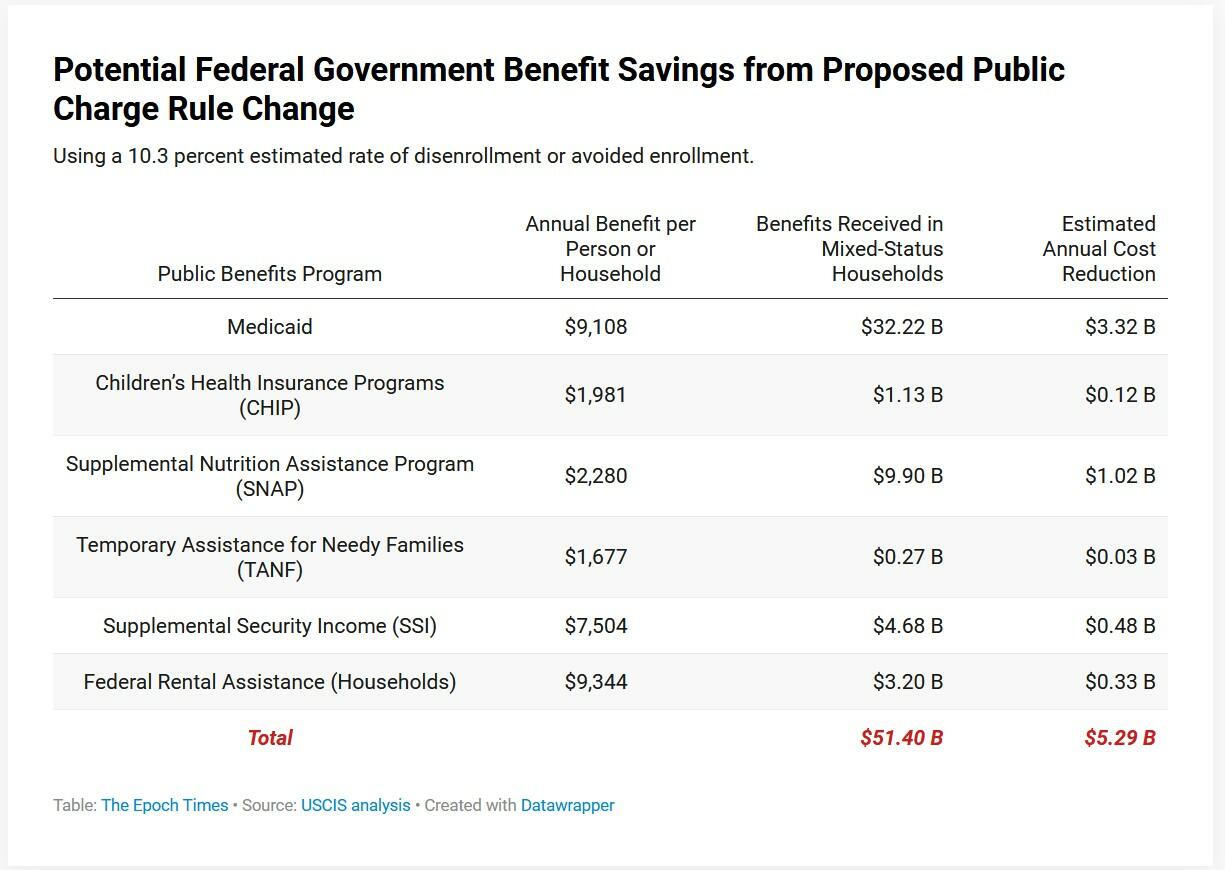
The new policy could cut government spending by about $8.97 billion each year because of people who would stop or avoid enrolling in public benefits, DHS stated in its proposal. That includes $5.29 billion less from the federal government and $3.68 billion less from states.
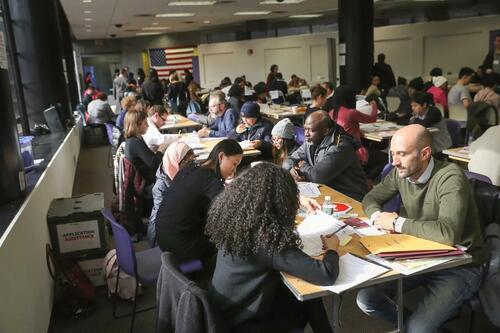
Under current rules, an applicant is mostly evaluated individually, whereas the new rule takes into account an applicant’s family members living in the same household, including a mixed-status household, which consists of people with different immigration and citizenship statuses.
There were an estimated 4.7 million mixed-status households in the United States in 2022, according to a Center for Migration Studies analysis. Mixed-status households receive more than $51 billion annually in public benefits, according to an analysis by The Epoch Times, based on DHS data.
However, public benefit use can’t be considered against immigrants in mixed-status households who entered the United States as refugees or asylum seekers. Between 1990 and 2022, the United States has welcomed more than 2.1 million refugees and accepted more than 800,000 asylees, according to data from the U.S. Department of Health and Human Services.
DHS said the new rule could impact some U.S. citizens who live in mixed-status households. It could penalize green card applicants if direct family members in the household, including U.S. citizens, receive public benefits. Those U.S. citizens may decide to avoid public benefits so the green card applicant isn’t penalized.
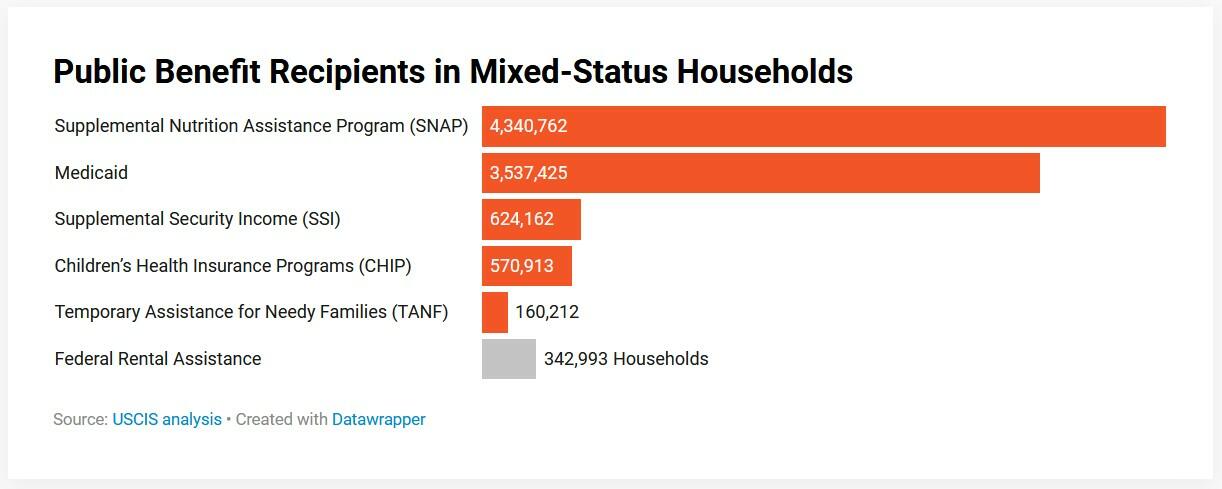
Within mixed-status households, roughly 9.2 million individuals receive food stamps, Medicaid, Children’s Health Insurance Program, Temporary Assistance for Needy Families, and Supplemental Security Income. And about 343,000 households receive Federal Rental Assistance, according to DHS data.
DHS estimated that about 950,000 individuals, or 10 percent, will likely stop participating in or choose not to apply for public benefit programs if the current proposal is implemented.
Studies found large drops in benefit enrollment after the 1996 welfare reform law, with decreases ranging from 21 to 54 percent, DHS noted.
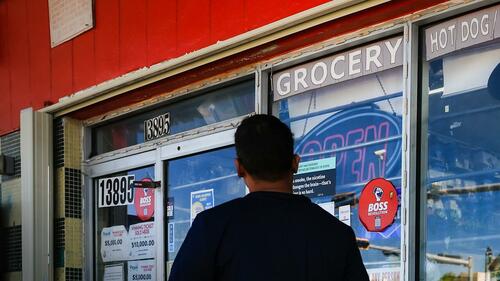
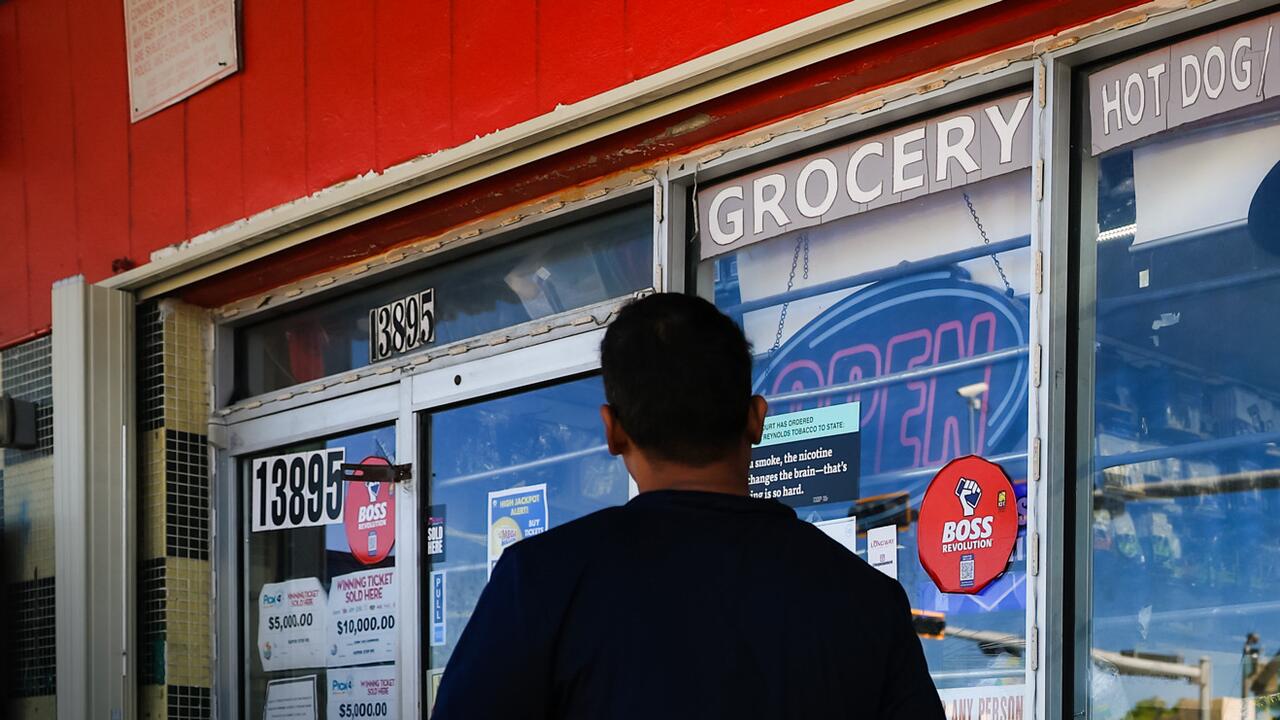
The new proposal acknowledged the changes could also affect organizations that rely on public benefit funds. These include hospitals and nonprofits tied to Medicaid, companies that make medical supplies and drugs, grocery stores that accept SNAP benefits, farmers who supply SNAP-eligible foods, and landlords involved in federally funded housing programs.
Evolution of the Policy
The United States has used “public charge” as grounds for rejecting permanent residency applications since the 19th century. The Immigration Act of 1882 specified that aliens who became public charges within a year of arriving in the United States would be deported.
For more than a century, immigration officers were given broad discretion, known as the “totality of the circumstances” framework.
Then, in 1996, Congress set new requirements and policy goals. The Illegal Immigration Reform and Immigrant Responsibility Act of 1996 required officers to consider, “at a minimum,” five statutory factors: age, health, family status, financial situation, and education and skills.
Read the rest here…
Tyler Durden
Fri, 01/23/2026 – 14:40ZeroHedge NewsRead More






 T1
T1