Explosion In AI Data Center Buildouts Will Demand Next-Gen Counter-Drone Security
Despite trillions of dollars slated for global data center buildouts, power grid upgrades, and other artificial intelligence infrastructure expansion through the end of the decade, there remains very limited investor discussion about the next-generation physical security architecture required to defend these increasingly critical and high-value infrastructure nodes, including data centers, power plants, and grid transmission chokepoints.
Protection of data centers from suicide drone swarm attacks is currently assessed as a lower risk at the moment, while the Trump administration, particularly following last year’s “Restoring American Airspace Sovereignty” executive order, is primarily focused on counter-UAS measures to secure stadiums and related venues against drone attacks ahead of the 2026 FIFA World Cup.
In recent weeks, U.S. military, federal agencies, and local authorities gathered for a two-day summit near U.S. Northern Command headquarters, bringing together federal agencies, 11 U.S. host committees, and FIFA’s security heads to prepare for matches across the United States, Mexico, and Canada.
“We’re never going to not worry about a dirty bomb,” Miami-Dade County Sheriff Rosanna Cordero-Stutz, who participated in the planning session, told Politico. “But we also recognize that there’s a lot of other things that we need to worry about as well.”
“You can’t just give counter-UAS mitigation equipment to law enforcement that hasn’t learned how to use it yet,” said White House FIFA World Cup Task Force Andrew Giuliani, who coordinated the federal government’s role in tournament preparations and addressed the drone threat at the summit.
Trump’s counter-UAS EO last June, combined with heightened drone-threat concerns ahead of FIFA World Cup events, underscores the urgent need for low-cost, rapidly deployable kinetic interceptor counter-UAS systems that could be repurposed to defend high-value infrastructure and critical assets beyond the soccer tournament.
Beyond the FIFA World Cup and back to the data center buildout story, Morgan Stanley’s Vishwanath Tirupattur forecasts that nearly $3 trillion of global data center spend will occur through 2028, comprising $1.6 trillion on hardware (chips/servers) and $1.3 trillion on building data center infrastructure, including real estate, build costs, and maintenance.
Wall Street analysts largely end their analysis at the financing and construction of next-generation data centers, with limited discussion regarding the modern security architecture required once these facilities are built and become instant high-value targets for non-state actors or foreign adversaries; traditional perimeter measures such as metal chainlink fencing and standard surveillance systems are rendered useless in the world of emerging AI threats, including coordinated autonomous drone or swarm-based attacks enabled by advances in AI and low-cost unmanned systems.
The deployment of low-cost kinetic counter-UAS intercept systems from the US could soon become a reality in Ukraine and be field-tested on the front lines, where tons of operational data would be gathered to help developers refine these systems ahead of future deployment to protect stadiums, data centers, and other high-value assets from drone threats across North America.
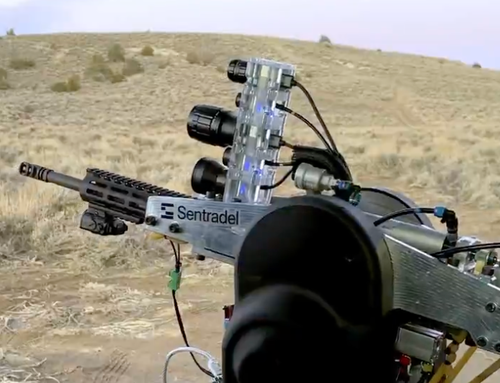
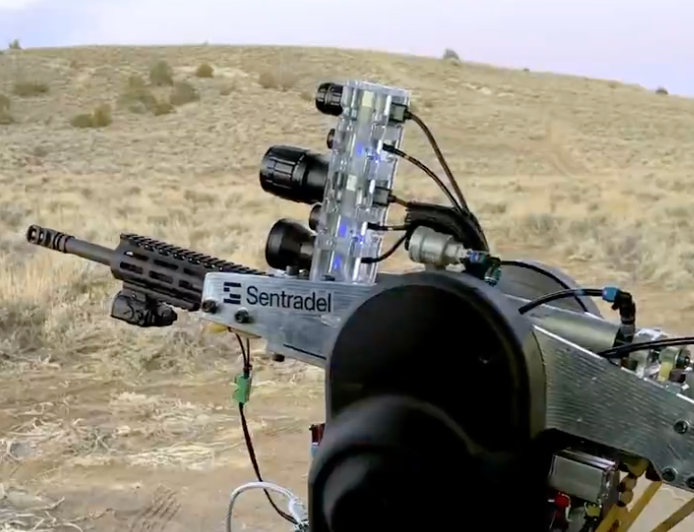
Cameron Rowe founded counter-UAS intercept startup Sentradel, which builds autonomous turrets to detect, track, and destroy FPV (first-person view) drones that can be easily modified with explosives. The low-cost interceptor uses a rifle that launches low-cost 5.56 bullets at incoming FPVs, versus current systems that use missiles and may cost tens of thousands per interception, where the economics of war aren’t there.
Meet Sentradel’s low-cost kinetic interceptor counter-UAS system:
Watch
Company Update #robotics #drones @sts_3d @camrrowe pic.twitter.com/0JoVSeYkpI
— Sentradel (@sentradel) December 2, 2025
There’s growing interest from the Trump administration that these counter-UAS intercept systems will be guarding high-value assets, perhaps not stadiums immediately, but likely data centers in the future, especially as former Google CEO Eric Schmidt recently warned that attacks on data centers are only a matter of time. Readers can see the full story here.
Tyler Durden
Sat, 01/31/2026 – 21:35ZeroHedge NewsRead More








 T1
T1