Indirect US-Iran Talks To Avoid War End In Agreement For 2nd Round, Cautious Optimism
The much anticipated talks between American and Iranian officials which kicked off Friday in Oman, in order to prevent war – or rather what many would describe as staving off US unprovoked attack – are being done in indirect fashion, at least in the opening phase.
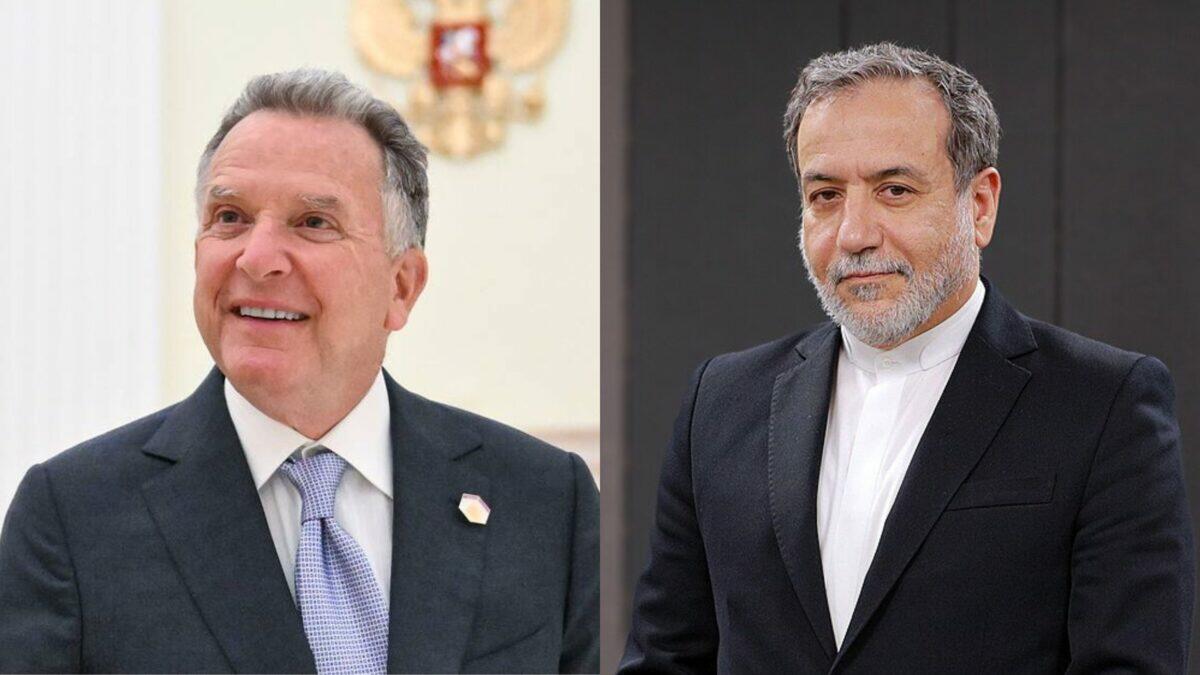
Iran’s Foreign Minister Abbas Araghchi is in Muscat for the discussions, while Trump advisers Steve Witkoff and (his son-in-law) Jared Kushner are also taking part. Iran’s ministry of foreign affairs has stated the goal of the meeting is to reach “a fair, mutually satisfactory, and honorable agreement regarding the nuclear issue.” Just before 6pm Oman time, Iran’s state media reported the indirect talks with the US have ended “for now” – but without elaborating. Crucially, another round is set for the coming days. There are positive initial statements out of Tehran:
IRNA: INDICATORS OF AN UNDERSTANDING DURING THE FIRST ROUND OF NEGOTIATIONS WITH AMERICA
At least they bothered to put a suit on for Iran pic.twitter.com/XtSoI1RKjG
— Vanessa Beeley (@VanessaBeeley) February 6, 2026
Iran wants the negotiations to only focus on the nuclear issues, while Washington has expressed concern over the Islamic Republic’s ballistic missiles and support for proxies in the region. But from Tehran’s perspective, it can’t discuss and negotiate away its own conventional arsenal which would be crucial in any future conflict with Israel or the US.
“We engage in good faith and stand firm on our rights,” Araghchi wrote on X just before going into the talks. He said his country “enters diplomacy with open eyes and a steady memory of the past year.” He added: “We engage in good faith and stand firm on our rights.”
The Omanis are mediating the talks, with the country’s foreign ministry describing, “The consultations focused on creating the appropriate conditions for the resumption of diplomatic and technical negotiations.”
There’s been a bit of a surprise addition, at a moment of the US military build-up in the region:
The commander of US Central Command (CENTCOM), Admiral Brad Cooper, was seen attending meetings on Iran in Oman.
A video posted by the state-run Oman News Agency showed Cooper participating in talks between US special envoy Steve Witkoff and President Donald Trump’s son-in-la, Jared Kushner during their meetings with Omani Foreign Minister Badr Albusaidi.
Despite talk of good faith and a conciliatory approach, the Iranian foreign ministry at the same time warned the Islamic Republic is “fully prepared to defend its sovereignty and national security” against “adventurism”.
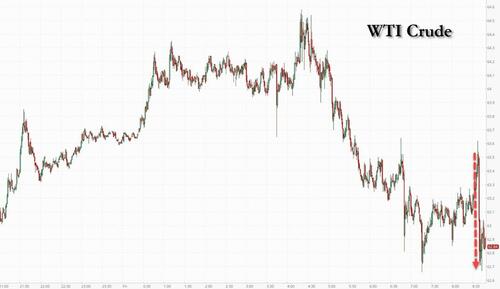
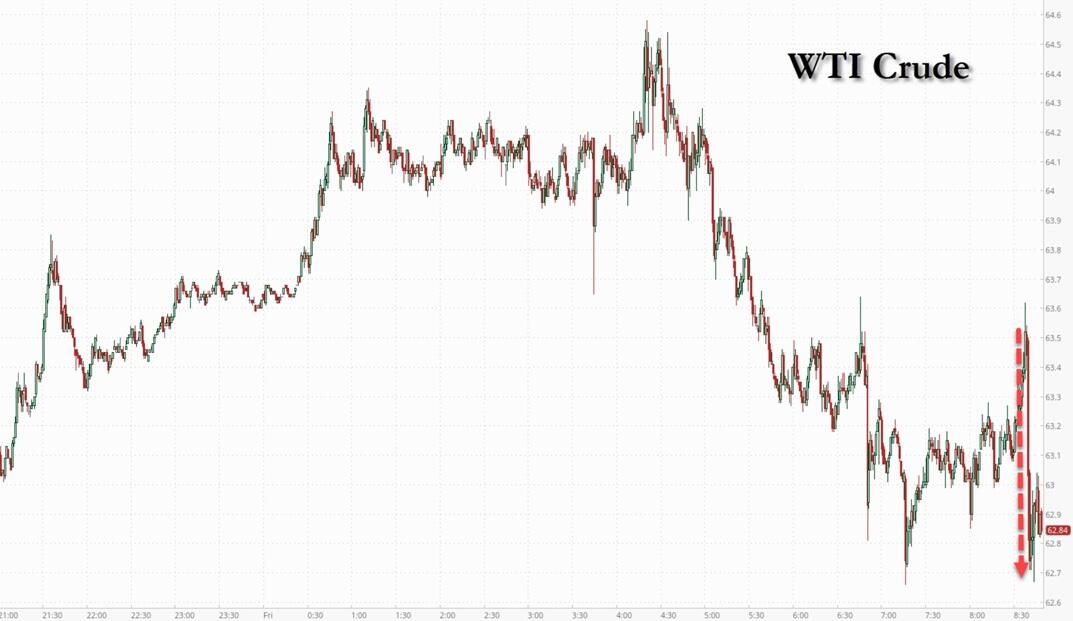
Oil immediately responded to the cautiously optimistic headlines of furthering talks beyond Friday…
Al Jazeera has meanwhile captured some of the international reaction in the following:
- German Chancellor Friedrich Merz said concerns about Iran are “very, very high” among regional leaders, calling on Tehran to return to negotiations with the US and end its nuclear program as he ended his three-day tour in the Middle East.
- Russia said that it hopes the talks between Iran and the US would yield results and lead to de-escalation.
- An Iranian diplomatic source warns against the presence of US Central Command (CENTCOM) or any regional military officials during the ongoing indirect talks in Oman, the Reuters news agency reported.
Yves Smith laid out some likely outcomes days ago, before Friday’s negotiations were officially agreed to, in Trump Will TACO With Intent to Strike Later:
The most likely course is for some sort of sham negotiations to allow the US to climb down for now and for Trump to depict the mere fact of talks as a win and a proof of US domination. But don’t expect the US to relent. As Greg Stoker pointed out, the Israeli minister of defense was in Washington last week to hand over the strike packages. Israel has not given up on Project Iran. The hawks most assuredly have not.
…
Israel can be expected to do the obvious, which is to continue to engage in what is too politely called asymmetric warfare or more accurately called terrorism, both to try to destabilize Iran and to preserve credibility among the warmongers in the Beltway. How far that gets in the next few months will be an indicator of how much Iran has been able to ferret out and destroy Mossad networks in Iran after its 12 Day War decapitation attacks and its recent protest escalations.Trump is admittedly becoming more and more erratic every day. He might wind up concluding he has too much manhood at stake to back down now or any time very soon with Iran. But as you can see, he has many many reasons to try to find a way to retreat, even if he tells himself it is only temporary.
Starting a new major conflict in the heart of the Middle East would not sit well with Americans, whether on the right or left, and certainly MAGA voters might recall the rhetoric blasting neocon foreign adventurism on the campaign trail.
These delicate talks could indeed prove the avenue for climb-down from ‘military solution’ – or else a launching pad toward conflict, providing an ‘excuse’ based on imposing demands that Iran can never live up to.
Tyler Durden
Fri, 02/06/2026 – 08:45ZeroHedge NewsRead More








 T1
T1