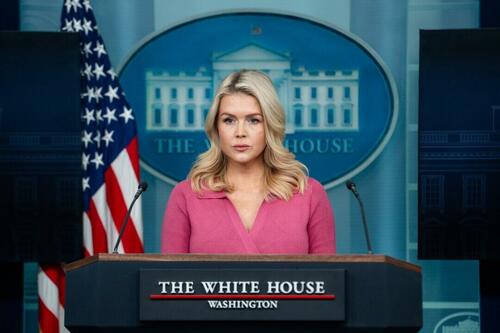
White House Says Trump Has No Plans To Deploy ICE At Polls, Won’t Rule Out Federal Presence
Authored by Tom Ozimek via The Epoch Times,
The White House said on Feb. 5 that President Donald Trump has not discussed any “formal plans” to deploy U.S. Immigration and Customs Enforcement (ICE) agents at polling locations during November’s midterm elections, while declining to guarantee that federal agents would not be present near voting sites.
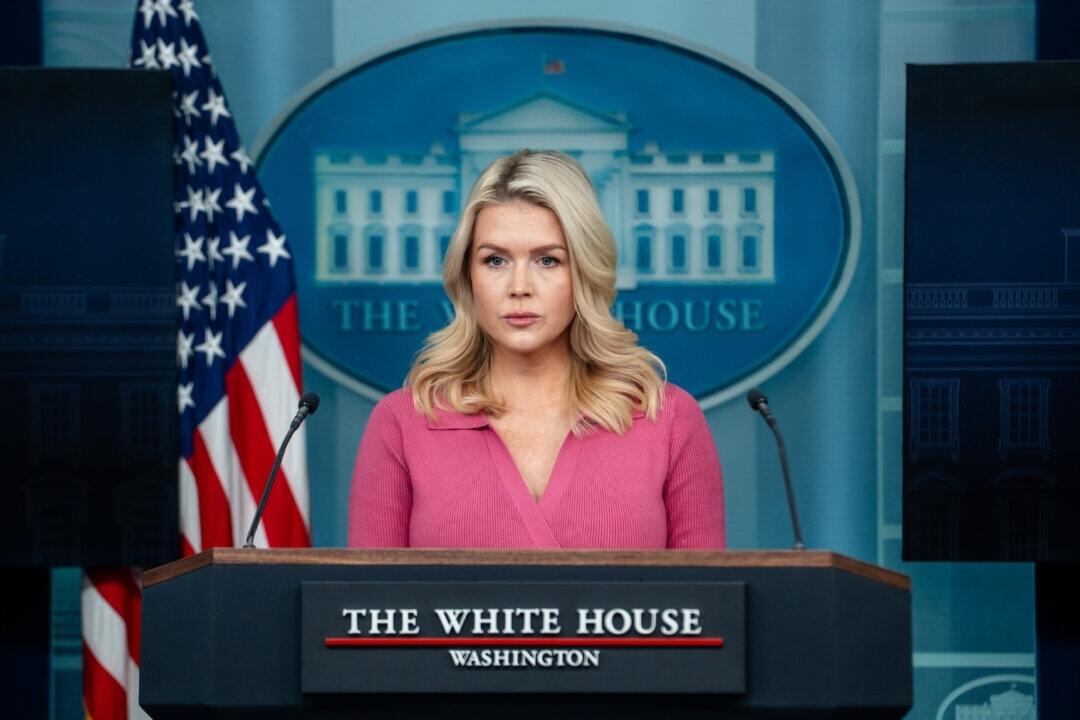
White House press secretary Karoline Leavitt made the remarks during a press briefing in response to a question referencing a comment from former Trump adviser Steve Bannon.
A reporter asked Leavitt for comment on Bannon’s recent remark that ICE agents would “surround the polls come November,” and whether the president was considering such action. Bannon made the remarks during an episode of his “War Room” podcast released Feb. 3.
“That’s not something I’ve ever heard the president consider. No,” Leavitt replied.
Pressed on whether she can “guarantee to the American public” that ICE will not have any presence near polling locations in the November mid-term election, the press secretary declined to offer such blanket assurances.
“I can’t guarantee that an ICE agent won’t be around a polling location in November. I mean, that’s frankly a very silly hypothetical question,” Leavitt said. “But what I can tell you is I haven’t heard the president discuss any formal plans to put ICE outside of polling locations. It’s a disingenuous question.”
Earlier this week, Trump suggested that Republicans should assert greater control over elections in areas the president has claimed are affected by fraud.
Speaking on Feb. 2, Trump said Republicans should “nationalize” and “take over” voting in at least 15 unspecified locations, repeating claims that U.S. elections suffer from widespread illegal voting.
Trump has long argued that noncitizens vote illegally in U.S. elections.
A 2014 academic study found evidence of noncitizen participation—“less than fifteen percent, but significantly greater than zero” in the 2008 presidential election and “more than three percent” in 2010. By contrast, a research review by the Brennan Center for Justice found that verified cases are “vanishingly rare.”
Voting booths are set up at a polling place in Newtown, Pa., on April 23, 2024. Matt Rourke/AP Photo
Federal law prohibits the president from deploying military troops at locations holding general or special elections “unless such force be necessary to repel armed enemies of the United States,” according to 18 U.S. Code § 592, and bars any sort of interference in elections by armed forces. ICE agents are civilian law-enforcement officers and are not covered by the same prohibitions that apply to the armed forces, although other laws still limit intimidation or interference at polling places.
Lawmakers from the Democratic Party and some voting-rights groups have said that any visible presence of federal immigration enforcement near polling locations—especially in communities of color—could intimidate lawful voters and deter turnout.
The American Civil Liberties Union (ACLU), for instance, said in November 2025 that any deployment of federal immigration agents in or around polling places on Election Day would amount to “illegal voter intimidation” and an attempt to “suppress voting.”
Trump administration officials have rejected such characterizations, saying federal involvement is aimed at protecting election integrity rather than suppressing turnout.
“Interference in U.S. elections is a threat to our republic and a national security threat,” National Intelligence Director Tulsi Gabbard said in a recent letter to Congress.
She said the administration is committed to ensuring that “neither foreign nor domestic powers undermine the American people’s right to determine who our elected leaders are.”
Democrats in Virginia have advanced legislation that would bar federal immigration enforcement activity near polling places.
Senate Majority Leader John Thune (R-S.D.) said he is not in favor of federalizing elections and that he believes Trump’s remarks were limited to expressing support for the SAVE Act.
House Speaker Mike Johnson (R-La.) noted that administering elections has historically been the responsibility of the states.
The SAVE Act, which Trump and congressional Republicans have cited as a priority, would impose nationwide requirements for voter identification and proof of citizenship, steps supporters describe as critical election-integrity safeguards.
Tyler Durden
Fri, 02/06/2026 – 13:40ZeroHedge NewsRead More








 T1
T1