Italy Beckons The Rich: How Flat Taxes And Lifestyle Are Luring Global Millionaires
Submitted by Thomas Kolbe
Think of Italy, and wanderlust awakens immediately. Last year, over 140 million visitors experienced the beauty of the Amalfi Coast, enjoyed time at Lake Garda, in South Tyrol, Tuscany, or on the beaches of Sicily. Italy is a land of dreams with a rich cultural history, attracting those who want to experience the dolce vita in its finest form.
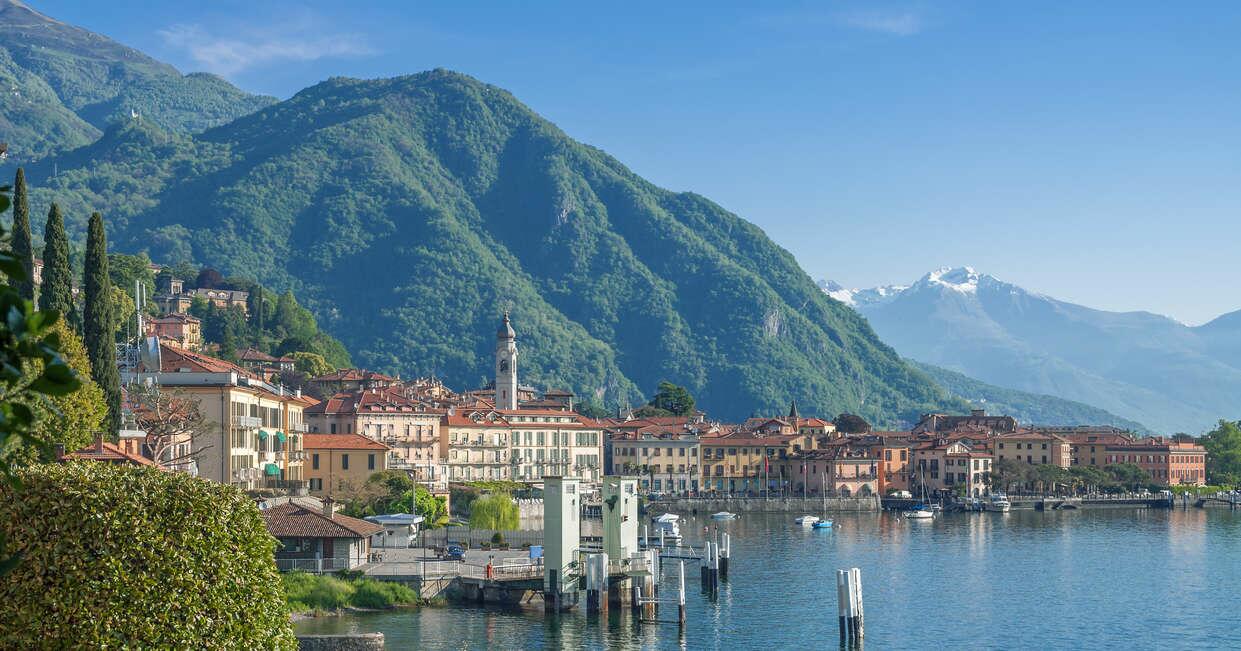
Italy is also a country that has drawn wealthy individuals from around the world for years. Last year alone, more than 3,600 high-net-worth individuals chose Italy as their new residence. They brought an estimated €21 billion in wealth with them – at least for tax purposes, as their investments or company holdings are usually spread across multiple countries.
What drives these wealthy newcomers may be Italian cuisine and the excellent weather, but above all, hard facts matter. Italy offers a special tax regime for the wealthy in the form of a flat tax. Incoming expats can either opt for standard domestic taxation or the so-called CR7 rule, under which wealthy newcomers previously paid a flat annual tax of €200,000 on all foreign income.
The CR7 rule, named after footballer Cristiano Ronaldo, whose now-iconic jersey bears the number seven, targets a specific class of taxpayers whose main sources of income lie abroad. It generally applies for up to 15 years and covers earnings from capital investments, image rights, licenses, foreign real estate, capital gains, or foreign inheritances.
Income from Italian domestic sources – in Ronaldo’s case, the salary from Juventus or revenues from Italian property – remains subject to standard Italian taxation. Ronaldo used this model after moving to Juve, allowing his billion-dollar wealth, largely invested abroad, to work tax-efficiently.
Italy has thus created a selective tax system designed to open doors for the global wealthy to settle in Italy, potentially establish business roots, and, later – even in the next generation – return to the regular tax system as integrated Italian citizens.
For the Italian treasury, this is a profitable arrangement. Adding ordinary consumption taxes and other routine levies, the state is estimated to have gained around €1 billion in extra revenue last year from the influx alone – without further effort. New businesses and investments from these wealthy newcomers also potentially create jobs and contribute to their local communities.
The broader tax framework is also appealing. Corporate and capital gains taxes in Italy are on average about two percent lower than in Germany. Inheritance taxation, for example, is significantly lower than in the UK, which now levies 40 percent on inheritances above £325,000, triggering an exodus of wealthy citizens.
Unsurprisingly, this preferential taxation has sparked criticism among Italians. The government of Giorgia Meloni responded by raising the flat rate from €100,000 to €200,000, and as of the start of this year, to €300,000. A flat fee of €50,000 per family member is also due. The goal seems to be defusing opposition without undermining the incentives.
Italy’s fiscal situation practically forces this approach. With public debt at roughly 135 percent of GDP, the country is cornered. Tough budget cuts accompany the government’s tax initiatives – and early results are visible.
This year, the budget deficit is expected to shrink to 2.5–2.8 percent of GDP – a notable achievement, considering other EU heavyweights like Germany and France report deficits of five to six percent.
The bond market has also responded positively. Yields on ten-year Italian government bonds have dropped from about 5 percent three years ago to roughly 3.5 percent today. The gap to German bonds – the so-called spread – is narrowing, signaling that markets view Italy’s fiscal climate as far more stable than just a few years ago, while conditions in Germany are increasingly perceived as critical.
In Rome, officials are watching Germany’s tax debates closely, where signs are emerging that Berlin might follow Norway’s 2022 example and levy a special wealth tax on the rich.
The Social Democrats, together with the united Left, are pushing for higher inheritance taxes on corporate wealth and the debated reintroduction of a wealth tax, driving their coalition partners forward. The political climate is favorable, and the Union parties appear resigned to the left’s dominance, likely to support these measures despite the precarious state of social security.
The mechanism is simple: spark a resentment-driven debate, activate the already abundant public envy, and target the wealthy. This alleviates political pressure – both on migration and on overdue welfare reforms – from the shoulders of those in charge.
Economists at the German Institute for Economic Research recently added fuel to the debate. With progressive rates of up to 12 percent for billionaires, Germany could generate roughly €150 billion in extra annual revenue.
Yet envy debates increasingly replace rational policy. This capital is not idle; it funds productive investments, company holdings, job creation, and technological advancement.
In its struggle for survival, Germany – and apparently a majority of its citizens – seems willing to consume its own productive base rather than endure a period of tough reforms and sacrifice, emerging stronger with a healthier economic foundation.
It is a fatal path, historically a civilizational rupture: for a limited time, the strong state stands at the end of a rapidly bleeding middle class, whose economic assets melt like ice in the sun. A societal climate of envy and impoverishment is the inevitable result.
South of the Alps, one can already anticipate a surge in German millionaires relocating. Germany’s political climate is increasingly hostile to enterprise and performance.
And as noted, life in Tuscany or the picturesque coastal towns of Italy offers compelling reasons to leave Germany behind. Put simply: nowhere in Italy is it as bad as in Berlin.
* * *
About the author: Thomas Kolbe, a German graduate economist, has worked for over 25 years as a journalist and media producer for clients from various industries and business associations. As a publicist, he focuses on economic processes and observes geopolitical events from the perspective of the capital markets. His publications follow a philosophy that focuses on the individual and their right to self-determination.
Tyler Durden
Tue, 02/17/2026 – 07:20ZeroHedge NewsRead More








 T1
T1