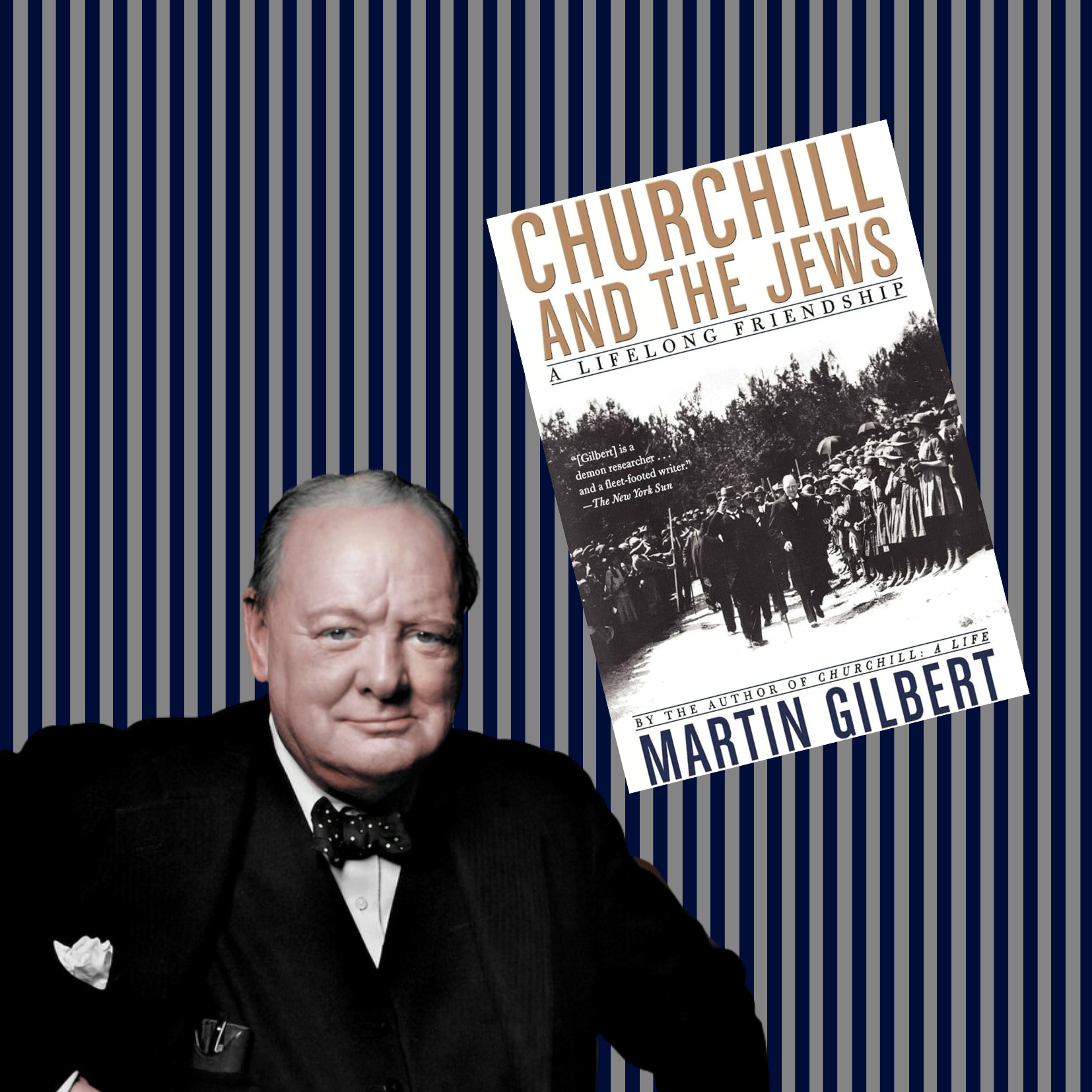
Winston Churchill’s philosemitism is by now well known. The battle for control of the WW2 narrative is all but won by the revisionists amongst the youth. To the younger generation, Churchill is nothing but a drunkard rabble-rouser who took money from wealthy Jews to agitate for a war which was in their interests, not Britain’s. But Churchill was chosen for a reason; he was a great friend of the Jews and assisted them with their goals not only in the lead-up to the Second World War in the late 1930s, but throughout his entire career. From day one, he was Britain’s most prominent and ardent Zionist. Indeed, as General Sir Edward Louis Spears, Churchill’s friend, said to Martin Gilbert: ‘Even Winston had a fault. He was too fond of Jews.’1
The younger generations have been exposed to this new side of Winston Churchill thanks to the tireless work of men like David Irving, and find the entire shady business fascinating. So, I figured that people might also find the bigger picture interesting. Martin Gilbert is not only Jewish himself but also Churchill’s official biographer, so, naturally, he is biased in the extreme. That does not make the tale any less interesting.
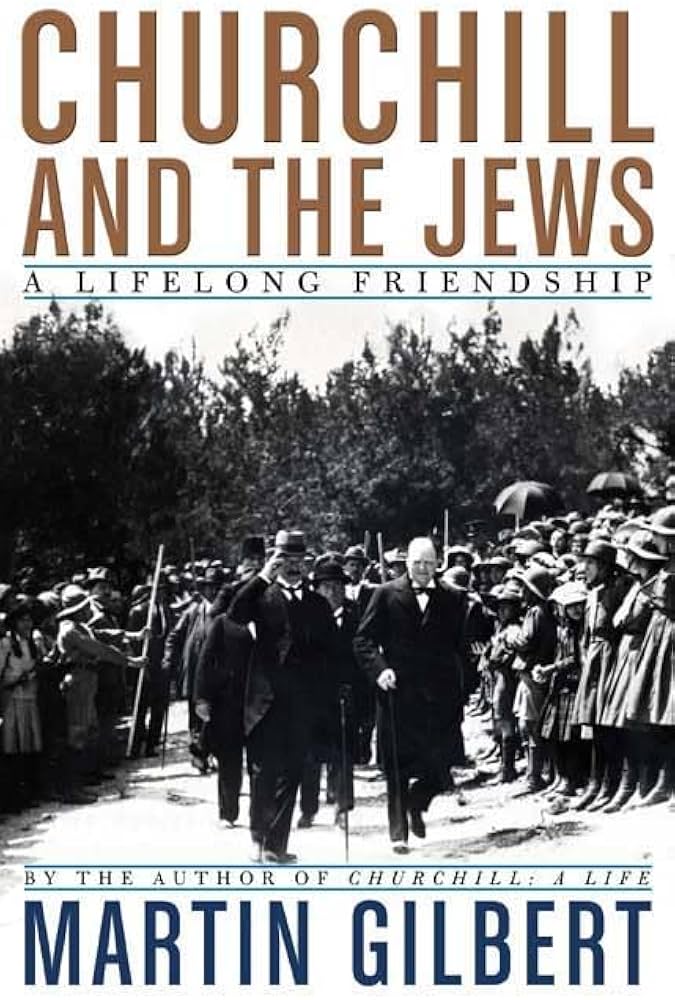
What follows is not only a short review but also essentially my lengthy notes of the book, which is a goldmine for quotes and important information not only on the life of Winston Churchill, but also on the period between the Balfour Declaration and the founding of the State of Israel. Churchill, and almost he alone, seemed to carry Zionism on his back as most other British politicians sought to rid themselves of the issue and all the problems it brought Britain in the Middle East.
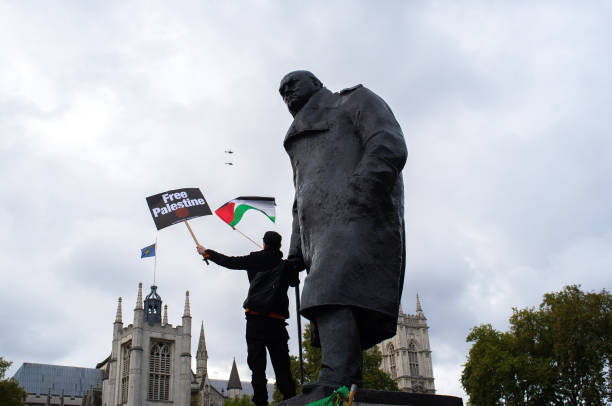
As noted, Gilbert is a biased author. All are to some degree, but Gilbert especially so. Still, in the text, the bias isn’t egregious by any means. You know what you’re walking into. What’s important is that Gilbert doesn’t omit things, at least it doesn’t seem as if he does. In the years leading up to the Second World War, Gilbert’s glaring omission is his subject’s near-bankruptcy and then bailout by wealthy Jews, in return for agitating for war against Germany. Due to the way the rest of the book is written, I can only imagine that Gilbert wouldn’t have left this out for nefarious reasons.
Churchill’s early years are covered in depth. Here, Gilbert makes it extremely clear who was paying Churchill’s way. This is seen as something to celebrate, just part of the relationship. To Gilbert, there is nothing nefarious about Churchill getting a free ride through life thanks to his father’s wealthy Jewish friends.
One surprise to me in this book was the lack of support for Zionism at the time. The Jews have never been a particularly loved people, but sympathy for the Palestinians was almost unanimous, and at the first sign of any pushback from them, most were willing to write off the entire Zionist project altogether. Then, as now, it just didn’t seem fair to import a foreign population and replace the current one.
The lack of impact the Holocaust had, at least immediately, upon the thinking of most Brits was also fascinating. Whilst repulsed by the horror stories they were hearing from occupied Europe, this still didn’t make Zionism any more palatable, even if it meant rejecting 100,000s of starving Jewish refugees from making landfall in Palestine.
The sheer extent of Winston Churchill’s philosemitism, too, was also bewildering. Most would imagine that this was a relationship of convenience born shortly before the Second World War, but far from it. Churchill was funded precisely because he was so fond of the Jews. Tommy Robinson is the only modern British comparison which I can think of. Whether it was speaking out in favour of Jewish mass-immigration (and even crossing the floor in Parliament over the issue), putting down riots against the Jews with excessive force or pushing the cause of Zionism, Churchill was there, and this was all merely before the Great War.
I’ll mostly let the book speak for itself, but I will say it is very well written and best of all, concise. Not once did I feel that this book was a chore to read, on the contrary, it was a please. The books spans three of the most fascinating events in modern history, World War I, II and the founding of the State of Israel. Churchill was wrapped up in all three.
In the notes, or, essentially, the story in miniature below, I’m sure you’ll find as many fascinating or useful quotes as I did. Certainly, you won’t look at the founding of Israel the same way again with all of this added context, and there is something for everyone, but remember, this is not a comprehensive narrative, but merely one side of the story, from Churchill’s official biographer. Enjoy.
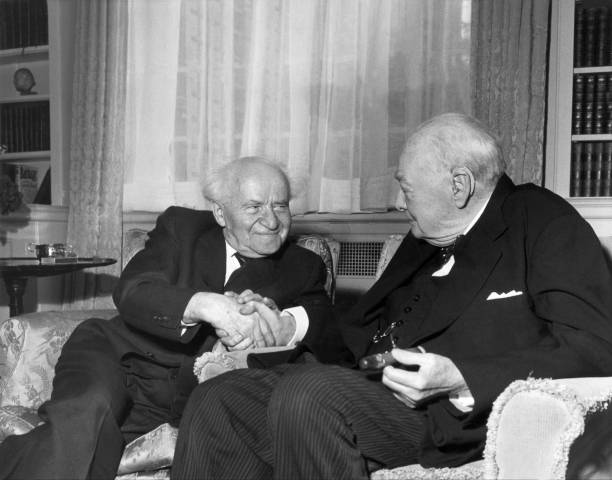
Early Life
The claims that Winston Churchill was part-Jewish, which are made by many on the right, are completely baseless. This can be completely written off. So where did this love for the Jews come from? Well, it was inherited. His father, Lord Randolph Churchill, was completely surrounded by wealthy Jews who bankrolled him. He was even rebuked by members of his own family for keeping this sort of company. One Jew who was always around whilst Churchill was growing up was Nathaniel Rothschild, head of the famous banking family and the first Jewish member of the House of Lords.
At the age of 21, Churchill found himself in Paris. It was 1898, and so the story of Captain Alfred Dreyfus was dominating the headlines. Dreyfus, who was Jewish, was accused of being a German spy. Emile Zola had just taken up Dreyfus’ cause in his famous ‘J’Accuse’ article. Churchill wrote home to his mother: ‘Bravo Zola! I am delighted to witness the complete debacle of this monstrous conspiracy.’2
A few years earlier, Churchill’s father had passed away, but his wealthy Jewish friends (who had kept him afloat his entire career) continued their friendship with Winston. Randolph Churchill, Winston’s son, would write cheekily in his biography of his father: ‘Churchill did not confine his quest for new and interesting personalities and friends to Jewish households. During this period he was sometimes invited into Gentile society.’3 Whenever anything was required, Winston knew to ask Lord Rothschild as ‘he knows everyone’.4 Another wealthy Jewish friend of his father’s, Sir Ernest Cassel, invested Winston’s money for him free of charge from the second he began seeing returns on his writings. Rothschild and Cassel would fund Churchill’s famous trip to South Africa in 1899 as a war correspondent. In 1902, Cassel secured Churchill a £10,000 stake in a loan offered by the Japanese government, a ridiculous sum of money for the time. Three years later, Cassel had a library built for Winson in his Mayfair flat. The list of other seemingly offhanded donations is endless, and the level to which Churchill’s early career was bankrolled by Jews makes for astounding reading.
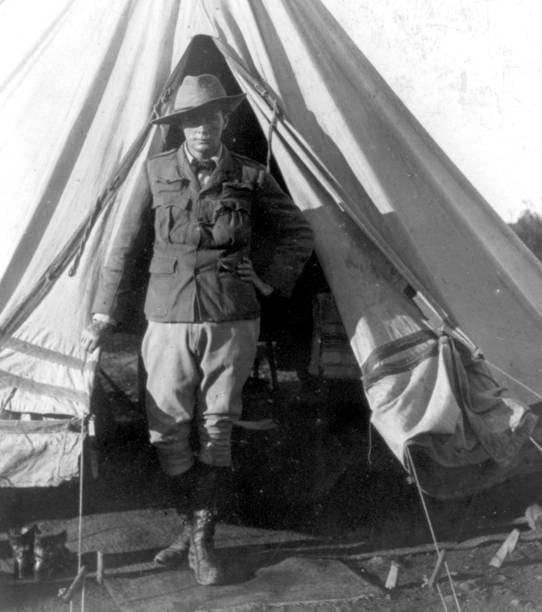
Member of Parliament
It was 1904 when Churchill first really came into contact with Jews outside of the wealthy political circles of London. Winston was told that the Conservative Party would no longer support him, and so of he went to seek a new seat as a Liberal. This ended up being Manchester North-West, where one-third of the electorate was Jewish.
Churchill was a very convenient choice for this seat. One of his primary backers here was the President of the Old Hebrew Congregation, the merchant Nathan Laski. Churchill was tasked with agitating against the Conservative Government’s Aliens Bill. The point of the bill was to stop the influx of Jewish immigrants from Eastern Europe. Laski provided Churchill with a dossier of papers relating to the bill, from which Winston prepared detailed criticisms to slander the bill with. These were sent out in a letter to Laski and as an open letter to various newspapers:
‘What has surprised me most in studying the papers you have been good enough to forward me, is how few aliens there are in Great Britain. To judge by the talk there has been, one would have imagined we were being overrun by the swarming invasion and ‘‘ousted’’ from our island through neglect of precautions which every foreign nation has adopted. But it now appears from the Board of Trade statistics that all the aliens in Great Britain do not amount to a one-hundred-and-fortieth part of the total population, that they are increasing only 7,000 a year on the average, and that, according to the report of the Alien Commission, Germany has twice as large and France four times as large a proportion of foreigners as we have. It does not appear, therefore, that there can be urgent or sufficient reasons, racial or social, for departing from the old tolerant and generous practice of free entry and asylum to which this country has so long adhered and from which it has so often greatly gained.’5
He went on to say that English working men ‘are not so selfish as to be unsympathetic towards the victims of circumstances or oppression. They do not respond in any marked degree to the anti-Semitism which has darkened recent Continental history, and I for one believe that they disavow an attempt to shut out the stranger from our land because he is poor or in trouble, and will resent a measure which, without proved necessity, smirches those ancient traditions of freedom and hospitality for which Britain has been so long renowned.’6
On the same day that this ‘critique of anti-semitism’ was published, Winston Churchill officially left the Conservative Party and joined the Liberal Opposition. ‘The Jews of Manchester had acquired a courageous champion.’7 Churchill’s first speech from the Liberal Opposition benches was to be a fierce attack upon the Aliens Bill. The Sun newspaper alleged that Churchill was opposing the bill on the orders of Lord Rothschild. The Jewish Chronicle agreed, reporting that ‘Mr Nathan Laski said he had interviewed Mr Winston Churchill, who had seen Lord Rothschild with reference to the Bill. The result of the interview was that Mr Churchill was practically leading the attack on the Bill in the Grand Committee.’8
Major Williams Evans-Gordon, MP for Stepney, declared that Churchill ‘was faithfully carrying out the instructions he had received from the party for which he was acting.’9 Churchill and his fellow Liberals won out, but Winston was shocked when a year later the Liberals introduced their own watered-down Aliens Bill in 1906.
‘I was concerned to find the other day how very bitter and disappointed the Jewish Community have become in consequence of the continuance of this very harsh and quite indefensible measure… I hope you will be able to do something to allay the feeling which is rife. I am sure the Liberal Party would support the repeal of such a foolish piece of legislation.’10
In December 1905, Churchill would lead a public protest meeting in Manchester ‘against the appalling massacres and detestable atrocities recently committed in the Empire of Russia.’11 One of the fellow-speakers on the platform was Dr Chaim Weizmann, future President of the Zionist Organisation and, later, of Israel.
Churchill proved to be a loyal servant of his Jewish constituents. When he wasn’t being whisked around Europe on holidays, paid for by Cassel, Rothschild and Baron de Forest, he was visiting Jewish hospitals, tennis clubs or a Talmud Torah School. Churchill wrote that he had been amazed by the community spirit of the Talmud Torah School. He did not think people could unite like this ‘unless they possessed some guiding principle. They in that part of Manchester had the spirit of their race and of their faith. He counselled them to guard and keep that spirit. It was a precious thing, a bond of union, an inspiration, and a source of great strength.’12
To a gathering in support of a Jewish Hospital Fund, Churchill gave some advice:
‘Be good Jews. A Jew cannot be a good Englishman unless he is a good Jew.’13
Pandering to one-third of his electorate above all others clearly was not a working strategy. In those days, one was made to seek re-election when appointed to a cabinet position. Churchill was made President of the Board of Trade in 1908 and then lost the election (even though supposedly 95% of Jews voted for Churchill). He was forced to find a safe seat in Dundee, Scotland.
In 1910, Churchill became Home Secretary, and he wouldn’t have to wait long to use his powers for his friends. In 1911, an anti-Jewish riot broke out across the south of Wales. Some businesses were ransacked, but there were no deaths, not even any serious injuries. Regardless, Churchill called in hundreds of soldiers to put down what he termed a ‘pogrom’. This action pleased no one. Trade unionists naturally saw it as beyond the pale to call in the army against miners, and the Conservatives saw the act as unacceptable militarism. Churchill ignored these criticisms and sent in even more troops.
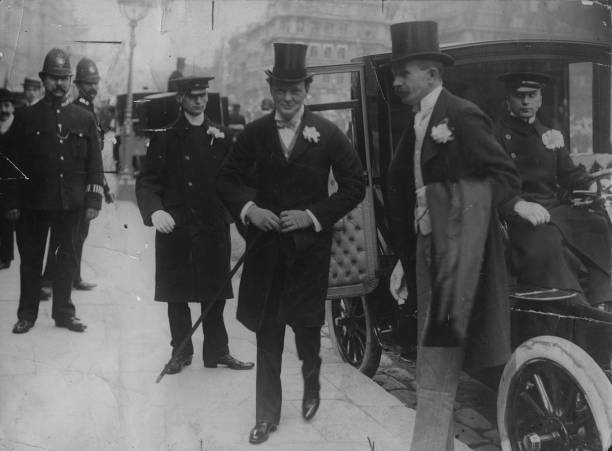
The Great War and the Aftermath
Upon the outbreak of the Great War, many Jews found themselves in a very precarious position, given that so many of them had been born in Germany. Their loyalties were far from certain at a time of national crisis. Churchill made sure his Jewish friends were quickly naturalised so they weren’t interned.
As First Lord of the Admiralty, Churchill was faced with a growing shortage of acetone, which was vital for naval explosives. To resolve this problem, Winston turned to Dr Chaim Weizmann. Weizmann, given the right facilities and funding, was able to produce what the nation required. Weizmann recalled that this situation had an unforeseen consequence, that being the support of Arthur Balfour, Churchill’s successor at the Admiralty. Balfour would, of course, write his name into the history books with the Declaration which bears his name.
At the war’s conclusion, Prime Minister Lloyd George called an election which resulted in a coalition government. Churchill wrote to Lloyd George whilst he was forming the cabinet: ‘There is a point about Jews which occurs to me – you must not have too many of them.’14 Too many Jews in the cabinet (there were three Jewish contenders for Cabinet office) might give rise to comment, he warned. In the end, only one Jew was appointed to the Cabinet, whilst Churchill became Secretary of State for War.
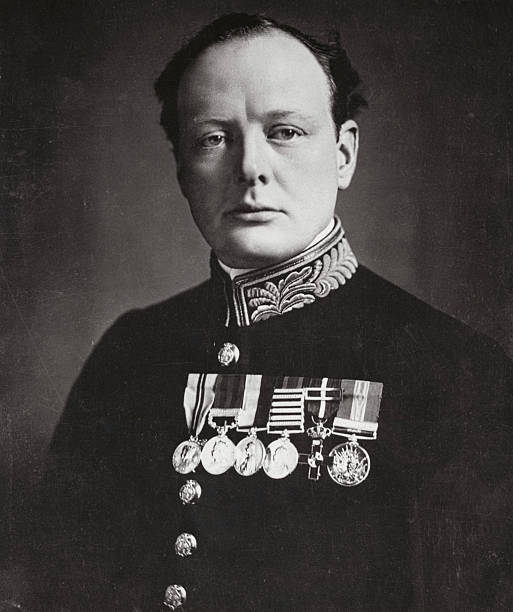
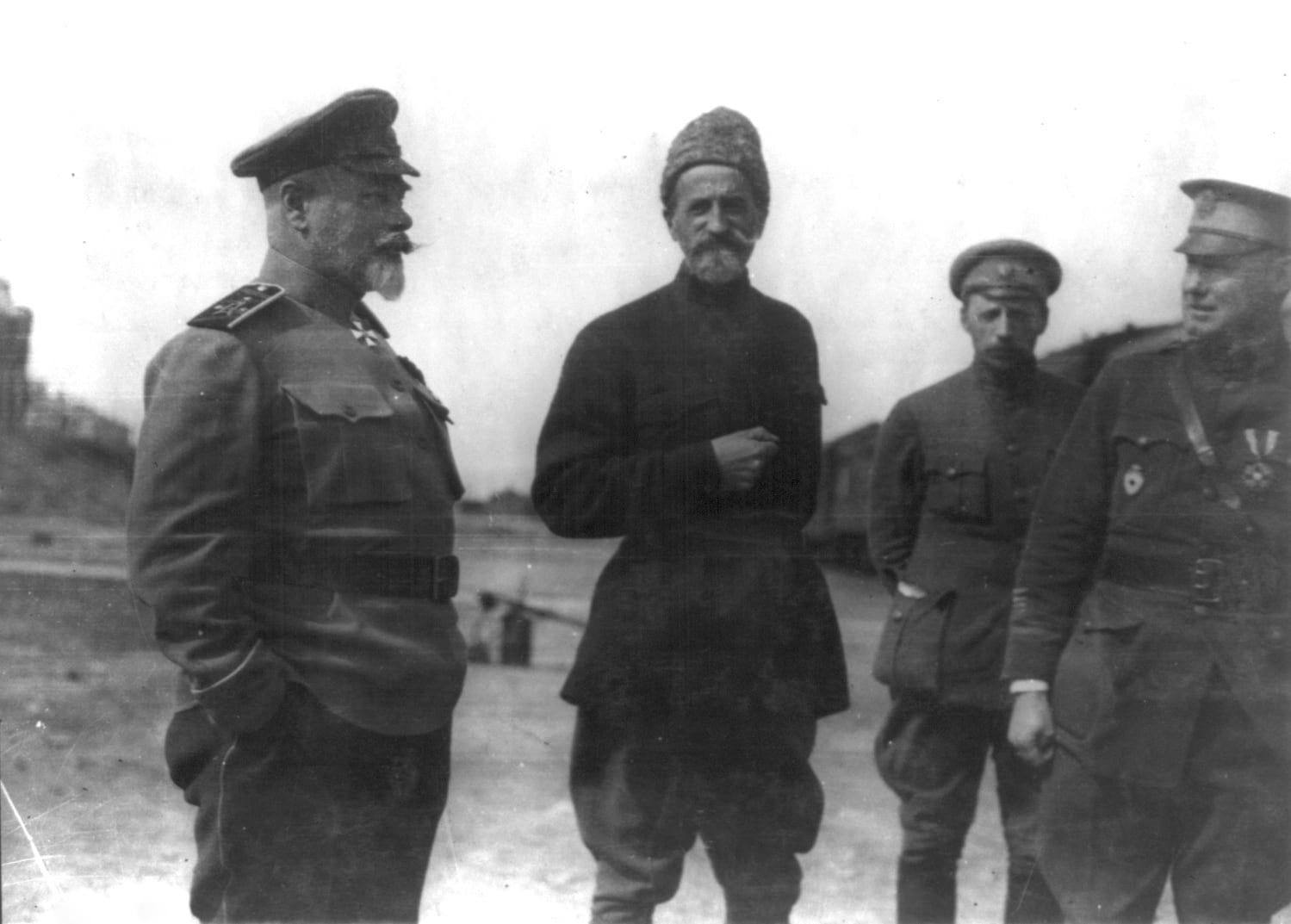
As Secretary of State for War, Churchill found himself responsible for supplying the anti-Bolshevik armies in Russia. Due to the near-universal support for the Bolsheviks from Russia’s Jews, these armies were inflicting pogroms against the Jews in all the regions of Russia they managed to retake control of. As Churchill wrote in a telegram to the Chief of the Imperial General Staff: ‘In view of prominent part taken by Jews in Red terror and regime, there is special danger of Jew pogroms and this danger must be combated strongly.’15
In another letter, to the senior British General in Southern Russia, General Holman, Churchill wrote:
‘It is of the very highest consequence that General Denikin should not only do everything in his power to prevent massacres of the Jews in the liberated districts but should issue a proclamation against anti-Semitism… The Jews are very powerful in England, and if it could be shown that Denikin was protecting them as his armies advanced it would make my task easier.’16
It was no good; the massacres continued despite Churchill threatening the White armies with an arms embargo. Repeatedly, the Secretary of State for War was forced to beg General Denikin to keep his men in line. The General did try, but was accused by his own men of being bought by the Jews.
Churchill also had responsibility for newly conquered Palestine. Dr Weizmann, head of the Zionist Executive in London, wrote to Churchill with a ridiculous list of demands including preferential treatment for Jews and his own pick as Chief Administrator. Churchill wrote to General Allenby at the Paris Peace Conference:
‘However much we may sympathise with Zionist aims, it must be borne in mind that Palestine is as yet merely occupied enemy territory, under a purely military administration. Therefore, the appointment of Chief Administrator is entirely the concern of the War Office and not one in which the Executive of the Zionist Organisation should have any voice. This does not seem to be quite clear to Dr Weizmann.’17
Weizmann got his pick, General Deedes, six months later anyway.
Churchill actually argued that the British should abandon her mandates over the conquered Ottoman territories. Instead, he proposed, they should be placed under the authority of the League of Nations. Winston was worried about the conflicts emerging in the Middle East. Britain was the ‘greatest Mahommedan power’ in the region with tens of millions of Muslims in her Empire. Mistreatment of the Palestinians and the carving up of Turkey could prove disastrous. He wrote
‘Lastly, there are the Jews, whom we are pledged to introduce into Palestine and who take it for granted that the local population will be cleared out to suit their convenience.’18
Churchill’s advice was not heeded, and Lloyd George decided to keep Palestine within the Empire.
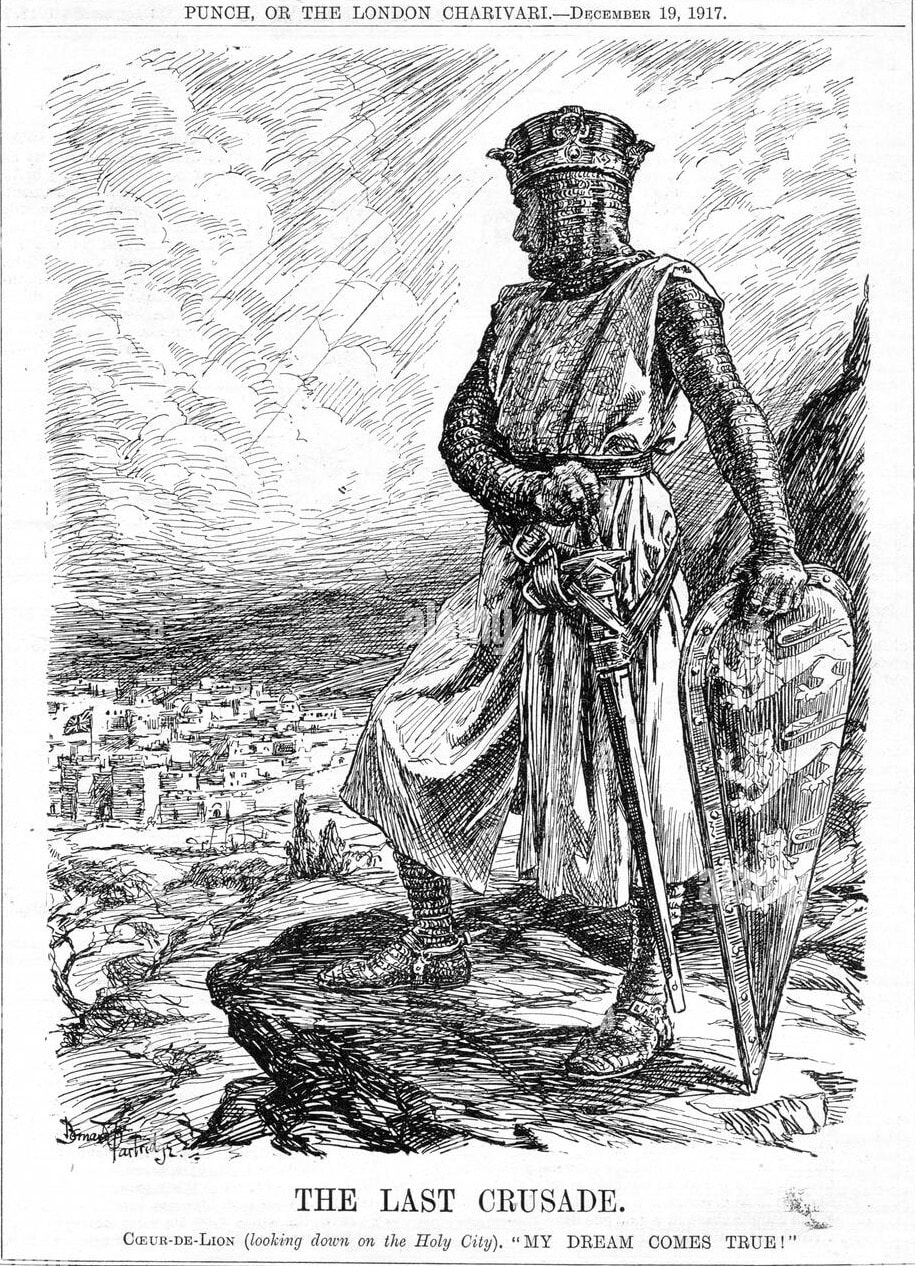
The Struggle for the Soul of the Jewish People
On 2 January 1920, Churchill described Bolshevism as a ‘Jewish Movement’19 in a speech in Sunderland. A month later, he wrote his famous article about the Jews for the Illustrated Sunday Herald. Jews would have to make a choice between identification with their country of residence, Zionism and Bolshevism, he said, before calling them ‘the most formidable and the most remarkable race which has ever appeared in the world.’20 Christianity, which had come from the Jewish people, had built the modern world, he said. Now, with Bolshevism, it seemed ‘as if the gospel of Christ and the gospel of Antichrist were destined to originate among the same people.’21
Churchill also declared his newly reinvigorated support for Zionism:
‘Palestine is far too small to accommodate more than a fraction of the Jewish race, nor do the majority of national Jews wish to go there. But if, as may well happen, there should be created in our own lifetime by the banks of the Jordan a Jewish State under the protection of the British Crown, which might comprise three or four millions of Jews, an event would have occurred in the history of the world which would, from every point of view, be beneficial, and would be specially in harmony with the truest interests of the British Empire.’22
In January 1921, Churchill was appointed Secretary of State for the Colonies. Winston’s task was to reduce the cost of administering Britain’s Palestinian and Mesopotamian mandates. Winston was also to follow through on Britain’s promises from the Balfour Declaration.
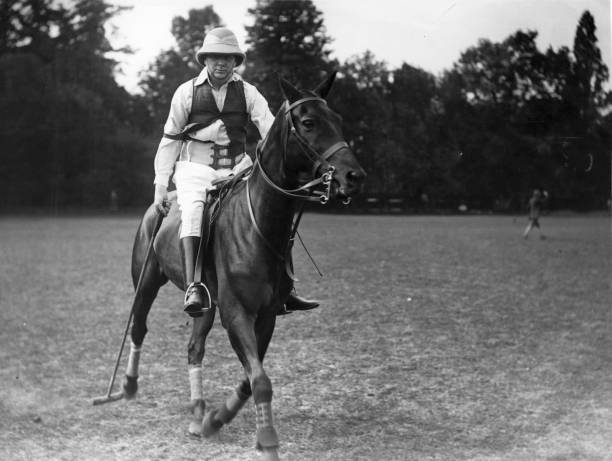
Churchill appointed Colonel T.E. Lawrence (of Arabia) as his Arab affairs adviser. Together, they would attempt to find a way to untangle Britain’s contradictory promises to the Jews and the Arabs. Churchill himself came to visit in April 1921. Wiezmann bombarding him with letters demanding just about everything in the region did little to influence him. It was decided to detach Transjordan from Palestine on 17 March. The Jews were allowed to settle the lands from the Mediterranean to the Jordan, and from upper Galilee to the Negev desert. Given that the Arab Kingdom to the east and the Jewish regions to the west would both be under overall British control, Churchill reasoned that conflict could be avoided. Four or five years, Lawrence inaccurately predicted, would be enough for the Arabs to drop their opposition to Zionism.
It was then off to Palestine to sell this to the Arabs, who, naturally, were not too happy. Churchill attempted to reassure Emir Abdullah of Transjordan by saying that there was, ‘in his opinion, a great deal of groundless apprehension among the Arabs in Palestine. They appeared to anticipate that hundreds and thousands of Jews were going to pour into the country in a very short time and dominate the existing population. This was not only not contemplated, but quite impossible.’23 Jewish immigration, Churchill said, would be a ‘very slow process’.24 This worked for Abdullah, and Jewish immigration was accepted west of the River Jordan into British-ruled Palestine.
Churchill also addressed a gathering of Jews at what would become the Hebrew University.
Britain’s promise ‘was a double one. On the one hand, we promised to give our help to Zionism, and on the other, we assured the non-Jewish inhabitants that they should not suffer in consequence. Every step you take should therefore be also for moral and material benefit of all Palestinians. If you do this, Palestine will be happy and prosperous, and peace and concord will always reign; it will turn into a paradise, and will become, as is written in the scriptures, a land flowing with milk and honey, in which sufferers of all races and religions will find a rest from their sufferings. You Jews of Palestine have a very great responsibility; you are the representatives of the Jewish nation all over the world, and your conduct should provide an example for, and do honour to, Jews in all countries…
The hope of your race for so many centuries will be gradually realised here, not only for your own good, but for the good of all the world.’25
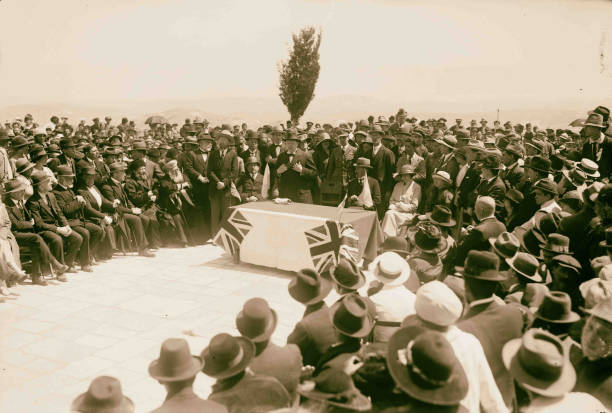
Whilst in Palestine, Churchill was met by delegations of Arabs and Jews alike. The former, to a man, were against any Jewish immigration at all. The Arabs tried two strategies: protest and negotiation. The former strategy, which consisted of shouting and screaming at Churchill, often with threats to harm the Jews, did not do their cause much good. The latter strategy, which consisted of presenting Churchill with a long list of reasons to exclude Jews from one’s society, complete with detailed examples, also did no good. The Palestinians were out of luck.
Most Jews in Palestine whom Churchill met were full of promises about coexistence with the Palestinians. How could a people who had been persecuted for 2,000 years even conceive of doing the same to another people, they explained.
The Prime Ministers of Canada, Newfoundland, Australia and New Zealand, as well as the Archbishop of Canterbury, all met with Churchill and told him of their concerns with Zionism and the way things were shaping up. All felt very sorry indeed for the Palestinians, but it was no good. The path was set.
Opposition everywhere was fierce. In 1922, the House of Lords rejected a Palestine Mandate that incorporated the Balfour Declaration by 60 votes to 25. Churchill’s task was now to reverse this in the Commons during the debate on the mandate on 4 July. Churchill argued that Britain had no choice but to follow through on promises which had been made in wartime. Besides, Churchill reasoned, the Arabs had been ‘quite content to dwell – a handful of philosophic people – in the wasted sun-scorched plains, letting the waters of the Jordan continue to flow unbridled and unharnessed into the Dead Sea.’26
Put simply, the Arabs weren’t utilising the land properly. The Jews already in Palestine were making great progress, and doubtless the Jewish immigrants to come would do the same. Churchill won the day. 35 votes were cast against the government’s Palestine policy, whilst 292 voted in favour. The issue passed through the League of Nations shortly afterwards.
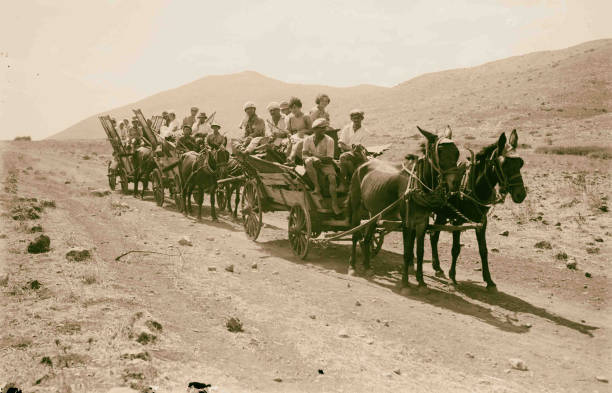
Partition
The 1922 General Election saw an entirely Conservative administration emerge triumphant. Churchill lost his parliamentary seat in the process and desperately had to search for a new one. His first attempt in West Leicester in 1923 was unsuccessful, and ‘whenever he spoke in public during his attempts to return to Parliament he was met by the accusation that during the war he had done the bidding of wealthy Jews for illegal gain.’27 This was a time when anti-Semitism was on the rise in Britain and such accusations could prove fatal to one’s career.
During his two years out of Parliament, Winston was approached by Robert Waley Cohen, one of Britain’s richest Jews, and asked to act as an intermediary with the government over the merging of two companies. This was seen as politically sketchy, but Churchill had just purchased Chartwell, his country house in Kent, and needed money for a rebuilding plan. He accepted the £5,000, an enormous sum for the time.
In March 1924, Churchill ran for office again in the Westminster Abbey constituency by-election and lost, but tried again eight months later in Epping at the general election and succeeded. Prime Minister Stanley Baldwin then appointed Churchill as Chancellor of the Exchequer.
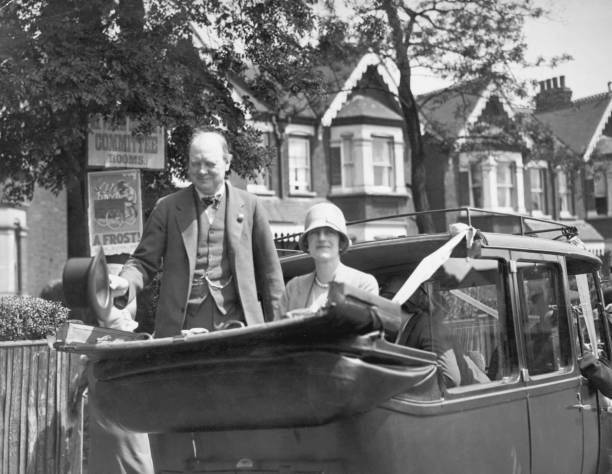
Five years later, in 1929, Labour prevailed at the General Election, but Churchill kept his seat. In that same year, violence broke out in Palestine, and both the Arabs and the Jews saw about 100 of their number killed; each side also saw hundreds more wounded.
Whilst on a tour of Canada and the United States, Churchill was asked about this matter. The Arab had no reason to hate the Jew, he said, and it was to Jewish enterprise that ‘the Arab owes nearly everything he has. Fanaticism and a sort of envy have driven the Arab to violence, and for the present the problem is one of proper policing until harmony has been restored.’28 From Jewish immigration, the Arabs had received ‘good gifts, more wealth, more trade, more civilisation, new sources of revenue, more employment, a higher rate of wages, larger cultivated areas, a better water supply – in a word, the fruits of reason and modern science.’29
Churchill continued to speak up for Jews, whether in Palestine or elsewhere, and in 1931 he joined an ‘informal but strong committee of members of both Houses who spoke in favour of Zionist enterprise in Palestine.’30 The Secretary of the Committee, the Jewish Labour MP Barnett Janner, wrote that the members of the committee ‘made Zionism one of their parliamentary duties.’31
On 13 April, 1933, Churchill warned the government about the dangers of Hitler’s ‘most grim dictatorship’32 and lamented the Fuhrer’s ‘persecution of the Jews’33 (they had been barred from national, local and municipal office).
‘I cannot help rejoicing that the Germans have not got the heavy cannon, the thousands of military aeroplanes and the tanks of various sizes for which they have been pressing in order that their status may be equal to that of other countries.’34
Again and again, Churchill would take aim at Germany in Parliament and in the press, always being sure to place anti-Semitism at the forefront of his list of concerns. The Germans, who were desperately attempting to befriend Britain, took notice of the threat immediately and called Churchill’s behaviour out in their own newspapers.
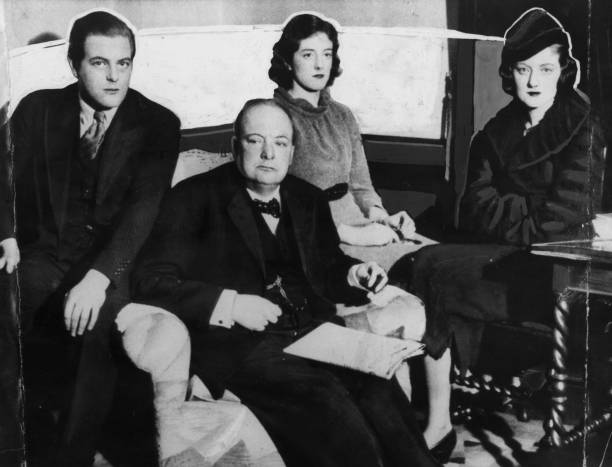
It was around this time that Churchill was approached by Albert Einstein, who had recently left Germany. Einstein wanted to enlist Churchill’s support in his scheme to get Jewish scientists out of German universities so they could find new homes in Britain or the US. Churchill was naturally happy to help. Thomas Loveday, Vice-Chancellor of Bristol University, would write in to complain that students from the Dominions were being rejected in favour of this new flood of Jews, purely based on race.
Britain was to have a general election in November 1935, and rumours were rife that Churchill would once more be given a Cabinet position. Churchill’s election speeches focused on the German question. The solution, Churchill said, was rapid rearmament. By this point, it was this constant agitation against Germany that he was best known for. The NSDAP newspaper, the Völkischer Beobachter, reported that ‘as soon as Mr Churchill opens his mouth, it is safe to bet that an attack on Germany will emerge. He is one of the most unscrupulous political intriguers in England. His friendship with the American Jewish millionaire Baruch leads him to expend all his remaining force and authority in directing England’s action against Germany. This is the man whom the government are apparently thinking of including in the Cabinet.’35
In 1935 and 1936, Stanley Baldwin’s Government started to limit Jewish immigration to Palestine. On 24 March 1936, the House of Commons discussed the proposal for setting up a Legislative Council in Palestine. Naturally, given that the Arabs were the majority, they would have most of the power. They would then be able to veto any future Jewish immigration. The Zionist dream would be dead. Churchill, naturally, was against this and led the charge against the government’s plans.
‘There is in our minds, an added emphasis upon this question of Jewish migration which comes from other quarters, at a time when the Jewish race in a great country is being subjected to most horrible, cold, scientific persecution, brutal persecution, a ‘‘cold’ pogrom as it has been called – people reduced from affluence to ruin, and then, even in that position, denied the opportunity of earning their daily bread, and cut out even from relief by grants to tide the destitute through the winter; their little children pilloried in the schools to which they have to go; their blood and raced declared defiling and accursed; every form of concentrated human wickedness cast upon these people by overwhelming power, by vile tyranny.
Surely the House of Commons will not allow the one door which is open, the one door which allows some relief, some escape from these conditions, to be summarily closed, nor even allow it to be suggested that it may be obstructed by the course which we take now.’36
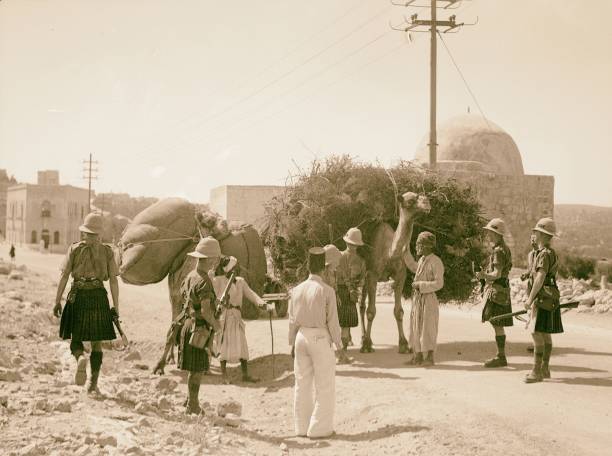
On 8 June 1937, a private dinner was held for a number of prominent Zionists, including James de Rothschild, Leo Amery, Chaim Weizmann, and Churchill. At one point, Winston turned to Weizmann and said, pointing at those present, ‘You know you are our masters. If you ask us to fight, we shall fight like tigers.’37 Many Jews, as well as the British Government, felt that a partition plan might be prudent. Weizmann reasoned that it was better to have a smaller, secure Israel than a prolonged project for a larger one that might fail.
Churchill stood against this. He wanted to go the full way. The British Government, he said, were ‘untrustworthy; they would chip off a piece here, and chip off a piece there; and Dr Weizmann’s dream of an annual immigration of 60,000 or so would be smashed from the outset.’38 The only thing the Jews could do, he said, was to ‘persevere, persevere, persevere!’39
On one occasion during the dinner, Churchill jumped up and dismissed Partition as a fraud before proclaiming that the Baldwin government were ‘idiots, talentless… If England depends on them it will be destroyed… However, this situation will not continue much longer – England will wake up and defeat Mussolini and Hitler, and then your time will come too.’40
On 7 July 1937, the Peel Commission published its report, which proposed the division of Palestine into a Jewish state and an Arab State. Jerusalem and Bethlehem, along with a corridor to the sea which included Jaffa, were to be kept separate and ruled by the British.
The debate on the matter was held on 21 July. Churchill, naturally, fiercely fought against partition. He had a few avenues of attack. Even before immigration, the small Jewish state would have a population density equivalent to that of France or Germany. On top of this, the nation was too small, and the borders too indefensible, to ever hope to repel the inevitable Arab invasion that would one day come. This all mattered to Britain, Churchill said, because when the scheme inevitably failed, it would be a critical blow to British prestige.
Churchill’s solution was merely to slow down Jewish immigration, so as to not provoke the Arabs. They were to be slow-boiled into becoming a minority, instead. During a dinner with Baron Melchett, Churchill said:
‘The only reason why the cable has broken down is because you put too much current on it and it has fused. It should be repaired, and is still a good cable. The reason you put too much current on it was due to persecution in Germany, by no means your fault. You are in no way to blame. But the facts must be realised and a more moderate tempo must be used in future.’41
The Labour and Liberal parties both opposed Partition and it was agreed to stand down for now, but to keep Partition as a future option.
Road to War
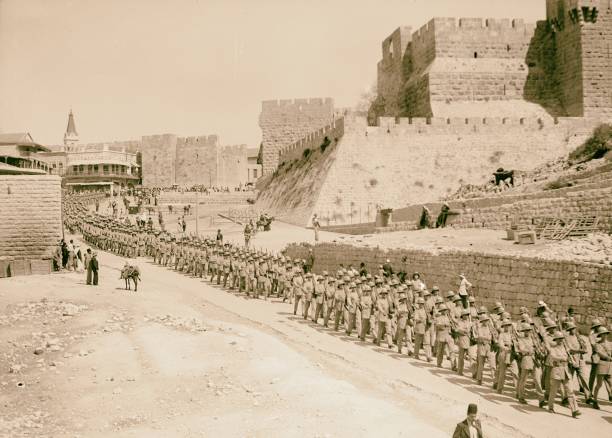
It was in 1936, whilst the Partition debate was still ongoing, that Winston Churchill was approached by Eugen Spier, a Jew from Germany. Spier, like Churchill, was to become a part of what was later called ‘The Focus’. The group met for lunch for the first time on 19 May 1936, their united goal being to drag Britain into a war with Germany. Between that day in May and the outbreak of war, Spier alone would donate just shy of £10,000 (well over £500,000 today) to The Focus.
Churchill was sent to France, where he met with Mrs Goldsmith Rothschild, as well as Leon Blum, the Prime Minister, and Georges Mandel, one of Blum’s senior Cabinet colleagues. Both Blum and Mandel were Jewish and strong opponents of Appeasement. Allies were being sought for The Focus abroad. Together, they could get their war. The basis of this ‘Anti-Nazi League’, as it was termed, was, in Churchill’s own words, ‘of course Jewish resentment at their abominable persecution.’42 In February 1937, Churchill met with Imre Revesz (later Emery Reves), a Hungarian Jew. He had previously published anti-Nazi articles in Germany, but after the rise of Hitler, he was forced to move his operations to Paris. Reves attained the exclusive rights to publish all of Churchill’s relevant articles outside of the British Empire and the USA. By year’s end, Churchill’s articles agitating for war with Germany were being translated and published in twenty-five different European capital cities.
On 19 August 1938, Major Ewald von Kleist arrived at Chartwell, Churchill’s country residence. Kleist was one of the anti-Nazi plotters in the German army who sought to sabotage Hitler’s plans for Czechoslovakia. If only he and his fellow plotters could receive ‘a little encouragement they might refuse to march’43 against Czechoslovakia. Shortly afterwards, Churchill publicly appealed for the German officer corps to overthrow Hitler.
The Fuhrer responded on 6 November in a speech at Weimar:
‘Mr Churchill has declared openly that in his opinion the present regime in Germany should be abolished in cooperation with internal German forces who would put themselves gratefully at his disposal for the purpose.
If Mr Churchill had less to do with emigres, that is to say, exiled foreign paid traitors, and more to do with Germans, then he would see the whole idiocy and stupidity of what he says. I can only assure this gentleman that there is in Germany no such power as could set itself against the present regime.’44
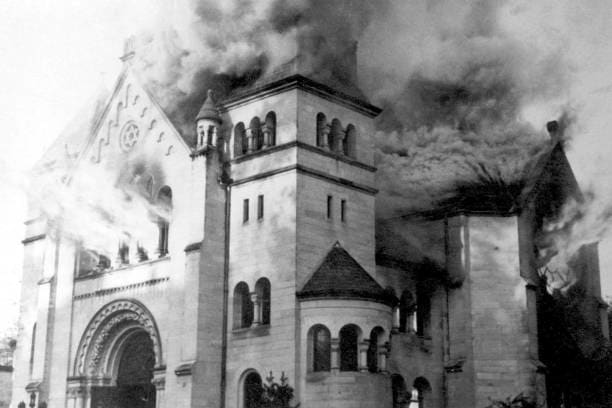
On 7 November 1938, Herschel Grynszpan, a Jewish terrorist, walked into the German embassy in Paris and shot Ernst von Rath, a German diplomat. The German press immediately pointed the finger at Churchill’s propaganda campaign. In Der Angriff, Joseph Goebbels headlined an article covering the murder: ‘The work of the instigator-international: A straight line from Churchill to Grynszpan.’45
‘While in London the Churchill clique, unmasked by the Fuhrer, was busy with sanctimonious deception, in Paris the murder weapon spat in the hands of a Jewish lout and destroyed the last measurable remnants of credibility in the assertion that agitation for war and murder against the Third Reich has never been carried on or contemplated.’46
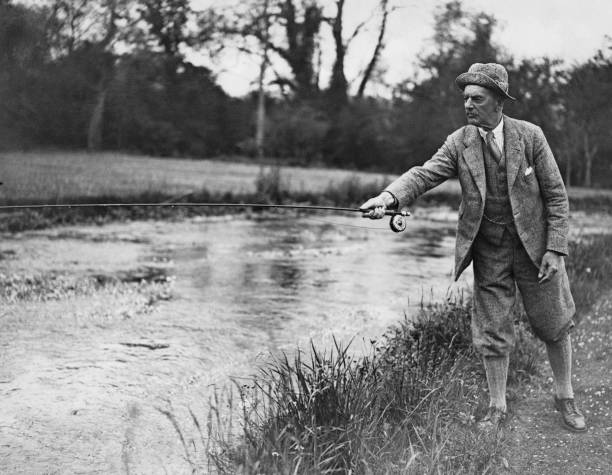
With war approaching, the calls for Churchill to be included in Neville Chamberlain’s inner circle were growing stronger. Many of these calls by ‘a larger and larger segment of the British public’47 were just manufactured propaganda. One campaign, for example, was led by the editor and designer of Picture Post, Stefan Lorant, a Hungarian Jew. Lorant and a photographer spent a day at Chartwell figuring out the scheme with Churchill. Together, they would work ‘out how best to present the call for his return to government.’48
Gilbert writes:
‘The two issues of Picture Post that followed Lorant’s visit marked a turning point in the public perception of Churchill as a man whose knowledge and experience were not being used. The first issue was published on 25 February 1939 with text by Henry Wickham Steed, a former editor of The Times and a member of the Anti-Nazi League. Its theme: ‘The greatest moment of his life is yet to come.’49
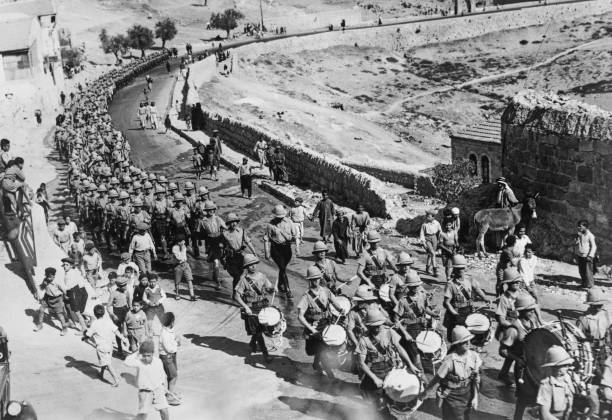
There was trouble not only in Europe, but in the Middle East. Between 1936 and 1939, British troops had killed over 5,000 Palestinians during the Arab Revolt. Pressure was mounting from neighbouring Muslim states to halt Jewish immigration into Palestine. They were quite right that Jewish immigration was lighting the entire region on fire, and the British were losing the will to bother anymore. The cost was too high for no return. They were, after all, sinking money and lives into a foreign cause and, at the same time, infuriating tens of millions of Muslims within and surrounding the Empire.
Neville Chamberlain remarked at the Cabinet’s Palestine Committee on 20 April 1939:
‘If we must offend one side. Let us offend the Jews rather than the Arabs.’50
A month later, the government devised a policy which would ensure that the Arabs remained the majority in Palestine. The White paper on the topic was to be known as the ‘Black Paper’ by the Jews. It was to be the death of their dreams, had World War 2 not intervened. Jewish immigration was to be limited to a total of 75,000 during the coming five years. After that five-year period, self-governing institutions would be set up. The Jews would still be a minority by this point, and so the Arab majority would have control of the country. From here, the Arabs could then get rid of Jewish immigration altogether.
Churchill fought fiercely against this, arguing that despite the cost in money and lives, Britain had to uphold her promises in the Balfour Declaration. His lengthy speech on the topic was published widely throughout Britain and in Palestine itself. Jewish messages of support flooded in. Dr Weizmann, for example, telegraphed in: ‘Your magnificent speech may yet destroy this policy!’51
It was no good. The final vote on the White Paper was 268 to 179 in favour of its recommended policy.
War
On 3 September 1939, Britain declared war on Germany. Churchill finally got the war he wanted, and, now, also attained the position he wanted too, as he was brought into the Cabinet on the same day as First Lord of the Admiralty. On the 19th, Churchill dined with Weizmann and, as the latter recalls, asked him to prepare a ‘list of our requirements’52 for the participation of Palestinian Jews in the British war effort. Churchill asked if the 75,000 young Jews registered for military service were armed. If they weren’t, he said, he would arm them. After this, the British troops would no longer be needed in Palestine. What was important, Weizmann said, was ‘to create cadres and establish a military organisation.’53 The Second World War here, clearly, was secondary. Once the Jews were sufficiently armed and organised, Churchill said, then ‘the Arabs would come to terms with them.’54 Naturally, Churchill was unable to persuade the Cabinet of this scheme.
On 17 December 1939, Churchill again met with Weizmann. Weizmann told Churchill that ‘after the war the Zionists would wish to have a State of some three or four million Jews in Palestine’ (there were 500,000~ Jews in Palestine in 1939). Churchill replied: ‘Yes, indeed, I quite agree with that.’55
Despite the war, Churchill continued to speak up about Palestine. The proposed Land Transfer Regulations would forbid further Jewish land purchases in the West Bank as well as in most of Galilee. With an American election coming up, Churchill warned, ‘do we really wish at this juncture to throw what Lord Lothian calls ‘‘the powerful factor’’ of the influence of American Jewry into the scales against us? Can we afford to do so?’56 Once more, Churchill’s strategy was to hope to pull the United States deeper into the war using Jewish influence.
Churchill reminded the Cabinet of the last time this had happened:
‘It was not for light or sentimental reasons that Lord Balfour and the Government of 1917 made the promises to the Zionists which have been the cause of so much subsequent discussion. The influence of American Jewry was rated then as a factor of the highest importance, and we did not feel ourselves in such a strong position as to be able to treat it with indifference.’57
And of the current situation:
‘When the future is full of measureless uncertainties, I should have thought it was more necessary, even than in November 1917, to conciliate American Jewry and enlist their aid in combating isolationist and indeed anti-British tendencies in the United States.’58
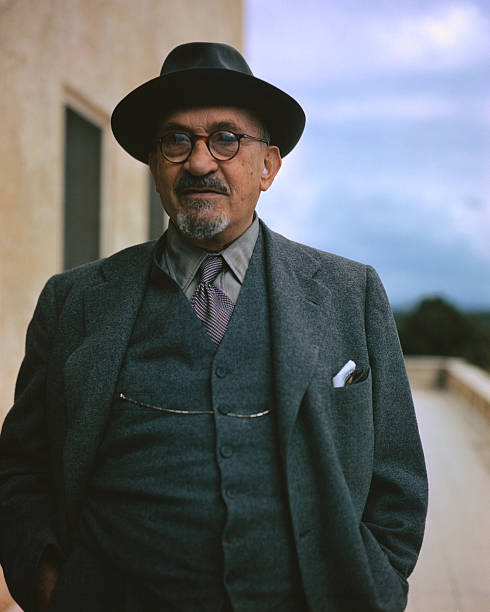
Dr Weizmann had set off for New York, and, Churchill said, ‘I am sure that it is his whole desire to bring United States opinion as far as he possibly can on to our side, but the line indicated in the draft telegram may well make his task impossible, and he will find himself confronted with the active resentment of American Jewry. Their anger may become public and be readily exploited by all unfavourable elements in the United States. This may do us great harm there; and when the repercussions of this outcry reach this country the Government will have to face a debate in the House of Commons which will be not only embarrassing, but dangerous and damaging to our common interest.’59
In early May, it was clear that Chamberlain’s time was up. The search for a successor began. Sir Samuel Hoare, Secretary of State for Air, drew up a list of ‘Winston’s Mistakes’ that made him unsuitable for the position. One of these read: ‘Pro-Zionist row over land settlement in Palestine.’60 But this was no longer about Palestine, and who better to run a war than the man who wanted it more than anyone else? On 10 May, Churchill became Prime Minister.
Ben Gale, a Jew in Tel Aviv, was in the middle of the lecture when the chairman interrupted the speaker and read out the news. He recalled:
‘Everyone in the large hall stood up and cheered wildly. With Churchill at the helm, there was now hope for the Jews of Palestine!’61
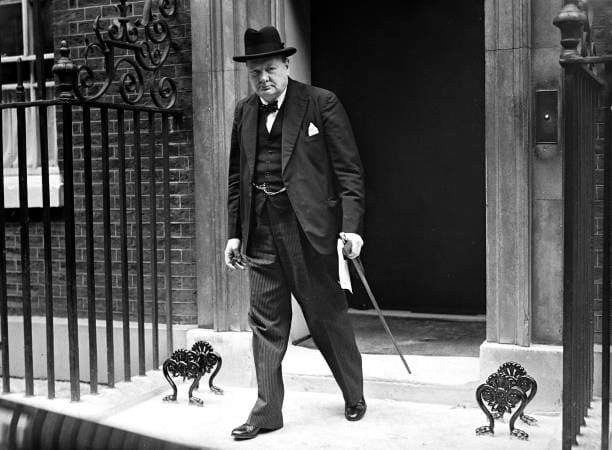
Prime Minister
In the autumn, the Germans attempted to embarrass the British by sending boatloads of Jewish refugees towards Palestine, where they would inevitably be rejected as illegal immigrants. These refugees, upon arrival, were loaded onto the Patria, where they were then to be sent on to Mauritius to be interned. Just as the ship was about to leave Haifa, a bomb went off. The explosive had been planted by Jewish extremists who wished to disable the ship, leaving the British with a fait accompli. Instead, they trapped their fellow Jews below deck, where 267 of them drowned.
General Wavell, Commander-in-Chief of British forces in the Middle East, telegraphed the Secretary of State for War, requesting that the survivors be sent to Mauritius. He could not afford a crisis with the Arabs at such a vital time. Churchill replied:
‘Personally, I hold it would be an act of inhumanity unworthy of British name to force them to re-embark.’62
Churchill got his way, but was not to do so again in 1941 when Dr Weizmann was pushing for a specifically Jewish force of 12,000 men, with its own insignia and flag, under the British army. Wavell, once again on the grounds of potential Arab reaction, would have none of it. Churchill raged:
‘General Wavell, like most British military officers, is strongly pro-Arab. At the time of the licences to the shipwrecked illegal immigrants being permitted, he sent a telegram not less strong than this, predicting widespread disaster in the Arab world, together with the loss of the Basra-Baghdad-Haifa route. The telegram should be looked up, and also my answer, in which I overruled the General and explained to him the reason for the Cabinet decision. All went well and not a dog barked. It follows from the above that I am not in the least convinced by all this stuff.’63
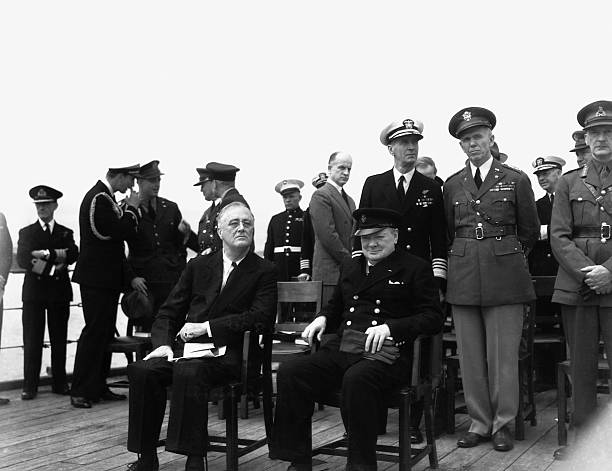
On 20 August 1941, Churchill was presented with the Atlantic Charter by President Roosevelt. Britain and the United States were to pledge themselves ‘to respect the right of all peoples to choose the form of government under which they live.’64 Churchill supported this, but sought an exception for the Jews as ‘the Arabs might claim by majority that they could expel the Jews from Palestine, or at any rate forbid all future immigration.’65 He added: ‘I am strongly wedded to the Zionist policy, of which I was one of the authors.’66
Churchill’s views were not shared by most of his Cabinet. Oliver Harvey, Anthony Eden’s Private Secretary, noted in his diary:
‘Unfortunately AE is immovable on the subject of Palestine. He loves Arabs and hates Jews.’67
The British officer corps was, almost unanimously, in line with Eden’s thinking. Churchill proposed to ‘make an example of these anti-Semite officers and others in high places. If three or four of them were recalled and dismissed, and the reasons given, it would have a salutary effect.’68 No officers ended up being dismissed, and Churchill’s Cabinet Ministers never changed tack.
The Polish Government in London requested that air raids be carried out on Germany along with a leaflet dropping campaign ‘warning the Germans that our attacks were reprisals for the persecution of the Poles and the Jews.’69 Churchill took this advice and asked the Royal Air Force to undertake ‘two or three heavy raids’70 on Berlin with this message. Chief of the Air Staff, Sir Charles Portal, naturally pointed out that any such raids ‘avowedly conducted on account of the Jews would be an asset to enemy propaganda.’71
In April 1943, Churchill received news that the Spanish were refusing to allow Jews to cross the Pyrenees. The Prime Minister met with the Spanish Ambassador and told him ‘that if his Government went to the length of preventing these unfortunate people seeking safety from the horrors of Nazi domination, and if they went farther and committed the offence of actually handing them back to the German authorities, that was a thing which would never be forgotten and would poison the relations between the Spanish and British peoples.’72 The border was soon reopened.
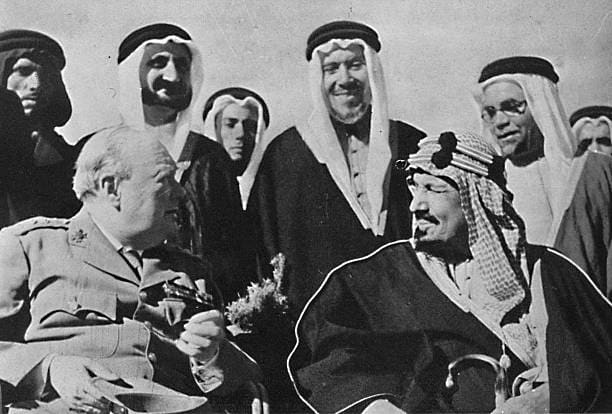
In the summer, Churchill put forward a plan which would see King Ibn Saud of Saudi Arabia rule an Arab Federation which spanned across the Middle East. The King would receive £20,000,000 a year, but, in return, he was to accept a Jewish State in Palestine. Weizmann, who Churhcill had discussed the plan with, then spoke to Roosevelt’s Foreign Policy adviser, Sumner Welles, as if the plan were a fact. When Anthony Eden, the Secretary of State for Foreign Affairs, heard this, he was furious. He wrote to Churchill:
‘I do not know how far Dr Weizmann has authority to speak in your name, but I am a little worried about the danger of confusion arising in Washington. Our present Palestine policy has been accepted by Parliament. I know well your personal feeling on this but there has been no discussion suggesting that the US government should be approached as regards the possibility of modifying it.’73
On 25 October, at a lunch at Chequers, Churchill told Dr Weizmann that ‘after they had crushed Hitler they would have to establish the Jews in the position where they belonged. He had had an inheritance left to him by Lord Balfour, and he was not going to change.’74 Weizmann pointed out that ‘there were dark forces working against them which might force the Cabinet’s hand.’75 Churchill responded that Weizmann had ‘some very good friends: for instance, Mr Attlee and the Labour Party are committed on this matter.’76
Churchill went on to claim that he would seek to acquire Transjordan for the Jews in the post-war settlement, too. The Arabs had ‘done very little, and in some instances had made things difficult for us. He would remember this when the day of reckoning came.’77
This was perhaps easier in Churchill’s mind than in reality. The PM wrote to the Chiefs of Staff Committee in September 1943:
‘Of every fifty officers who came back from the Middle East, only one spoke favourably of the Jews.’78
There were other ways in which Churchill could get his way, though. Churchill refused to allow the 1939 White Paper, which had passed into law by an overwhelming majority, to come into effect. This move was ‘certainly unconstitutional,’79 as even Gilbert admits.
In July 1944, the first rumours of the goings on at Auschwitz-Birkenau began spreading in the Allied nations. Importantly, it was reported that Jews were still being rounded up and sent there from Hungary. As soon as Weizmann learned of this, he went to the Foreign Office with some demands. One of these was an appeal for the Allies to bomb the railway lines between Budapest and Auschwitz. Churchill responded immediately: ‘Get anything out of the Air Force you can, and invoke me if necessary.’80
As word continued to spread, Churchill began to push harder for the creation of a Jewish unit. ‘I like the idea of the Jews trying to get at the murderers of their fellow-countrymen in Central Europe, and I think it would give a great deal of satisfaction to the United States,’81 Churchill said. If any of the ‘usual silly objections’82 were raised, Churchill said, ‘I can overcome them.’83 On 19 September 1944, Churchill got his way.
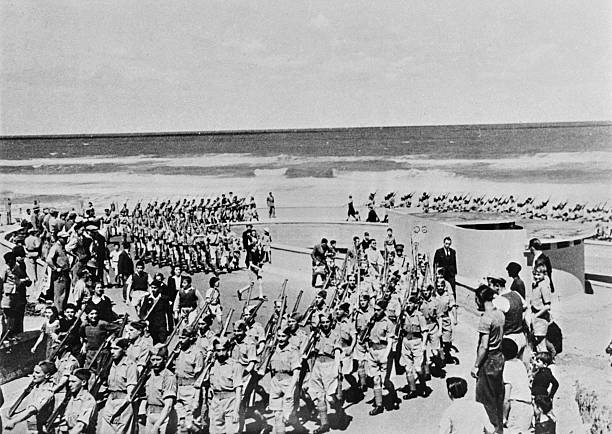
In Palestine, meanwhile, Jewish terrorists were engaging in an assassination frenzy. In August 1944, they even attempted to kill Sir Harold MacMichael, the British High Commissioner. Both his aide-de-camp and driver were wounded. Weizmann and the Jewish Agency were obviously less than happy about this, knowing that each act of terrorism would be a black mark against their Zionist dreams in British eyes. Weizmann had good reason to worry, for the Conservatives were beginning to talk in the same way as the British military. Still, Churchill said, this ‘only hardened his heart.’84
During lunch with Weizmann, Churchill told him that he had managed to bring Lord Moyne, the Minister Resident in Cairo, Churchill’s close friend and former anti-Zionist, around to their way of thinking. Weizmann, overjoyed, agreed to go and see him. Before he could get there, however, Jewish terrorists had murdered Moyne and his driver.
Churchill, deeply distressed by the death of his friend, stressed that ‘it was incumbent on the Jewish Agency to do all in their power to suppress these terrorist activities.’85 Over the past year, Churchill said, Moyne had ‘devoted himself to the solution of the Zionist problem.’86
‘I can assure the House that the Jews in Palestine have rarely lost a better or more well-informed friend.’87
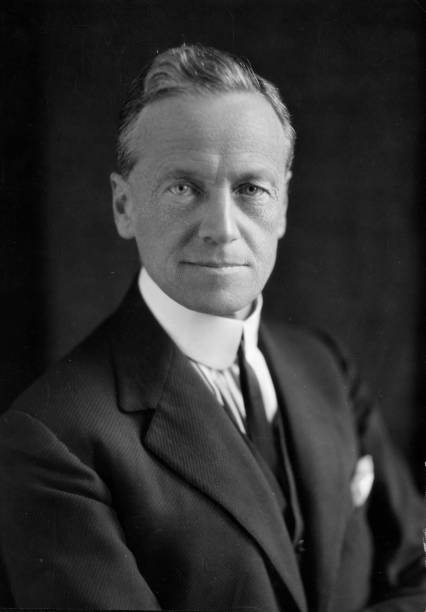
Churchill was pressed by Oliver Stanley, the Colonial Secretary, to suspend Jewish immigration to Palestine, or, at least, threaten to suspend it if the terrorism did not cease. Churchill replied:
‘Will not suspension of immigration or a threat of suspension simply play into the hands of the extremists? At present, the Jews generally seem to have been shocked by Lord Moyne’s death into a mood in which they are more likely to listen to Dr Weizmann’s counsels of moderation. The proposed announcement would come as a shock of a different kind and, so far from increasing their penitence, may well provide a not unwelcome diversion and excite bitter outcry against the Government.’88
This was, of course, very different to how Arabs were treated. When an Arab acted up, his entire village would be subjected to a collective fine by the British authorities. As Churchill wished, no changes were made. Terrorism went unpunished, but still, Churchill knew the stakes. On 17 November, he spoke in the Commons of the impact of ‘a shameful crime which has shocked the world and has affected none more strongly than those like myself who, in the past, have been consistent friends of the Jews and constant architects of their future. If our dreams for Zionism are to end in the smoke of assassins’ pistols, and our labours for its future to produce only a new set of gangsters worthy of Nazi Germany, many, like myself, would have to reconsider the position we have maintained so consistently and so long in the past.’89
‘I have received a letter from Dr Weizmann, President of the World Zionist Organization – a very old friend of mine – who has arrived in Palestine, in which he assures me that Palestine Jewry will go to the utmost limits of its power to cut out this evil from its midst. In Palestine, the Executive of the Jewish Agency has called upon the Jewish community – and I quote his actual words – ‘‘to cast out the members of this destructive band, deprive them of all refuge and shelter, to resist their threats, and render all necessary assistance to the authorities in the prevention of terrorist acts and in the eradication of the terrorist organisation’’. These are strong words, but we must wait for these words to be translated into deeds. We must wait to see that not only the leaders but every man, woman and child of the Jewish community does his or her best to bring this terrorism to a speedy end.’90
Leaders of both the Irgun and the Stern Gang terrorist groups would go on to become Prime Ministers of Israel. Both groups are praised to this day in Israel. In the wake of Churchill’s speech, the Stern Gang even discussed killing Churchill.
Due to Jewish pressure, the executions of Moyne’s murderers were not going ahead as planned. Churchill, furious, telegraphed the ambassador in February 1945: ‘It is of the utmost importance that both assassins should be executed.’91 ‘An instant complaint’92 was to be forwarded to the authorities, Churchill added. The executions soon took place.
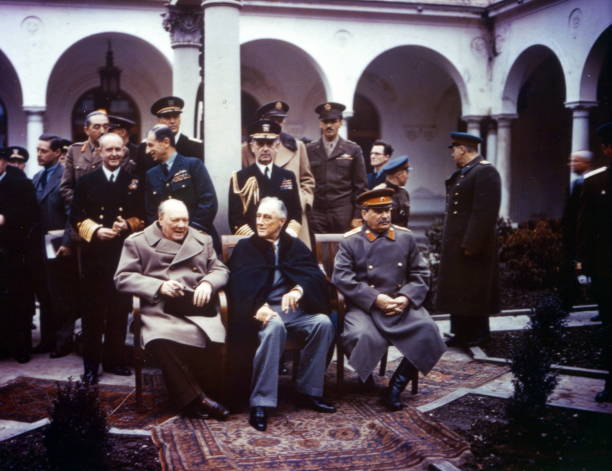
In the last months of Churchill’s premiership, he was losing the argument for the future of the Jewish people. After a meeting with the Saudi King, President Roosevelt, in his dying days, became a convert to anti-Zionism. Soon, Churchill found himself out of office. Churchill could only watch in frustration as Clement Attlee’s Labour Government attempted to solve the issue which he cared so deeply about.
Jewish Terrorism
With the war almost at an end, Weizmann bombarded Churchill with letters, begging him to somehow release all restrictions on Jewish immigration. There was, of course, nothing Churchill could do. He lamented that his colleagues in the House of Commons were too anti-Zionist. It was time for Weizmann to look to the United States. Britain could never fulfil the Zionist dream for them now. In a letter to Weizmann, who was now in a state of near-despair:
‘It has occurred to me for some time, reading all the attacks in the American papers on the way Britain has behaved in handling the Zionist question, that it might be a solution of your difficulties if the Mandate were transferred from Britain to the United States, who, with her great wealth and strength and strong Jewish elements, might be able to do more for the Zionist cause than Great Britain. I need scarcely say I shall continue to do my best for it. But, as you will know, it has very few supporters in the Conservative Party, and even the Labour Party now seem to have lost all zeal.’93
Weizmann lamented to a meeting at Zionist Headquarters in London that Churchill and Roosevelt had ‘let them down, maybe not intentionally, but inadvertently. They made promises which they could not carry out or mean to carry out. They were only a small people; he could not fight Churchill or Truman but he could keep his conscience clear by telling them ‘‘You have done what you have done, but you cannot expect me to swallow it.’’’94 The Jews had had absolute confidence in Churchill and General Smuts, but ‘both their letters were great disappointments.’95
Churchill, not giving up on the Jews, tried to have the mandate handed over to the Americans. He wrote to Colonial Secretary Oliver Stanley, Anthony Eden and the Chiefs of Staff:
‘The whole question of Palestine must be settled at the Peace table, though it may be touched upon at Terminal [code name for Potsdam]. I do not think we should take the responsibility upon ourselves of managing this very difficult place while the Americans sit back and critcise. Have you ever addressed yourself to the idea that we should ask them to take it over? I believe we should be the stronger the more they are drawn into the Mediterranean. At any rate the fact that we show no desire to keep the Mandate will be a great help. I am not aware of the slightest advantage which has ever accrued to Great Britain from this painful and thankless task. Somebody else should have their turn now.’96
Prime Minister Attlee appointed Ernest Bevin as Foreign Secretary. Previously, Bevin had earned the ire of the Jews by blaming predatory Jewish financial practices for Arab riots in Palestine. Bevin decided against allowing the immigration of 100,000 Jews from camps across Europe into Palestine.
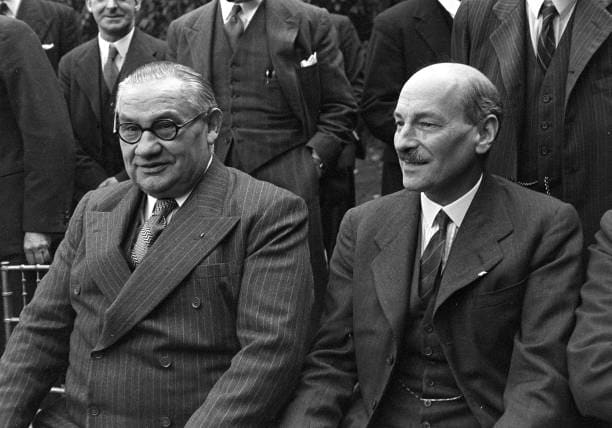
The Labour Government got serious about preventing illegal immigration. Those who were caught were sent to detention centres in Palestine. In response, Jewish terrorists stepped up their campaign against British troops and police. The British, having no desire to stick around in this mess, which, at the end of the day, didn’t concern them, set up an Anglo-American commission with a view towards ending the Mandate. The decision was the replacement of the Mandate with a partition.
Churchill, too, saw Partition as the last hope. The Jews had turned the British public against them, so it was this or nothing. Any further Zionist dream, at least directly, was dead. In a draft letter to Attlee, which Churchill decided not to send, he wrote:
‘I strongly favour putting all possible pressure upon the United States to share with us the responsibility and burden of bringing about a good solution on the lines now proposed by the Anglo-American Commission. If adequate American assistance is not forthcoming, and we are plainly unable either to carry out our pledge to the Jews of building up a national Jewish home in Palestine, allowing immigration according to our absorptive capacity, or if we feel ourselves unable to bear single-handed all the burdens cast upon us by the new Commissions’ report we have an undoubted right to ask to be relieved of the Mandate.’97
Churchill could not bring himself to capitulate in public. Knowing the situation was doomed, he pressed on. There was countrywide sabotage by Jewish terrorists, and, in June 1946, five British officers were kidnapped from the Officers’ Club in Tel Aviv. Churchill wrote to Attlee shortly afterwards, stating that ‘yielding to terrorism would be a disaster.’98 Churchill said that he still felt bound by Britain’s pledges in the Balfour Declaration. Abandonment of the Mandate, Churchill said insincerely, was not an option. ‘We shall not accept any solution, which represents abandonment of our pledges to the Jews or our obligations to the Arabs.’99
On 22 July 1946, Jewish terrorists bombed the British Secretariat wing of the King David Hotel in Jerusalem. 91 people were killed, mostly civilians. 41 were Arabs, 17 were Jews and 15 were Britons working in the Mandate administration. Churchill’s philosemitic position was becoming untenable. As one, the British people and the House of Commons alike rose in fury.
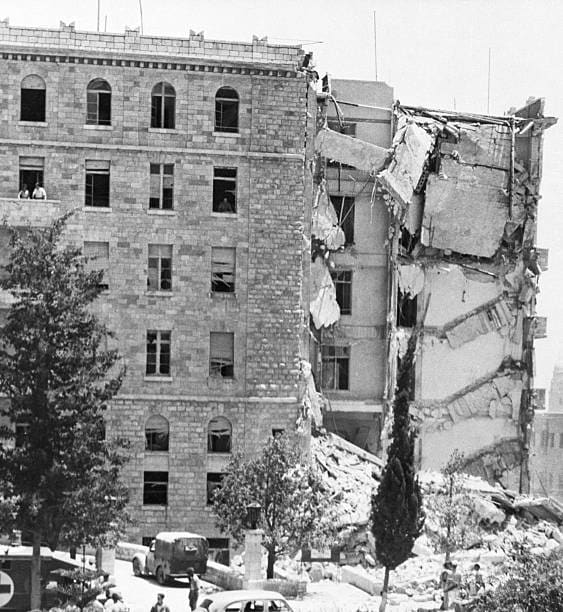
Churchill, in his speech, was forced to admit his feelings about the Mandate.
‘If in the Jewish movement or in the Jewish Agency there are elements of murder and outrage which they cannot control, and if these strike not only at their best but at their only effective friends, they and the Zionist cause must inevitably suffer from the grave and lasting reproach of the atrocious crimes which have been committed. It is perfectly clear that Jewish warfare directed against the British in Palestine will, if protracted, automatically release us from all obligations to persevere, as well as destroy the inclination to make further efforts in British hearts. Indeed, there are many people who are very near that now.’100
The terror continued. On 9 September, a British officer was killed in Jaffa, on 19 October, a British police inspector was shot dead in the main street of Jerusalem, on 30 October, a British constable was killed at a Jerusalem railway station, on 9 November, four British policemen were killed when a booby-trap bomb exploded in a home they were searching, on November 13, two British policemen were killed whilst patrolling the Jerusalem-Jaffa railway line, on November 17, four policemen were killed outside Tel Aviv when their truck was blown up and on 29 December, a British officer and three sergeants were kidnapped and flogged.
The intensity continued into the following year. On 3 January 1947, five British soldiers were wounded when mines blew up their jeeps. On 12 January, four people were killed in a bombing at the Police Headquarters in Haifa. On 27 January, Judge Ralph Windham was kidnapped by six Jewish terrorists from his court in Tel Aviv. He was released two days later.
Before the Palestine debate was set to take place on 31 January, it was announced by the government that during the past year Jewish terrorists had killed 45 British soldiers, 29 members of the British-manned Palestine Police Force, 63 Jewish civilians, 60 Arab civilians and 14 British civilians, two of whom were Jewish. Churchill, much to the disgust of public opinion, suggested in his speech that there should be no reprisals or even war with the terrorists:
‘The idea that general reprisals upon the civil population and vicarious examples would be consonant with our whole outlook upon the world of affairs and with our name, reputation and principles, is, of course, one which should never be accepted in any way. We have, therefore, very great difficulties in conducting squalid warfare with terrorists. That is why I would venture to submit to the House that every effort should be made to avoid getting into warfare with terrorists; and if a warfare with terrorists has broken out, every effort should be made – I exclude no reasonable proposal – to bring it to an end.’101
If the United States would not share the burden, Churchill said, then the mandate should be laid at the feet of the United Nations. Following this debate, the Labour Government decided to do exactly this. The Mandate was returned to the United Nations. Still, the Jewish terrorists did not stop. On 1 March, a bomb exploded in the Officers’ Club in Jerusalem, killing fourteen officers.
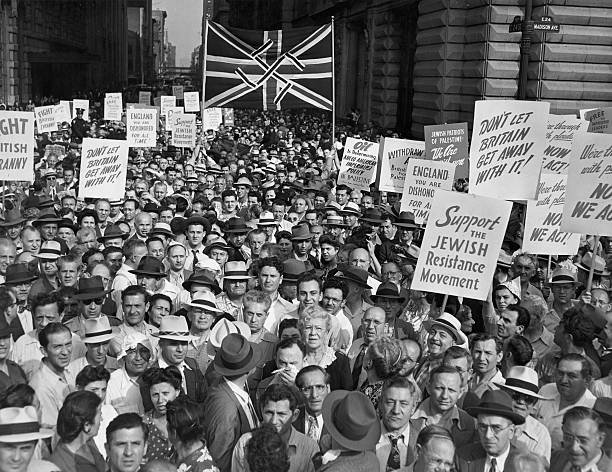
The Americans were equally as exasperated by the situation. Henry Morgenthau Jr, the Secretary of the Treasury, called President Truman on 21 July. The British were about to deport a ship full of Jewish illegal immigrants back to Europe and Morgenthau wanted to put pressure on the British. Truman wrote in his diary:
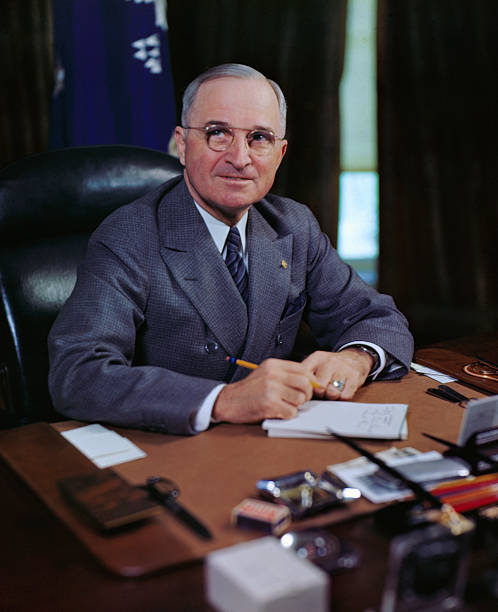
‘He’d no business whatever to call me. The Jews have no sense of proportion nor do they have any judgement on world affairs…
The Jews, I find are very, very selfish. They care not how many Estonians, Latvians, Finns, Poles, Yugoslavs or Greeks get murdered or mistreated as DPs [Displaced Persons] as long as the Jews get special treatment. Yet when they have power, physical, financial or political, neither Hitler nor Stalin has anything on them for cruelty or mistreatment to the underdog.’102
In a similar entry, Truman had written:
‘Put an underdog on top, and it makes no difference whether his name is Russian, Jewish, Negro, Management, Labor, Mormon, Baptist he goes haywire. I’ve found very, very few who remember their past condition when prosperity comes.’103
The Birth of Israel
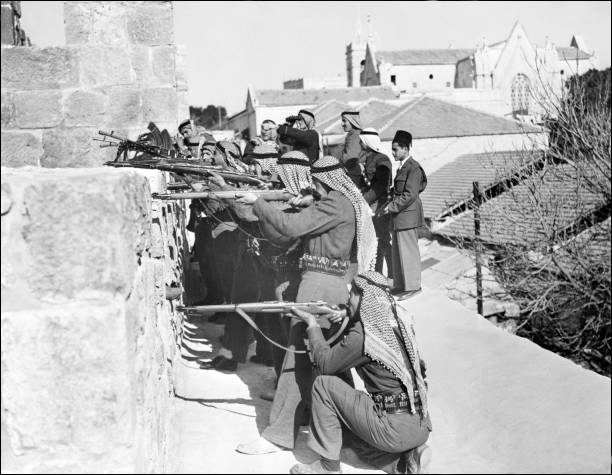
On 14 May 1948, the British Mandate came to an end. David Ben-Gurion proclaimed the independence of Israel. Both the Soviet Union and the United States immediately recognised the new Jewish state. Britain refused to do the same, and soon enough, the Middle East was on fire, with outside Arab forces rushing to the aid of the Palestinians. Amongst these forces were the Arab Legion, raised and trained in Jordan and led by British officers. Several hundred Jews were killed as the Legion overran the Jewish Quarter of Jerusalem. Churchill immediately disavowed the officers in the press and urged British impartiality. The officers were soon withdrawn.
The Jews were soon victorious on the battlefield, but Britain refused to recognise Israel. Churchill spoke in the House of Commons on 10 December on the matter:
‘The Jews have driven the Arabs out of a larger area than was contemplated in our partition schemes. They have established a Government which functions effectively. They have a victorious army at their disposal and they have the support both of Soviet Russia and of the United States. These may be unpleasant facts, but can they be in any way disputed? Not as I have stated them. It seems to me that the Government of Israel which has been set up at Tel Aviv cannot be ignored and treated as if it did not exist.’104
On 7 January, the Israelis did not particularly help matters as they shot down three British Spitfires which were flying on the Egyptian side of the Sinai border. One British pilot was killed. Labour held their ground, Churchill lamenting that ‘it is England that refuses to recognise it, and, by our actions, we find ourselves regarded as its most bitter enemies. All this is due, not only to mental inertia or lack of grip on the part of the Ministers concerned, but also, I am afraid, to the very strong and direct streak of bias and prejudice on the part of the Foreign Secretary…
I do not feel any great confidence that he [Bevin] has not got a prejudice against the Jews in Palestine.’105
Israel was granted de facto recognition by Britain on January 29, 1949, nine days after Churchill’s speech.
On 26 October 1951, the 76-year-old Churchill once more became Prime Minister. One of the first letters he wrote was to Dr Weizmann:
‘Thank you so much for your letter and good wishes. The wonderful exertions which Israel is making in these times of difficulty are cheering to an old Zionist like me. I trust you may work in with Jordan and the rest of the Moslem world. With true comradeship there will be enough for all. Every good wish my old friend.’106
On 17 January 1952, Churchill was in the United States addressing Congress:
‘From the days of the Balfour Declaration, I have desired that the Jews should have a National Home, and I have worked for that end. I rejoice to pay my tribute here to the achievements of those who have founded the Israelite State, who have defended themselves with tenacity, and who offer asylum to great numbers of Jewish refugees. I hope that with their aid they may convert deserts into gardens; but if they to enjoy peace and prosperity they must strive to renew and preserve their friendly relations with the Arab world, without which widespread misery might follow for all.’107
In 1953, there was trouble on the Israeli-Jordanian border. A Jewish mother and her two children were killed by Palestinian Arabs who had crossed the border, and so, in retaliation, Israeli Unit 101 massacred 69 Arabs in a Jordanian village. Most of the victims were women and children. Churchill refused to comment and distanced himself from calls by his fellow Conservatives to send troops at Jordanian request. This was a job for the United Nations, Churchill claimed, and, besides, the troops ‘might merely provoke Israel’.108 Churchill lamented to his doctor:
‘Now the Foreign Office wants a war with Israel!’109
On 31 March 1954, the British Cabinet drew up a plan for military assistance to Jordan in case of Israeli aggression. The plan would have involved the invasion of Israel from the south. This plan was not sent to the Jordanians, however, as a leak could have ‘very grave consequences’110 as Churchill remarked. The British opted for diplomacy, reminding the Israelis of their obligations to Jordan.
The Israeli Foreign Minister, Moshe Sharett, requested Britain to use its influence to stop the terrorist raids across the Jordanian border:
‘Through the clouds of the present local storms, we see far-reaching vistas of beneficient co-operation between Britain and Israel in culture and trade, in the advancement and defence of democracy, and in all creative achievement.’111
In February 1955, at the Commonwealth Prime Ministers’ conference, the matter of admitting Israel to the Commonwealth came up, a suggestion by James de Rothschild. Churchill wrote supportively to Anthony Eden: ‘This is a big question. Israel is a force in the world and a link to the USA.’112 To Sir John Schuckburgh, former head of the Arab Department of the Colonial Office, on the matter, he said: ‘Do not put that out of your mind. It would be a wonderful thing. So many people want to leave us; it might be the turning of the tide.’113
‘You ought to let the Jews have Jerusalem; it is they who made it famous.’114
Retirement
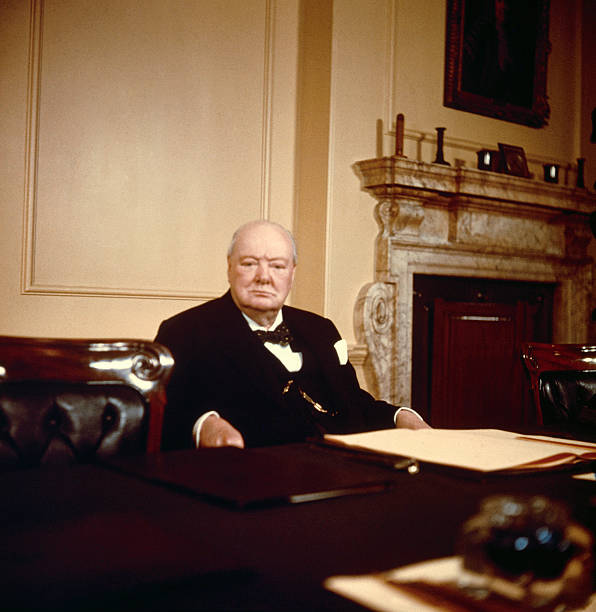
Churchill was overjoyed when it appeared that war was on the horizon between Britain and France on the one side, and Egypt on the other. President Nasser had nationalised the Suez Canal, and Churchill reckoned that ‘Britain and France ought to act together with vigour.’115
Chancellor of the Exchequer, Harold Macmillan, wrote in his diary of a dinner with Churchill on 5 August 1956: ‘I said that unless we brought in Israel it couldn’t be done. Surely if we landed, we must seek out the Egyptian forces, destroy them and bring down Nasser’s government. Churchill got out some maps and got quite excited.’116
When the news broke of the Israeli attack upon Egyptian forces in the Sinai, Churchill was over the moon:
‘I wish them well, and how I wish I were young again, to go to help them.’117
On 24 January 1965, Winston Churchill passed away at the age of 90. At a special meeting of the Israeli Knesset the following day, David Ben-Gurion eulogised him:
‘In his undaunted resistance and struggle against the Nazi Kingdom of hell, Churchill was the perfect combination of a great man at a great hour. He joined battle and he prevailed. The longed-for decision was not the result of one man’s war or the victory of a single nation. It was not through him alone that the sons of light prevailed against the sons of darkness. Nevertheless, this one man was a symbol and a catalyst, a focal point of hope and a kingpin of forces in the struggle of giants. As far back as the beginning of the century, Sir Winston Churchill supported the cause of Zionism. Thirteen years later he spoke on Mount Scopus of a free and sovereign state, one that would be unconquerable. Churchill belonged to the entire world. His memory will light the way for generations to come in every corner of the globe.’118
Harry Sacher, one of the British Zionist drafters of the Balfour Declaration wrote in the Jewish Chronicle on 29 January:
‘We Jews are under a special obligation to Churchill, the faithful friend of Zionism. For the MacDonalds, Zionism was a fantasy to be indulged when undemanding and to be betrayed when expedient. For Chamberlain it was an exotic irrelevance to be cast away in a diplomatic deal. For Bevin it was an unofficial strike to be crushed by a trade union boss. For Churchill it was the magical revival of a nation which had seen so many empires crumple to dust, which had persisted through so many trials and humiliations, which had renewed its ancient creative vitality and from which mankind might hope no little. It was characteristic that he called upon his countrymen to conceive the establishment of the State of Israel in the perspective of thousands of years. No petty calculation of ephemeral diplomatic loss or gain drew him to Zionism; for him it belonged to the great tide of history.’119
Preface
p3
p4
Ibid
p7-8
p9
Ibid
Ibid
p10
p16
p11
p14
p15
p29
p31
Ibid
p34
p35
p37
p38
Ibid
p42
p55
Ibid
p57
p81
p86
p92
Ibid
p94
Ibid
p99
Ibid
Ibid
p103
p109
p121
Ibid
Ibid
p123
p131
p136
p146
p146-147
p147
Ibid
p155
p156
Ibid
p157
p161
p163
Ibid
p164
Ibid
p165
Ibid
Ibid
p166-167
p171
Ibid
p179
p181
p184
Ibid
Ibid
p190
Ibid
p196
Ibid
p197
Ibid
p202
p204
Ibid
Ibid
p205
Ibid
p209
p212
p217
Ibid
Ibid
p223
p225
Ibid
Ibid
p225-226
p226
p227
p229
Ibid
p246
Ibid
Ibid
p248
p251
Ibid
Ibid
p259
p262
p265-266
p266
p273
p275
p282
Ibid
p287
Ibid
p289
Ibid
p292
Ibid
Ibid
p295
p295-296
p299
p306
Ibid
Zoomer HistorianRead More








 T1
T1