This video is available on Rumble, Bitchute, Odysee, Telegram, and X.
Why do people visit Rome? To see old things. There are the wonders of ancient Rome, and there are the wonders of the Italian Renaissance. What, though, have the Italians done lately?
You could ask the same of the Greeks, the Spaniards, the British, the French. What have they done for us lately? The last time the French tried to build something exciting, we got a modern art museum called the Pompidou Center.
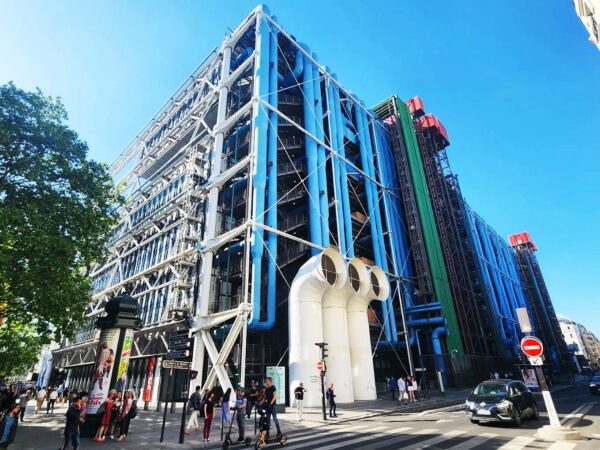
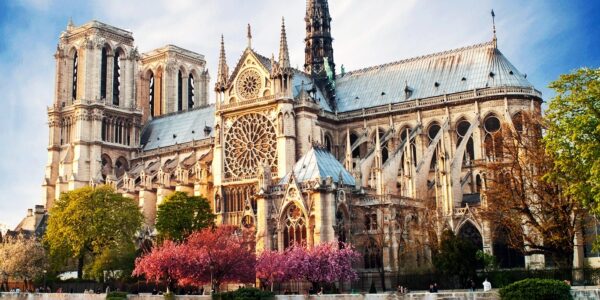
Does that really compare with a different building the French finished 700 years ago — without anything but human muscle and animal power?
Can’t say much for Americans either. Here’s a nice building and it’s impressive inside, too, but it’s 160 years old, and when’s the last time you saw a beautiful new building?

Italians were top of the heap twice. First, the ancient Romans accomplished astonishing things. This aqueduct, in the south of France, built from 40 AD to 52 AD, carried 11 million gallons of water a day for 31 miles to the Roman colony of Nimes.
Benh LIEU SONG (Flickr), CC BY-SA 3.0, via Wikimedia Commons
The stones are so carefully cut, they fit together perfectly, without mortar.
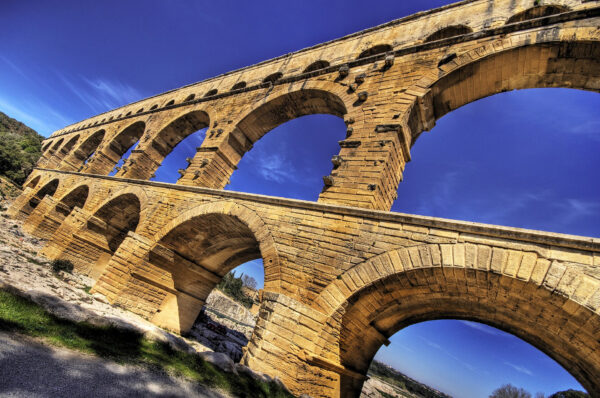
Wolfgang Staudt, CC BY 2.0, via Wikimedia Commons
In some places, the aqueduct drops only about a quarter of an inch every 100 yards, to keep the water flowing. Here is the inside, which carried water for five hundred years.
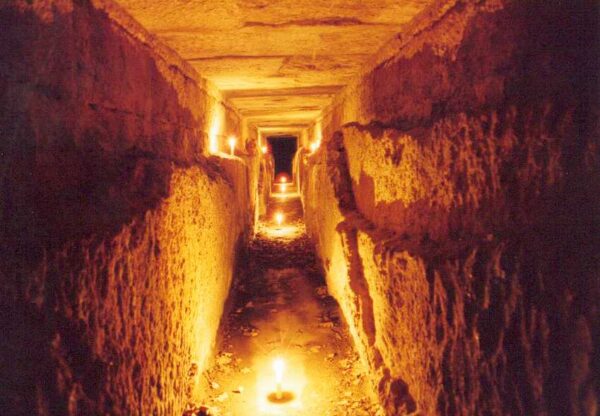
Édouard BERGÉ, CC BY-SA 3.0, via Wikimedia Commons
This is the end point in Nimes. The large round holes carried water to public fountains and baths, and to private homes.
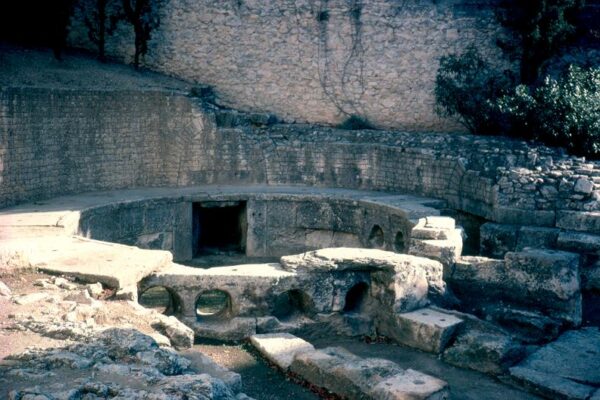
Credit: Ncadene~commonswiki via Wikimedia Commons, CC BY-SA 3.0
Water would still be flowing if the aqueduct had been maintained.
And the Colosseum. As you can see, it’s not what it used to be, but that’s not because it fell down.
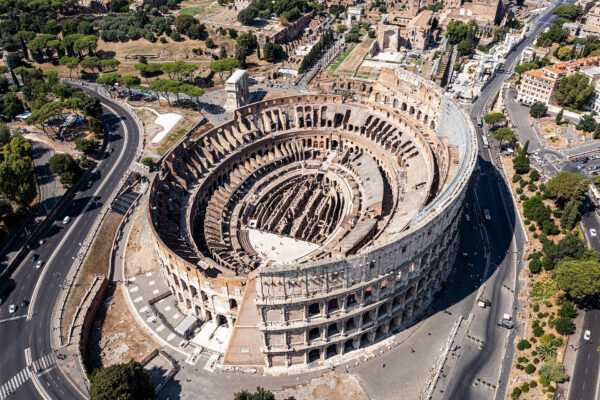
It would have been in just as good shape as the aqueduct, if it hadn’t been used as a quarry. A thousand years later, to make St. Peter’s Basilica, workers hauled off 2,500 cartloads of stone from the Colosseum.
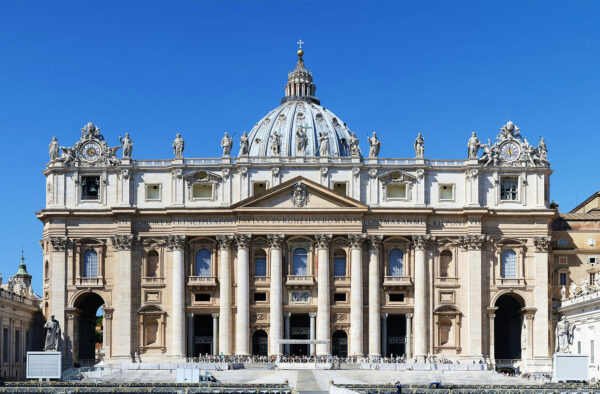
Alvesgaspar, CC BY-SA 4.0, via Wikimedia Commons
Without that pillaging, the amphitheater would look pretty much the way the Romans built it, complete with a colossal bronze statue of Emperor Nero outside, from which the Colosseum takes its name. I bet you don’t know what those poles along the top edge were for. Believe it or not, they were masts to support a huge awning that covered the seating area to protect spectators from the sun.
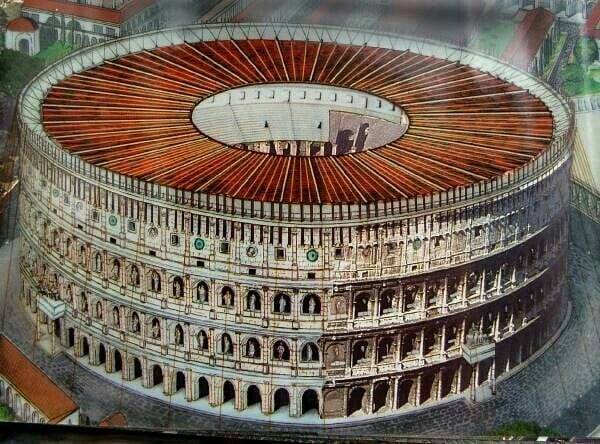
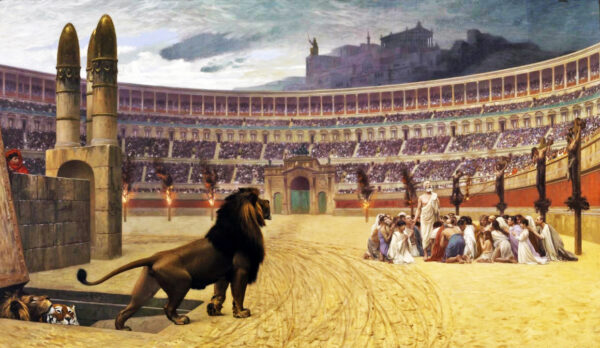
Wild animals popped out of trapdoors to fight gladiators or eat Christians. You know how?
Here’s a reconstruction of a wooden elevator that took them up to the arena.
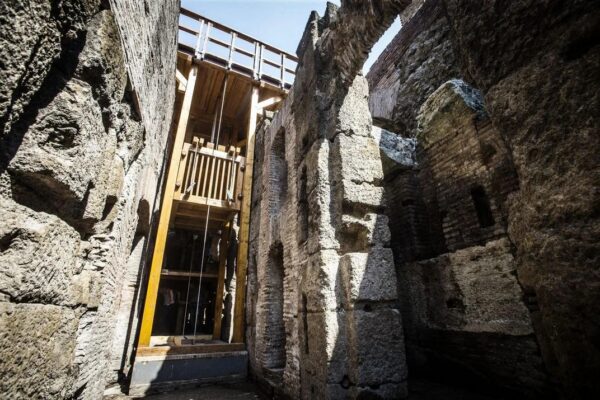
Workers operated a system of winches ropes, pulleys, and lead weights, and could lift 600 pounds.
Rome degenerated as it absorbed Oriental slaves and merchants. Vandals and Visigoths sacked the city in 410 and 455 AD.
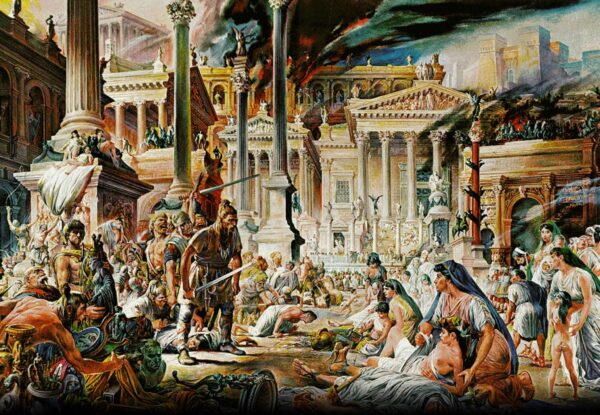
Later, more Europeans — Normans and Lombards — moved into the peninsula, and Italy had its second period at top of the heap.
There are thousands of names associated with the Renaissance, but I’ll concentrate on Bernini, a 17th-century sculptor, architect, and all-round genius. This is a self-portrait.
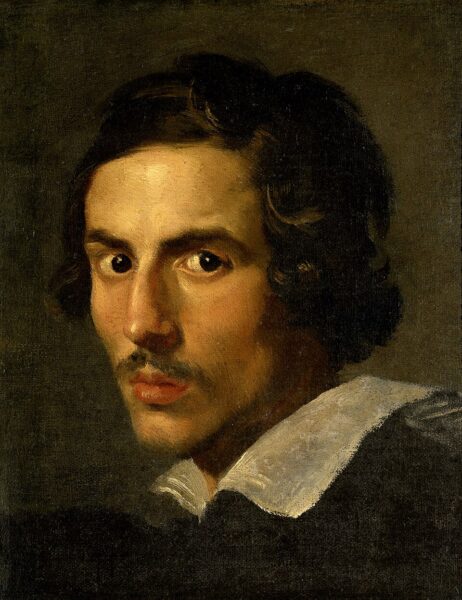
He was one of the master architects of St. Peter’s Basilica, and designed the huge columns that encircle the square. But his sculptures, along with the former princely buildings in which they are displayed, are especially dazzling.
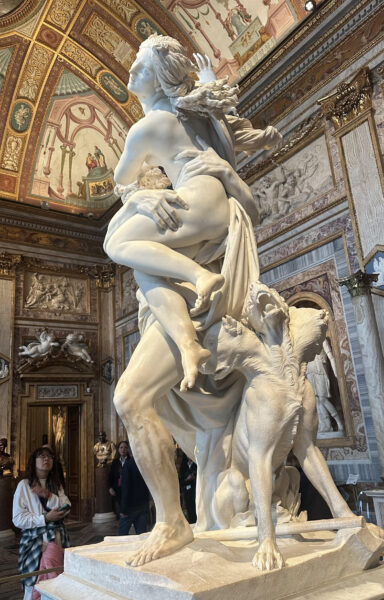
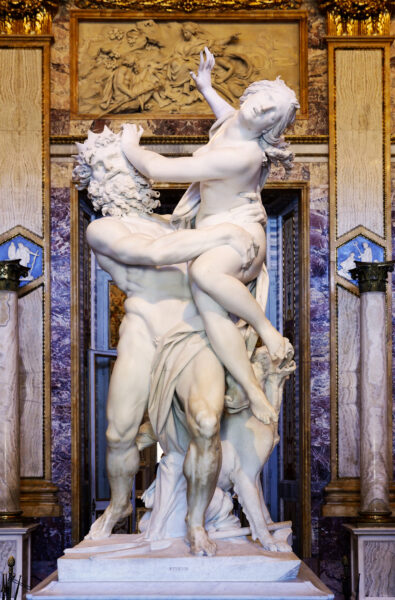
This is the Rape of Persephone, and look how realistically the man’s fingers dig into the woman trying to fight him off.
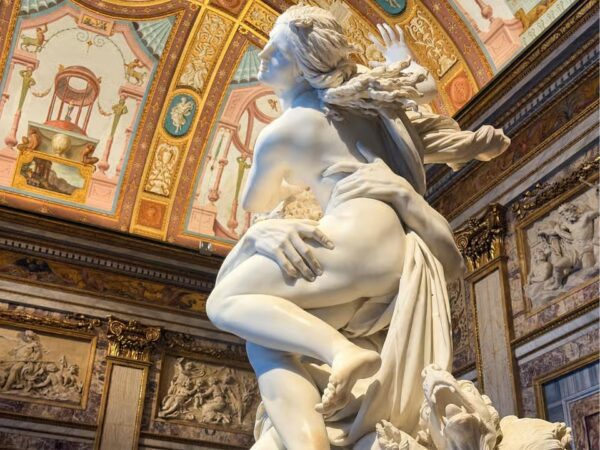
Here you can see the abductor, Pluto, with his three-headed dog Cerberus in the lower right.
Here’s another abduction. Love-sick Apollo is chasing Daphne, who can’t stand him.
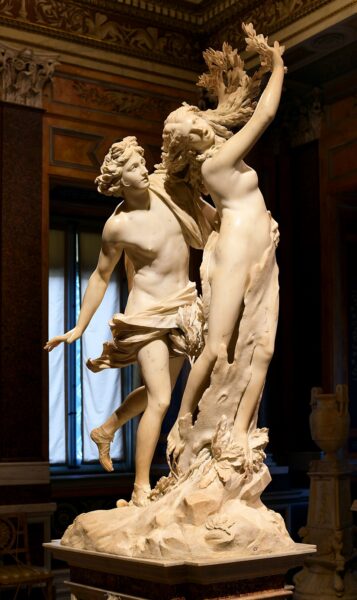
Credit: Gian Lorenzo Bernini, CC BY-SA 4.0, via Wikimedia Commons
Daphne escapes by turning into a laurel tree, as you can see from the bark and foliage growing from her legs.
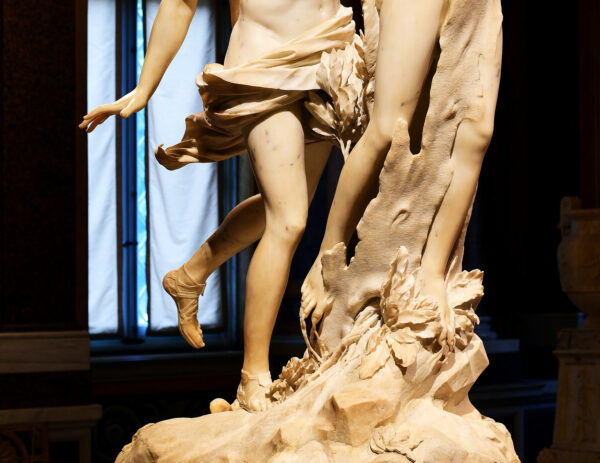
And here are laurel leaves sprouting from her hands, and the incredible detail of her hair.
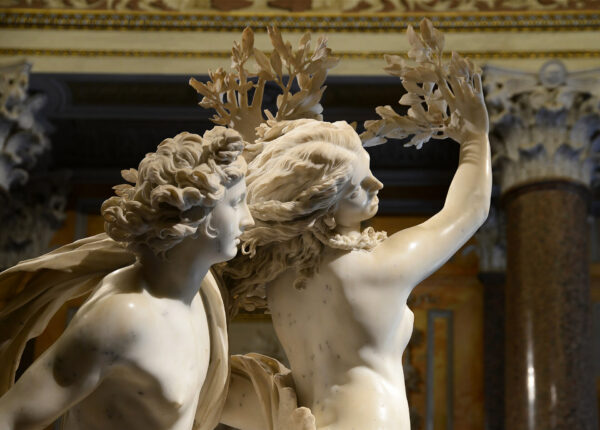
Galleria Borghese, CC BY-SA 4.0, via Wikimedia Commons
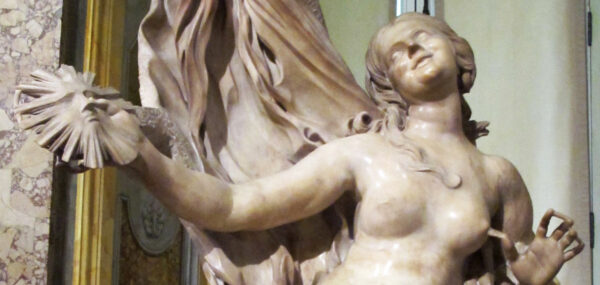
Bernini was an admirer of the female form. This is “Truth Unveiled by Time.”
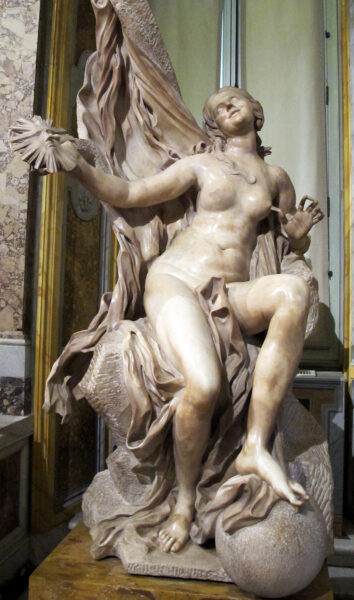
Gian Lorenzo Bernini, CC BY 3.0, via Wikimedia Commons
Father Time was originally going to be lifting her drapes, and as you can see, she is delighted to have the undraped truth revealed for all to understand.
Bernini liked real women, too, and this is one of his girlfriends, Costanza Bonarelli.
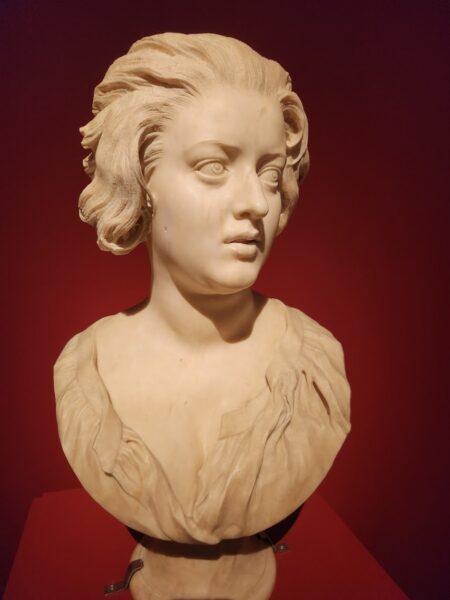
She was the newly-wed wife of one of his workmen, but he seduced her anyway. When he learned that his little brother Luigi was also enjoying her charms, Bernini attacked him with a crowbar and nearly killed him. As for Costanza, Bernini ordered a servant to find her and carve up her face, so she would no longer be attractive to any man, a punishment known as sfregio. Her biographer says she was exiled to a convent as an adulterer, but came back and was a successful art dealer.
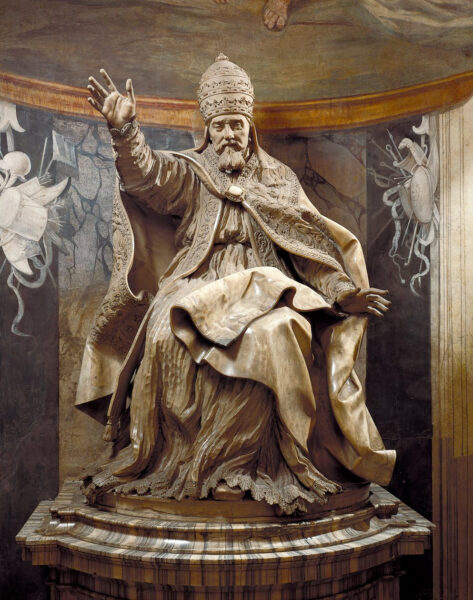
Pope Urban VIII — here sculpted by Bernini — who was a pal, got him off with a heavy fine and told Bernini to settle down.
He did, with a beautiful woman 19 years his junior, who gave him 11 children.
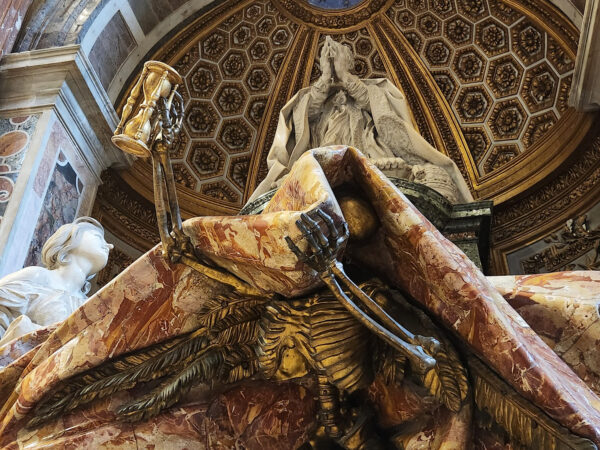
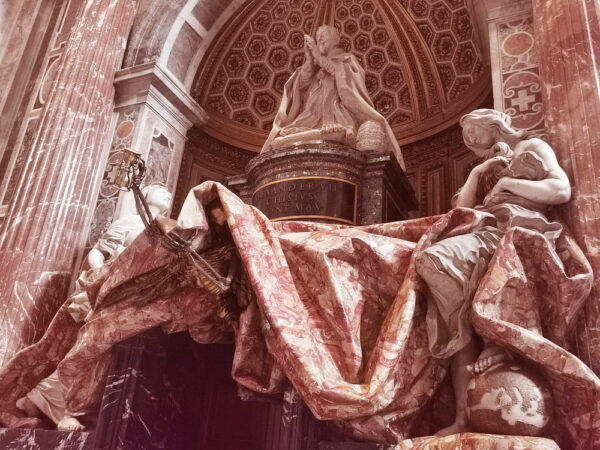
Here is Bernini’s monument to Pope Alexander VII in St. Peter’s.
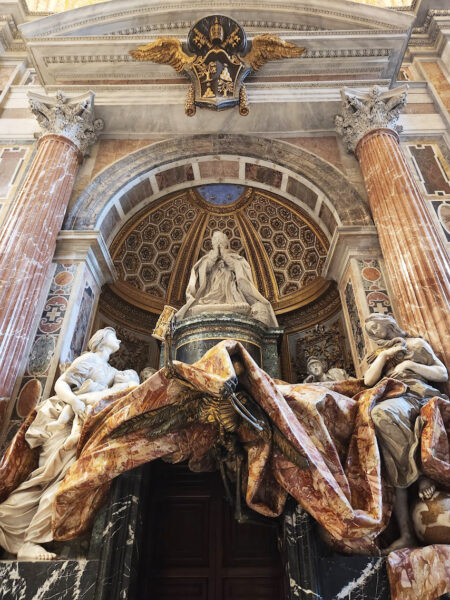
Look what’s coming out from under those marble folds: a winged image of death, waving an hourglass, reminding us that even popes must die.
To the right is an allegorical statue of truth, with her foot on a globe — also draped in red Sicilian marble.
And Bernini was just one guy. Here’s a bust of Michelangelo’s nephew, by a sculptor you never heard of named Giuliano Finelli.
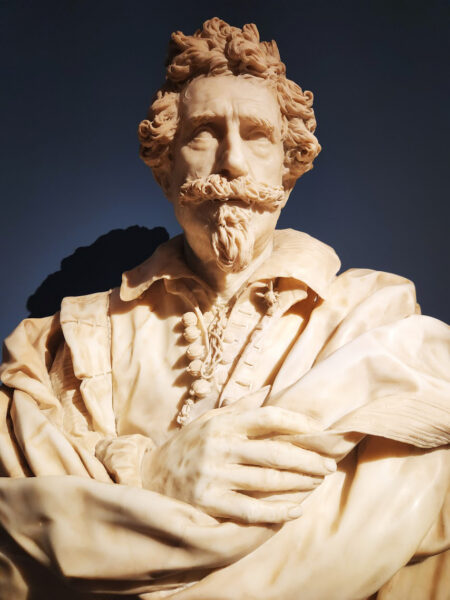
But look at the incredible detail of the laces at his throat. This is stone. Marble.
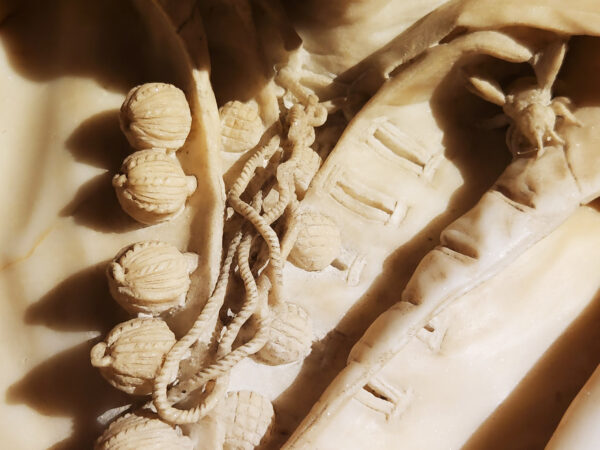
And in the upper right you can see a fly that Finelli carved in as a little joke.
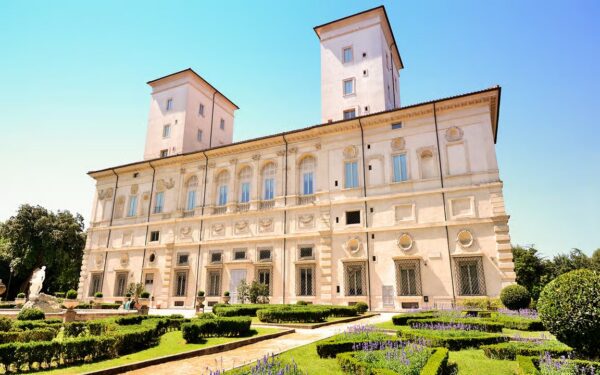
These beautiful pieces are exhibited in beautiful places. This is a room in the suburban villa that Cardinal Scipione Borghese had built in 1620.
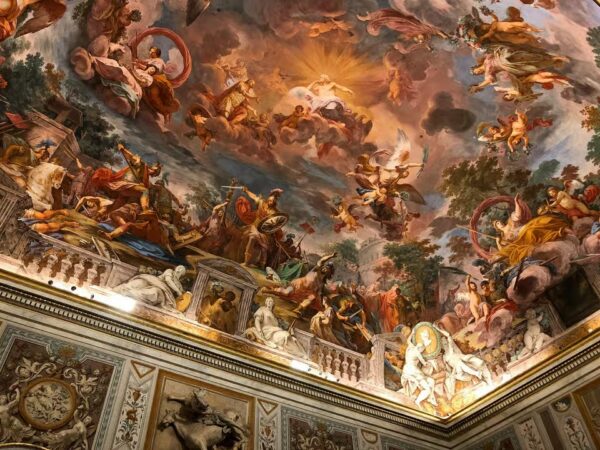
It contains one gorgeous room after another, all with astonishing works of art.
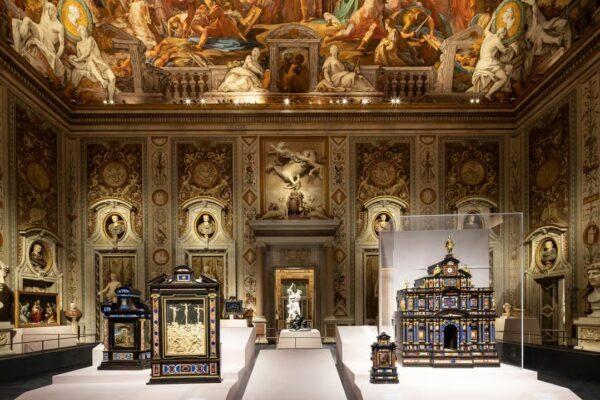
Here is another room with a painted ceiling, and let’s zoom in on a group in the center.
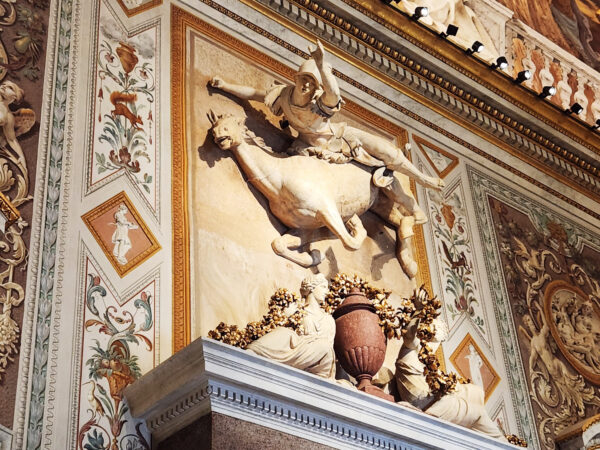
I’ve never seen anything like this: a horse and rider almost flying off the wall.
The Borghese villa is now a museum owned by the Italian government.
This, however, is still the private home of the Pamphili family, which acquired it in 1647.
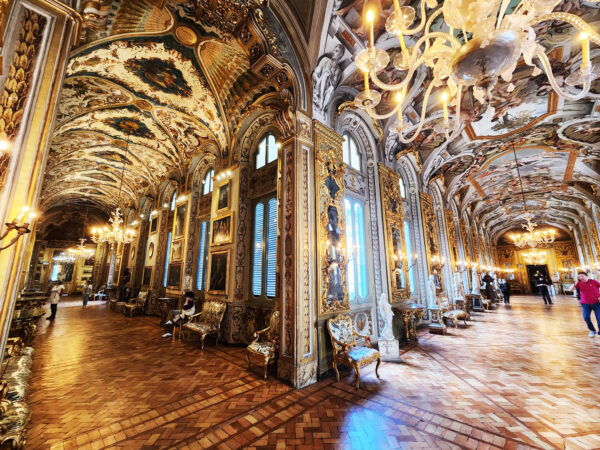
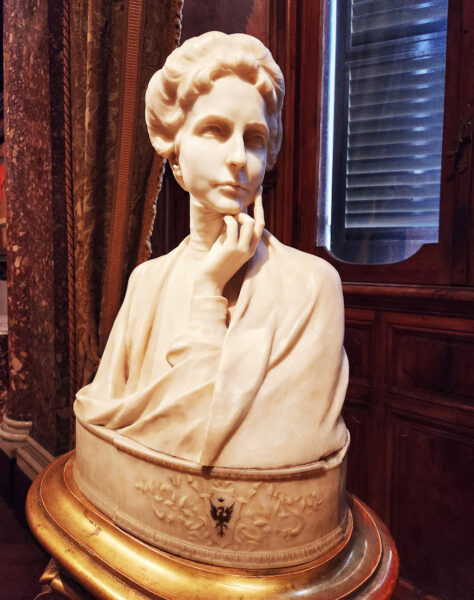
The current prince, Jonathan, lets visitors admire the family chapel as well as the countless artworks, including this charming bust of his 20th-century ancestress, Princess Emily.
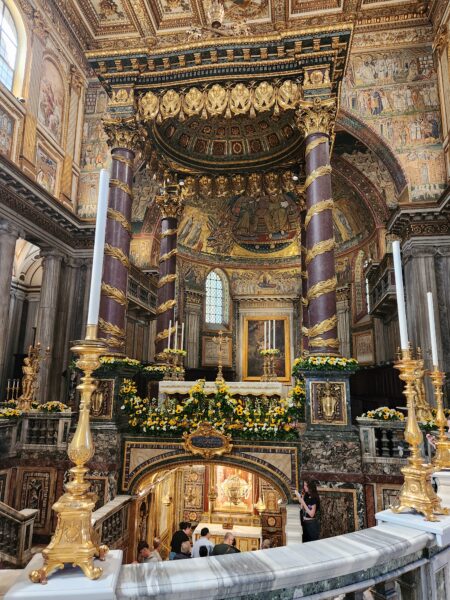
Renaissance Rome has no end of beauty. This is the Basilica of Santa Maria Maggiore. Both Bernini and Costanza are buried in Santa Maria.
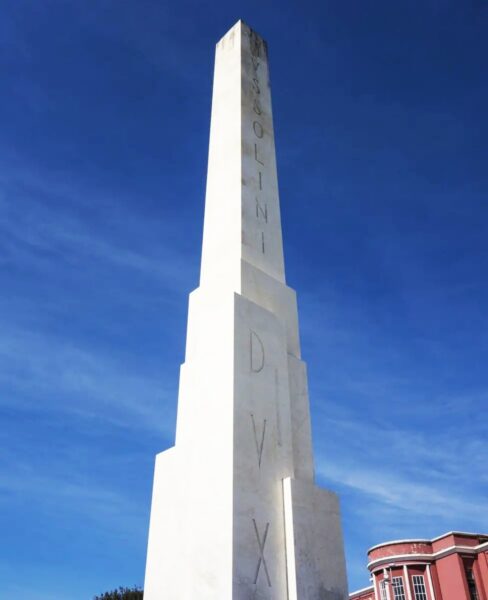
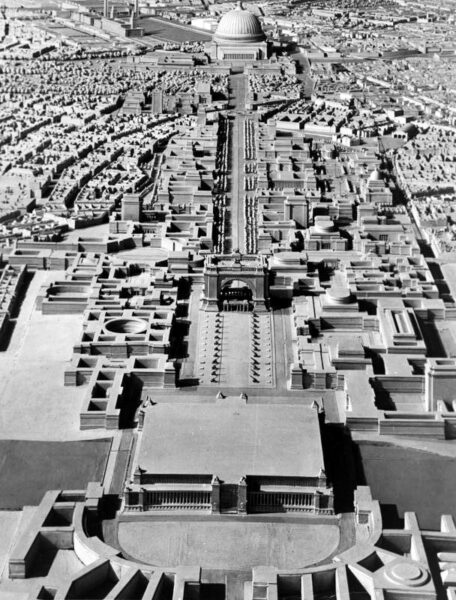
And this brings me back to the question: What have Europeans done for us lately? What happened to their ambition? It’s true that Benito Mussolini and Adolph Hitler had big plans to rebuild their capitals in heroic style. Il Duce put up this obelisk with his name on it and Hitler’s architect, Albert Speer, had grand ideas for Berlin, but all that went nowhere.
What is — or could be — our equivalent of a Bernini sculpture or the architecture of even what passes for a “minor basilica” in Rome: Santi Silvestro e Martino ai Monti?
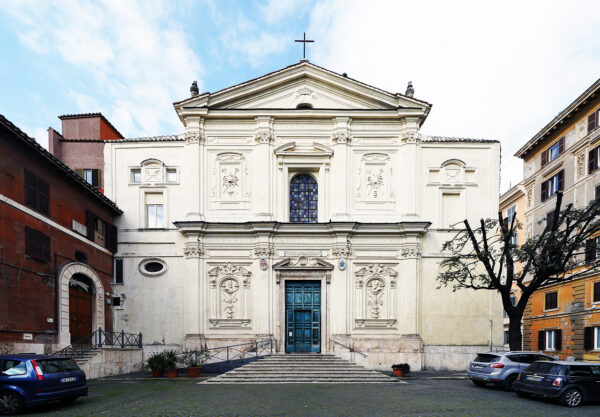
Credit: NikonZ7II, CC BY-SA 4.0, via Wikimedia Commons
Look at this. Is anyone in the West trying to build something that will dazzle people 400 years later the way Santi Silvestro dazzles us today?
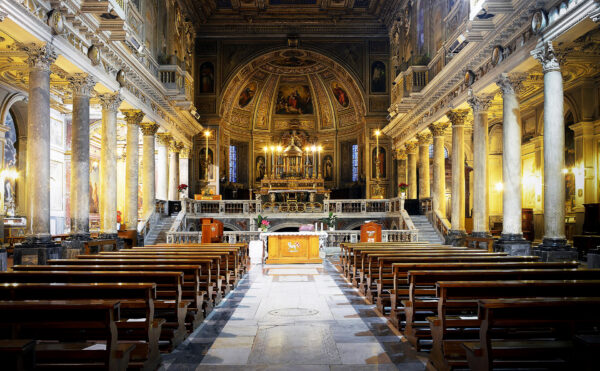
Credit: Livioandronico2013, CC BY-SA 4.0, via Wikimedia Commons
Do you think Jeff Bezos will leave behind a house as magnificent as the Borghese home? Elon Musk at least wants to go to Mars, but I don’t think he’s doing much for us earth-bound folks.
About the only Borghese-class billionaire I can find is Stephen Schwarzman, CEO of Blackstone, who bought a 100-year-old Newport, Rhode Island mansion called Miramar and plans to restore it, fill it with art, and leave it as a museum when he dies.
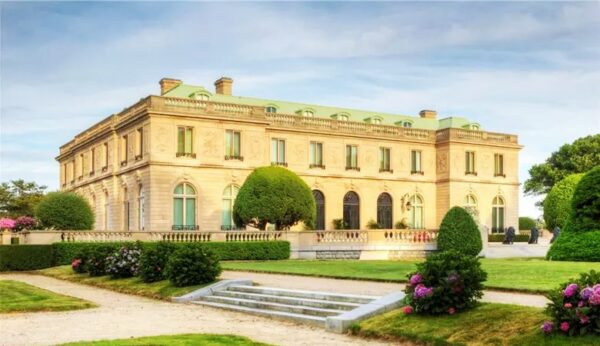
Good for him. But it will be full of old stuff. Why aren’t we making wonderful new things?
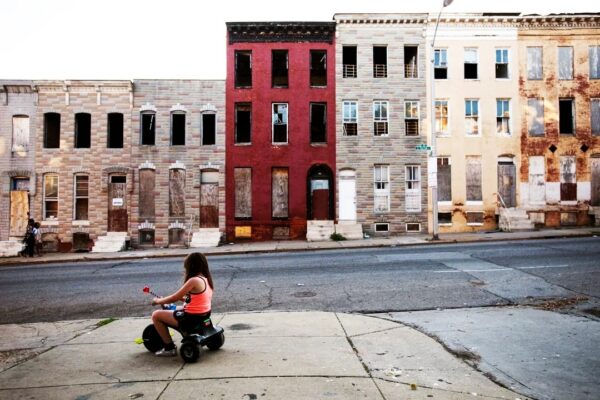
Because our priorities are different. We’re so busy trying to salvage the low end of the bell curve, we pretend there is no high end. Welfare loots productive people to subsidize louts and gives us headlines like this: “The three men who have fathered 78 children with 46 different women… and they’re not paying child support to any of them.” We have populations that can’t maintain buildings, much less build new ones.
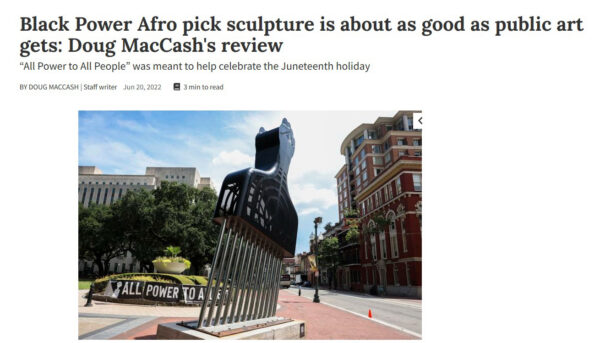
We live in a country in which “Black Power Afro pick sculpture is about as good as public art gets.”
Our race has a glorious past. The evidence is everywhere We are still the same people with the same potential for genius and greatness. It’s a matter of pride and a matter of will. I’m convinced we still have it in us.
The post What Have We Done Lately? appeared first on American Renaissance.
American RenaissanceRead More






 T1
T1