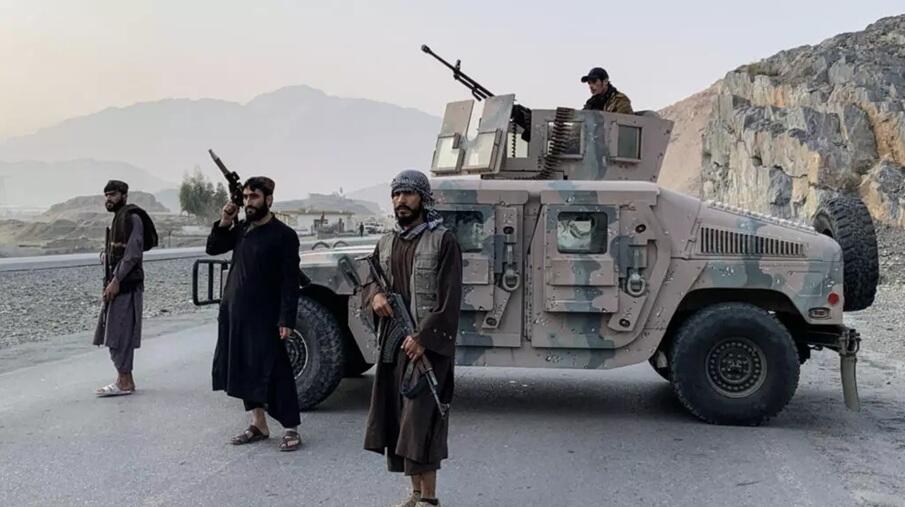
Pakistan Declares ‘All-Out War’ Against Afghanistan, Hundreds Dead In Overnight Clashes With Taliban
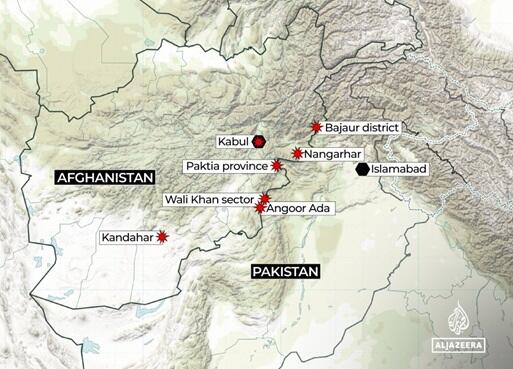
Overnight, Pakistan launched airstrikes across Afghanistan, including targets in the capital of Kabul, soon after which Pakistan’s Defense Minister Khawaja Asif by Friday morning declared an “all-out war” between the two countries.
Hours prior to the commencement of airstrikes and heavier clashes, Afghan Taliban forces reportedly attacked Pakistani border troops Thursday night in retaliation for Pakistani airstrikes earlier in the week.
A Pakistani military spokesman has said that 274 Taliban fighters have been killed and more than 400 injured by Pakistani strikes, adding that 74 Taliban posts were destroyed and 18 captured – and counting.
The Taliban for its part has said that 55 Pakistani soldiers were killed and 19 posts seized. Kabul have acknowledged Taliban fighters killed, 11 wounded, and 13 civilians injured in the mountainous northwest border region where the line of fighting is concentrated.
Since the Taliban returned to power in 2021, relations between Afghanistan and Pakistan, which share the disputed 1,600-mile Durand Line, have shifted from cautious engagement to open hostility. The history has been marked by shifting from one-time allies to on-and-off again enemies. Many analysts are pointing to ‘blowback’ for Pakistan after sponsoring the Taliban’s rise in the first place, decades ago (which also had the help of the CIA in ‘Operation Cyclone’).
Islamabad accuses Afghanistan of sheltering Tehrik-i-Taliban Pakistan (TTP) militants who carry out cross-border attacks.
Analysts say the latest escalation marks the first time Pakistan has directly targeted Taliban government sites, or essentially going all out against Kabul, rather than limiting strikes to alleged TTP positions.
Pakistan has said its forces have taken out a number of tanks and armored vehicles, as well as artillery positions. The Taliban relies on equipment left behind and confiscated after US and NATO forces rapidly withdrew from the country in the summer of 2021.
Pakistan has struck Kabul and declared it’s in an ‘open war’ with Afghanistan, after Islamabad accused the Afghan Taliban of opening fire along the shared border.
The fighting follows days of hostilities, despite a ceasefire agreement in October. pic.twitter.com/uQO1NT4H9f
— Al Jazeera English (@AJEnglish) February 27, 2026
It remains that Pakistan’s army has total force domination; however, the Taliban can still inflict pain through acts of terrorism, which Pakistani cities have suffered immensely under.
Acts of terror by Islamist groups have become almost a regular occurrence in Pakistan – with many suspected of having support through Afghanistan. For example, we reported on this major incident just weeks ago as follows:
At least 31 people were killed and 169 others injured on Friday when a suicide bomber struck a Shia mosque on the outskirts of Islamabad during Friday prayers, Pakistani officials said, in one of the capital’s deadliest attacks in over a decade.
The blast happened in the Khadija al-Kubra Imambargah mosque in the outskirts of Islamabad, with police saying the attacker had been stopped at the mosque gate before opening fire and setting off explosives among worshipers, according to officials cited by Reuters.
As for how the warring sides compare, regional publication Al-Monitor lays out the following:
Pakistan’s armed forces benefit from good recruitment and retention, bolstered by equipment from its main defense partner China. Islamabad continues to invest in its military nuclear programs and is also modernizing its navy and air force…
Pakistan has 660,000 active personnel in its defense forces, of whom 560,000 are in the army, 70,000 are in the air force, and 30,000 are in the navy.
The strength of the Afghan Taliban’s military is thinner, with only 172,000 active personnel. The group has, however, announced plans to expand its armed forces to 200,000 personnel.
The Taliban’s international isolation has meant that it cannot modernize its military – but still, there have been reports of drone usage against Pakistan positions.
As is typical, Pakistan points the finger at Israel and India for fomenting instability in the region:
“I think we must not miss out at this point the timing of this attack by Afghanistan. If you look at the visit of Indian PM Narendra Modi to Israel, it will be easier for you to connect the dots and understand that who is behind these attacks.” – Foreign affairs expert Dr Hassan… pic.twitter.com/uGjwMADETA
— Pakistan TV (@PakTVGlobal) February 27, 2026
Taliban authorities said their forces carried out drone strikes against military targets inside Pakistan as clashes between the two countries continued, according to statements from the defense ministry and a government spokesperson on Friday.
Pakistan’s Information Minister Attaullah Tarar said Pakistani Taliban militants attempted to deploy drones against targets within Pakistan, but air defense systems intercepted them and no casualties were reported.
Overall, Pakistan is experiencing some serious blowback for its years-long policies… Sky News’ Yalda Hakim points out that “Pakistan spent decades backing and sheltering the Afghan Taliban – its defense minister acknowledged that to me on camera. Now it says Taliban-ruled Afghanistan is providing sanctuary to militants attacking Pakistan. The consequences are unfolding in real time.”
Tyler Durden
Fri, 02/27/2026 – 11:25ZeroHedge NewsRead More








 T1
T1