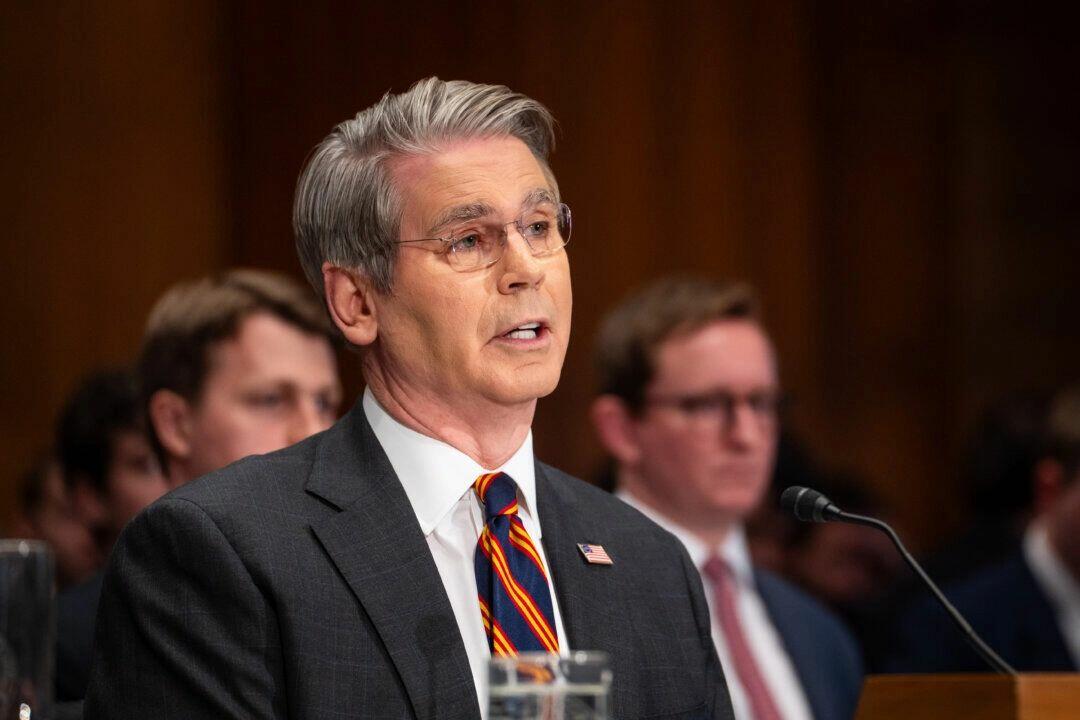
Watch: Bessent Teases ‘Series Of Announcements’ To Stabilize Oil; Says Trump’s 15% Tariff Will Kick In This Week
Authored by Andrew Moran via The Epoch Times (emphasis ours),
President Donald Trump’s 15 percent global tariff will take effect sometime this week, Treasury Secretary Scott Bessent said.
Following the Supreme Court’s rebuke of the president’s signature economic policy last month, Trump imposed a 10 percent global tariff, invoking Section 122 of the Trade Act of 1974. A day later, Trump pledged to raise the rate to 15 percent.
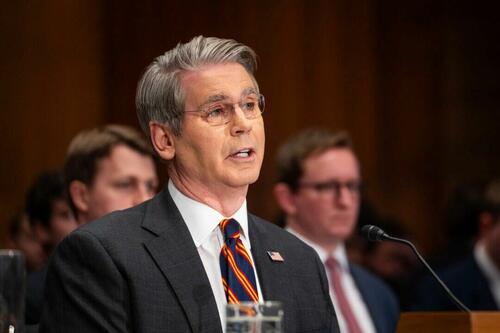
In an interview with CNBC’s “Squawk Box” on March 4, Bessent confirmed that the new rate would be introduced sometime this week and remain in place for 150 days.
He also anticipates tariff rates would return to the levels that were in place before the high court’s decision.
“It’s my strong belief that the tariff rates will be back to their old rate within five months,” Bessent said.
“They have survived more than 4000 legal challenges. They are more slow moving, but they are more robust.”
Bessent says the global tariffs will be raised to 15% “likely sometime this week,” and adds “it’s my strong belief that the tariff rates will be back to their old rate within 5 months” pic.twitter.com/jBwAcrhf9C
— Aaron Rupar (@atrupar) March 4, 2026
Bessent’s comments come two days after a U.S. federal appeals court rejected the president’s effort to postpone legal proceedings connected to tariff refunds, sending the battle to a lower court.
Estimates suggest the federal government’s tariff refunds could total $175 billion.
Fiscal year-to-date, the administration’s tariffs have generated more than $150 billion, according to Treasury data as of March 2.
Oil Announcements Coming
Global energy markets have been highly volatile since the Iran War, with crude oil and natural gas prices rocketing on fears of supply disruptions.
The president calmed down the oil market on March 3.
In a Truth Social post, Trump said the White House would offer naval escorts and guarantee political risk insurance for commercial oil and gas tankers traveling through the Strait of Hormuz.
The Strait of Hormuz is a vital global chokepoint that handles approximately 20 million barrels of oil and petroleum products per day. It has effectively been shuttered as insurance companies canceled coverage or dramatically raised premiums.
But the administration will make additional announcements to help stabilize prices, Bessent said.
“We have a series of announcements that we’re going to be making,” Bessent stated.
“We began yesterday with the announcement that [Development Finance Corporation] will provide the insurance for both the crude carriers and the cargo ships operating in around the Gulf over the weekend.”
He shrugged off a possible energy shock as the Middle East conflict intensified, saying that the United States and the global marketplace maintain ample supplies.
Bessent: “Over the weekend, Lloyd’s of London nullified the insurance, so the US government is going to step in and provide safe passage through the straits for the oil tankers” pic.twitter.com/ItR5vFSQDG
— Aaron Rupar (@atrupar) March 4, 2026
“This was a well telegraphed geopolitical event. The crude market had already moved substantially over the past two months. The crude markets are very well supplied,” Bessent said.
A barrel of West Texas Intermediate—the U.S. benchmark for oil prices—fell by about 0.5 percent in pre-market trading to around $74 on the New York Mercantile Exchange.
Brent—the international benchmark—was little changed at slightly above $81 a barrel on London’s ICE Futures exchange.
“Oil prices retreated after news the U.S. will ensure safe passage through the Strait of Hormuz, easing fears of a major global supply shock,” Adam Turnquist, chief technical strategist for LPL Financial, said in a note emailed to The Epoch Times.
“Softer oil prices are also helping cool inflation concerns and pull interest rates lower.”
Market watchers had warned that the risk of oil prices reaching $100 were high if the narrow waterway were closed for an extended period.
U.S. stocks also rebounded midweek, with the leading benchmark averages in the green prior to the opening bell.
The blue-chip Dow Jones Industrial Average crashed by as much as 1,200 points on March 2 before paring most of its losses. The tech-heavy Nasdaq Composite Index also fell by about 400 points before trimming its decline. The broader S&P 500 had also fallen by around 1 percent.
Tyler Durden
Wed, 03/04/2026 – 11:00ZeroHedge NewsRead More








 T1
T1