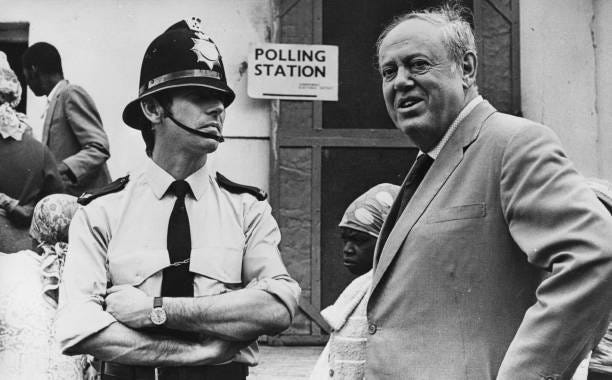
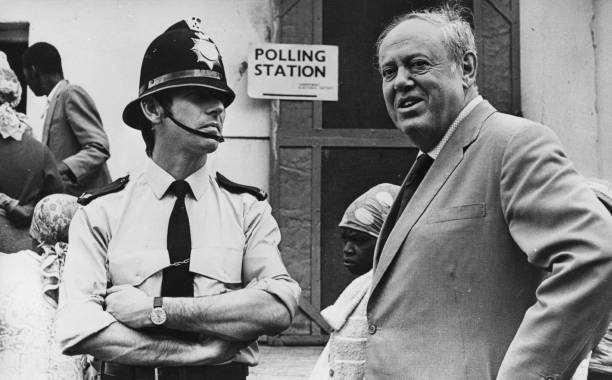
On 12 December 1979 Lord Soames arrived in Rhodesia to take up his new temporary role as Governor. Very few Rhodesians turned up to meet him with their Union Jacks. Former Prime Minister Ian Smith wrote of those who did:
‘The same old bunch of starry-eyed liberals who had always been petrified at the thought of standing alone in this world. They now heaved a sigh of relief at once more being able to cling on to the mother country’s apron strings. At the same time, they were busy fawning over those whom they believed would be their future masters. It is pertinent to note that over the next few years many of them packed their bags and departed, complaining that they could no longer live in the country – conditions had deteriorated at such an alarming rate.’1
Naturally, Muzorewa and his cabinet ministers were also in attendance to meet Soames, minus Smith, who chose to stay home to have lunch with his wife.
Soames’ arrival had been a long time coming. Negotiations between the British Government and Rhodesia had begun almost as soon as the little self-governing colony took the plunge and declared UDI on 11 November 1965. Since then, there had been the failed talks on board HMS Tiger and HMS Fearless with Labour Prime Minister Harold Wilson. After the failure of Fearless, Rhodesia, perhaps imprudently, adopted a new Constitution which waved goodbye to any prospect of majority rule and instead brought in the concept of parity. The African could now, as his contribution to the national revenue via direct income tax grew (in 1969 Africans contributed half a per cent), gain more seats in Parliament and eventually be equal to the White man, but not above him. The electoral rolls were now to be racially segregated, too.
This at the time, was seen as the Rhodesians crossing the Rubicon and essentially severing their ties with Britain once and for all. For good measure, the monarchy was dumped and Rhodesia became a Republic. Any chance of further talks with the mother country now seemed inconceivable. Rhodesia was going it alone.
This, however, turned out not to be the case. In 1970 the Conservatives came to power in Britain and Foreign Secretary Alec Home began a series of discreet talks with Ian Smith. The two eventually met face to face and, on 24 November 1971, an agreement was made with very generous terms for Rhodesia. All that was left was the test of acceptability. The British were to go around and put the terms to the African population and ask them if they accepted or not. Smith viewed this as nothing but a formality.
The British, however, quickly began to drag their feet. It took months for the commission to even arrive, and, in the meantime, the African Nationalists simply intimidated their own people into saying ‘no’ to whatever they were asked, resulting in some ridiculous conversations. Despite the intimidation, things didn’t seem to be going too badly once the commission actually arrived, but then suddenly everything changed. Back in Britain, Prime Minister Heath needed support from the Liberal Party if he was to join the EEC. A deal was struck and Rhodesia, which the Liberal party detested, was to be the sacrifice. The commission conveniently found that the agreement between Britain and Rhodesia was not acceptable to the African population and Rhodesia was left in the lurch.
Seven years of bitter warfare and attempts at internal negotiations with local African leaders followed, but ultimately there was nothing to show for it all. The South Africans, under Anglo-American pressure, threatened to turn off the tap unless Rhodesia conceded and in 1979, for the final time, Rhodesia was forced to the negotiating table.
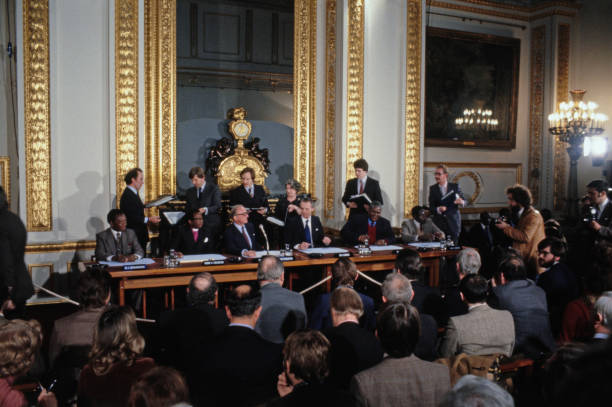
At Lancaster House in London the Rhodesians, to put a long story short, were forced to hand over their country to the British temporarily. A final election would take place under the watchful eyes of Commonwealth observers to decide which African leader would inherit the country the Rhodesians had built.
Preparations
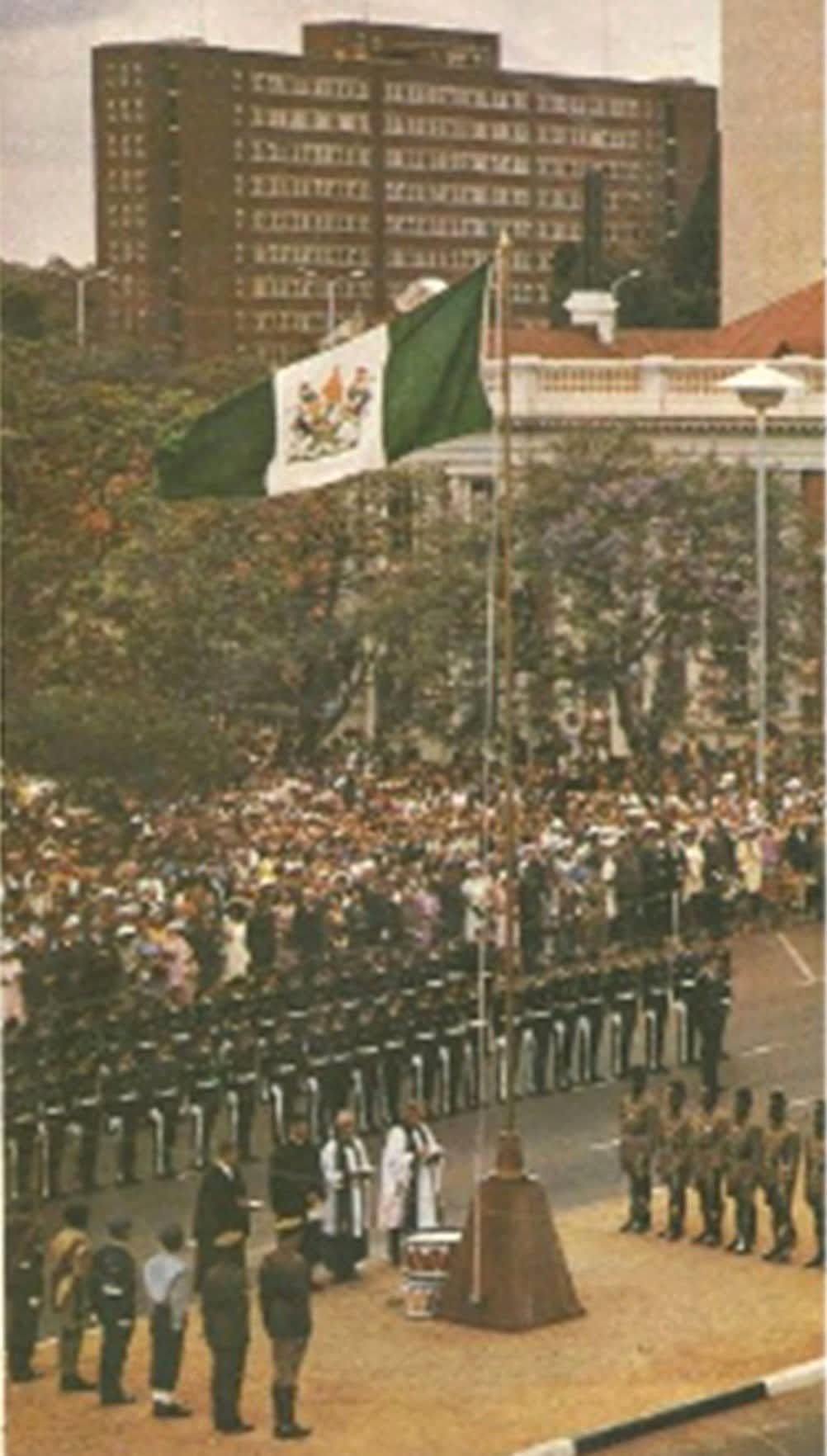
After inspecting a police guard of honour, Soames set off to Government House where he raised the Union Jack for the first time in a decade. The British transition period had begun. Soames’ arrival was awkwardly timed, for the final deliberations at Lancaster House were still ongoing and, presumably, or at least it was hoped, all would go as planned so everyone could get on with the job. To begin with Soames had very little authority and could only really resolve disputes via arbitration. On December 21, after all was wrapped up in London, it was time to get started.
Soames powers were extensive indeed:
‘The Governor will be established under an Order in Council which will confer on him executive and legislative authority. He will act according to the instructions given to him, for the fulfilment of his tasks, by the British Government. The Governor will have powers to make laws by Ordinance for the peace, order and good governance of the country. Legislative authority will be vested in the Governor and all public officers and authorities in Rhodesia, including the civil service, the police and the defence forces, will be required to comply with the Governor’s directions. The Patriotic Front’s forces will also be required to comply with the directions of the Governor.’2
Soames didn’t seem to be overly confident regarding his task. ‘This country could blow up at any time,’3 he reflected in his study at Government House. Almost immediately, there was an incident in which a British army colonel was shot at in his helicopter from a terrorist assembly point. There was also a police escort vehicle hit by a landmine and an escort group was fired upon by terrorists. Getting the terrorists to actually turn up to the assembly points was a mission in itself. Once the terrorists finally went where they were told they ended up turning the camps into defensive strongholds; they simply did not trust the security forces.
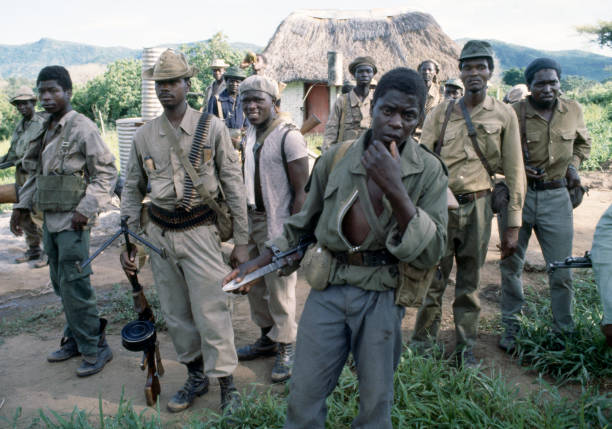
These were the terrorists who actually turned up to the assembly point. From the get-go there were ‘flagrant violations of the ceasefire, principally by ZANLA. As the security forces pulled back to bases to allow guerrillas safe passage to rendezvous and assembly points, several thousand ZANLA insurgents began to infiltrate across the border from Mozambique, bringing with them arms and equipment much of which was secreted in caches.’4
ZANLA (the military wing of ZANU, Robert Mugabe’s organisation) hastily armed as many young boys as they could, equipped only with ‘a few ant-eaten old muskets and a few rusty old weapons that couldn’t possibly have been the terrorist weapons and equipment.’5 These ‘mujibas,’ as they were called, were used to boost the numbers in the camps whilst the actual hardcore terrorists were kept out in the bush, ready to engage in an intimidation campaign during the election.
As Meredith writes: ‘As guerrilla commanders captured by security forces later revealed under interrogation by Soames’s police advisers, an estimated 4,000 men (the actual number was nearer 7,000) were instructed by Rex Nhongo to hide their weapons, remain in villages in twos and threes and prevent other political parties from campaigning.’6 These terrorists had been told to ignore any orders telling them to come in from the bush, as, if that did occur, it would be under duress from the British.
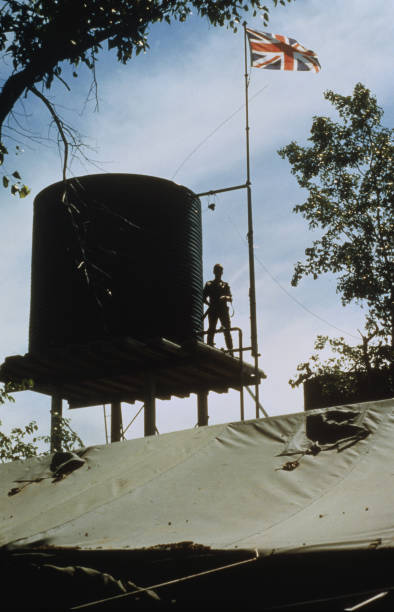
General Walls, presented with evidence of all this, furiously demanded that he be allowed to redeploy his own forces. The British had previously promised that this would be allowed if it were justified, which clearly in this case it was. Indeed, after the security forces had withdrawn to their bases, there was a sudden crime wave in the rural areas as ZANLA terrorists robbed and murdered at will. By 6 January Soames had to relent and let the security forces redeploy to the eastern border to ‘stem the inflow of ZANLA combatants.’7 This included the auxiliaries of Muzorewa (current Prime Minister of Zimbabwe-Rhodesia after Smith attempted an internal settlement which went unrecognised by the outside world) who immediately began to make themselves almost as hated as the terrorists. The security forces at the border, however, were no good if Soames was tying their hands behind their backs elsewhere. Salisbury once more looked like ‘the days of the 1960s when factional rivalry, petrol bombing and assault were commonplace.’8
Some indication of Soames’ attitude to all of this is contained within the most famous quote of the whole ordeal. The Governor remarked: ‘You must remember this is Africa. This isn’t Little Puddleton-on-the Marsh, and they behave differently here. They think nothing of sticking tent poles up each other’s whatnot, and doing filthy, beastly things to each other. It does happen, I’m afraid. It’s a very wild thing an election.’9 The Africans were it seemed, literally, going to get away with murder in these elections. The message from Mugabe was clear, if ZANU did not win the election, then he would take the country back to war.
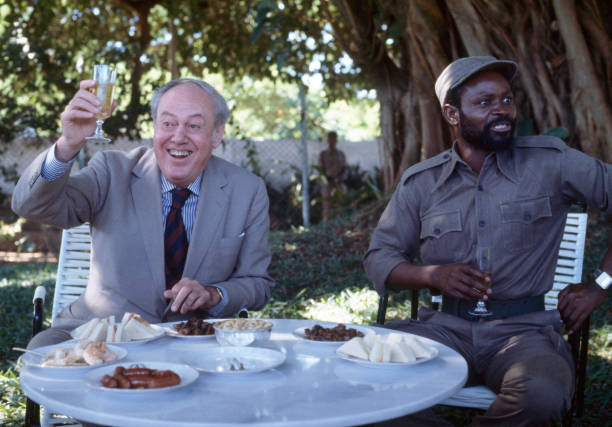
On 18 January Ian Smith visited Soames and produced over 1000 affidavits regarding the campaign of violence which Mugabe had been subjecting the entire country to. Soames claimed to have a plan. He produced a map and pointed out the three main provinces in which intimidation was taking place, Mashonaland East, Manicaland and Victoria. In these provinces, Soames said, the Patriotic Front could be disqualified. Smith quite rightly pointed out that this intimidation was taking place everywhere, not just in these three provinces.
To ban ZANU in general, Soames said, would be a step too far. The British would never be able to sell that to the world and, in particular, the Organisation of African Unity. Once more the British had broken a promise. Intimidation could be used, after all. On top of this, word had already travelled back that Thatcher had resigned herself to Mugabe winning the election. Her attitude, essentially, was that this was the unfortunate reality, and everyone had to get used to it. There was to be no question of enforcing the rules preventing intimidation.
A week later Smith visited Soames again as the intimidation had only increased. This time he backed out of even excluding ZANU from the three provinces: ‘I have had a message from Peter Carrington telling me that any such plan would be unacceptable to the OAU, and therefore it is out.’10
Smith, quite rightly, replied that this was a blatantly dishonest betrayal which was in breach of the Lancaster House agreement. Soames could only respond: ‘I am afraid, Mr Smith, that the principles and standards on which you and I were brought up to believe in, are no longer part of this world.’11
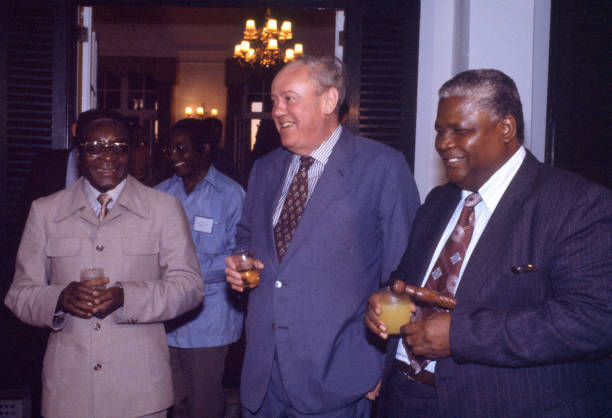
To Joshua Nkomo’s credit, he and his forces behaved much better than Mugabe’s. Almost all of his men actually went to their camps, and the ZAPU leader made it very clear that any of those who did not fall in would be regarded as bandits and disowned. ‘The war is over,’ he proclaimed, ‘people must not be surrounded by armed men from any quarter.’12 Whites were so impressed with Nkomo’s conduct, in fact, that Smith was moved to remark: ‘This may sound distasteful to some people who have been on the receiving end, such as the Viscount disasters. But the best choice could be Nkomo.’13
Muzorewa and his UANC, meanwhile, produced a mock coffin as part of their ceremony for burying UDI. Many quite rightly asked the question: ‘Did they not use Smith and his UDI to bring themselves into power?’14
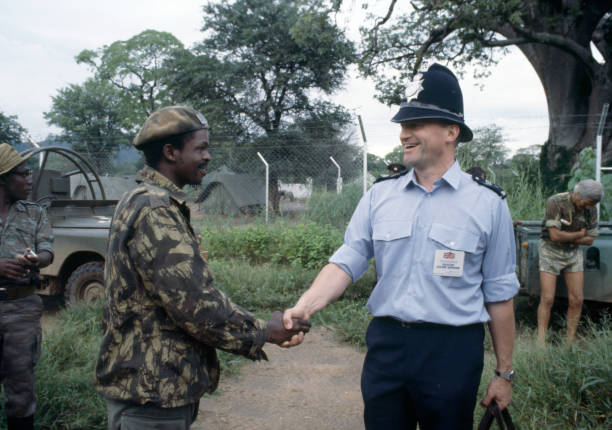
1200 Commonwealth troops arrived as part of the Commonwealth Ceasefire Monitoring Force. Perhaps as a sign of how much things had changed, there were Africans who lived in England amongst their number and many of them were invited into people’s homes purely for the novelty of hearing these Africans speak in a Brummy, Cockney or Geordie accent. A lot had changed for the older Rhodesians since they’d emigrated or even since UDI. The British were a vanishing breed not only in Rhodesia, but in Britain too, it seemed.
Mugabe arrived late in Rhodesia, held up by Soames because the ZANU leader was refusing to release imprisoned ZANU dissidents as per the terms of the agreement. When Mugabe did arrive he was given a hero’s welcome, drawing one of the largest crowds ever seen in the country.
Mugabe met with Soames and bluntly told him that if any attempt to ban or restrict his party was made, then he would take the nation back to war. Thatcher had by now washed her hands of the future of white Rhodesians, and so effectively Mugabe could make whatever threats he liked, after all, this wasn’t Little Puddleton-on-the-Marsh.
Election
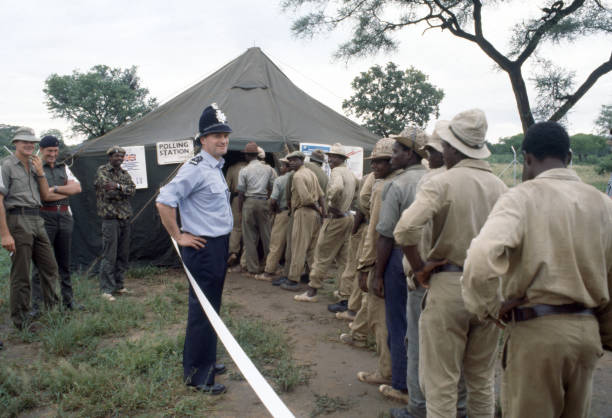
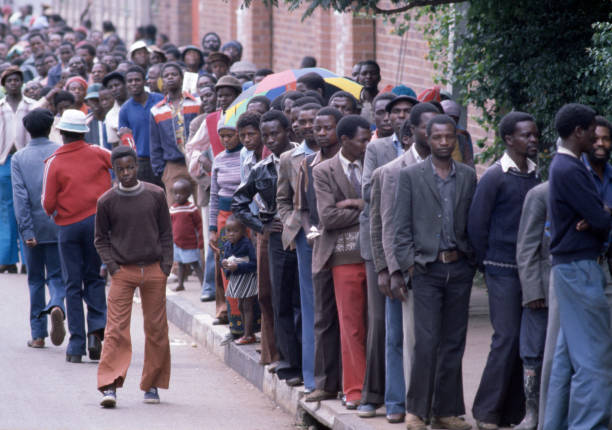
Tensions were high as the African election approached. The White election had been a foregone conclusion with the Rhodesian Front sweeping every seat as usual. Mugabe’s intimidation campaign only increased as the big day approached. Indeed, ‘the evidence being gathered by Soames’ own election supervisors – British local government officials and ex-colonial administrators flown to Rhodesia specially to monitor the election – was that the scale of intimidation in eastern Rhodesia was massive.’15 Teenagers carrying stick grenades or direct death threats were one thing, but the rumour had been deliberately spread that ZANU would know which party a tribesman voted for. Vote ZANU or die, essentially. Villagers were threatened with collective punishment, a guaranteed way to get the entire village to vote for Mugabe. In Salisbury, meanwhile, ‘black servants were visited by ZANU political agents and told their names would be entered into a black book – the book was then shown to them.’16
There were, of course, the actual murders, of which there was usually at least one a day. Soames’ own election supervisors reached the conclusion that ‘in five of Rhodesia’s eight electoral provinces conditions for a free election no longer existed.’17 In many areas, Muzorewa and Nkomo just stopped holding rallies. Nkomo remarked that: ‘The word intimidation is mild, people are being terrorized. It is fear. There is fear in people’s eyes.’18 It was Muzorewa, however, who bore the brunt. He was directly competing with Mugabe for the Matabele vote, most of his meetings, he said, had been disrupted by intimidation. Both Muzorewa and Nkomo met privately with Soames and urged him to ban ZANU. Even after ZANLA attacked a passenger bus, killing sixteen Africans, the Governor still refused to act.
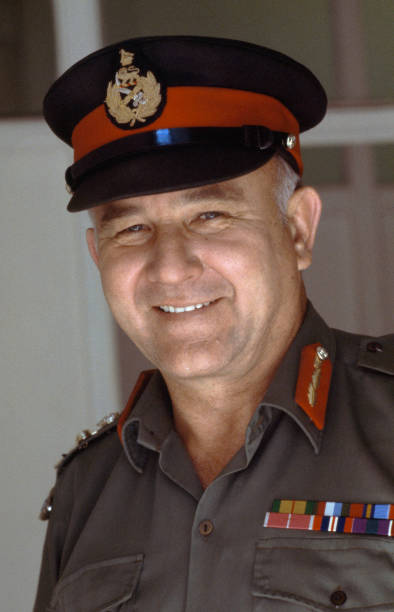
Smith’s last hope remained the Security Forces. After a meeting with General Peter Walls on the morning of the election, the 3 March, a message was fired off to Margaret Thatcher and a copy was sent to Smith.
Walls reminded Thatcher of her commitment to oppose Marxism, her recommendation of Soames and her promise to support the Rhodesian Security Forces in their task. Soames, Walls stated, had proved weak and incompetent. All the evidence of the terror campaign had been placed in front of him and yet Soames had done nothing. Clearly, Soames had no intention of complying with the British Government’s supposed commitments. The British, Walls went on, should continue with their mission until it had been completed properly. If the British did not comply with the agreement, Walls said, then the Rhodesian security forces reserved the right to act in the manner he thought best. An empty threat.
At 4pm on 3 March Smith was summoned to a meeting with Nkomo. There was even worse news. The intimidation campaign had reached new heights throughout the day. Canvassers from UANC and ZAPU had been murdered and some had even been buried alive. The British still refused to act despite the fact that their own Election Commissioner, Sir John Boynton, ‘noted that threats of violence or death, the murder and abduction of candidates and agents, the destruction of property, attempts to force the local population to attend meetings or keep them away, and the threatened continuation of the war were all potent factors in the campaign.’19
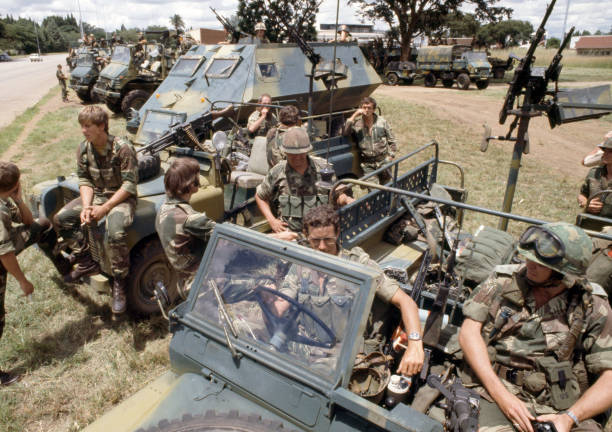
The servicemen of Rhodesia, meanwhile, took to drinking their sorrows away and exchanging dangerous talk of coups and schemes in the bars, clubs and messes of the country. They believed they had remained undefeated on the battlefield and could hold their head’s high. For most this was enough and discipline held. A few, however, went their own way.
A group of Selous Scouts massacred a bus full of UANC voters and left ZANLA equipment at the scene as a deception. Elsewhere there were bombings which seemed to be deliberately low scale in order to show what a communist victory would actually look like and in Gwelo the Selous Scouts rigged up a large explosive to the Mambo Press and framed ZANLA. Mugabe suffered multiple attempts on his life, including one at his own home.
The Death of Rhodesia
On 4 March military units all over the country were prepared for the worst as they listened to their radios. Registrar-General Eric Pope-Symonds read out the preliminary election results and the news wasn’t good at all. Out of 80 African seats Mugabe had won 57, Nkomo 20 and Muzorewa 3. Mugabe had officially won his outright majority.
Operation Quartz, the ridiculous plan which would have seen ZANU set back ‘twenty years’20 was quickly dropped when it was revealed how total Mugabe’s victory had been. The troopers all across the country, fingers tightly on triggers waiting to make their move, were to be left disappointed. The plan, if Mugabe had lost or had his victory annulled and then ‘returned to the bush,’21 was to involve the assassination of both Mugabe and his deputy, Simon Muzenda. The South African Air Force as well as the Rhodesian Air Force, together with the SAS and Selous Scouts, were to wipe out enough of the ZANLA leadership and enough of their trained forces grouped up in the camps to effectively neuter the entire party. Obviously this was all pretty fanciful stuff and General Walls almost certainly would never have given the green light regardless, but now there was simply no chance. Prudently, knowing the political consequences of such an audacious move, the General told his men to stand down.
That evening he got on camera in front of the nation, claiming to represent the Security Forces and, essentially, telling his boys to behave and allow the transition:
‘Anyone who obeys the law will have our backing and will have nothing to fear. At the same time, anybody who gets out of line or for whatever reason starts disobeying the law will be dealt with effectively and swiftly and, I may say, with quite a bit of enthusiasm… We are looking forward in a spirit of reconciliation to maintaining law and order.’22
The British were not willing to implement the Lancaster House deal and Mugabe had intimidated his way to victory and got away with it. This was on the British, not Peter Walls, no matter how many Rhodesians would claim otherwise in their memoirs. There was simply nothing the General could realistically do. Regardless, a joke ran throughout the messes of Rhodesia that their country had suffered its ‘Walls’ Street Crash!’ On 15 March the commanders of the RLI and Selous Scouts went to visit Walls. When told to sit they refused and said it was not necessary. They had come to inform him that in the eyes of Rhodesians he had lost all credibility and therefore he had no further part to play, they said. The duo, Lieutenant Colonel Charles Aust and Lieutenant Colonel Patrick Armstrong, then saluted and departed.
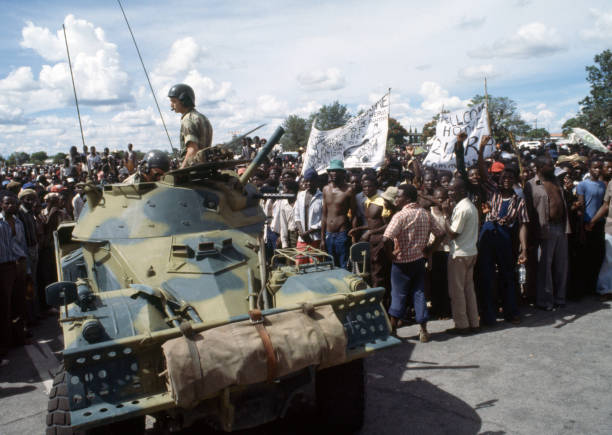
The Rhodesian public, despite all evidence to the contrary, continued to believe that somehow the ‘moderate and pliable’23 Bishop Muzorewa would form the first African Government of Zimbabwe. Rhodesians, then, were left ‘bewildered or devastated’24 by the news of Mugabe’s triumph.
Within hours of the election results thousands of homes went up on the market, civil service resignations poured in and ‘husbands phoned wives telling them to pack a bag and leave for South Africa; children had even been sent to school that morning carrying bags packed for flight in case early rumours of the result were true.’25 One of the most rapid brain drains in history was about to take place. Some hotheads talked tough, proclaiming that they would essentially go scorched earth on Rhodesia, sabotaging mines or blowing up the Kariba dam before taking the gap to South Africa, but naturally, none of this materialised.
The first man Mugabe invited to speak to him once it was clear that he was the victor was none other than Ian Smith, who recalled:
‘They could not get over their good fortune at inheriting this jewel of Africa – this wonderful country with its sophisticated infrastructure, viable economy, broad-based industry, the breadbasket of central Africa. They realised that it was not only the professional men and the primary producers – farmers and miners – who were responsible for this, but also the skilled artisans, those who kept the wheels turning, and he wanted to assure me that it was their intention to preserve all this.’26
Mugabe then spoke to the nation:
‘Let us join together, let us show respect for the winners and losers. There is no intention on our part to victimise the minority. We will ensure that there is a place for everyone in this country. I want a broadly based government to include whites and Nkomo.’27
Mugabe then proceeded to issue a long series of reassurances and promises to the whites of Zimbabwe regarding stability, law and order, pensions and private property. The ZANU leader also announced that he was keeping General Walls on as commander. To many, lost in the depths of despair as they were, it seemed that Mugabe, this dedicated Marxist, might just mean it. Many of the homes which had been listed merely hours earlier came right back off the market. A lot of Whites now adopted a ‘wait and see’ approach which, for many, would prove fatal. Even Ian Smith fell for Mugabe’s speech. Weeks earlier he had called Mugabe ‘the apostle of Satan,’28 but now he was ‘sober and responsible.’29
At midnight on 17 April Rhodesia ceased to exist and by 1985 over half of the Whites of Zimbabwe had left. The dream was well and truly dead.
The Great Betrayal, Ian Smith, p326
From Rhodesia to Zimbabwe: The Politics of Transition, Henry Wiseman and Alastair M. Taylor, p18
The Past is Another Country, Martin Meredith, p389
The Past is Another Country, Martin Meredith, p394-95
Serving Secretly, Ken Flower, p255
The Past is Another Country, Martin Meredith, p395
Rhodesia: A Complete History, Peter Baxter, p725
The Past is Another Country, Martin Meredith, p398
Rhodesia: A Complete History, Peter Baxter, p725
The Great Betrayal, Ian Smith, p409
Ibid
The Past is Another Country, Martin Meredith, p399
Ibid
The Great Betrayal, Ian Smith, p326
The Past is Another Country, Martin Meredith, p401
The Past is Another Country, Martin Meredith, p402
Ibid
Ibid
The Past is Another Country, Martin Meredith, p407-408
Rhodesians Never Die, Peter Godwin and Ian Hancock, p269
Rhodesians Never Die, Peter Godwin and Ian Hancock, p270
Rhodesians Never Die, Peter Godwin and Ian Hancock, p276
Rhodesians Never Die, Peter Godwin and Ian Hancock, p1
Ibid
The Past is Another Country, Martin Meredith, p409
The Great Betrayal, Ian Smith, p341-342
Rhodesia: A Complete History, Peter Baxter, p740-741
The Past is Another Country, Martin Meredith, p410
Ibid
Zoomer HistorianRead More








 T1
T1