
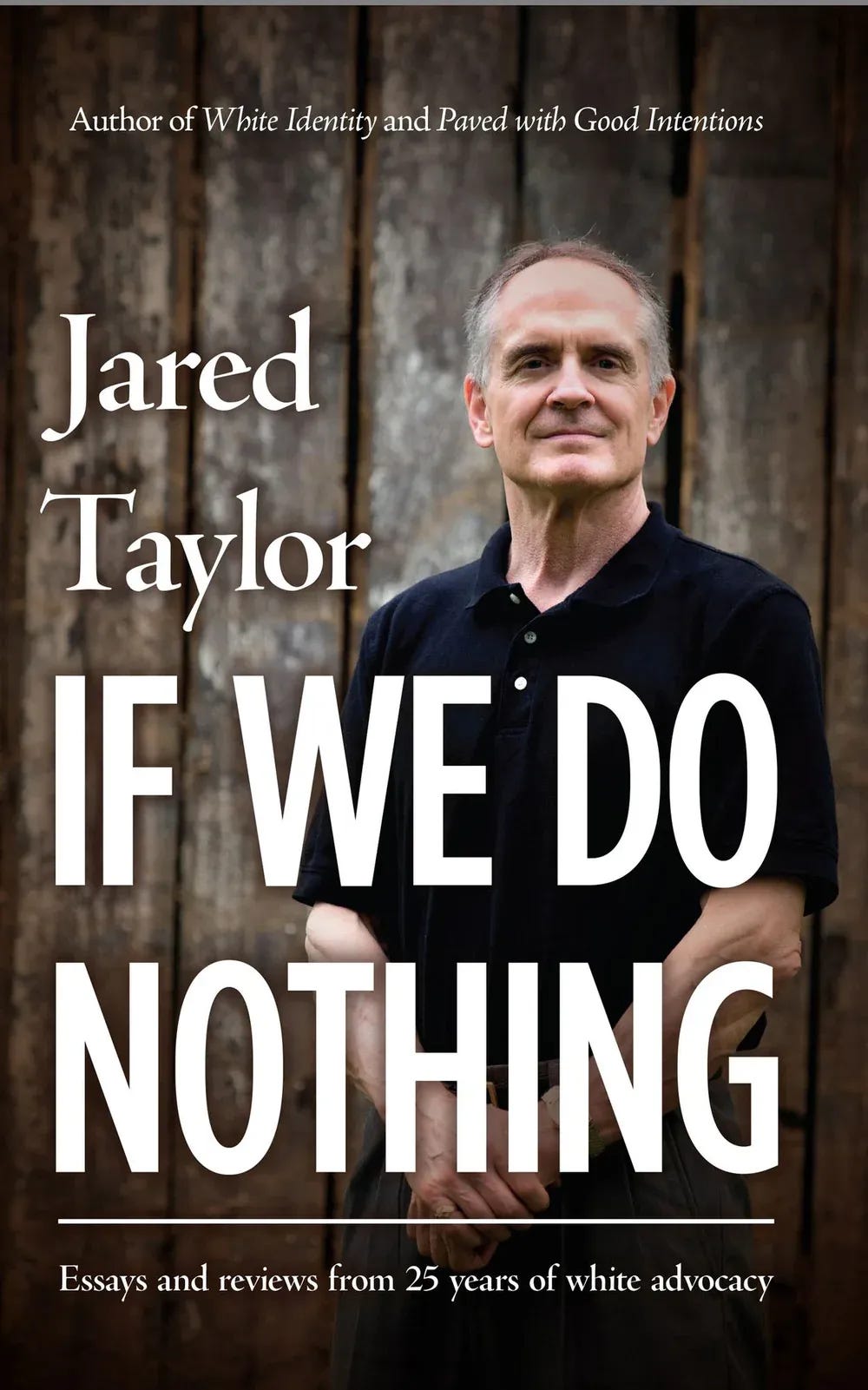
On the right, we all know of Jared Taylor, but very few are aware of his books; fewer still have read any of them. Jo, who runs Oldspeak Bookshop, a wonderful online and, uniquely, physical bookshop here in the UK, has begun selling two of those books, and she very kindly sent me a copy of If We Do Nothing: Essays and reviews from 25 years of white advocacy.
As the title suggests, Jared has been a long-time advocate for White interests, and so many of the arguments contained within If We Do Nothing are by now our bread and butter, but this is precisely because of the hard work from people like Jared. Just because many of the arguments are familiar, does not make them any less engaging, and Jared, as always, makes his points in great detail with ample evidence to support his claims.

Basic Principles
His collection begins with ‘Basic Principles’, a section dedicated to answering ‘why Western man seems to have chosen oblivion rather than survival.’1 Our own unique traits, Jared conclusively proves, have either been wasted on the other races, or used against us. The European’s missionary spirit, for example, made Europeans, religious or not, seek to make the lives of non-Whites as great as ours. We believed this was something that could be taught. Instead, this has been thrown back in our faces.
We were hardly pacifists, but we were mostly tough but fair. Other races would have wiped their enemies from the face of the earth when they had power over them. We, however, despite dominating the globe, sought to bring our subjects up to our level and actively preserved them.
‘What would the world be like if some other race had the tremendously disproportionate power that whites have had and continue to have? Would Africans or Asians act with the restraint whites have shown? Would they voluntarily sheath their weapons and instead give aid to help races less successful than themselves?’2
‘When Whites took possession of North America, Australia, and New Zealand, they set aside territory for the exclusive use of the natives they displaced, giving them at least a minimal base for ethnic preservation. Non-whites who displace whites will not establish white homelands.’3
Chivalry in warfare and sportsmanship on the playing field; in both domains our behaviour has been completely taken advantage of. This section of the book struck me as remarkably similar to Maurice Samuel’s You Gentiles, but written from the White man’s perspective. Samuel, who is Jewish, simply could not wrap his head around why Whites take sports so seriously, or why we would choose to spare a wounded opponent in warfare, or have any rules for warfare and sports in general. When football/soccer first left the realm of the amateur, many players refused to take penalty kicks as they did not believe that a fellow sportsman would ever deliberately foul his opponent. Now, with football becoming a largely non-White sport, most players spend half the game on the floor pretending to be injured. In warfare, we have created rules of engagement and, as most famously displayed in the Christmas Truce of 1914, been able to come together with our opponents. We are, after all, part of the same family. We spared the non-White races when we conquered them; can we now expect the same behaviour we benevolently bestowed upon them?
We have always been a giving people. Whites receive a psychological boost from helping others; it makes us feel good, and many become addicted to this feeling… especially leftists! We’ve created foundations for preserving pretty much every endangered species of animal on earth, and we’ve gone out of our way to help the non-White races whenever they fall upon hard times. We cannot help it; we feel it is our duty. In a homogenous society, such behaviour, often involving self-sacrifice, has been an objectively good thing, a noble thing. Everybody benefits from such a society. This does not apply to our interactions with the rest of the world.
‘The system of governance built up in white societies is based on the assumption that the interests of others sometimes require that we sacrifice our own. All principles of Western morality require this. If it is good and generous to sacrifice individual interests, then why not group interests?’4
We have sacrificed our own interests, again and again, for minority interests. Where has that gotten us? Until Whites start thinking and acting racially again, Taylor argues, things will continue to get worse. As Taylor presaged, things would have to get a lot worse before they got better. Everyone, deep down, knows the racial differences. Even White flight, as Taylor elucidates, does not change the thinking of many. Liberals can watch their entire neighbourhood get overrun and simply move elsewhere, not changing their thinking at all in the process. Only now that non-Whites have become inescapable have we begun to see genuine metapolitical and, in the US, actual political change.
History
Our problems, Taylor posits, go back a long way. Then, as now, those who did not come into contact with non-Whites, did not understand them.
‘It was always the metropolitan authorities – whether in Britain, Spain, France or Portugal – who pushed for gentler and even equal treatment of colonial subjects. The men on the ground understood that empires could not be run on egalitarian principles. Whites who spent the most time overseas and who knew non-whites best were the ones who were least sentimental about them.’5
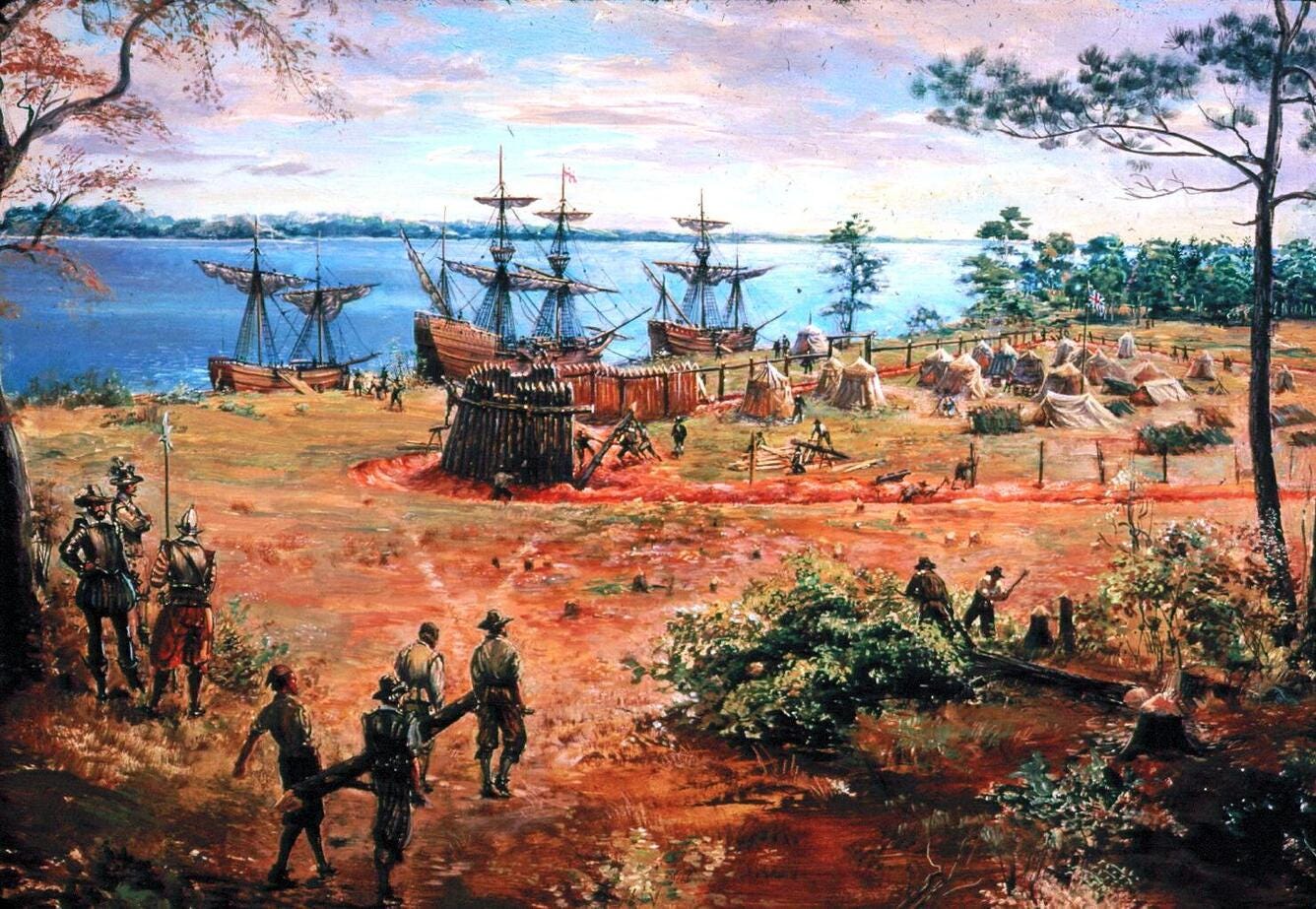
The Spanish understood the Indians, for they had dealt with them for over a hundred years by the time the English decided to settle Jamestown. One backer of the Virginia Company wrote naively: ‘Their children when they come to be saved, will blesse the day when first their fathers saw your faces.’6 Then, as now, distance led those back in Britain to misunderstand the non-Whites. With this kind of idea in mind, the English landed in Jamestown, refusing to build fortifications so as to not seem hostile. Ten days later, hundreds of Indians attacked the camp, and only the use of cannons, which terrified the Indians, saved the entire settlement from a massacre. Only then were the Whites, after contact with non-Whites, shocked into the harsh realities. Up went the stockades.
Eventually, over the course of years, the two sides began to mingle. The Whites took this at face value, trusting as ever. In 1622, the Indians turned on the Whites and attempted to exterminate them, killing 400 of Jamestown’s 1,200 Whites. The Whites had gone out of their way to help the Indians, setting aside 10,000 acres for a college where they could be instructed in the Christian faith. None of this was reciprocated. George Thorpe, the man who had treated the Indians the best and worked in their interests, was mutilated and killed in a particularly cruel fashion.
In 1644, this series of events repeated itself, the Indians launching a sneak attack in which 400-500 Whites were killed. Only then did the Whites respond properly, and the Indians were decimated. There were no more illusions. In 1690 Governor John Archdale of the Carolinas praised God for the diseases which were ravaging the Indians:
‘The Hand of God has been eminently seen in thinning the Indians to make room for the English.’7
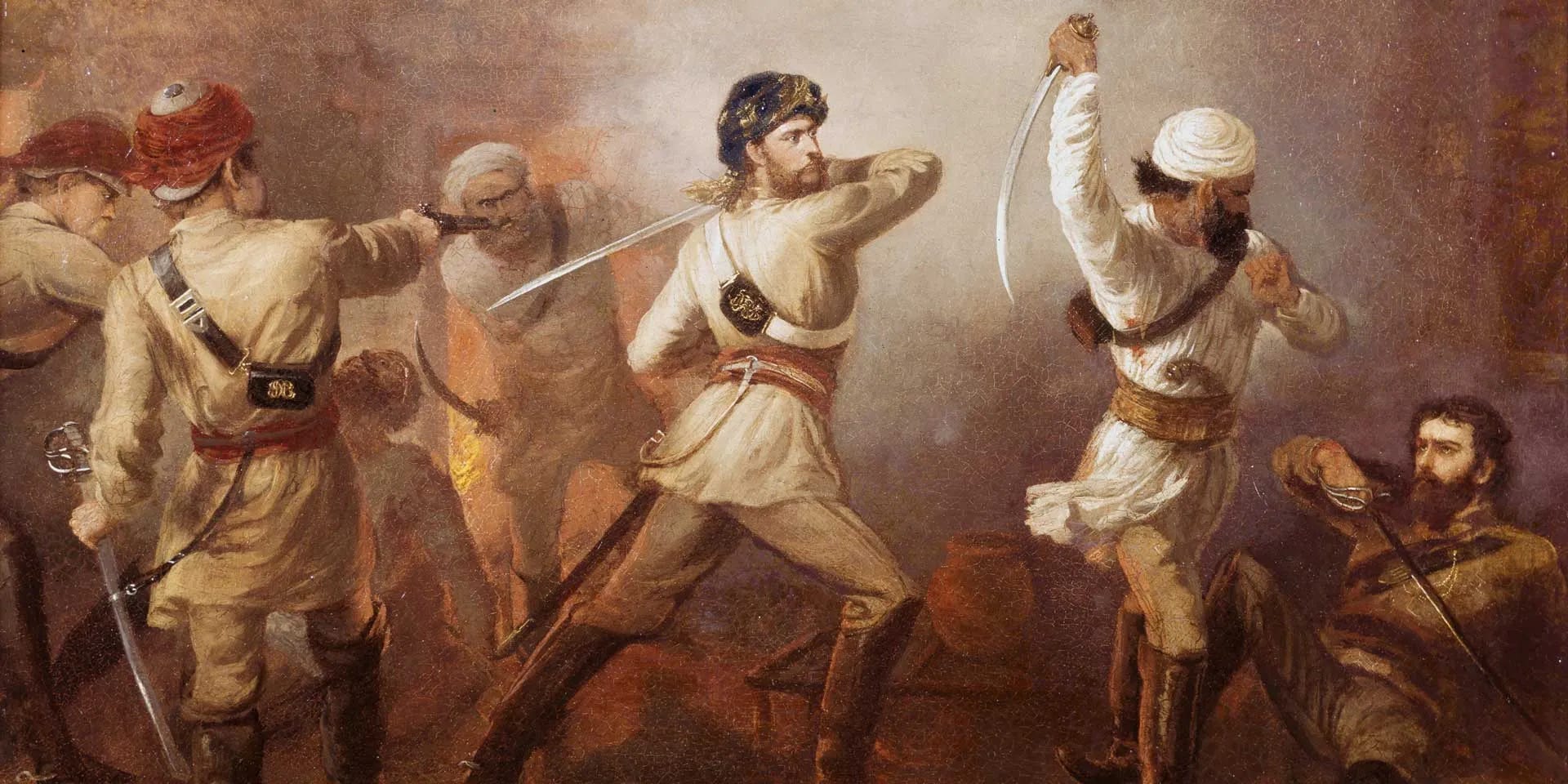
In India, the situation was the other way around. The Indians were naturally subservient and took no issue with the British ruling them; the problems only came when missionaries and liberals got involved in the 19th century. Once again, these missionaries and liberals did not understand the realities of non-Whites.
The Indians only wished for their cultures and religions to be left alone, and the mutiny of 1857 was in large part a reaction to liberal reforms such as the abolition of the burning of widows. Then, overnight, British missionary zealotry was redirected towards brutally putting down the Indians whom they felt they had treated so well.
Upon making contact with Africans, the British immediately labelled them as a deeply inferior race. Once more, it was only those back home who had any illusions about African behaviour. Many early on argued that it would be impossible to convert them, truly convert them, to Christianity. In the 19th Century, those back in Britain began meddling once more. Governor of Jamaica Edward Eyre, who had just executed 200 people during a slave revolt, was left bewildered when he was summoned before a commission in England and made to answer for his actions. He was removed from his role and would die very bitter, utterly convinced that he had been done wrong. The Whites of Jamaica, however, would never forget him, and to them he would always remain a hero. The treatment of Eyre echoed around the Empire.
‘I have to think of the howling Societies at home who have sympathy with all black men whilst they care nothing for the miseries inflicted on their own kith and kin who have the misfortune to be located near these interesting n******’8
– Sir Garnet Wolseley
‘If this were empire, it is as if the people back home now have an inkling of what Edward Eyre faced in Jamaica or of why Rex Dyer opened fire in Amritsar. Far fewer people can shelter their illusions behind walls of ignorance.
Will whites wake up in time to save their civilization? If they do, they will look back in gratitude to men who knew the world best, who thought about it hardest. They will wonder why, during the 20th century, Europeans ignored the warnings of men like Albert Schweitzer, and did not listen to Rudyard Kipling when he wrote: ‘‘A man should, whatever happens, keep to his own caste, race and breed. Let the white go to the white and the black to the black.’9
Current Events
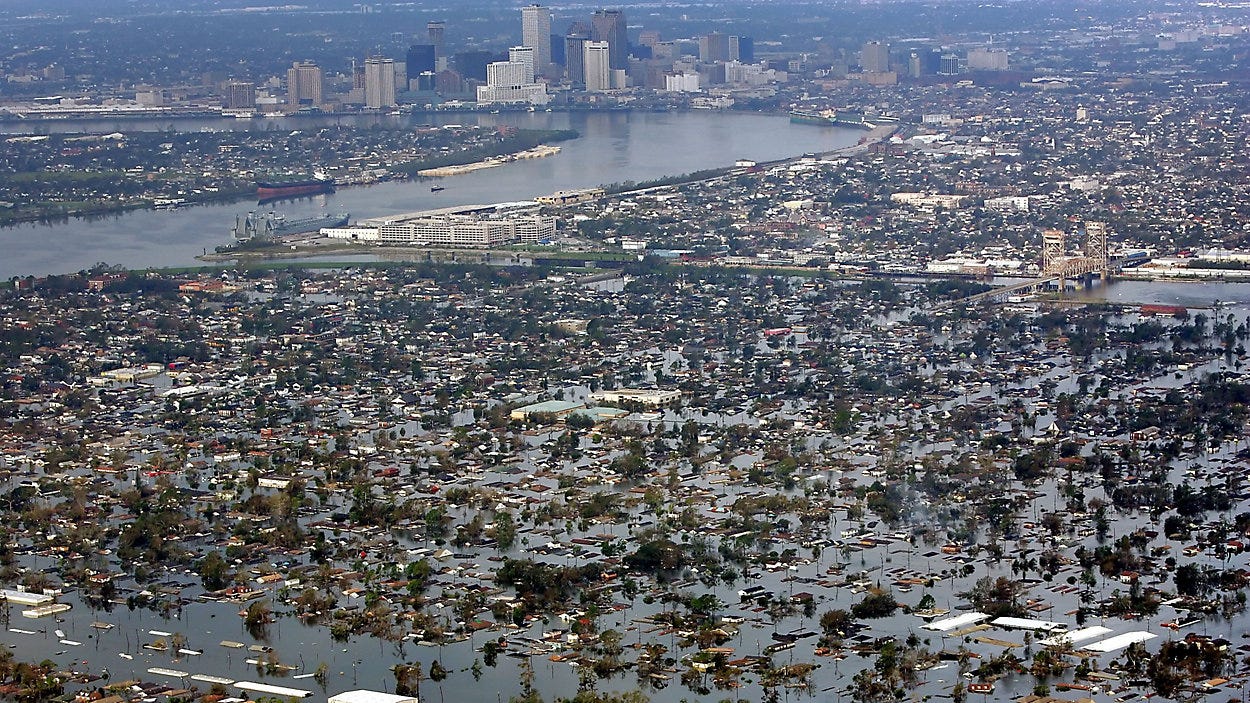
In August 2005, Hurricane Katrina hit the Gulf Coast. As Jared Taylor points out, however, much of the damage was not the result of the hurricane or the flooding, but rather the behaviour of the people of New Orleans, a 67% Black city, and an impoverished one at that.
New Orleans was soon flooded, and up to 100,000 of the city’s 480,000 people had already fled before the hurricane hit. Disproportionately, those leaving would have been White, or the better-off Blacks. Whilst the storm was still blowing, the Blacks of New Orleans began an absolute looting frenzy, and America’s television screens were full of pictures of Blacks wading through water, carrying televisions or other such stolen goods above their heads.
Looting was one thing, but the Blacks also began raping and murdering at will. Thousands were trapped on rooftops or in their attics, and up to 1/5th of the city’s police officers simply refused to work. The city had become a lawless hellhole, where it was every man for himself.
One group of stranded British women shouted to a group of African policemen, who did decide to show up, for help. ‘Well, show us what you’ve got’10 they replied, and motioned for the women to lift their t-shirts up and show their breasts. The women said no, and the police sped off in their motorboat.
Since 1978, New Orleans had had Black mayors, and since then, they have done their best to make the police force as Black as possible. When it was clear that this police force was not going to be able to deal with the crisis, the National Guard was called in. Once they arrived and took control, Mayor Ray Nagin offered to pay for his police force, firefighters and city emergency workers to go on five-day holidays to Las Vegas or similar destinations, a complete dereliction of duty.
‘New Orleans has a high crime rate at the best of times – it is usually in top contention for the American city with the highest murder rate – and looted firearms spilled into the street. Some blacks fired on any symbol of authority, blazing away at rescue helicopters and Coast Guard vessels. Several days after the hurricane, with desperate people still huddled on rooftops, FEMA said it was too dangerous to attempt rescues.
On Wednesday, along one stretch of Highway 10, hundreds of volunteer firefighters, auxiliary coastguardsmen, and citizens with small boats were eager to reach people, but could not set out because of sniper fire. ‘‘We are trying to do our job here but we can’t if they are shooting at us,’’ explained Major Joey Broussard of the Louisiana State Fishers and Wildlife Division. ‘‘We don’t know who and we don’t know why, but we don’t want to get in a situation of having to return fire out there,’’ he said.
Perhaps the most chilling accounts were from hospitals, where staff deliberately tried to move patients upstairs as the water rose, while blacks looted the floors below. Most hospitals had emergency generators, but these began to give out. Two days after the hurricane, the city had no running water, and as food ran out, doctors and nurses gave themselves intravenous feedings to keep going.’11
Outside of the city, thugs held up supply trucks bringing supplies to the hospitals, and when the patients eventually had to be evacuated by helicopter, every single one was fired upon from the ground. To reclaim the city, the National Guard had to launch, by their own definition, a Combat Operation. Cliff Ferguson, of the 527th Engineer Battalion, lamented: ‘You have to think about whether it is worth risking your neck for someone who will turn around and shoot at you. We didn’t come here to fight a war. We came here to help.’12
By the time the city was finally ‘reclaimed’, bodies were found everywhere. Amongst this number were innumerable children who had been raped and murdered. One particularly horrible find included ‘a seven-year-old boy, [who] was found raped and murdered in the kitchen freezer.’13 Whites, no matter where they were hiding, were subjected to abuse and threats at best, and indescribable brutality at worst. Even the Louisiana Superdome, where over 10,000 people had gathered, saw innumerable rapes and murders. Robbery was just taken for granted.
A Different Perspective
In 2005, ‘civil rights icon’ Rosa Parks died at the age of 92 and became the first woman to lie in state in the Capitol; her casket was given a military honour guard and her funeral in Detroit lasted for seven hours. President George W. Bush ordered that all flags over federal buildings and military bases should fly at half-mast. To Jared Taylor, this is all very perplexing, for Rosa Parks did nothing more than sit down on a bus for thirty minutes.
Mrs Parks refused to give up her seat and move to the coloured section of the bus in 1955, and her subsequent arrest led to the Montgomery bus boycott. Parks, however, had been a member of the NAACP for over a decade and the ordeal had all been planned. Earlier that year, another girl, Claudette Colvin, had also been arrested for refusing to move seats, but the NAACP decided she was too dark, and too degenerate in her private life, to bother with, and so they recreated the situation with Parks, who was light-skinned and better behaved. Parks, who had no real baggage of any kind, was told to simply take her seat and hold her tongue; no screaming obscenities at the authorities like Colvin. On the same day that she was arrested, 35,000 leaflets had already been created, calling for the bus boycott on the following Monday.
The boycott lasted for a year, but it was not this which brought down bus segregation, but rather a court case in which Claudette Colvin was one of the four plaintiffs, Browder v. Gayle. The court ruled that segregated buses were a violation of the 14th Amendment, and so Montgomery agreed to integrate its buses. The boycott, which was all theatre from the beginning, was an unnecessary failure, but this is not how history has recorded what went down. ‘Even by the most sympathetic reading’, as Taylor puts it, it is impossible ‘to see Rosa Parks as anything but an unimportant actor in an overblown drama.’14
‘Blacks are not likely to complain if whites make a demigod of an unimportant woman, but why do whites bow their heads before such transparent fraud? There is no satisfactory answer. Americans are never happier than when glorifying non-whites who have denounced the alleged sins of whites. The adulation of Rosa Parks is just another chapter in the lemming-like rush to destruction whites everywhere appear to have joined. If a still-majority-white Congress and Senate can vote by acclamation to make Rosa Parks the first woman to lie in state in the rotunda, any act of racial self-mortification is possible.’15
Conclusion
If We Do Nothing was a wonderful read, a book I could hardly put down, and devoured in a day or so (250 pages). Taylor covers a vast array of topics, but for me, as a Brit, the most fascinating chapter was Africa in Our Midst, which covered Hurricane Katrina. I knew there was some looting by Blacks as well as other criminal behaviour, but I was completely unaware of the total descent into barbarity, with even children as young as seven being raped and murdered. A complete breakdown of law and order, and a real glimpse at what a minority White future actually looks like. The chapter on racially motivated sexual violence in American prisons, too, made for absolutely harrowing reading. Jared, as he has always done, cuts right through the liberal miasma and gets right to the reality of the topics he discusses.
It’s been a long journey for Jared, and it’s so nice to see him now gallivanting across Europe, collaborating with various nationalist movements. Everywhere he goes, he is treated as the hero that he is, and he always looks happy to lend a hand to whatever pro-White causes require his services. After so many decades, I cannot even begin to imagine how vindicated he feels now that his people are finally waking up to the reality that he has been trying to drill into their heads this entire time.
If this book were on Goodreads, I would’ve given it five stars. Please do check it out.
Introduction
p24
p72
p28-29
p74
p76
p78
p83
p90
p135
p136
p137
p142
p182-183
p183
Zoomer HistorianRead More








 T1
T1