
Follow me on Twitter: @FromKulak

Disclaimer: At no point in this piece to I ever advise, instruct, or make know the means of making explosives (this knowledge I leave to Wikipedia, Youtube, and other unsavory parts of the web).. Nor do I discuss the fine processes of how to make Complex incendiary device fuels in detail sufficient to actually do so (I strongly encourage anyone interested in pyrotechnics to do extensive research, as even very simple non-explosive incendiaries can be incredibly dangerous to work with in all but the smallest quantities) which in the US and some other countries are not-regulated, whereas others are highly regulated under the US National Firearms Act not as explosives, but as destructive devices (Its weird), whereas in other countries they DO have stringent regulation (nor is this legal advise)… The purpose of this piece is to discuss a set of hypothetical improvised non-explosive anti-tank weapon’s systems and the tactics of their hypothetical employment. The details of how to go about actually creating the fuels, reactive agents, and dangerous chemicals will not be discussed here, except in such detail as is necessary to WARN against the various extreme dangers of hazarding to make them.
Neither the Author nor anyone at Anarchonomicon is a Pyrotechniques Expert, Chemist, Lawyer, EOD Technician, or Military Authority in any sense of those words that matter. And none of the hypotheticals discussed should be pursued without consultation with those qualified people.
By Contrast none of the TACTICS discussed should ever be pursued by anyone EVER who values their life or the lives of anyone around them… or atleast certainly anyone who values them more than victory.
.
“The three basic requirements of a successful General are Concentration of Force, Activity, and a firm Resolve to Perish Gloriously. They are the three principles of the military art that have disposed luck in my favor in all my operations. Death is nothing, but to live defeated is to die every day.’
-Napoleon Bonaparte
Intro: The Fundamental Problem of AntiTank Warfare, or the Need for Non-Explosive Weapons Systems
I’ve been deep diving unusual or hypothetical military and guerilla logistics and doctrines for a while now.
I predicted the rise of motorcycles on the modern battlefield in the early months of the Ukraine War. I deep dived the operational tactics and information warfare logic of modern Urban Stealth Operation focusing on the Luigi Mangione Case, and later deep dived the logistics and kit needed for modern urban espionage operations. And I’ve dug into weird little niches like the Knife employed as a strategic (not tactical) level weapon, and the rise of Assassination as the Default mode of Warfare.
And I keep coming back to the same tired conclusions:
Its a cliche, but the real limiting problem of almost all warfare is logistics.
This goes doubly and triply for unconventional forces who cannot access traditional supply lines to secure weapons… And, even more limiting, often lack the training and advanced skills to make or improvise such weapons.
Whilst the inability to access weapons is crippling… The inability to access the knowledge with which to craft or improvise such weapons is even more damning.
Unconventional or irregular forces regularly find themselves unable to access dedicated heavy weapons, modern sophisticated precision systems, and sometimes are forced to even craft their own small arms… but even worse, they often find themselves without the technical skills and experience to craft or improvise alternatives.
While making explosives is not extraordinarily difficult… problem children around the world have made various explosive mixtures from Youtube and internet recipes and even before the internet when “Science Sets” you could order through catalogs actually taught real science, but the actual logistics of USING explosives effectively is shockingly finicky.
Sure tweenage boys might blow up garden gnomes in their backyard for fun, and if you’re fortunate enough to live in a country that sells real Ammonium Nitrate fertilizer, ANFO (Ammonium Nitrate-Fuel Oil) only has 2 ingredients and the other one is gasoline, but if you are in a guerilla movement in a place like Iran or your unit has been cut off hundreds of miles behind enemy lines and you actually want to USE explosives, in a form that’s combat effective.
Suddenly it gets way more complex. And you learn just exactly why grown-ups told you not to play with fireworks.
If you are in a country that doesn’t just sell Ammonium Nitrate or other oxidizing precursors at the hardware store, or if you’re pinned down in a warzone and can’t get to a hardware store… Suddenly you need to do a lot of basic chemistry, often requiring odd tools that can be a pain to source… Sure with a bit more knowledge and understanding of chemistry fundamentals you can make your own Nitric Acid Generator, or start following the process of rending fat to generate Nitroglycerin, or heaven help you creating disgusting smelling Nitre beds to make saltpeter from Urine like the American Confederacy when they got desperate…
And if you already have primers for bullets or another explosive you could probably create the more unstable small detonators (the primary explosive) to set off more stable large payload explosive charges… (the secondary explosive).
And if you have a not extraordinary knowledge of electronics you could probably create timed or radio, cellphone, or other ignition mechanisms…
And if you have basic shopclass skills you could probably weld your own rockets and and mortar shells…
But if your plan is for your band of merry men to be producing explosives from raw chemicals in some kitchen or basement, combining them with homemade electronics and detonators, fitting them into home-welded Mortar shells and Rocket Grenades, and then either firing them at the enemy with a home-brew mortar tube, launching them with your own shoulder launchers, or dropping them from a drone with your own impact-fuse design…
I can guarantee you, unless you are vastly more competent than I am… or your isolated band of merry men has a vastly more skilled chain of weirdos than I can imagine…. Some mistake’s are going to happen and get people killed once you start operating at scale.
Bomb-making is not a profession for people over-attached to their fingers or faces.
Between the exothermic reactions and boiling you have to do to homebrew the chemicals, the common misfiring and static charges of home electronics, the inherent danger of even professionally made impact fuses, and the white knuckle terror of putting even small rockets or mere shotgun slugs through tubing you’ve welded yourself… One of your kitchens, fuses, launchers, or tubes is going to explode in incendiary shrapnel fury exactly when you have 3-4 people gathered around it… And if you’re a guerilla or insurgent this will immediately get dozens of forensic experts pouring over your former safe house and the bodies of your former comrades.
For this reason in spite of the skills not being extraordinarily hard to get (between Wikipedia, Youtube, Archive.org and Anna’s Archive: The Chemical, Electronic, Engineering, and Metallurgical knowledge to make your own remote explosives, mortar systems, and rocket artillery can be gained in a week)… It is almost unheard of for cut off units or besieged battalions separated from their logistics chain to just start craft-making their own armaments on the fly. And likewise the most successful guerilla groups invariably produce explosives and weapons systems FAR below their natural skill ceiling.
Sure the IRA COULD have tried to create their own rocket artillery, shoulder fire rocket launchers, or Mortar tubes, the mechanics are not that complex… But they had recurring enough accidents and problems with simple timer bombs that they preferred to limit themselves to the few enough but reliable enough professionally made heavy weapons Gaddafi or American smugglers could get them.
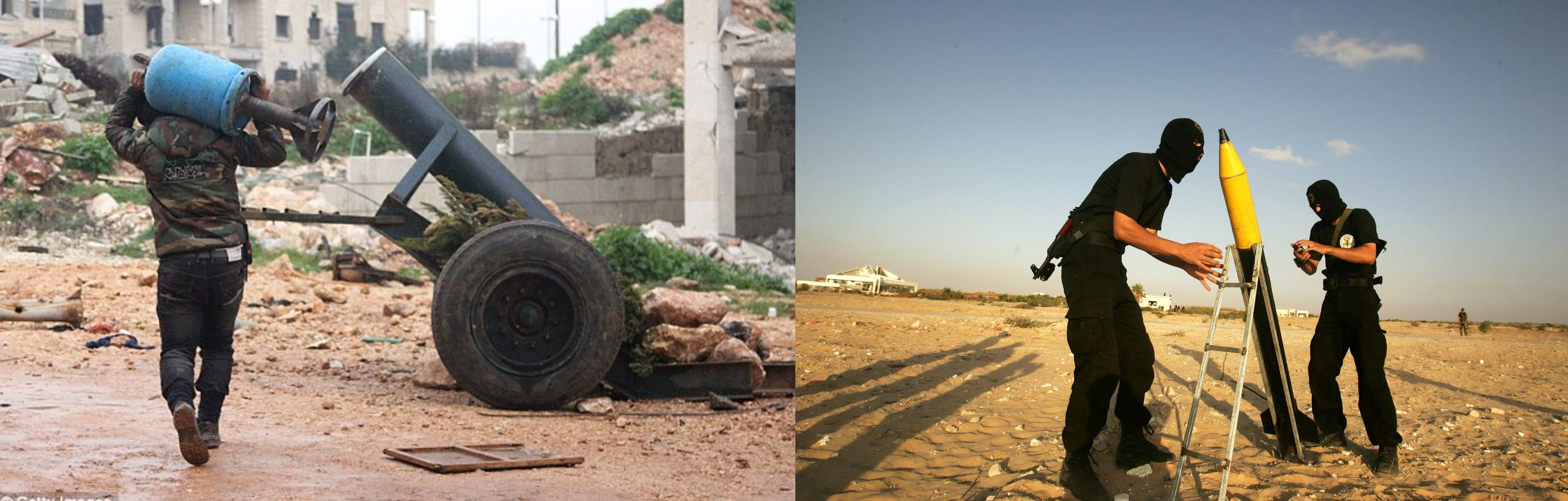
The only factions that really homebrew their own heavy weapon systems are Government level pariah states like Hamas, Hezbollah, or ISIS (or Ukraine) who have the resources and the space to create entire semi-professional supply chains without one accident compromising their OPSEC or taking out anyone irreplaceable.
The cemeteries are full of indispensable men.
– Charles de Gaulle
Thus there is an inherent need in Small and unconventional forces for weapons systems that can be readily improvised by low-skill individuals that are effective, deadly, and able to take on modern armored enemies in ways that are better than completely useless… But ideally which do not depend upon explosives, electrical timing, or home chemistry to an extent that it’d immediately start generating casualties from hot spots on burners, static charges, or radio frequency overlaps.
Indeed we used to have exactly such weapon systems.
They were called “petrol bombs” or “Molotov Cocktails”…
The only problem is:
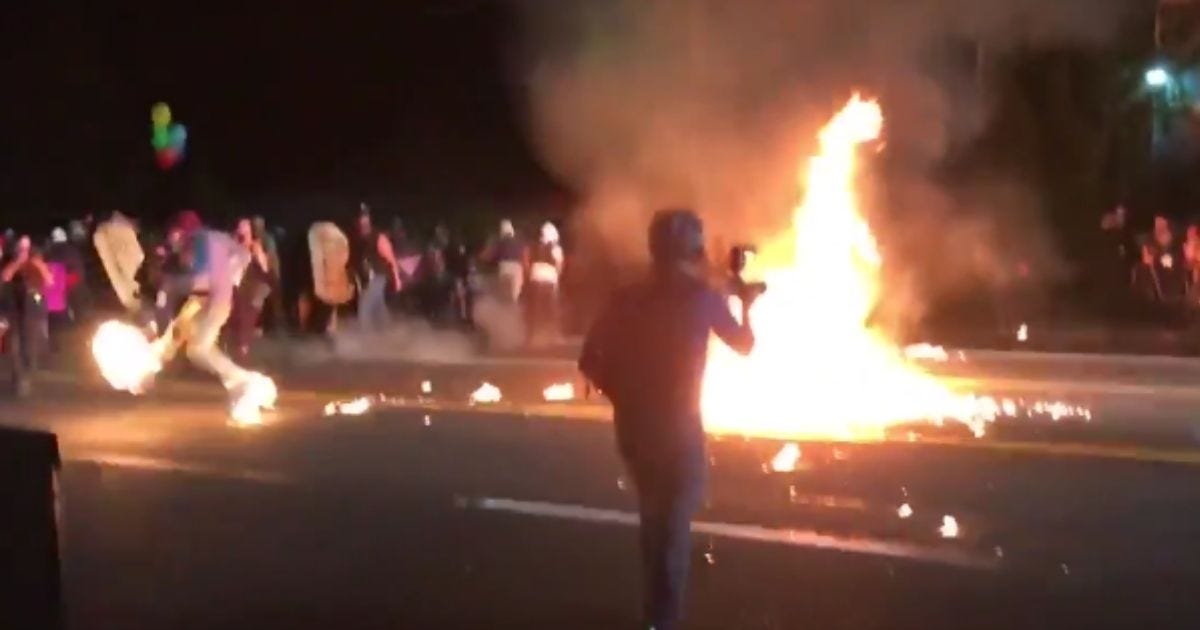
Molotov Cocktails Don’t Work Any More
The Molotov Cocktail has a storied place in the history of warfare, and on the streets of Portland… originally an improvised anti-tank weapon from the Finnish Winter War, the little lethal beverage has been employed in conflicts on every continent… Including Antarctica judging by that one John Carpenter documentary.
Its continued use on the modern battlefield and in improvised warfare everywhere is belied by exactly one problem.
Molotov Cocktails don’t work any more.
They’re still good thrown area denial weapons, and incendiaries always have an anti-building and anti-material role, and as makeshift anti-personnel grenades… Well I certainly wouldn’t want one thrown into my fire position, or into my face…
But they don’t do what they were originally designed for.
.
The Molotov cocktail was an artifact of profound military imagination and creativity. By the Finnish Winter War of 1940 Tanks were incredibly refined implements of war.
Aside from massive dedicated anti-tank rifles (fast fading in viability) and the first generation of shoulder fired rockets (The First Bazooka and PanzerFaust were still 2-3 years away)… There was shockingly little that infantry could do to tanks if the tank simply refused to drive over an anti-tank mine or sit still long enough for a satchel charge or sticky bomb to be placed, or corrected artillery fire to be brought in.
Tank armor had just gotten good enough that any non-specialized direct fire weapon wasn’t going to defeat its nearly impenetrable armor.
The Finnish “Molotov cocktail”, perfected mechanisms found in earlier petrol bombs and overcame this by doing the opposite.
This may be stating the obvious, but the Molotov cocktail is a Hand Thrown, Non-Explosive, Liquid Incendiary Weapon.
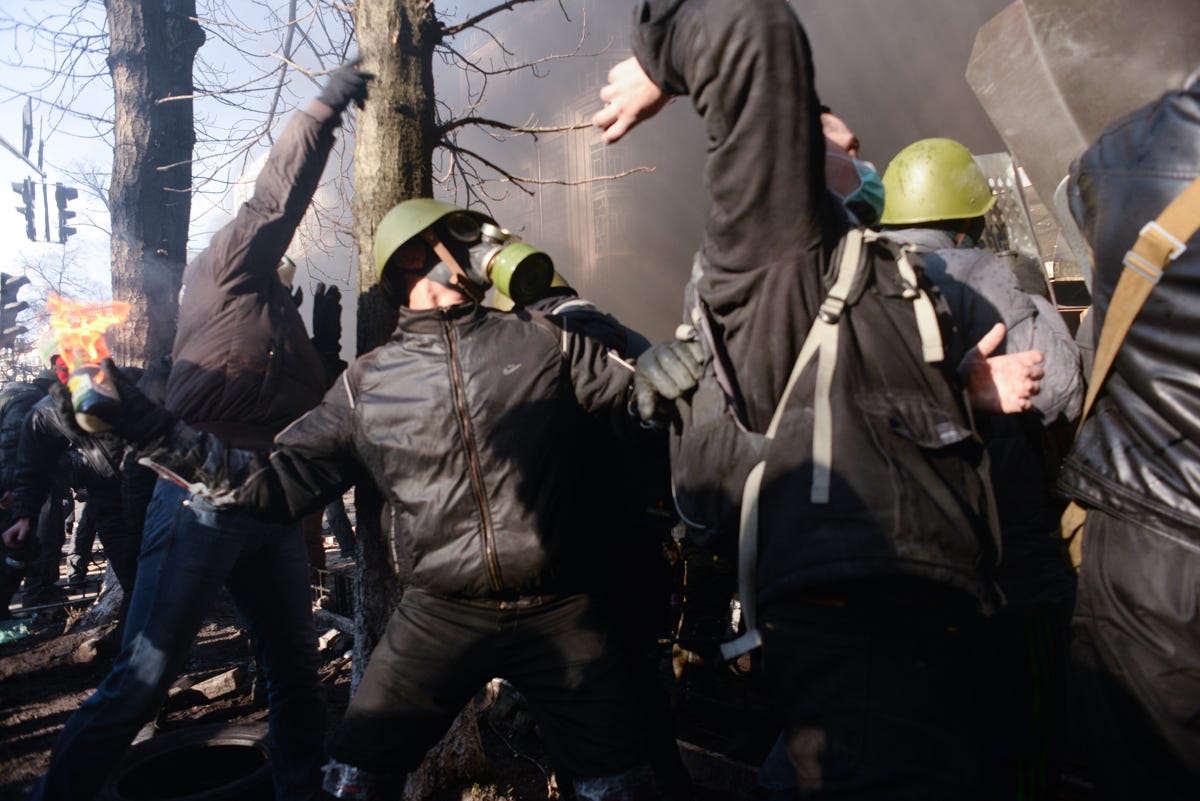
We’re used to it now… and it is so simple it probably wasn’t even noted at the time, but every individual part of how the the molotov cocktail is delivered, “detonated”, overcomes armor, and delivers its damage is weird, archaic, and non-standard.
Throwing is a primordial holdover still used in grenades and almost no other weapon system… Physical force glass breaking is basically only used as a trigger mechanism in improvised weapons, basic booby-traps, or exotic or cheap security systems… Likewise the exposed flame priming, literally “lighting a fuse” like early grenades and dynamite sticks is not used in any other modern weapon.
And the liquid petroleum payload is of course the oddest part of it… Unlike gellatinized napalm mixtures that “Sticks to kids”, or even early Greek fire used by the Byzantines, the goal of early petrol bombs and the final molotov cocktail… was NOT to stick, but rather to flow and leak and seep into hatches, vents, and other nooks and crannies of ww2 era tanks, Ideally burning those inside or burning out and overheating vital bits of the tank.
The problem of armor penetration was not so much solved as circumvented. And while the Cocktail was certainly not superior to a dedicated antitank-gun or later a Panzerfaust… The ease of logistics in producing them gave them a ready place on the battlefield, and later the streets of endless protest actions and in the bags of endless arsonists.
Molotov Cocktails were so effective against WW2 era tanks and armored Vehicles that even dedicated US Infantry Tank hunters were taught to use Molotov Cocktails as one of the main tools in their arsenal:
However… As anti-armor weapons? Molotov Cocktails don’t work anymore.
Even extremely light armored personnel carriers now are designed immediately and directly to prevent mere burning liquid from posing a threat to the occupants… Indeed most armored vehicles are designed with the tacit knowledge that the most likely application they’re ever going to see is crowd control against pissed off civilians and are largely designed with this in mind.
Forget Main-BattleTanks, your local police-force’s BearCat is designed specifically to resist multiple conventional Molotov cocktails even though a pre-WW2 antitank guns would almost certainly defeat it.
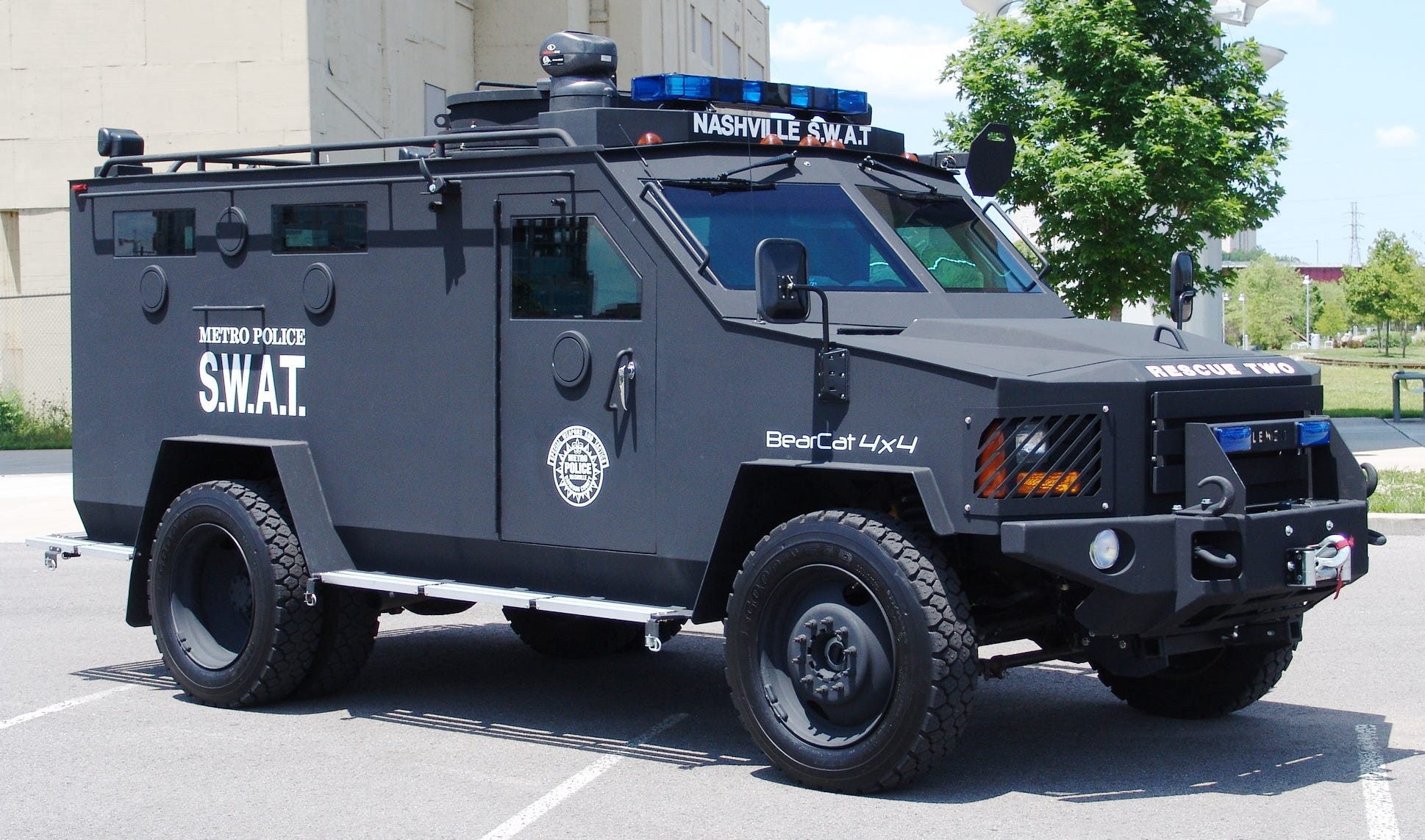
The Finnish liquid armor avoider simply doesn’t work anymore.
You can’t defeat a modern (or even 1950s) tank with just a bottle of liquid petroleum.
…
But… What if you could defeat it with something else?
What if using other odd chemical properties we were able to create NEW models of hand-thrown antitank Cocktails that you could store and ignite with the breaking of a bottle?
This my friends is the CatGirl Cocktail Hour! Where we will show YOU how to defeat a Tank Platoon (in theory) with common garbage around you house, standard handyman resourcefulness not rising to the level of a bombmaker, or 14 year old home chemist, and just a little Imagination 😽🌈.
At the Extreme Limits of Ultra-Unconventional Warfare, We Leave the Realm of The Guerilla and Other Misspelt Jungle Animals. We Instead Enter into The Domain of The CatGirl and Stranger Internet Abominations.

NOTE: What follows is a Theoretical Demonstration, a fictional scenario/set of scenarios to demonstrate the principles of the core concepts, which will require some SUSPENSION OF DISBELIEF for the purposes of more fully highlighting the concept and the logic.
If any of you actually try to take on a modern conventional Main BattleTank using only these tactics then you are either very stupid or very desperate, and can expect something like 75% fatalities in the unlikely event that you somehow miraculously win.
Just Like A SciFi Story! Sorta… not Exactly
Now if you are a True Gamer or SciFi Fan, you might already have an idea of what just such a thrown weapon vs. a Tank might be…
Every SciFi series has them: The MeltaBomb™… Or whatever non-trademarked name you give them in your knockoff SciFi Series.
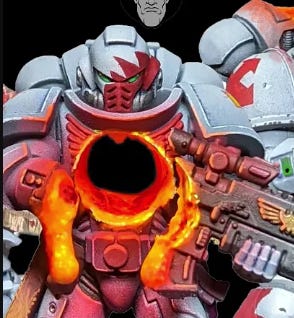
The Meltabomb (or your cheap knockoff) uses some extreme heat reaction, fusion bullshit, Chaos Magic, Ultra-preassurized something, plasma what-have-you to produce heats so extreme they’re sufficient to melt solid hardened magic dwarven space-metals and Force Fields, and even elite-level Alien Big-Bug biological exoskeletons that are somehow even tougher.
The Actual Mechanics are bullshit.
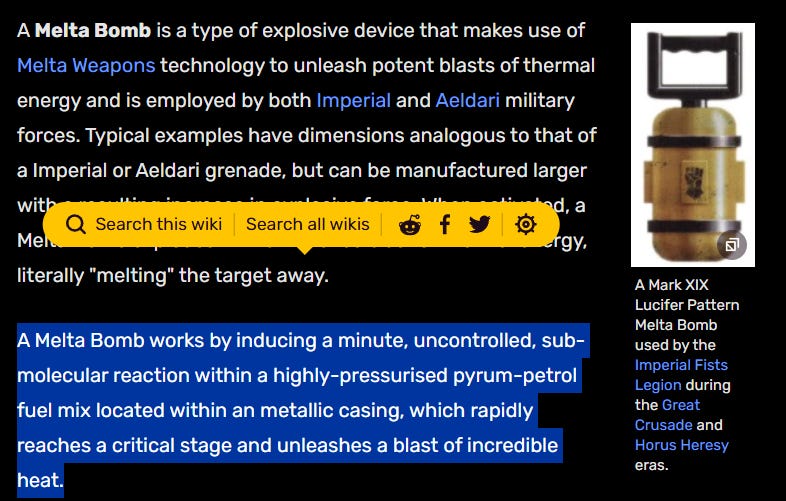
For example this description specifies that it is a “Sub-molecular reaction” (So like Atomic Fission? A Nuclear Reaction?) in a “highly pressurized” environment (so like Pressurized methane?) Of a “Pyrum-Petroleum Fuel Mix” (Pyrum is Latin for “Pear” like the fruit. I assume a fake scifi mix).
There’s a reason the reaction is so bullshit they can’t even define if it is a petroleum combustion, complex pressure thing, or an atomic reaction… Or whether it is more analogous to the Emperor’s Wrath or the Judeo-Christian Lucifer (I hope one of you nerds can tell us how Lucifer fits into 40k lore), and the reason for all this bullshit is that achieving enough heat to rapidly and explosively MELT Hardened Steel, let alone Hardened Robot SpaceWizard Steel and Force/Warp Fields that are supposed to be even harder than that… is very hard to do.
.
Steel is hard to melt. Even with dedicated arc welders and thermic lances you can generally only melt little segments with work and sustained heating unless you have a blast furnace and full on metal works.
As 9/11 fans and Bin Laden defenders will tell you, Jet Fuel cannot melt steel beams.
Whether one wants to quibble about the temperatures at which steel loses structural integrity… It is simply true that the hottest petroleum products get to 1030c (1890 F) in the open air (it gets to 2230c in a spinning jet-turbine, but you need to be mixing air at roughly 10,000 rpm to achieve that), whereas Steel does not melt until 1370-1530c (depending on alloy).
Thus many 9/11 conspiracy theorists posit the Twin Towers were brought down not via jet planes… But preplaced Thermite Charges already on the steel beams (Look Up E-Team, Larry Silverstein, and Dancing Israelis).
Yes THERMITE! The Stuff from Breaking Bad and Mythbusters, and basically every Youtube Channel under the sun.
This is one of the Internet and Television’s favorite non-explosive pyrotechnics because:
A) it’s not an explosive and is regulated differently depending on your jurisdiction (so its way easier and legally much safer to put in your Youtube video)
B) The ingredients (raw Aluminum powder and Iron Oxide powder (rust) can be ordered off Amazon with a simple credit card really cheaply
C)The reaction itself is kinda hard to start and relatively safe as long as you light it outside and don’t get it on you.
D) It looks, and is, REALLY Freaking cool
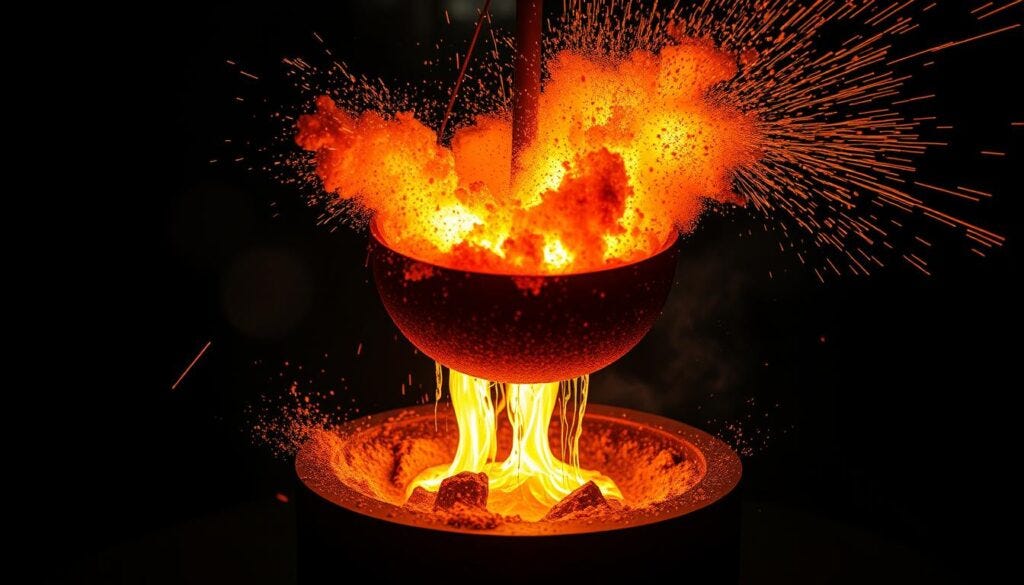
Thermite Burns up to 2500c or even 2800c in certain compressed ultra-dense special made variants (which we will not be discussing, but someone might want to research)… More than enough to melt steal beams, that one lock in Breaking Bad, flower pots on Youtube, and even weld Railway links together.
Fe2O3 + 2 Al → 2 Fe + Al2O3
Iron Oxide (rust) + Aluminum —> Iron + Aluminum Oxide (aluminum slag rust)
You see the burning reaction produces tons of heat because it is an already hot metal reaction which produces no gas byproduct to take the heat energy away from the hot metal, or draw in cool gas to interact with the reaction.. Unlike a wood fire, or petroleum fire, or conventional explosion (high or low explosive) no gas is given off in the core reaction (it burning and reacting with other things will produce gas, but a truly perfect thermite reaction would generate no gas at all) this means nothing is taking heat away from the reaction except for things outside it coming into immediate contact. It also has all the oxygen innate to the reaction, so it is basically impossible to smother once it gets going… you can only spread it more thinly or remove fuel before it can become part of the reaction… You can’t cut off the oxygen supply (assuming the two powders are mixed evenly) since all the oxygen is already IN the fuel, the oxygen is just going from the Iron molecule to the aluminum molecule next to it.
Pay attention to the thermite reaction in this Railtrack welding job… They do lots of prep work and they have to hack off their steel jig and cut it down, but the simple thermite reaction really does most of the work.
Even the division of the raw iron weld from the Aluminum slag that’s formed is done by the hot liquid thermite itself. Iron is heavier than Aluminum Oxide so it sinks, thus the brittle Aluminum slag pours out the side where you can see them taking it off with shovels, whereas the hot molten Iron goes immediately downwards into the other metal…
presumably you’d think if you put this on a tank, by say throwing a lot of thermite on it the same effect would bring the hot metal melting liquid iron down onto the Tank Armor… Right?
Naively you’d think this would be the perfect tool to Cut into tank armor? Right?
Wrong!
While in principle Thermite can and does melt steel, the quantities required are all wrong.
Take a look at the video of the train weld again… You notice at the start how they’re Using a propane torch on the jig and the tracks? They’re doing that because METAL CONDUCTS HEAT.
The first thing that happens when hot molten metal comes in contact with a solid piece of metal is all the heat that goes into it gets conducted into the rest of the metal.
They’re preheating the train tracks and jig to hundreds of degrees in temperature so that the hot thermite slag doesn’t just immediately harden ON to the jig and the tracks.
Even a very thin amount of steel can stop thermite from melting through as long as there is sufficient metal attached to it to conduct the heat away.
Without a disproportionately large amount of thermite relative to the steal, or really aggressive pre-heating, you just are not going to melt much if any steal…
You can see this man used a really heroic amount of thermite shaped in a flowerpot on a 1 inch thick steel plate, and he only got about 3/8th of an inch into it…
So then is Thermite useless for attacking a tank? Afterall you’re never going to get enough of it even if you brought a carload that the Tank couldn’t easily conduct away into the rest of its metal… So much for that idea.
.
No It’s the perfect antitank weapon.
You just have to think like those Finns in 1940 and not like a Space Marine.
A Tank (or other armored vehicle) Does 4 Things:
-
A Tank Moves,
-
A Tank sees things through various optics
-
A Tank shoots it’s weapons systems
-
A Tank keeps its occupants alive
All four of these can be crippled by really small amounts of thermite getting on the tank.
1. A Tank Moves
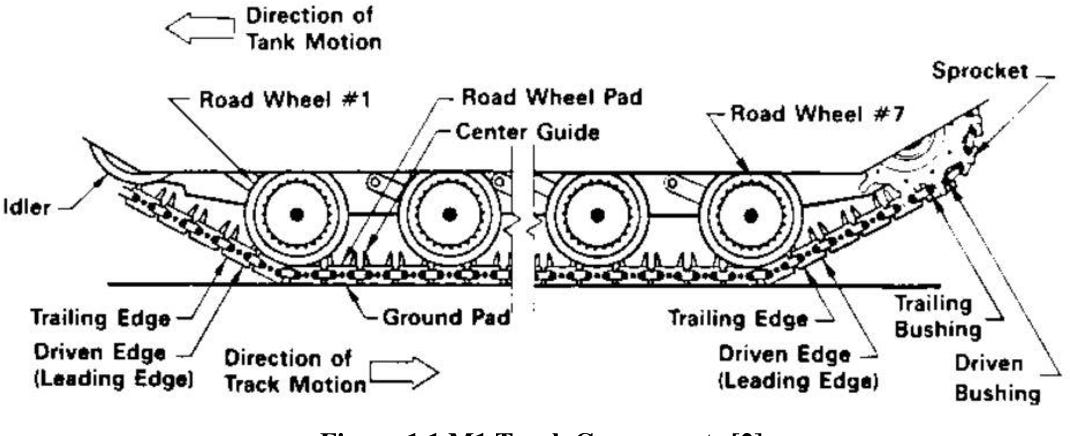
The Tracks of a Tank are it’s Achilles heel. Here the 600 millimeters (60 cm, 2 feet) of effective armor the tank has are reduced down to mere 5-20 millimeter pins.
These pins are under extraordinary forces and pressures for the tank to move engine turns the drive sproket, and then ever wheel, contact surface, and the entire weight of the tank are all moved via tension on the track. Similar to the chain on a bike or motorcycle, but if the chain had to loop around the outside of the tire and be the contact surface of the tire in addition to the drive force.
Beyond this tanks have TWO treads and zero steering tire. The way tanks turn is by running one tread faster, and one tread slower… And sometimes they even turn in place by running one tread forward, and one tread backwards. Again modern tanks are 50 tons, and there is no inbuilt steering or angling to this. All 50 tons of the tank are turning based sheerly off the lateral tension formed between the two tracks pulling in different directions. RIPPING the contact surface of the tread out of it’s 50 ton contact with the hard ground.
All of this exerts unimaginable pressure on the small steel pins within the tread, which themselves need to be internally lubed and checked regularly lest they overheat and rip and the tank lose it tracks becoming as dead in the water as a bicycle that simultaneously lost it’s chain and tire at once.
So what happens to the treads when you flash-weld the pins, contact plates, and lube together… Whilst dumping newly formed molten hardening steel into the narrow space between where the pins and plates need to glide freely?
It rips itself apart.
Remember Steel melts at 1500 degrees, and thermite burns at 2500 degrees. Which means the specific actual temperatures that hardened and forged and shaped the specific super-hard alloy they use in the pins of tank treads is probably somewhere between 700-1300 degrees. All the complex metallurgical bonds, galvanic hardening, specific machine-hammered smith-work that separates hardened steel tank treads and pins from super-soft steel alloys like your limp bendy stainless steel butter-knife (both made of Iron)… All those complex metallurgical bonds break down well before the steel itself melts, as low as 700-800, maybe 500 degrees… That super expensive government contract military alloy is being turned back into a soft Iron-Slag that can’t stand up to the forces of a tank tread and certainly not after its been welded together in it’s bushing.
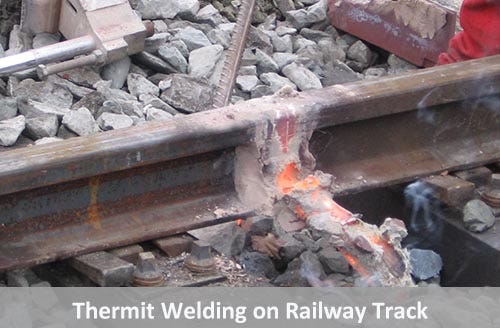
Remember Thermite is already used to weld Railway tracks together so solidly that 20,000 ton (not a typo) Trains can roll over them safely without the bond breaking even on winding non-linear mountain tracks. Those tank tracks aren’t rolling smoothly after that… They’ll either bind solid or rip apart.
So the soldiers inside the tank, if they ever want to move again, will have to repair/replace the Tread… Or abandon the tank (in combat this is a common “Bail-out” reason… Mobility killed tanks are just sitting targets waiting to die)
Btw this is what repairing/replacing a Track looks like:
Yes.. This does make them sitting ducks and easy targets to rifle fire, artillery, follow on strikes, etc. Thus why it’s common for tankers to just abandon a mobility killed tank.
So if you only had a suitable delivery vehicle, thermite would indeed be an almost perfect weapon for disabling tanks… Not because it penetrates the armor… But because it doesn’t have to.
The clever resistor doesn’t have to make Meltabombs… but rather:
The CatGirl Melta-tini™
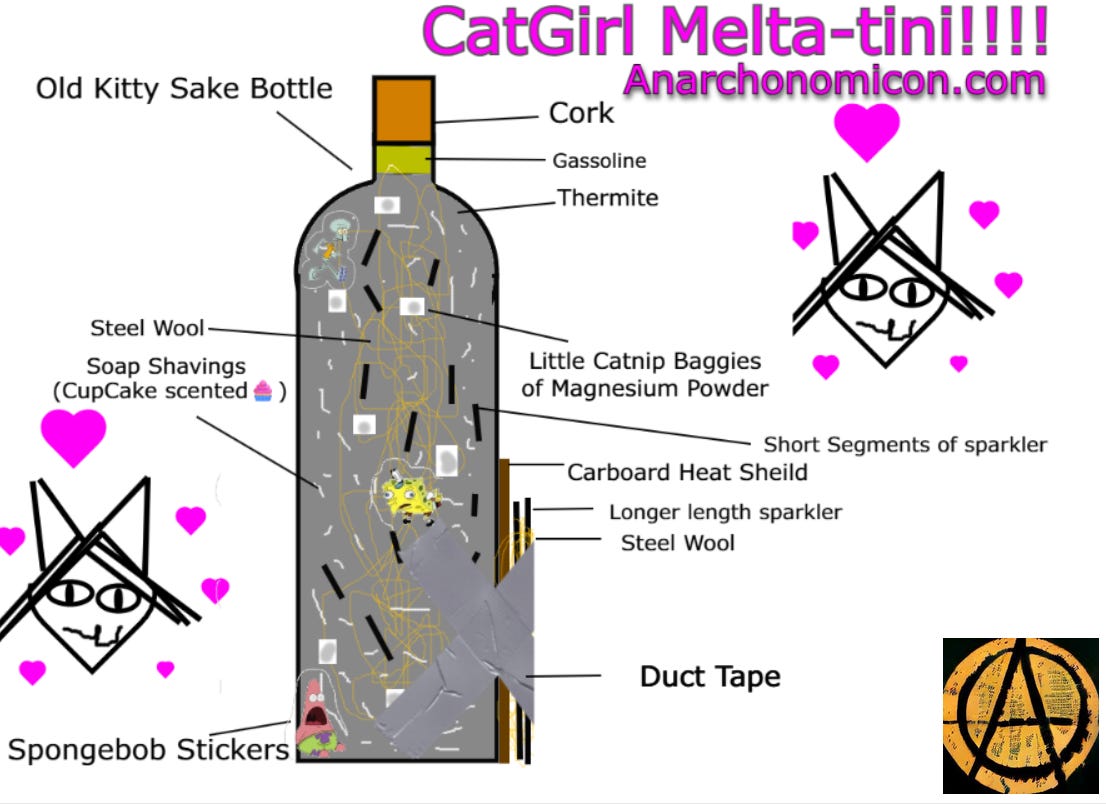
Legal Disclaimer: Note this is NOT an explosive. No element of this undergoes explosive reaction or even deflagration, rather this is a series of open-air combustion reactions and exothermic reduction-oxidization reactions which cannot even hypothetically be used to produce shrapnel or concussive explosive damage.
In theory (not legal advice) depending on the jurisdiction, it is in the same legal category as camping fire-starters and diagrams for how to build a campfire, maintain gas motors, metalurgical chemical welding equipment, and other examples of multi-element complex combustions used throughout hobbies and industry.
The “Sparkler” refers to a common off the shelf recreational children’s or metalurgical generic “sparkler” used to produce a high ignition temprature, which are to be chemically unaltered and whose chemical compositions are sortof black boxes depending on manufacturer… These have various proprietary compsition mixtures to them, so if your local maker uses a deflagrating composition instead of exothermic reduction-oxidization then the above image is not representing that, a deflagrating sparkler might behave the same or differently.
Likewise we advise against EVER creating any incendiary device… including camp fires (People fall into camp fires. They’re dangerous. This one time at PorkFest in New Hampshire a guy lost his junk after drunkenly falling into the campfire).
Remember The Purpose of this piece is to predict the future of warfare, hypothesize future weapon systems (much as many Military Magazines draw diagrams of hypothetical hovertanks, “vaccum bombs”, “Stealth Rifles”, “Plasma weapons”, etc.) Then Properly anticipate and advise the skilled military personnel who read this blog… And in the process horrifically deface the future of all Military History by CatGirl-Branding everything that hasn’t yet been safely named.
The CatGirl Melta-tini!
Soon to be the backbone of low-resource unconventional AntiArmor-Warfare everywhere, (or atleast every fictional universe not served by lasers).
Now this might look like Complete Chaos… And there’s a Reason for that.
Thermite is hard to light… Or at-least that’s the common perception.
The truth is…
WARNING: If you use a ball-mill to mill Aluminum powder, it can quickly get to a fineness where it is DANGEROUSLY reactive, at which it forms a vaccum seal from devouring the limited oxygen sealed within the mill, and becomes liable to combust unpredictably at mere exposure to open air (and fresh oxygen) when the container is unsealed and the vacuum broken by the sudden influx of oxygenated air… if safety protocols are not followed properly.
It will literally just ignite to a face-melting 2000 degree dust “explosion” (this is a misnomer)… For no reason.
This is beyond the dangers of handling fine aluminum dusts to begin with which when breathed in sufficient quantities can result in immediate death via irritation, damage, and release of fluids into the lung… Drowning in your own lungs… or over less severe exposure long term lung damage, and neurological damage resulting in reduced intelligence, reduced neurological measurements, and Alzeimer’s.
For those who have surpassed even my Hobo-Spergs… I hearby dub you my Retard Hobo-Spergs.
The Truth is there is a reason I’m not going to go into the actual process of making effective Thermite here. despite its seeming complete simplicity, any combatant who actually does it, or has to develop a logistical chain to convert scrap aluminum from foil, Pop-Cans, harvested bikes and other sources, etc. should be researching multiple sources and developing a very paranoid safety protocol involving timers, respirators, separate facilities, fire containment (you won’t suppress a 2000 degree flame), welding safety equipment, etc. for how to mill it down to a fine powder with air control, sealed rooms, fineness thresholds, etc. to avoid risking long term fine dust exposure, or a spontaneous metal fire rapidly burning comrades and buildings to the ground.
Safety protocols I cannot give you.
Here is a video on the matter from a youtuber/pyrotechnical hobbyist. Note: almost certainly research it more than this. This should be your “Wow! that’s obscenely dangerous” video not your “I know how to do it now” video:
However the reason the Melta-Tini is SO complex, is because most fighters who would ever hypothetically use it are probably not going to do that (or do it poorly) and wind up with a “safer” coarse Thermite mixture that’s really hard to light. (like the common perception)
Now consider that the idea is to throw this and have it break at random, and fly over an large object with sharp angled metal… And there is an EXTREME risk that large amounts of the thermite is just going to get thrown aside and sit inertly on the ground…never igniting.
Given it would take many multiple Melta-tinis to disable a Tank, this wasted fuel would quickly add up to 20-50% or even a majority of the thrown fuel NOT IGNITING.
Beyond this the weather conditions in war always find a way to screw with you… Thus tons of redundancy is built in so that it should work in Arctic conditions (some of the gasoline will freeze below -40… but most of it will stay liquid… Might create an odd dispersal pattern) it should still ignite in monsoon season, and basically all other conditions.
So extreme, really quite comical, overkill and redundancy in ignition mechanisms are needed.
I will now break down the hypothetical ignition steps and logic:
External igniter:
I hate the traditional modes that Molotov cocktails ignite. I’ve seen lots of videos online of people going to throw a Molotov and splashing themselves with burning gasoline that sloshed out through the burning cloth. Likewise the “Self-igniting” Molotovs you see the Finns and Militaries use with Storm-Matches taped to match strike faces, or segments of flint taped to coarse steel… Strike me as accidents waiting to happen. They’re a good booby-trap design or makeshift warheads/droppable grenades for drones, but I wouldn’t want my untrained volunteers running around with cases full of live booby-traps and armed warheads.
I imagine sleep deprived soldiers moving several dozen Molotovs in Bottle-cases into fighting positions and disguised buildings which have had dozens of man hours poured into hardening into proper fighting positions, only for one of the Molotovs to get dropped, auto-ignite, and then set off the rest with half a platoon in the building.
Instead My design incorporates an inextinguishable and wind-supercharged, external igniter… But inside a design which if someone dropped it unignited “SHOULD” just become a mess of gasoline covered metal-sludge on the floor to be cleaned up.
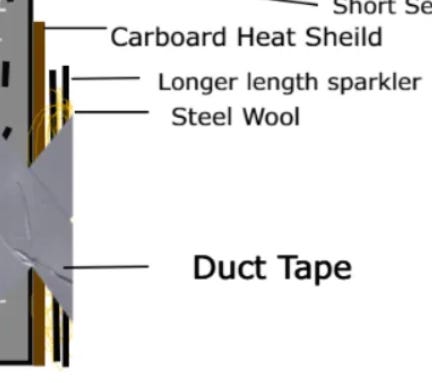
The Igniter
-
Sparklers 🎇: The External sparklers are first ignited with a lighter. Yes just like kids at summer barbeques. These little party toys are actually staples of the metal industry because they burn at over 1000c. This is why little Sally can’t make it go out no matter how fast she swishes it through the air and why every year several children endure really quite horrific burns from contacting the hot element. The complex mixed metal/oxidizer mixture is PERFECT for burning hot enough to start metal fires, being inextinguishable, and burning at predictable timed rates (these are also perfect for 5-60 second timed fused, as long as you insulate the thing you’re igniting from sparks). This is the first thing you’d ignite.
-
Steel Wool: Even ultrafine steel wool burns very poorly because the dense steel consumes the oxygen around it so quickly. Once the Sparklers are ignited they’ll burn the the steel wool… but Steel fires are almost impossible to maintain, without a direct forced oxygen source (such as in forced-oxygen thermic lances, which are shockingly easy (but dangerous) to make)… The exception is if it’s flying through the air… Then it has all the oxygen it needs, and it burns and casts tons of sparks around at about 700 degrees Celsius. This not only makes the flame even more windproof, but guarantees that at-least one of those hot metal sparks will ignite all sections of the cocktail, even if it hits a sharp metal corner or a post which might quickly sheer and cut the fuel payload in half.
-
The Cardboard or other insulator: Because the sparklers burn at 1000 DEGREES, they will almost certainly quickly crack the glass of the bottle if left burning next to it. Ideally an operator is going to throw the Melta-tini quickly after igniting… but suitably thick insulator for the glass provides a lot of additional safety to the operator.
-
Duct-tape: Given how fool-proof the igniter is the last way it could fail is if it flies off the cocktail before the bottle breaks… thus it must be secured firmly.
The Fuel Payload
-
The Gasoline/other liquid fuel: Once the bottle breaks the sparks from the igniter ignite the liquid fuel part of the payload, igniting everything evenly instantly. The liquid gasoline part of the payload permeates the rest of the payload (the thermite, the soap shavings, the steel wool, the Little Baggies of Magnesium, the sparklers). it takes up all the empty parts giving you more heat and energy for the same bottle space, and Guarantees an immediate ignition of the full payload evenly… However it permeates EVERYTHING… so….
WARNING: All individual parts of the payload MUST be tested in small amounts, outside, against the specific gas/deisel/keroscene/achohol subout, etc. Since depending on the Ethanol content, the octane mix, any stabilizer additives, or any substitutions… it might interact with the fineness of the aluminum powder, the individual sparkler mix, the magnesium bags, your soap, the steel wool… ect. to produce an EXOTHERMIC REACTION. Igniting the whole thing in your face as you finish the assembly. (again this is a hypothetical weapon system, not instructions… also it should be assembled outside with full welding PPE (mask, gloves, and welding apron), and not looking straight down the bottle (heat rises))
Gasoline is a complex mix of hydrocarbons, which very rarely have oxygen atoms in the mix, so it ““shouldn’t”” react with the metals… the idea is the burning gas will ignite the other elements via heat conduction (lighting them via flame like a paper fire igniting wood in a campfire) and all the combustion will be parallel combustion reactions, not chemical reactions with eachother.
But If any igniters or other portions reacted during small small testing with a specific brand of liquid fuel… The Hypothetical Fighter would cut that ignition pathway or use an alternative fuel.
However assuming it can be used “safely” the Liquid fuel ““should”” insulate even very fine aluminum mixes from air and oxygen. This ““should”” make it more drop safe whereas simple ultra-fine aluminum powder, on its own or mixed with other dry solids in an airtight environment, will quickly consume all oxygen in the environment over the course of hours… And can cause that exothermic incindiary metal reaction when suddenly exposed to air… Lighting the thermite, if it is ground THAT finely (which it should not be)..
Thus the liquid fuel, assuming it itself does not cause a spontaneous combustion via an unrealized additive, would make it vastly ““safer”” from risk of dropping both from combustion and unprotected Aluminum inhalation.
It’d be a miserable mess for a soldier to clean up in an urban fighting position, but with ventilation, a respirator for the fumes and gloves, you could actually clean it up without undue risk.
Again I cannot emphasize enough that this is a speculative scifi hypothetical weapon I am PREDICTING will appear on the future battlefield just like military/popular mechanic magazines drawing diagrams of Nuclear Laser rail-gun BattleTanks, not weapon design instructions.
-
Soap Shaving/ or other thickeners (melted styrofoam,tallow, butter, motor-oil, dried orangejuice concentrate, etc.): “Napalm” and other thickened/gelatinized gasoline mixtures are a staple of molotov cocktails and incendiary warfare… Some of these theoretically produce higher heats, or extend the burn-time at lower temperatures… but the real goal is simply to change the texture of the mixture from a thin liquid that flows off surfaces and burns uselessly on the ground to a gel that “sticks to kids”… and vehicles, and legitimate targets… Likewise the purpose of the soap (or whatever) is to ideally produce a gel texture when mixed with the liquid fuel that will cause the still cool thermite/sparkler/steel wool/magnesium sludge to bind together and stick to the metal surfaces of the Armored vehicle when throw instead of simply sliding off and scattering. (I have no idea what the specific additive or mix would be to achieve that, again this is a hypothetical weapon system… Cupcake scented soap is included in the example because it smells nice.)
However this also has the advantage of including a slower burning and dirtier element to the gas/hydro-carbon mix… This means that when the thermite gets going it will superheat the unburnt fuel and mix causing small violent and sudden release of gas… This will cause molten thermite to spit and scatter like ice cubes in a deep fryer or water in a burning frying pan… Now this is HIGHLY dangerous to anyone near the tank, (such as anyone trying to throw Melta-tinis)… But it’s also radically increased the chance of thermite sparks and droplets landing on the glass viewports, Optical Devices, ammunition and moving parts of externally mounted machineguns, explosive reactive armor, and all the sensitive bits of the tank. The more the poor desperate fighter is risking molten thermite splashing in their eyes, the more likely it is to get in the tank’s eyes.
Obviously don’t try this at home.
Also look into Copper Thermite.
Optional Hypothetical Pathway 7A: Steel-Wool (mixed in the payload)
Steel wool AGAIN does not reliably burn whilst sitting still, but once the bottle breaks on contact, the additional steel-wool in the bottle can ignite and get to 700c very quickly before the payload comes to rest… This give you an increased chance to get sparks igniting small amounts of thermite that sheer off into small odd vulnerable places that stick out like weapons barrels, exposed Ammunition of secondary weapons, open hatches and bolts assemblies, optics… Etc.
Optional Hypothetical Pathway 7B: Smaller Sparklers
Another optional hypothetical… these small segments provide another fast igniting pathway to get the hard to ignite thermite up to temperature letting the liquid gassoline fire ignite them in whatever sheered off clump they wind up in after the bottle impacts, then they ignite the thermite.
Optional Hypothetical Pathway7C: Magnesium Powder Baggies
Magnesium strips are the standard way to ignite thermite and metal in lab and other settings, and magnesium bars are sold in camping stores specifically so campers can generate fast igniting magnesium powder to start fires. These little baggies provide another available pathway to get from the gassoline fire to the thermite fire.
-
The Thermite
Once ignited reliably enough the thermite will burn all other thermite it is contact with, or any other thermite that is added to it over subsequent bottle throws.

The Heel of Achilles, and Other Soft Bits
All of the above should be sufficient to weld the pins and treads of the tank’s tracks, degalvanize the steel, and when the tank moves make them rip themselves apart. Stranding the beast.
However tanks and armored vehicles have many other soft bits that can be burnt away in a 2500 degree mini-sun.
The explosive reactive armor of modern tanks for example are almost all composed of modern high explosives that are detonated by highly safe and secure detonator electrical systems. Most modern high explosive will often not even detonate from fire or temprature alone, requiring instead the impact of hyper-sonic detonation to break their thick molecular bonds… This actually helps the tank-hunter since if the tank hunter can get the explosive reactive armor burning with your Meltatini, there’s a good chance (stand clear) that it’s NOT going to detonate spraying it’s energy outwards, but instead combust in a chemical fire starting a massive fire on top of the tank and burning all the other explosive reactive armor, the lights, the sighting systems, the ammunition in the exposed machine guns…
Because tanks are built with Armor and penetration as the main concern, this risk is highly dangerous.
Now BattleTanks do have built in fire suppression systems, notably Halon and Other Chemical fire supression, sometimes compresses CO2 systems… The systems vary.
But remember the Thermite Reaction:
Fe2O3 + 2 Al → 2 Fe + Al2O3
Iron Oxide (rust) + Aluminum —> Iron + Aluminum Oxide (aluminum slag rust)
.
There’s no way to suppress this. The Chemical reaction isn’t drawning gas from anywhere else, the oxygen atoms are just crossing from the IronOxide to the Aluminum.
Combine that with the 2500 degree heat, and the supression systems are basically useless.
This means there’s nothing to prevent you blinding the tank by burning it’s core fighting systems:
2. The Tank Sees through it’s Optics, and 3. it Shoots it’s Weapons Systems
While I’m certain The Adeptus Mechanicus will eventually develop a means to actually melt THROUGH Tank Armor… In the Meantimes the cutting edge of CatGirl Warfare™😻 is ADDITIVE Melta-Weaponry.
YOU DON’T HAVE TO MELT THROUGH THE ARMOR. Flat thick metal slates do nothing.
Everything that makes a Tank function comes from More delicate pieces of equipment that Have to LEAVE the protective shell of the armor, just like all the little bits that make an insect function are located OUTSIDE it’s protective exoskeleton.
Tanks are actually really complex and delicate pieces of equipment… the main thing that protects them is not their armor, but their armaments… Given the equipment your standard American “Fudd” has in their Gun Safe and Garage, you could destroy a tank irreparably 10 different ways in about 5-10 minutes if you knew what you were doing…
The Thing is you’d never get a chance to if it were in operation, because you’d be ripped apart by its main gun, coaxial machine gun, top machinegun, grenade launchers, flamethrowers, explosive reactive armor, other oddities, and if you were right in close… The Tank is faster than anyone on foot and could just spin its treads to try and run you over or catch you in the treads and rip you apart.
Its not that Tanks are unkillable… you can look up videos online on how to do enough damage, even with simple rifles, to take one off the battlefield if you ever have a clear sightline, suppressed rifle, it’s unoccupied, and no one’s paying attention.… But you’d never get to do that on the battlefield because they’re tougher, stronger, faster, and even if you inflict sufficient damage for a mission kill It’ll almost certainly have free weapons left to kill you for your trouble….
.
this is where quickly blinding the tank becomes vital.
Underappreciated about even conventional Molotov cocktails, is how intuitively understandable their physics are, and thus how easy it is to improve indirect-fire launchers for them.
Making your own Mortars is a nightmare, but fashioning a bottle launcher from slingshot tubing, or a crossbow, makeshift mini-trebuchet, or even just a stick (like a primitive rock thrower or atlatl) is actually fairly trivial for the average hoodlum/soldier to get to 50meters to even a few hundred meters of effective arcing indirect fire range.
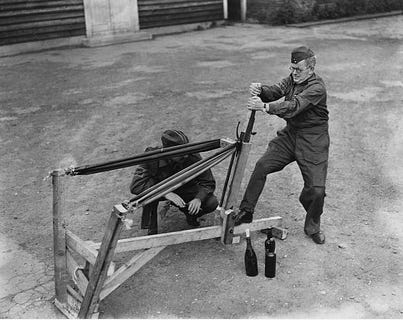
This means that if you test and range your homebrew launcher properly, and employ spotters, you can land arc-ing indirect fire molotovs, Meltatinis, and other strikes on armored vehicles from positions in hilly, forested, or urban where their direct-fire weapons cannot see you.
.
So What happens when lots of 2500-Celsius Thermite lands on top of a tank?
Well… Glass melts at 1400-1600 degrees Celsius.
All the optics, view ports, ranging devices, backup ranging devices, cameras? All of those are not only getting choked up with Iron-Aluminum slag, their very lenses and sensors are themselves melting… If they get hit.
This of course would require a large volume of Melta-Fire to get on the tank to disable all it’s viewing and ranging options… But if you get the mobility kill with thermite on the tracks either because of a brave thrower or a clever angle of ambush with one of your launchers… then the Tank’s a sitting duck to just have more indirect fire dumped on in carving out its various eyes and options to fire.
Likewise many of a Tank’s secondary weapons, beyond it’s main Gun and Coaxial machinegun Are either Man-operated by gunners sticking their heads out of the their hatches to manually manipulate the guns, or they’re operated by delicate motors and cameras remotely from within the vehicle.
In either case thermite getting near the secondary guns, despite the chance to just destroy them or cook off their ammo, risk frying those cameras and motors, and at 2500 degrees, is hazardous enough no one’s poking their head up and risking getting it on them in an attempt to work that gun with the hand controls.
Beyond this you might cripple the tank’s main-turret’s ability to turn if thermite gets in the turret ring and literally welds it to the main body of the tank.
4. A tank keeps its Occupants Alive
In Case you haven’t guessed already, I don’t like tanks.
They insist upon themselves.
They ruined warfare.
It used to be there was a phrase, sometimes attributed to Napoleon:
“Artillery for the smart. Infantry for the tough. Cavalry for the Brave.”
Tanks Ruined Cavalry!
How can you be “the brave” when you’re wrapped in 600mm of effective armor?
Tanks are the force, along with Airstrikes, that stripped the virtue out of warfare and made it “Pay to win”, and hell probably brought about the decline of western masculinity.
It used to be the tougher braver, smarter son-of-a-bitch won… Now its whoever is attached to the best bonds-market.
.
But this is where virtue gets its revenge. Where Toughness, intelligence, and almost suicidal bravery finally beats the lumbering Military industrial Pork Barrel.
The final way to defeat the tanker isn’t cutting through their armor with superior money and industrial logistics…
But turning their own armor against them.
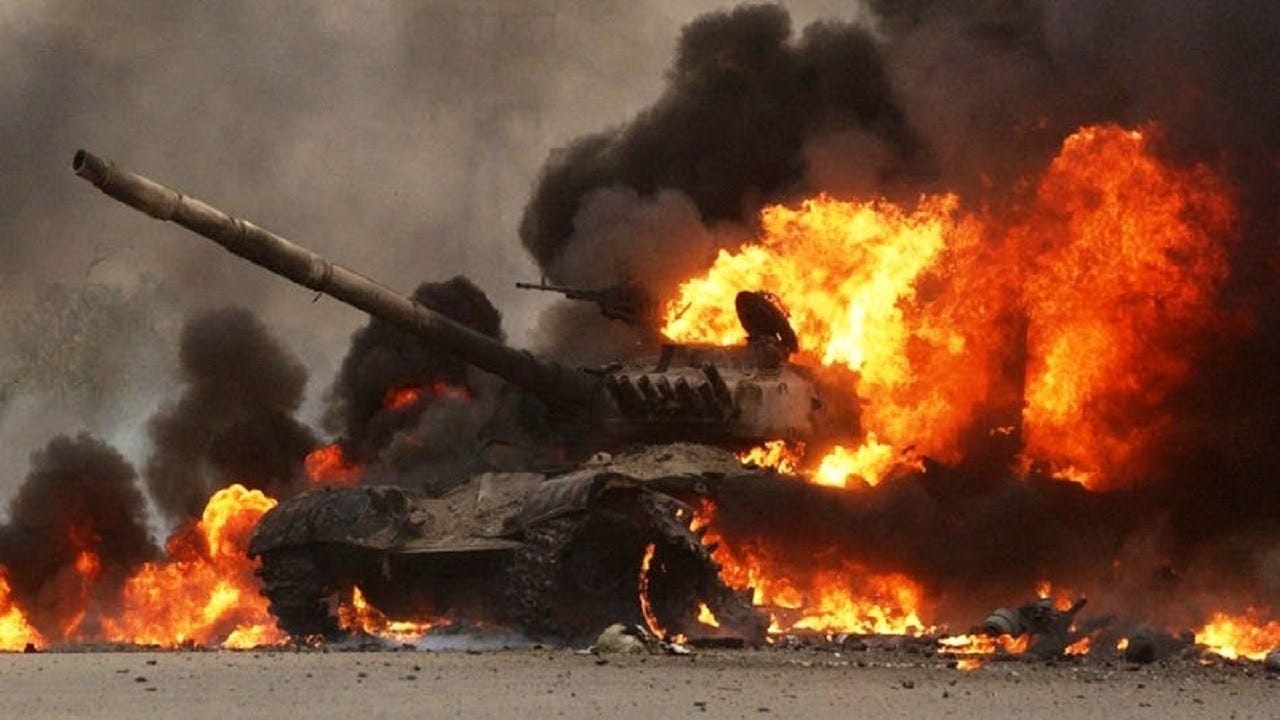
The Net Heat Kill
Remember how Thermite can’t defeat tank armor? The cumulative 50 tons of metal all conspire to conduct the heat away from the hot spot where the little splotch of thermite might get through? This is the double-side of that sword.
.
As any motorcyclist in a traffic-jam can tell you, the weakness of any motorized vehicle is HEAT.
That 50 ton tank is already with it’s engine running Dangerously hot relative to what a person would be conmfortable dealing with.
Israel had a massive problem with this.
The Merkava Tanks have a recurring problem with their Air-Conditioning units failing, which beneath the blistering desert sun in the midsummer heat of the Mediterranean right next to a MASSIVE tank engine isn’t the funny “awe poor baby” story you might think, but a major problem.
Their crew compartments were getting up to 50 degrees (122 Farenheit) with the actual core engine and other systems already being much hotter…
This of course crippled a lot of their operating tempo, and safety as the crews could no longer operate buttoned up with their hatches closed, but instead need to keep them open with the additional vulnerability to grenades and drones.
.
So lets imagine you’ve crippled the tracks by Themitically welding the pins together, and you’ve blinded it by melting it’s optics and view ports…
You can translate that into a kill, or force the occupants to bail out by just hitting them more.
Theoretically this is possible with the meltatinis: a 1kg bottle of thermite will heat 2500 kgs of steel about 1 degree. So every 20 bottles you raise the temperature of a 50 ton tank 1 degree.
Not logistically impossible by any means ( your ingredients are used pop cans and rust) But that’s rather inefficient once you’ve got it dead in the water.
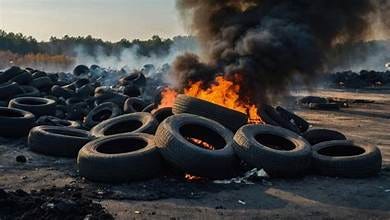
Alternatively ordinary petroleum or rubber tires can be placed under the disabled tank to cook it out in much the same manner that a small camping stove will boil an entire pot. Forcing the tankers to bail out and surrender. And starting the burning of paint, components, and all other parts of the vehicle (stand clear incase the fuel or ammo compartment go)
Rubber Tires are obscenely energy dense (they’re solidified compressed heavy petroleum) the smallest passenger car tire burns about 30 minutes, truck tires, or multiple tires will burn for hours.
.
Once you get a mobility and weapons kill on a tank, if you have no heavy weapons, this is the cheapest quickest way to kill the vehicle and prevent it being recovered by the enemy.
Remember an abandoned tank or armored vehicle, even if unrecoverably damaged, is a goldmine of spare parts to be cannibalized by enemy forces if they can recover them.
Main BattleTanks cost 3-20 million dollars. And many lighter armored vehicles are awkwardly not that much cheaper.
For a few minutes and about $50 in scrap tires… You could deny your enemy millions of dollars in recoverable parts.
In Conclusion:
Is Any of This at all Realistic?
While I have many other ideas to include as part of subsequent “CatGirl Cocktail Hours”… I will end off here, pointing out… This is basically suicide.
Whilst used as indirect fire, dropper munitions for quadcopter drones, or improvised sabotage charges… “Meltatinis” would almost certainly do incredible damage and could cripple a tank.
In all but the most perfectly plotted ambush this complex multi-stage stripping away of capabilities would take many minutes to get to a true kill of combat capabilities, whereas the tank need merely turn it’s heavy guns line them up in 2-4 seconds and rip apart trees, terrain, buildings, and the air itself with deafening and consciousness destroying heavy fire, even if the rounds do not find the guerillas to scatter their innards across several football fields.
.
However the history of warfare is NOT driven by what is “realistic” but rather what is possible.
In this scene after days of bare survival lost in the blistering heat of Afghanistan hunted by an invisible enemy, a soviet tank crew has an encounter with the Mujahideen fighting hunting them at the exact worse moment, low on ammo, with the the tank’s engine seized, and the battery drained.
A favorite parable story for both Tankers and Guerilla warfare enthusiasts Is the film “The Beast of War”.
The Plot is not “Realistic”, the story of a lost Russian tank running out of supplies and the even worse equipped Mujahadeen desperately chasing it with no idea how they’re going to kill it runs through tons of coincidence, happenstance, etc.
Yet the story is beloved by tankers and subject matter experts especially because of the incredible technical realism, and the almost mythical parables and stories of extremity highlighting and exploring principles and concepts in the most rewarding way.
Sure all of this happening to one crew is incredibly unlikely… but almost all tankers or tank hunters at some point encounter some finicky, technical, and archetypal struggle resembling the film’s mythical hyperreality… And watching it all play out to the most extreme drawn out endgame makes one of the greatest treats of War Cinema.
.
Likewise, the above hypothetical of a lone guerilla faction, or cut off unit deprived of every heavy weapon and antitank tool, taking out a main battle-tank with nothing but garbage, a large number pop-cans, and a number of shredded tires… Isn’t realistic, but it highlights a lot of the dynamics.
In a normal engagement such a force would go after lighter armored vehicles or positions, or employ Meltatinis to augment or follow-up after employing regular explosive heavy weapons which they might have in smaller numbers, or limited capability.
But against lighter targets like Wheeled Vehicles or smaller infantry fighting vehicles… A very few Individual Meltatinis fired indirectly, employed in booby traps, or quickly thrown in ambush before running probably could cripple the vehicle.
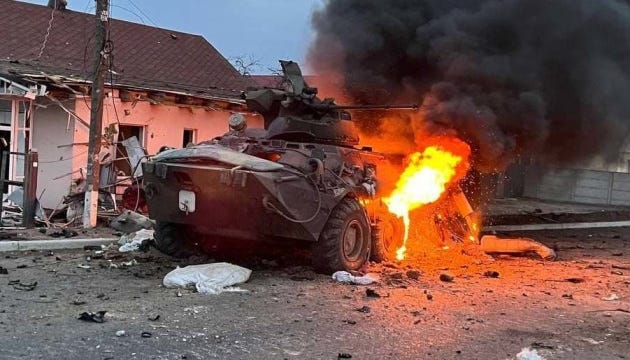
Wheeled vehicles especially run the risk that their own massive tires could be easily set alight by the 2500 degree thermite getting on and in them, blowout immediately… And then have a potentially inextinguishable vehicle fire on the scale of the tires you’d use to cook off a disabled tank. Indeed in driving away once the fire is notice the unextinguishable molten metal would get on and in the redundant other tires driving over it.
.
Likewise anywhere enemy chemical and compressed-gas fire-suppression systems needs to be overcome such as ships, datacenters, etc. Thermitic weapons immediately recommend themselves since their flame will remain unaffected whilst the chemicals and compresses gas disperses, allowing the suppressed onsite fuel to reignite… In much the same manner that trick candles incorporating a fine steel core to their wick cannot be extinguished. Likewise they recommend themselves to igniting hardened or otherwise inert targets that aren’t conventionally considered flammable, or which are designed to resist such ignition.
.
However again this is all speculation.
Whilst I’m very convinced of the physics, chemical properties, and tactical/technical logic I’ve laid out here… This remains as speculative and science fiction as those laser-tank diagrams in Popular Mechanics Magazine.
I’ve never made one of these (that would be illegal where I am), and unless you are a responsible EOD/Pyrotechnics expert with the appropriate licensing, registration, and tax stamps… Oh and actual certified chemical safety expertise to do so without risking life, limb, and brain exposure to Aluminum dust… (in which case, it would make a cool Youtube Video if you can legally and responcibly do so).
I cannot emphasize enough that this should not be attempted or contemplated, and that this in no way represents actionable instructions on how to create something like this, and certainly not safety instructions on how to do so without almost certain injury or death.
Instead this is put out there is a speculative weapon system for my (often shockingly) knowledgeable and expert military, law enforcement, and combat veteran readership to commentate on and to be aware of the possibility of.
I know I’m read by at least a few former Special Forces and actual Tank-Operators from various militaries who will be keenly interested in the possibility, risk, and opportunity that such a concept represents.
Please do share your thoughts. And checkout my other speculative warfare pieces:
.
.
Tip:
BITCOIN: bc1qdhj7637sgcssxgxygjaa3ddljwy8tzg5mzw325

MONERO: 8AhA3g9hbtDcAJE5MPmeQsFwwGsf3H9fq9tC6giQ4a6vKnTXv4J4MivKXrPKDpXyEeNc9mfFejbq84kSWkC8pjuj18rAEij

Follow me on Twitter: @FromKulak
AnarchonomiconRead More






 T1
T1